
¶Table of Contents
¶Quick facts
The Sloughi is a North African sighthound whose country of origin is Morocco, according to the breed standard. It combines a lean, athletic body with a strong prey drive and a close bond with its people. At home, it can be quiet and affectionate, but outdoors, the sight of a fleeing animal can quickly bring out a very different level of energy. Carefully planned opportunities for safe exercise are therefore central to life with this breed.
- Size: males stand 66–72 cm at the withers and females 61–68 cm, according to the FCI breed standard.
- Activity level: high exercise needs, with daily walks and regular opportunities to run in a securely enclosed area.
- Grooming: minimal. The short coat can be maintained with a soft brush or grooming mitt about once a week, with baths as needed.
- Life expectancy: around 10–15 years according to the AKC, as a broad guide for the breed.
- Best suited to: an owner who appreciates a sighthound’s independence and can provide companionship, gentle training and safe opportunities to run.
It is easy to fall for the Sloughi’s elegance, but choose the breed based on how well its needs fit your everyday life. Think about where your dog will be able to stretch its legs, how you will manage working days and how you want to approach training. Try to meet adult dogs and ask their owners how they handle prey drive, visitors and time alone in practice. This will give you a more useful picture than meeting only a litter of puppies.
¶Appearance and coat
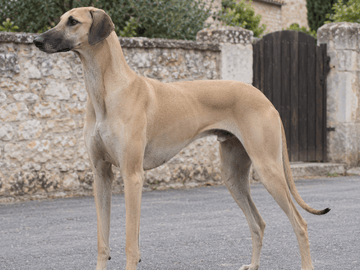
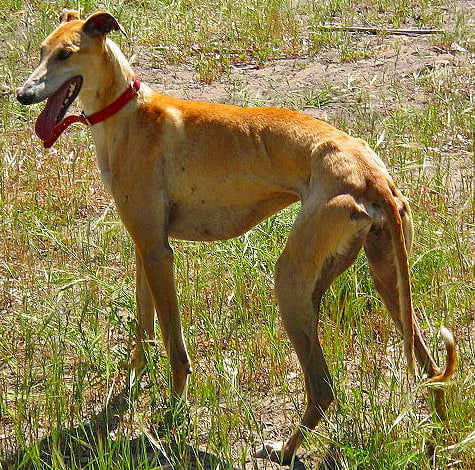
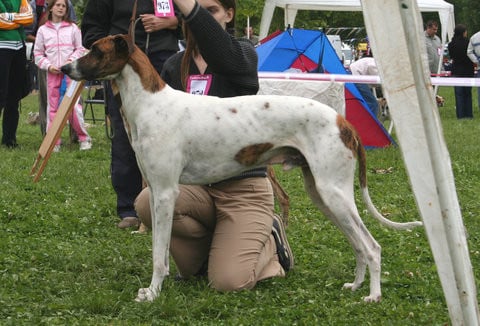
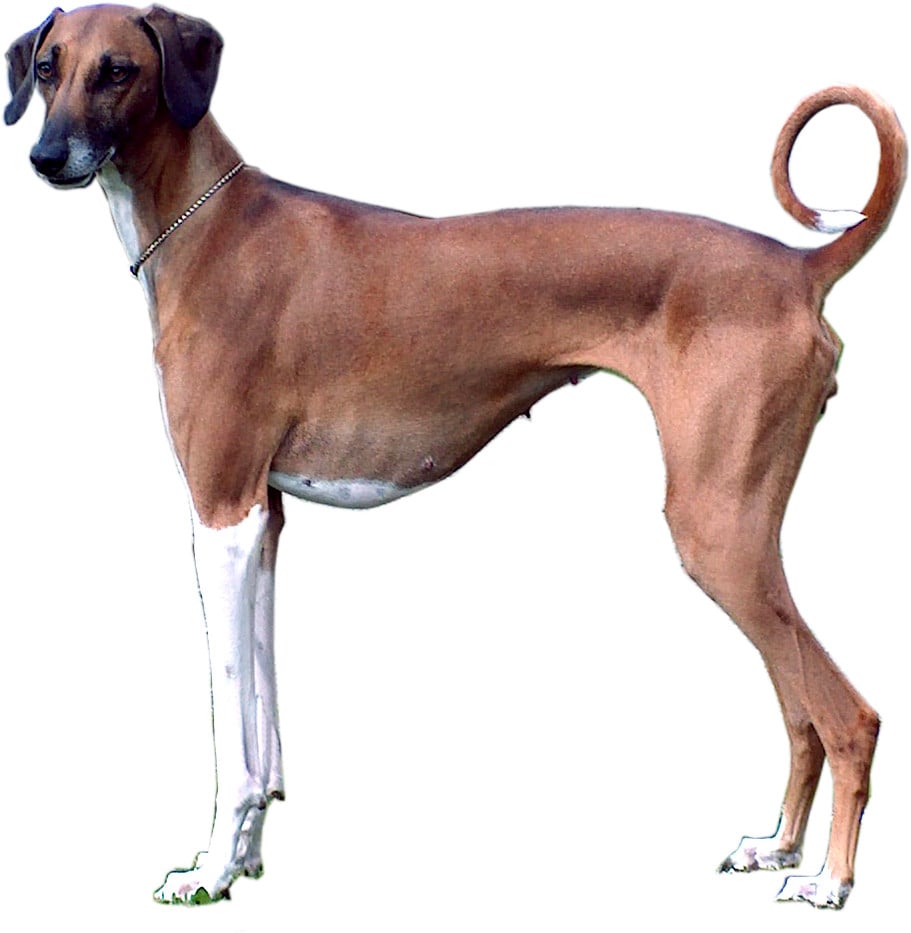
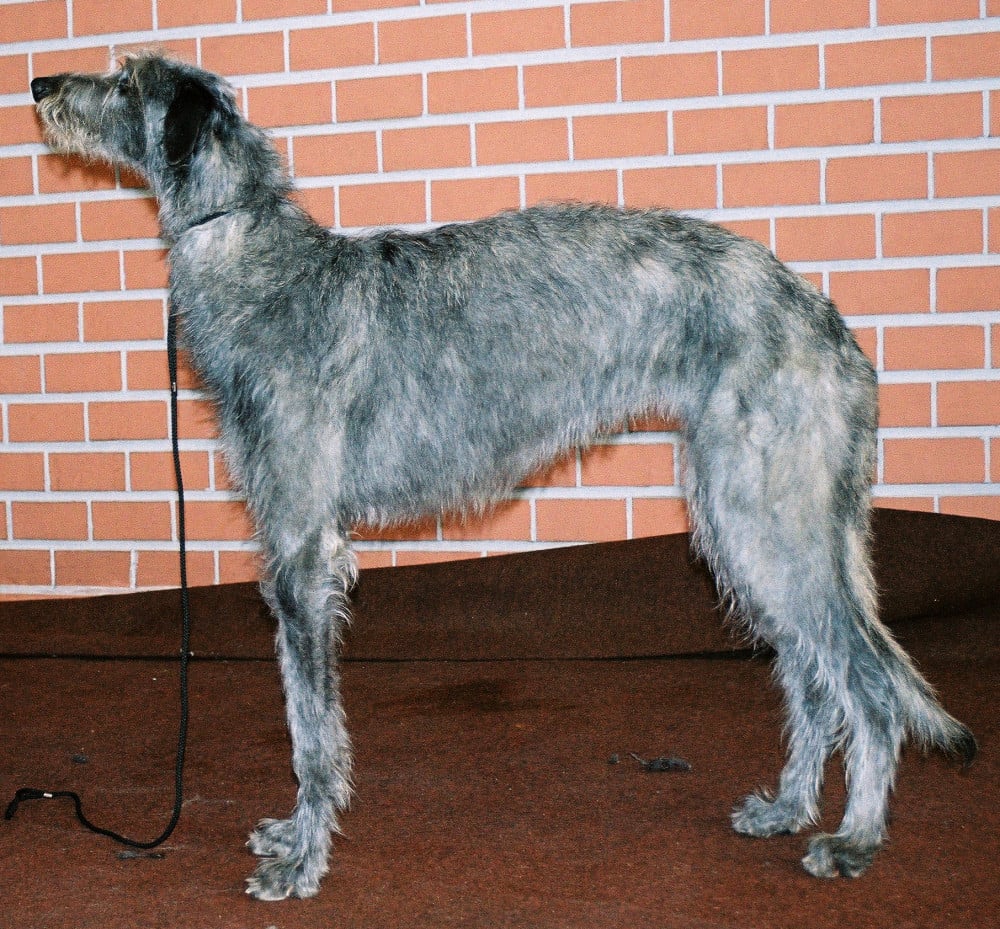
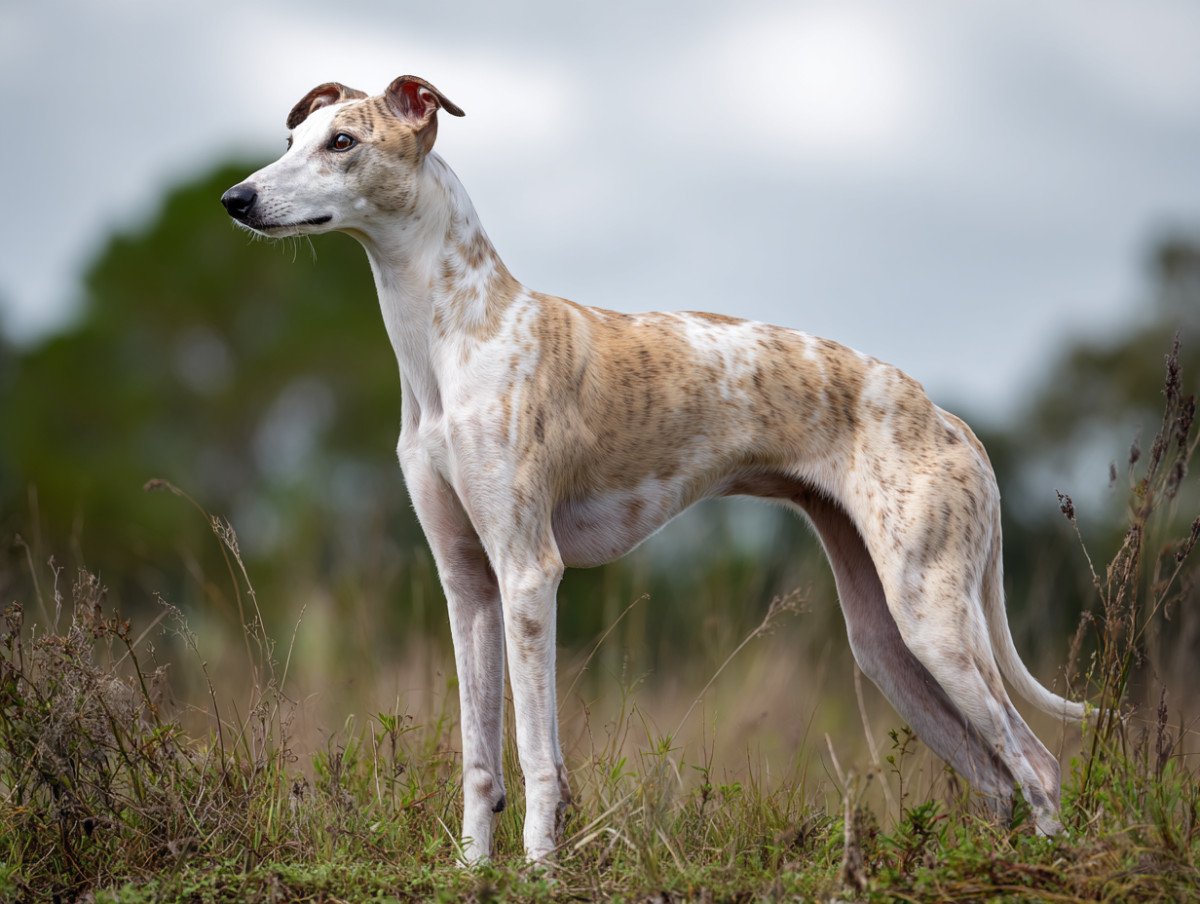
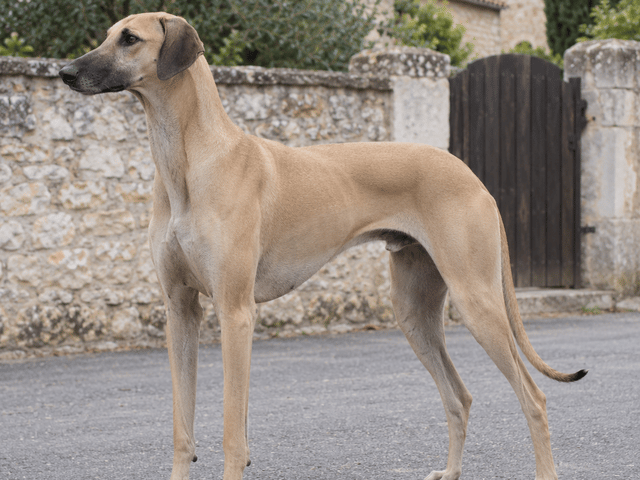
The Sloughi is long-legged, muscular and clearly built for movement. Its body is slightly taller than it is long, with a tucked-up belly and a long, slender tail carried low, with a curved tip when at rest. The head is elongated and wedge-shaped, and the eyes are large and usually dark. The triangular ears hang close to the head, contributing to the breed’s gentle, serious expression.
A Sloughi should have a lean, fit body with visible muscle definition and bone structure. This is a functional sighthound, and its elegance should be balanced by strength and sound proportions. The hip bones may be visible without the dog being underweight, but body condition must be assessed individually. Ask a vet for help if you are unsure about your dog’s weight, muscle development or a change in its body.
The coat is very short, dense and fine. Colours range from light sand to red sand, with or without a black mask, black mantle, black-tipped hairs or black brindle markings. There is no long feathering, and the coat needs no elaborate trimming. Gentle brushing with a soft brush helps keep it clean and provides an opportunity to spot changes in the skin.
Make paw, nail, ear and dental care part of the routine too. Get your puppy used to short, calm handling sessions and gradually build up what it is comfortable with. Brush the teeth regularly, ideally every day, and check the ears without cleaning them unnecessarily. An unpleasant smell, repeated head shaking or tenderness should be assessed by a vet. An easy-care coat does not make other aspects of care any less important.
¶Temperament and personality
The Sloughi is described as dignified, alert and strongly attached to its family. Many are somewhat reserved with strangers and prefer to decide for themselves when they are comfortable making contact. Ask visitors to give the dog space to approach at its own pace. Being reserved does not mean a dog needs to greet everyone; the aim is for it to feel secure in ordinary everyday situations.
Early, positive experiences with people, environments and handling are therefore important. Adapt encounters to your puppy’s reactions and allow time to recover. The breed club’s breeding strategy distinguishes between the breed’s natural reserve and excessive fear or aggression. Ask the breeder how adult relatives respond to strangers, new places and everyday surprises, and how the puppies gain social experience before going to their new homes.
Prey drive is another fundamental trait. The Sloughi hunts by sight, can detect movement far away and may decide independently to give chase. This affects both walks and the choice of playmates. A dog that is calm at home can become very intense when its hunting instinct is triggered. Plan for a safe environment even when everyday training is going well, particularly around small animals and fast-running dogs.
¶Training and exercise
The Sloughi needs daily exercise and regular opportunities to use its speed in a secure enclosure. Combine walks with other activities your dog enjoys and can do without overexertion. Age, health and fitness determine how much is appropriate. Puppies need shorter activities with breaks, while a healthy adult dog can gradually build greater endurance. Ask your breeder or vet for advice when planning exercise.
Lure coursing, in which the dog follows an artificial lure, can provide an outlet for the breed’s hunting abilities. The Sloughi uses its eyesight, adjusts its speed and may try to anticipate the prey’s direction rather than following its exact path. Scent work and blood tracking can also add variety. Contact a sighthound club for a suitable introduction to running activities, and choose activities to suit your dog’s abilities and interests.
Use rewards, clear cues and patience in training. The Sloughi is sensitive to harsh training methods, and a trusting partnership needs to be built gradually. Spend time on recall, calm encounters with other dogs and learning to disengage from distractions. Start with easy situations and reward your dog for checking in with you. Recall is valuable, but it should be combined with a lead and secure fencing wherever prey drive could otherwise lead your dog away.
¶Health
The Sloughi is generally described as a healthy breed, but tumours and immune-mediated diseases do occur. The available information does not provide a reliable measure of the risk to an individual dog. Ask the breeder about both parents and older relatives, their lifespans and any recurring diagnoses. The American breed club emphasises openness about health as an important part of breeding.
The inherited retinal disease PRA is an important topic to discuss before buying a puppy. The AKC lists an eye examination and a DNA test for the Sloughi form, PRA-rcd1a, as health checks recommended by the American breed club. Ask to see which test was performed, the result and which dog the certificate relates to. A DNA test covers a specific disease variant; it does not replace a clinical eye examination or guarantee the dog’s overall health.
The Swedish breed-specific breeding strategy document, known as RAS, linked to by the Swedish Kennel Club (SKK), was approved in 2020. It discusses PRA as well as reported cases of immune-mediated polyarthritis (IMPA) and steroid-responsive meningitis-arteritis (SRMA). This is historical background, not current disease prevalence data. Ask the breed club about more recent follow-up information and the breeder about health in the particular family line. Also distinguish between recommended examinations and the registration requirements in force when the litter is planned.
Monitor your dog’s body condition, movement, appetite and energy over time, and seek veterinary advice if anything changes noticeably. A lean build alone does not tell you how a dog is feeling. Adjust food and exercise to its life stage and health, and include training treats in its daily food allowance. Bring records of previous health problems and examinations to veterinary appointments so that the assessment can be based on your individual dog.
¶History and origins
The Sloughi has a long history in North Africa, particularly in the Maghreb region, which includes Morocco, Algeria, Tunisia and Libya. These dogs have been used for hunting, where sight, speed and endurance were essential. They have lived closely alongside people in both mountainous areas and more open landscapes. The FCI lists Morocco as the breed’s country of origin and the country responsible for its standard.
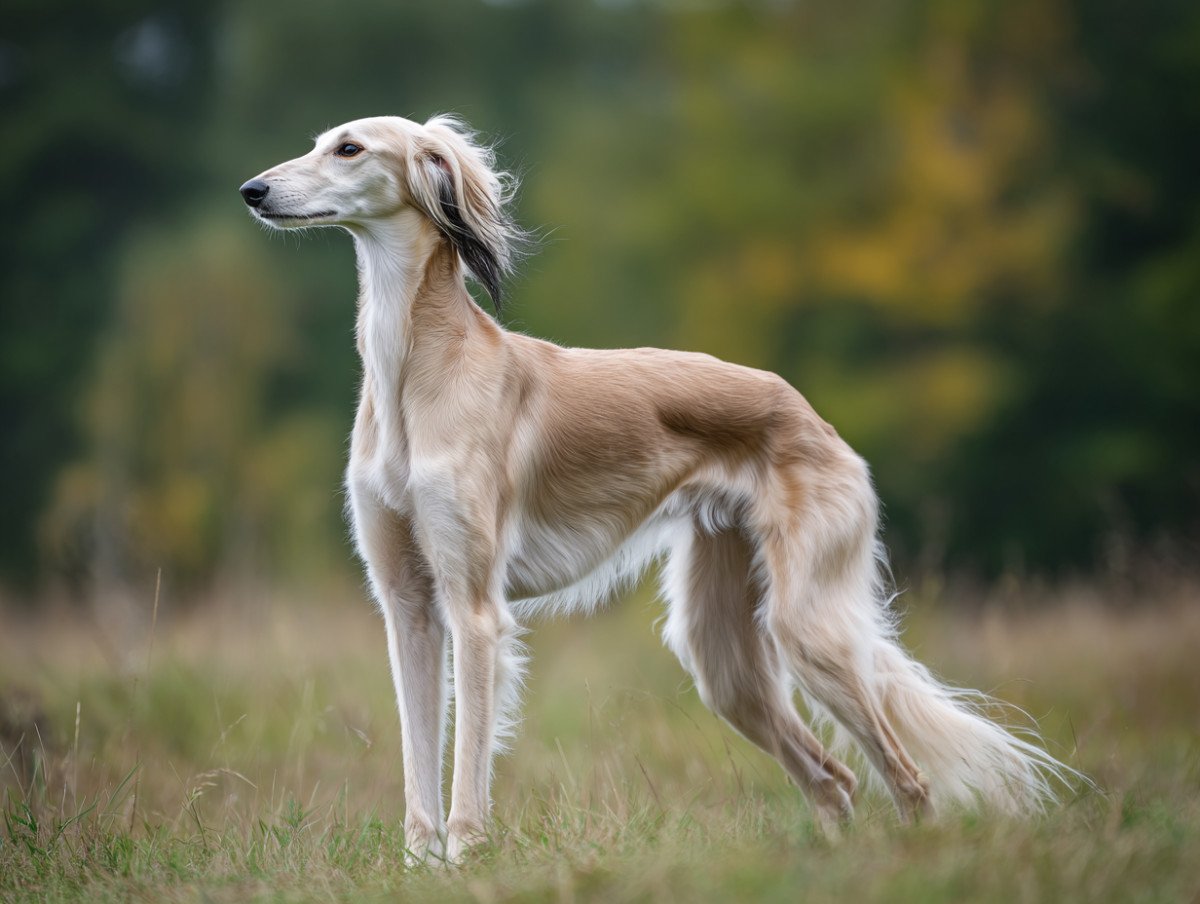
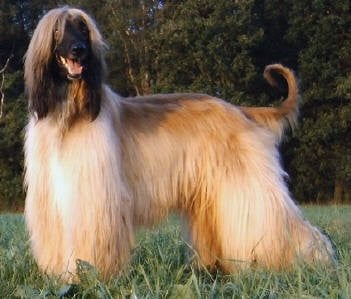
The breed reached Europe in the late 19th century, and European breeding programmes were later developed using dogs from North Africa. Today, the Sloughi is also kept as a companion and sporting dog, but its background as an independent hunter remains clear. It should not be confused with the Saluki or Azawakh, which are separate breeds. Resemblances to very old depictions of dogs cannot, on their own, establish the exact age or origins of the modern breed.
¶Living with the breed
Life with a Sloughi suits someone who enjoys both quiet companionship and a dog with a mind of its own. Provide a comfortable resting place where your dog can retreat, and organise your days to make room for companionship, activity and rest. Calm behaviour indoors needs to be considered alongside how well the dog’s other needs are being met. It does not, by itself, indicate how much exercise or company the dog needs.
In a family with children, adults must take responsibility for interactions. Introduce the dog gently to children and teach them to respect its space and resting place. Young children and dogs should always have an adult present. Ask specifically how the dog you are considering, or its close relatives, behaves around children, as experience and individual temperament matter more than a general breed description.
Other dogs can become good companions, but introductions and play need to be tailored to the individuals involved. The strong prey drive calls for particular care around cats, small pets and very small dogs in motion. Do not assume that one calm meeting means all future interactions will be safe. Use distance, a lead or separation when needed, and plan household routines before a new animal moves in.
Your living arrangements need to work alongside daily walks and opportunities to run. Check access to secure enclosures before making a decision, and inspect fences and gates wherever your dog will be off lead. The very short coat offers limited protection from the weather. A warm dog coat may be needed in cold or wet conditions; adjust time outdoors to the weather, the activity and your dog’s response. Make sure it can come inside to rest somewhere warm and dry.
Time alone should be introduced gradually, with your dog’s sense of security in mind. The Sloughi forms strong bonds with its family, and Swedish breed documentation includes reports of difficulties with being left alone. Begin with short, uneventful periods and increase them only when your dog is relaxed. Arrange care if your working day requires more time alone than your dog can manage, and seek support early if training is not progressing.
Before buying, it is wise to review both the practical arrangements and the available records: where your dog will run, how daily companionship will be provided and what health information is available for its family line. Ask to meet adult dogs and discuss the breeder’s priorities. If you respect the breed’s independent nature and can meet its exercise needs, the Sloughi has every opportunity to become a close and valued companion.
¶Characteristics
¶Frequently Asked Questions
¶Comparisons with Other Breeds
Compare Sloughi with other breeds and see the differences in temperament, activity level, and care to make a confident choice. Show All Comparisons