



¶Table of Contents
¶Quick Facts
The Border Collie is a British sheepdog for someone who wants to work with, train and give their dog meaningful tasks throughout its life. The breed is highly trainable and has great stamina, but those same qualities often make it more demanding than a dog bred primarily for companionship.
- Dog type: purebred sheepdog, recognised by the FCI in Group 1
- Size: medium; the ideal height for males is about 53 cm, with females usually slightly shorter
- Weight: approximately 12–20 kg, with variation according to sex and build
- Life expectancy: approximately 10–15 years
- Coat: smooth or moderately long double coat in many colours
- Typical traits: alert, biddable, responsive, intelligent and strongly motivated to work
- Best suited to: a committed owner who enjoys regular training and can teach both activity and rest
The key question before buying is not whether the family walks for a set number of hours, but whether daily life allows time for regular training and cooperation. A Border Collie needs to use its brain, express its herding instincts in controlled ways and also learn to settle at home.

¶Appearance & Coat
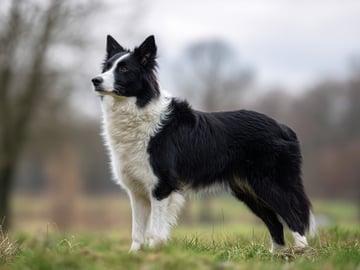
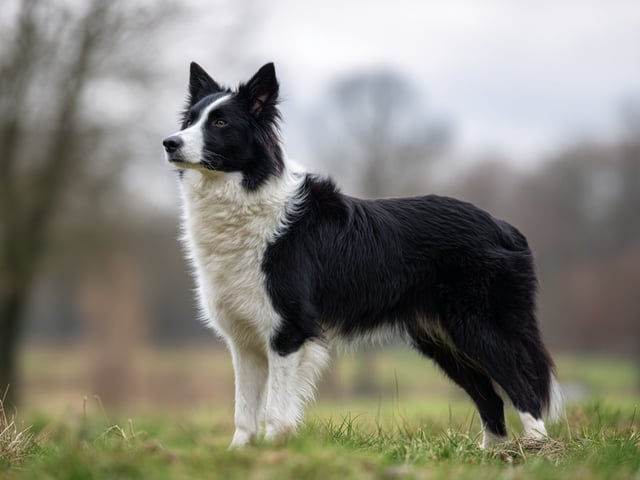
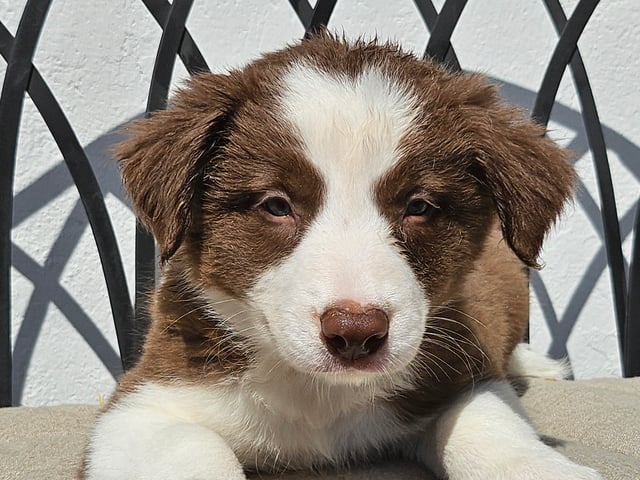
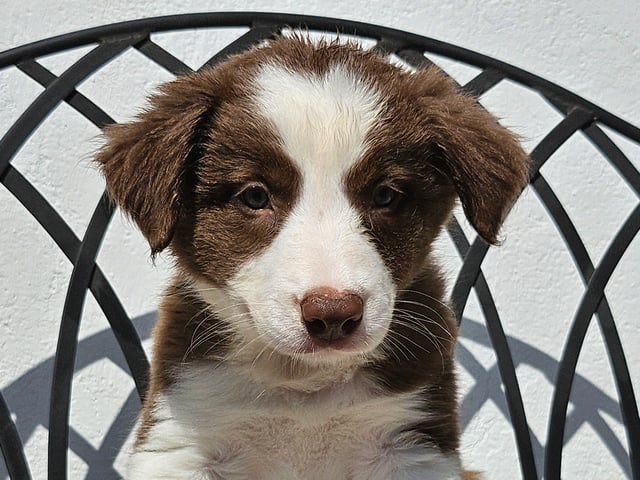
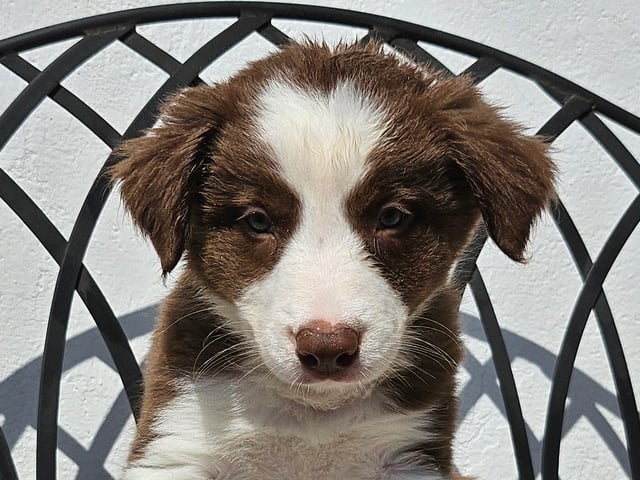
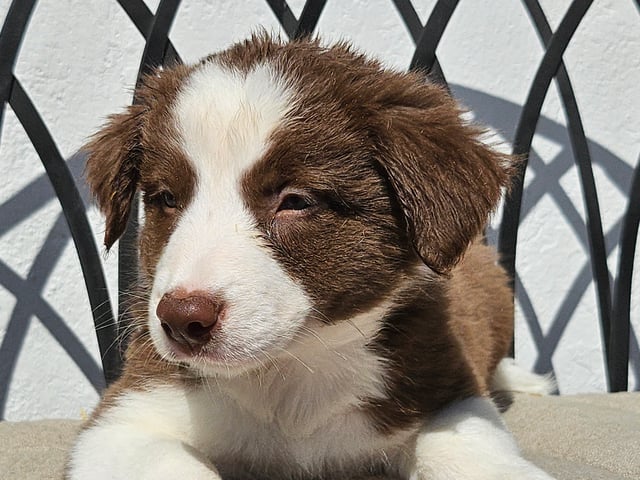
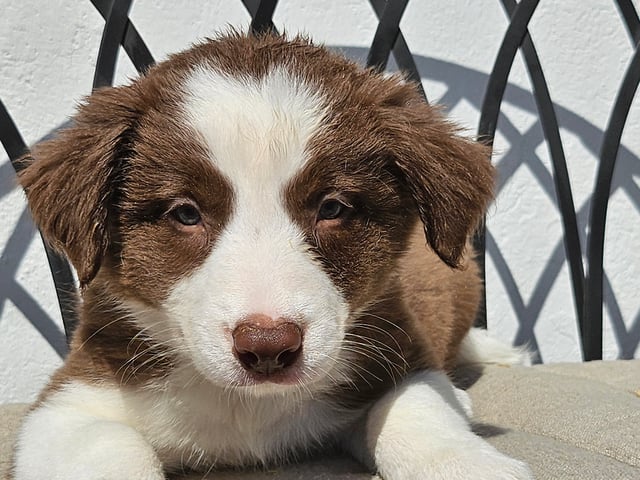
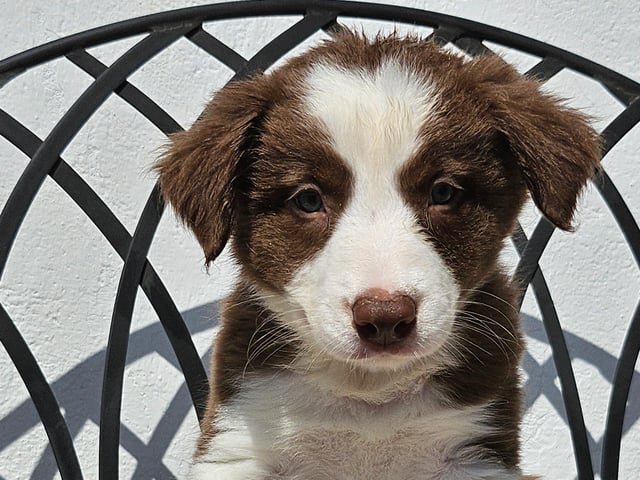
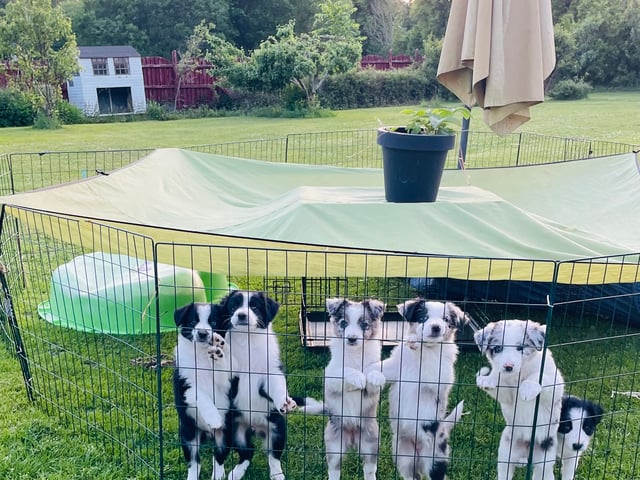
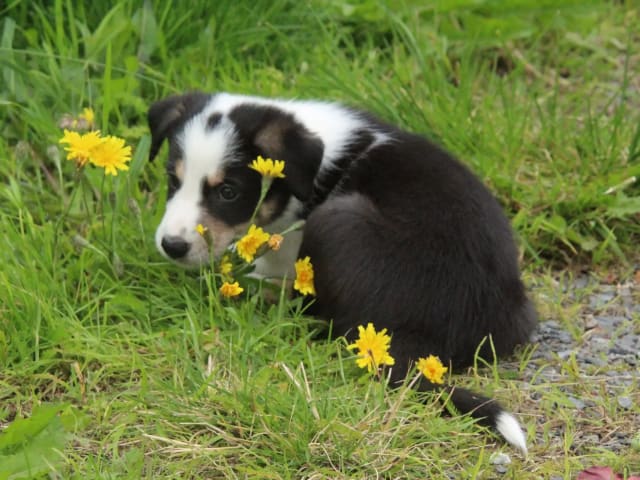
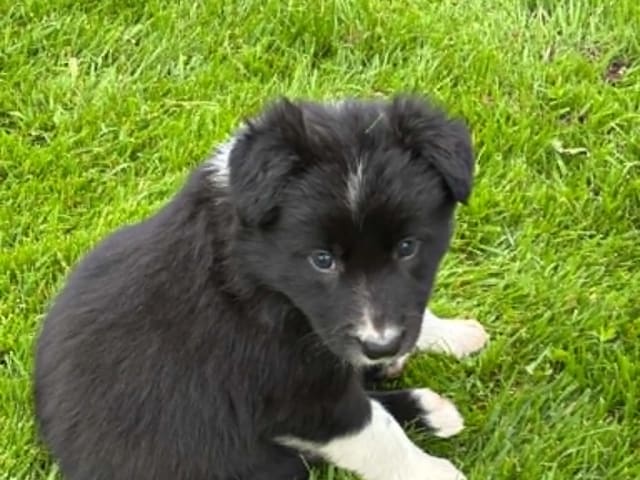
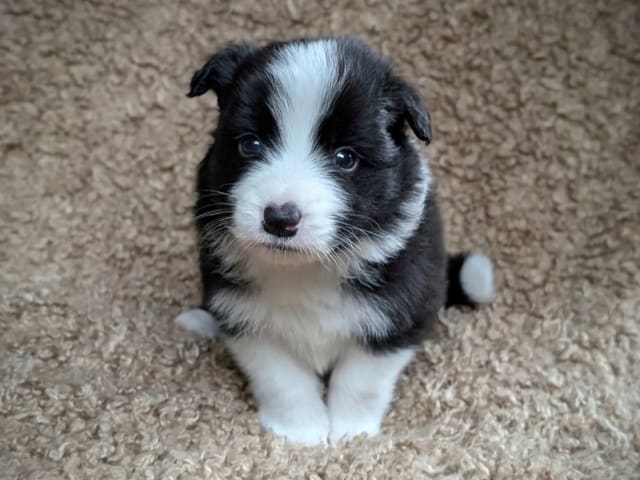
The Border Collie is an athletic, well-balanced dog, built for agility and sustained work rather than for a uniform appearance. The body is slightly longer than the height at the withers, and movement should be free, smooth and efficient. The breed standard gives an ideal height of 53 cm for males and slightly less for females, although both size and build vary noticeably within the breed.
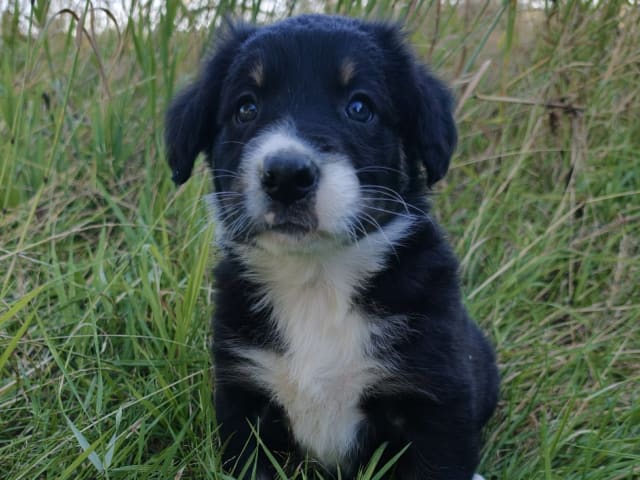
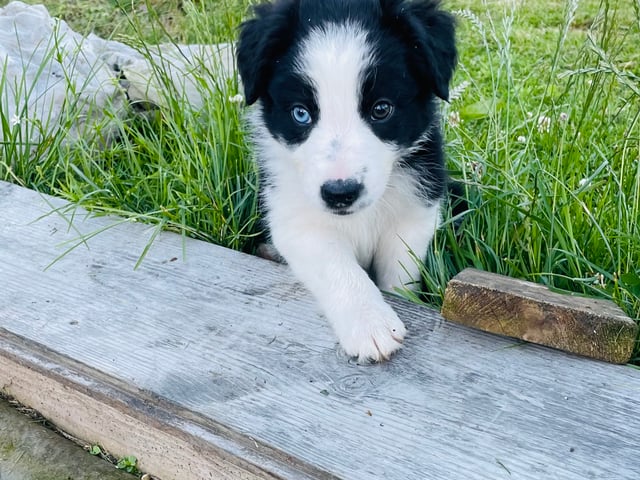
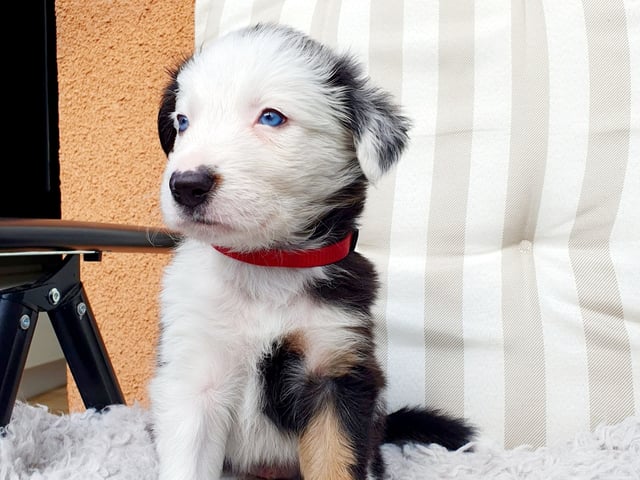
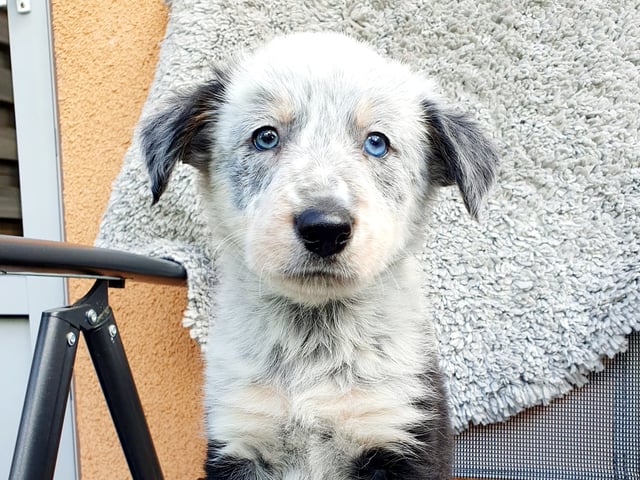
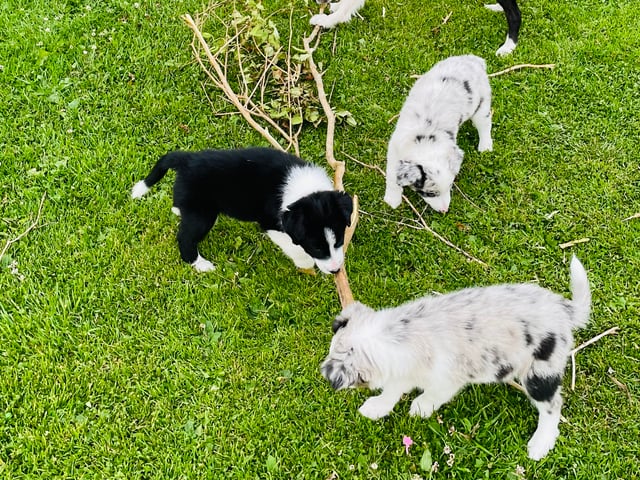
The standard describes two coat varieties: smooth and moderately long. Both have a dense, medium-textured outer coat and a soft, dense undercoat that provides weather resistance. The moderately long coat forms more of a mane, breeching and brush, while the smooth coat lies closer to the body. Many colours and markings occur; black and white and tricolour are common, but the standard permits considerable variety provided white does not predominate.
The coat is basically straightforward to maintain. Brush as often as needed to remove loose undercoat and prevent matting, particularly behind the ears and in areas of feathering. More frequent brushing is needed during periods of heavier shedding. Bathe when necessary. A dog that works or trains outdoors should also be checked afterwards: examine the paws, nails, skin and coat for injuries, grass awns, ticks and debris.

¶Temperament & Personality
The Border Collie is attentive, cooperative and extremely quick to notice patterns. It therefore learns not only what its owner intends to teach, but also which sounds predict a walk, how people normally move and which behaviours produce a response. Highly trainable does not automatically mean easy to live with; unclear routines and accidental rewards can establish behaviour just as quickly as considered training.
Herding depends on the dog noticing and influencing movement. In everyday life without sheep, the same sensitivity can be directed towards cars, bicycles, runners, children or other animals. Staring, stalking, cutting off a path and chasing are signals to address early. They should be interrupted calmly and replaced with a trained alternative, not encouraged as an amusing quirk.
A Border Collie can live successfully in a family, but the breed is not universally “good with children” regardless of the individual and environment. Running, shouting and fast play can trigger herding behaviour or stress. Children and dogs therefore need adult supervision, and the dog needs an undisturbed resting place. Living with a cat or other dogs can also work, especially with thoughtful introductions, but cannot be guaranteed on the basis of breed alone. The cat should be able to withdraw and the dog should be taught to leave it alone.

¶Training & Exercise
A Border Collie needs both physical activity and tasks requiring concentration every day, but it is not possible to specify a number of hours that suits every individual. Age, health, temperament, previous training and work determine the appropriate load. A good routine alternates movement, problem-solving, cooperation and recovery.
Walks in varied surroundings, free movement where it is safe, scent work, obedience, tracking, herding and other dog sports engage the dog in different ways. Choose activities in which the dog must listen and make decisions, not merely run quickly. Endless ball throwing or other highly arousing repetition is a poor measure of whether the dog’s needs have been met; it can increase anticipation without teaching the dog to settle.
Keep training sessions short, clear and reward based. Give everyday skills such as recall, lead walking, stopping at a distance and disengaging from movement as much attention as tricks or competitive exercises. Reward calm behaviour too: lying in a designated place, waiting while something happens and sleeping after activity. A Border Collie that is always offered more high-speed activity can become extremely fit without learning how to rest.
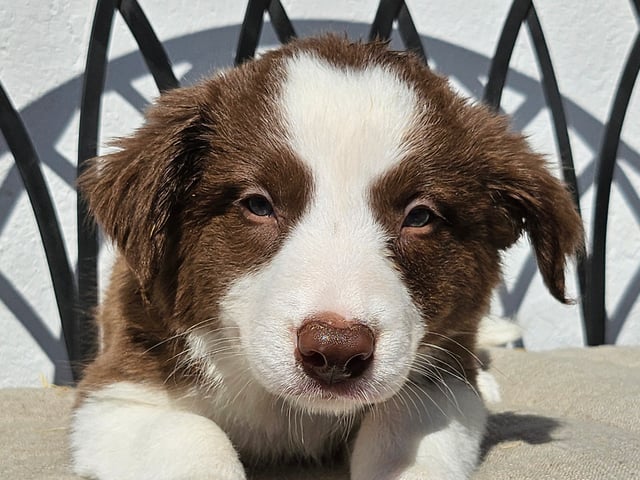
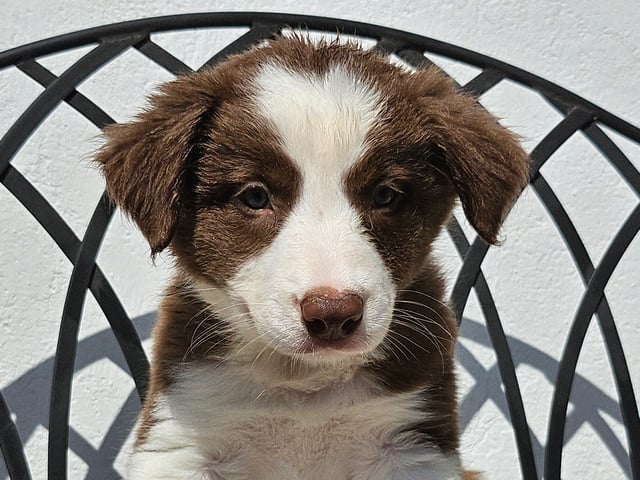
Puppies and young dogs need controlled experiences, not a miniature version of an adult training schedule. Build confidence in different environments, allow the body to mature and increase physical load and difficulty gradually. If the dog becomes more scattered, noise-sensitive or fixated despite receiving more activity, the answer may be a better balance and professional help rather than still harder exercise.

¶Health
The Border Collie is regarded as comparatively healthy, but the breed has documented conditions that a puppy buyer should understand. Hip dysplasia (HD), Collie eye anomaly (CEA), other retinal changes, epilepsy and osteochondrosis affecting mainly the shoulder are among the areas highlighted by the Swedish Kennel Club and the Swedish Sheepdog Society.
When assessing a Swedish-registered litter, start by checking the parents’ official hip status and eye examination. Under Swedish Kennel Club rules, the eye result must be recorded before mating and would normally be no more than one year old. Check the registered results and also ask about epilepsy, recurring seizures, shoulder problems and early deaths among siblings, parents and other close relatives. Normal results for two parents do not describe the health of an entire family line.
DNA tests are available for several inherited conditions in the breed, including CEA, IGS, TNS and sensory neuropathy. Which tests are relevant depends on ancestry and current recommendations. Ask the breeder to explain what has been tested and why. For recessive diseases, a healthy carrier is not the same as an affected dog; what matters is planning the mating so puppies cannot inherit the disease variant from both parents. A DNA test does not replace a clinical eye examination, joint results or knowledge of the wider family.
A dog with Border Collie collapse (BCC) may be completely symptom-free at rest but become disorientated, unsteady or fall during or shortly after intense activity. The dog may appear to recover after 5–30 minutes, but any collapse must be taken seriously and assessed by a vet. BCC is not the same as ordinary fatigue, heatstroke or the dynamin-1-related EIC variant more commonly seen in Labrador Retrievers. Stop the activity immediately if the dog’s focus or movement changes abnormally.

¶History & Origins
The Border Collie developed in the border country between England and Scotland as a working dog for sheep farming. Selection was based for a long time on practical herding ability: the dog needed to read livestock, work at a distance and respond to its handler’s signals in demanding conditions. This functional background explains the breed’s eye, stalking movement, endurance and strong drive to control movement.
The FCI recognises the Border Collie as a British sheepdog subject to a working trial. In Sweden, function also has an unusually explicit place in registration. The breed is entered in the Swedish Kennel Club’s dedicated sheepdog register, REG V, and a Swedish-born Border Collie can only be registered when both parents have passed a herding trial held by Svenska Vallhundsklubben (SVaK) or have an approved equivalent qualification from abroad. Appearance can consequently vary more than in many other breeds, while working ability remains central to the Swedish breeding model.

¶Living with the Breed
Living well with a Border Collie requires planning, but not constant entertainment. The goal is a dog that can work with focus when needed and rest when nothing is happening. That balance is best suited to a home where someone genuinely enjoys dog training and where responsibility does not depend on children exercising the dog.
Living in a flat is not automatically ruled out, and a large garden does not guarantee a good life. Access to suitable training environments, safe exercise and a routine that can genuinely be maintained matter more. In a busy area, the owner must be able to manage traffic, bicycles, runners, sounds and encounters without the dog becoming stuck in herding or constant vigilance.
Time alone should be trained gradually, beginning with very short periods and adjusted to the dog’s age and reactions. The Swedish Board of Agriculture’s advice that dogs should be taken out at least every six hours during the day is not a promise that a dog will be comfortable alone for that long. Consider filming early sessions and step back if the dog paces, pants, barks, damages things or cannot settle. A routine involving repeated long working days without help is a poor starting point for this breed.
Before buying a Swedish puppy, check at least three things for both parents: a registered hip status, a valid eye result and a pass in an approved herding trial. Then ask about epilepsy and joint health in close relatives, relevant DNA tests, how the parents behave both at rest and at work, and what support the breeder provides after the purchase. The best match is not about finding the “cleverest” puppy, but choosing one whose temperament and working drive suit what you can offer throughout the dog’s life.
¶Characteristics
| Characteristic | Value |
|---|---|
| Breed Type | Purebred |
| Aggressiveness | 2/5 |
| Child Friendly | 3/5 |
| Energy | 4/5 |
| Hair Shedding | 3/5 |
| Health | 3/5 |
| Intelligence | 5/5 |
| Grooming Needs | 3/5 |
| Learning Ability | 5/5 |
| Barking Level | 5/5 |
| Height | 52 – 53 cm |
| Weight | 12 – 20 kg |
| Life Expectancy | 10 – 15 years |
¶Border Collie price
Here you can see typical asking prices for Border Collie in Sweden over the last 12 months.
The calculation is based on valid Get a Pet listings from the last 12 months, including active and expired listings. These are asking prices, not confirmed sale prices.
¶Frequently Asked Questions
Are Border Collies good family dogs or are they too intense for most homes?
They can be very devoted family companions, but their high energy and intense focus are not a good fit for every household. They usually do best with active, engaged owners who enjoy training and mental games. In lower activity homes they may become frustrated, anxious, or develop problem behaviors such as obsessive chasing or herding family members.
How much exercise does a Border Collie really need each day?
Most adults need at least 1.5 to 2 hours of physical activity daily, plus regular mental stimulation such as training, scent work, or puzzle toys. Simply letting them run in a yard is rarely enough. Without sufficient outlets for their energy and intelligence, they may become destructive or develop compulsive habits.
Why do Border Collies stare so intensely and crouch when they see movement?
The characteristic stare, crouch, and stalking behavior are part of their herding instinct, which has been strongly selected over generations. They use eye contact and body position to control livestock, and many will display these behaviors with people, other pets, or moving objects. Training is often needed to channel this instinct appropriately in a non‑farm setting.
Can a Border Collie live happily in an apartment or city environment?
Apartment living can work if the dog receives significant daily exercise and structured mental work outside the home. This usually means multiple long walks, off‑lead running where safe, and purposeful training sessions. Without that level of commitment, urban or apartment settings often lead to stress and behavior issues.
Do Border Collies get along well with children and other pets?
They can be excellent with children and other animals when well socialized, but their herding drive may lead them to nip at heels or try to control movement. Calm, respectful children and supervision are important, especially with young kids who run and squeal. Many live peacefully with other dogs and cats if introduced carefully and given proper boundaries.
What common health problems are Border Collies prone to?
They are at higher risk for hip dysplasia, certain eye conditions such as collie eye anomaly, and epilepsy. Some lines also carry genetic sensitivities, including the MDR1 mutation that affects drug metabolism. Responsible breeders screen for these issues, but regular veterinary checkups and prompt attention to changes in movement, vision, or behavior remain important.
How much grooming does a Border Collie coat require and do they shed a lot?
They have a double coat that sheds moderately year round and more heavily during seasonal changes. A thorough brushing once or twice a week usually controls loose hair and prevents matting, with more frequent brushing during heavy sheds. Professional grooming is not essential, but regular nail trimming, ear checks, and basic hygiene are important.
Are Border Collies really the smartest dog breed and what does that mean for owners?
They rank extremely high in trainability and problem‑solving, often learning new cues very quickly and remembering them well. High intelligence, however, means they also learn unwanted habits just as fast and can become bored with repetitive routines. Owners typically need to provide varied training, new challenges, and clear rules to keep them mentally satisfied.
Can a Border Collie be left alone during a normal workday?
Many can cope with being alone for part of the day if their exercise and mental needs are met before and after, and if they are gradually taught to be comfortable alone. Without this preparation they may develop separation‑related behaviors such as barking, chewing, or pacing. Enrichment, such as safe chew items and puzzle feeders, can also help them settle when left.
What should I look for in a responsible Border Collie breeder or rescue?
A responsible breeder screens hips and eyes, discusses known genetic risks, and is open about the working or sport lines their dogs come from. They will ask detailed questions about your lifestyle because they know this breed is not suitable for every home. Reputable rescues similarly assess temperament and activity level, aiming to match each dog with an appropriate environment.
¶Comparisons with other breeds
Compare Border Collie with other breeds and see the differences in temperament, activity level, and care to make a confident choice. Show all comparisons