
¶Table of Contents
¶Quick facts
The French Pointing Dog - Pyrenean Type is known in Sweden as braque francais, type pyrénées. This medium-sized pointing dog from France is valued for its sociable nature and willingness to work closely with its handler when hunting. It is smaller and lighter than the Gascony type, but still has a strong need to work. Its friendly temperament and easy-care coat therefore need to be matched with an active lifestyle.
- Size: under the 2023 FCI standard, males stand 51–58 cm at the withers and females 49–56 cm. The dog should be muscular and agile without being heavy.
- Activity level: high. The breed needs daily exercise, mental stimulation and opportunities to use its gundog abilities.
- Grooming: a very low-maintenance, short, fine coat. Regular brushing and bathing when needed are usually enough; ears, nails and teeth also need care.
- Life expectancy: the AKC gives approximately 12–15 years as a general guide. This is not a guarantee for any individual dog.
- Best suited to: an active hunter or owner who wants to develop a close working partnership and has a clear plan for hunting training, retrieving and other meaningful activities.
Start by telling the breeder what you want to do with your dog. Ask how the adult dogs work, what they are like at home, and what hunting test and health screening results are available. The breed’s reputation for being cooperative does not replace the need to choose an individual dog and a breeder suited to your circumstances.
¶Appearance and coat
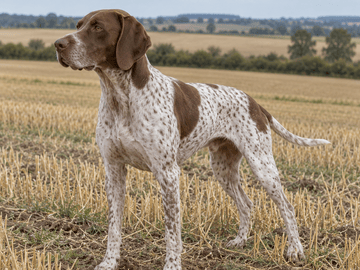
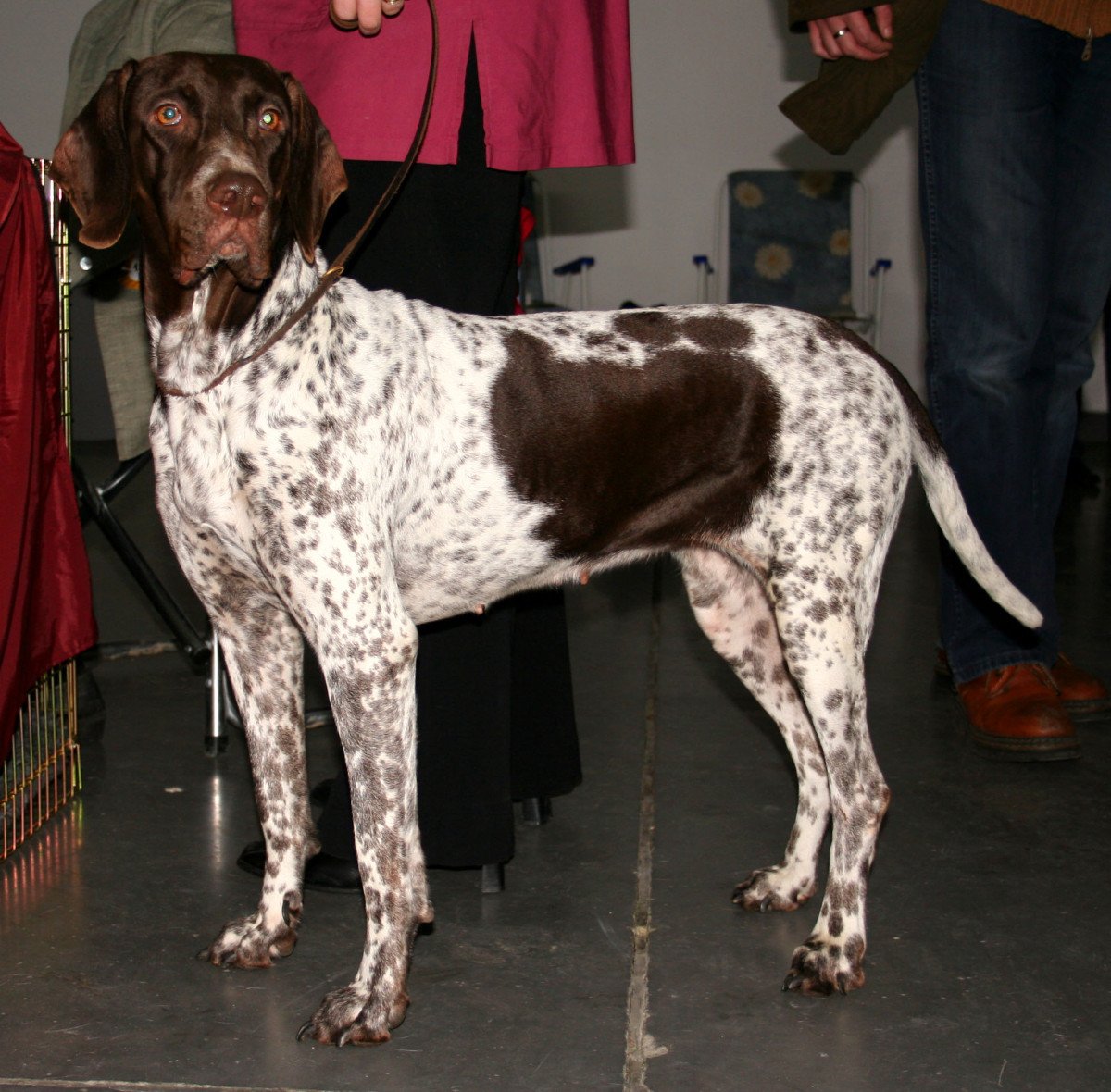
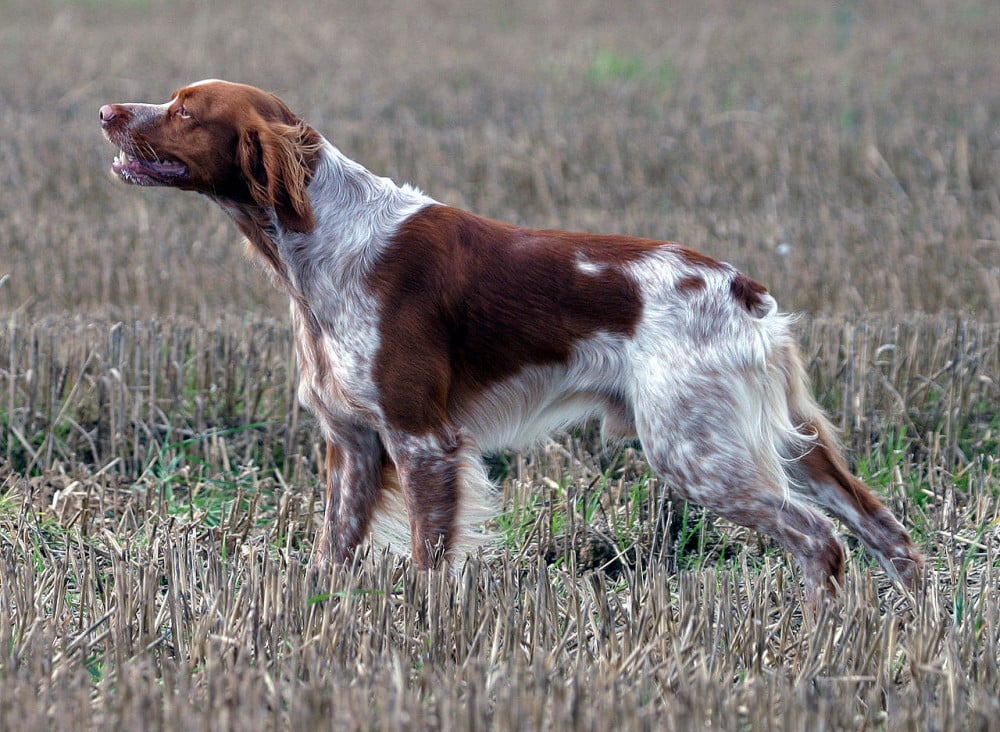
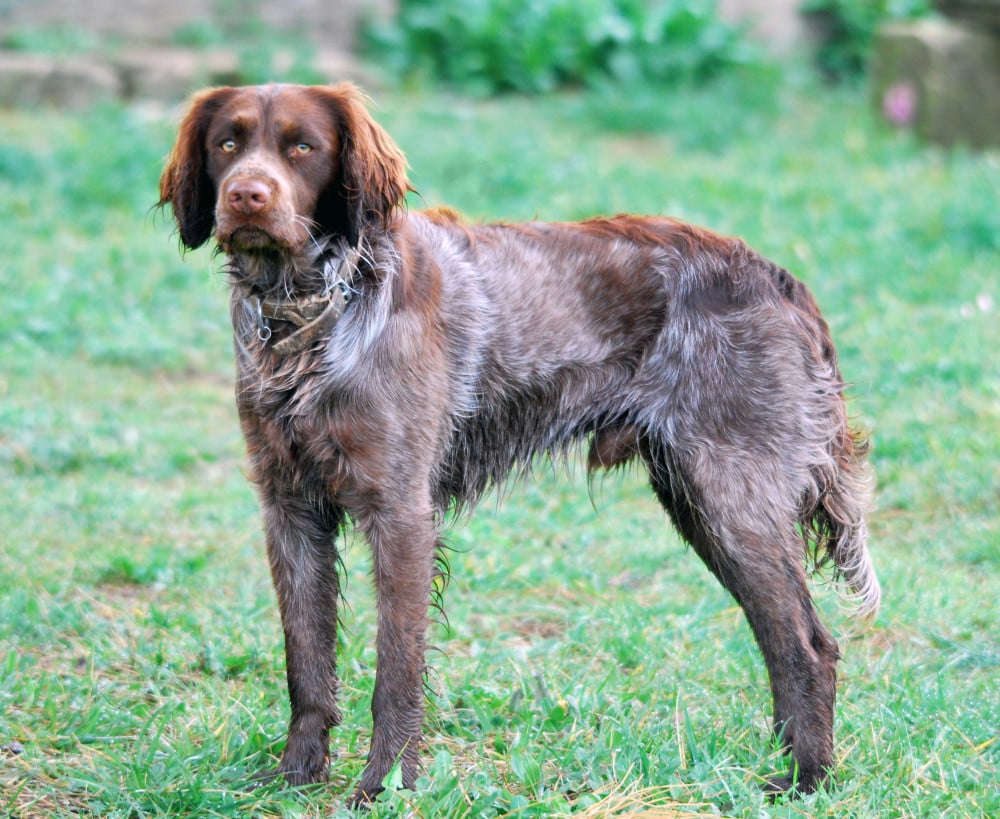
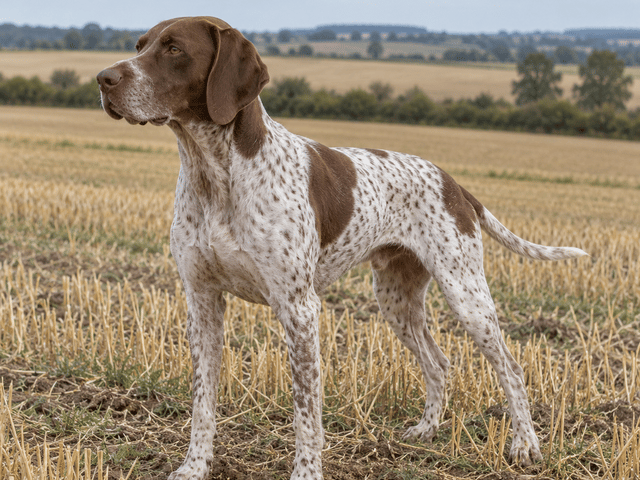
The French Pointing Dog - Pyrenean Type is a well-proportioned gundog with clearly defined muscles and a light, functional build. Its skin is tighter than that of the larger Gascony type, and it has little or no dewlap. The nose is chestnut brown. The eyes are brown or dark yellow, and the drop ears are set above eye level and do not quite reach the tip of the nose.
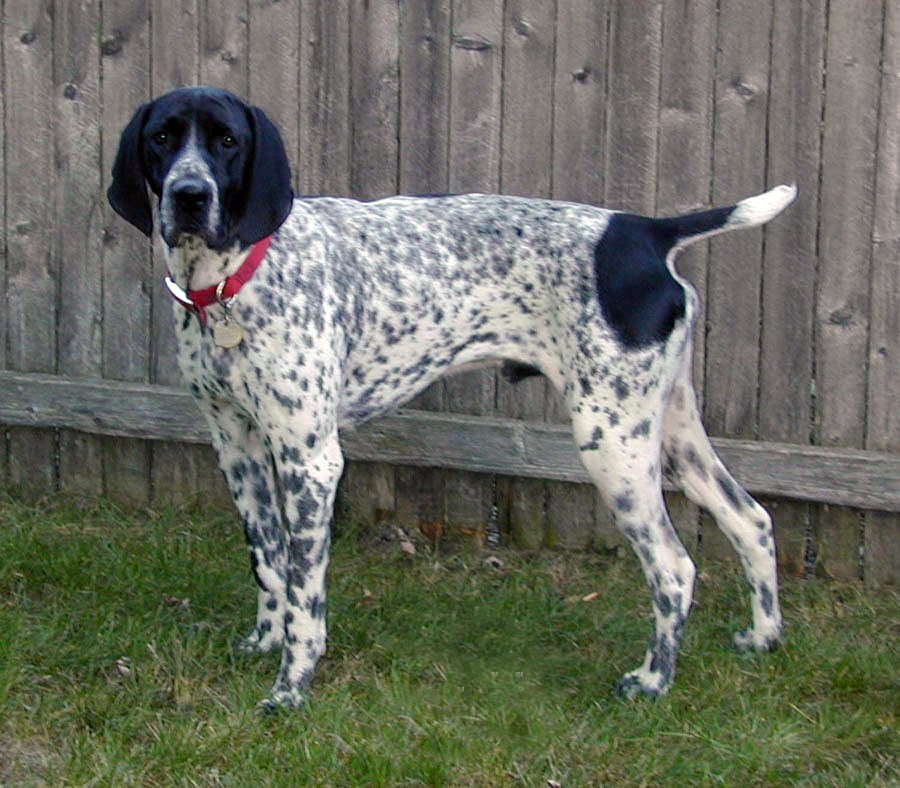
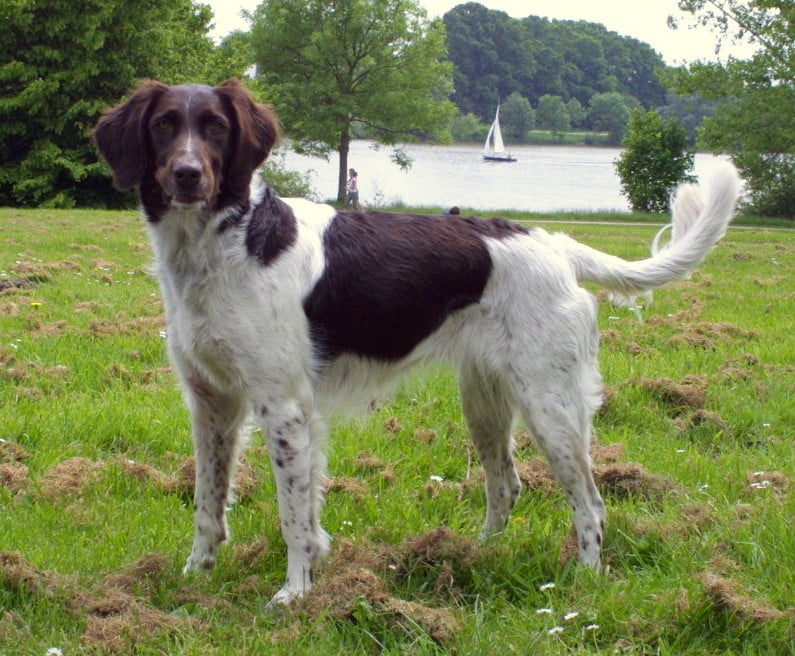
Under the current FCI standard, males stand 51–58 cm at the withers and females 49–56 cm. Coat colours include chestnut brown, brown and white, heavily ticked brown and white, or brown with tan markings. The tail is fine, and dogs may have either a long tail or a naturally shorter one. Size and markings, however, do not tell you how a particular puppy will perform in the field.
The coat is shorter and finer than that of the Gascony type and requires little maintenance. Brush it regularly to remove loose hair and dirt, and bathe the dog when necessary. The AKC suggests a regular weekly grooming routine. Check the skin at the same time, especially after working in dense vegetation, where small wounds or foreign material can easily go unnoticed.
Get your puppy used to calm handling of the ears, paws and mouth from the start. Short sessions that reward cooperation make routine care easier. Check the body after outings, keep the nails at a suitable length and make toothbrushing a habit. Ask the breeder to show you how to examine the ears without irritating the skin or making the experience uncomfortable.
¶Temperament and personality
The Swedish Kennel Club (SKK) describes the breed as friendly, easy-going and sociable, while the AKC highlights its eagerness to please. It may enjoy both being close to its family and working alongside them. This makes it appealing to anyone looking to build a close working partnership, but it does not mean that every dog will respond in the same way to people, other dogs or unfamiliar situations. If possible, meet adult relatives and ask about their everyday lives.
A pointing dog’s job requires both initiative and cooperation. It needs to use its nose and search for game while maintaining contact with its handler. Spend time developing clear communication and rewarding the behaviours you want to encourage. Even a quick learner needs experience and guidance to understand what is expected in different settings.
Give your puppy positive experiences with people, other dogs and everyday situations at a pace it can handle. Although the breed is described as sociable, calm introductions and the option to retreat are still important. Also ask whether the breeder uses behavioural assessments such as BPH to complement their knowledge of the dogs. Any result should be considered alongside the individual dog’s experience and behaviour at home and at work.
¶Training and exercise
Approach this breed as a working pointing dog. Hunting training, searching, retrieving and tracking provide opportunities to use several of its natural abilities. A well-planned routine also includes walks over varied terrain and physical conditioning tailored to the individual dog. Ask the breeder or an experienced gundog instructor to help you plan your young dog’s development and first steps towards practical work.
Start early with engagement, recall, steadiness and delivering objects to hand. Work in small steps and use rewards your dog values. The Swedish breeding strategy stresses clear communication and warns that unfair punishment can make a dog reluctant to cooperate. Gradually increase distractions, and keep the dog safely under control whenever its hunting drive could take over before its training is reliable in that situation.
Hiking, swimming and activities such as obedience, rally obedience or agility can add variety, and the AKC mentions several of these as possible forms of exercise. Always adjust the demands to the dog’s age, health and fitness. For a young dog, play, training and rest need to be balanced. Monitor how well your dog recovers, and seek help with its routine if it struggles to settle between activities.
¶Health
The SKK notes that the Swedish population is too small to assess the breed’s health reliably. The Swedish breeding strategy from 2026 also describes the available evidence as limited. Ask for documented information about the parents and other close relatives. Enquire both about screening results and about recurring problems owners have noticed in daily life or during work.
The breeding strategy recommends hip dysplasia (HD) grades A or B, with the option of using grade C to preserve genetic diversity. For elbows, it recommends elbow dysplasia (ED) grade 0; under these recommendations, a dog with ED grade 1 should be paired with a dog graded ED 0. The document states that hip and elbow X-rays are not mandatory breeding requirements for the breed. Ask the breeder to explain how joint health, relatives’ results and genetic diversity have been weighed up in the planned mating.
The breeding strategy also calls for monitoring of skin and coat, eyes, ears and other health issues. These are areas to keep an eye on, not evidence that every condition mentioned is common in the breed. If a breeder refers to a DNA test, they should make clear which disease or trait it tests for. Such a result answers a different question from a clinical examination.
Practical preventive care is important for an active dog. Check the ears, examine the body after work and monitor body condition as activity levels change. Seek veterinary advice for problems such as pain, recurring ear trouble or persistent itching. A dog’s willingness to work, or its membership of a breed often described as robust, is no substitute for an examination when something has changed.
¶History and origins
The French pointing dog has its roots in southwestern France and the central Pyrenees, where pointing dogs have long been used to hunt game birds. Today’s two types share this history: the larger Gascony type and the smaller French Pointing Dog - Pyrenean Type. They differ in size, substance and skin, among other features, while sharing the same basic role as pointing gundogs.
The Pyrenean type has retained a strong connection to practical hunting, in which searching, pointing and retrieving are central tasks. The breed remains uncommon in Sweden, where it is represented by Specialklubb för Kontinentala Fågelhundar, the specialist club for continental gundogs. The Swedish breeding strategy emphasises assessment of hunting ability and international cooperation, allowing a small population to develop with due regard for working ability, temperament, health and genetic diversity.
¶Living with the breed
The French Pointing Dog - Pyrenean Type suits a lifestyle in which the dog can take an active part. Think through what you will do together both during the hunting season and throughout the rest of the year. A good routine makes room for exercise, scent work, cooperation and rest. Ask what a typical week looks like for the breeder’s adult dogs, and compare that with the time and experience available in your household.
The breed’s friendly nature can provide a good foundation for family life, but children and dogs need to get to know one another under adult supervision. A responsible adult should always be present when young children interact with the dog. The dog needs somewhere to rest undisturbed, and children need to learn to respect its food, sleep and signals that it wants space.
Other dogs may be welcome companions, but introductions need to suit the individuals involved. With cats and smaller animals, the breed’s hunting instincts require particular care. Let the animals get used to one another under controlled conditions, and make sure you can separate them. Getting along with an animal at home is no guarantee that the dog will behave the same way around unfamiliar animals outdoors.
Your living situation needs to make it practical to meet the dog’s activity needs. Access to training grounds and good walking areas is valuable, while a garden alone will not provide everything the dog needs. Ask how adult relatives cope with visitors, noises and quieter days. Practise calm everyday routines alongside more energetic activities to help the dog understand both.
Introduce time alone gradually once your puppy feels secure at home. Start with short periods and increase them according to the dog’s response, arranging company or supervision when needed. The breed’s sociable reputation does not provide a precise limit for how long an individual can cope alone. Plan working days and other absences around the dog you actually have and how its training progresses.
Before buying, it is particularly useful to get clear answers about three things: the breeder’s hunting goals, the adult dogs’ everyday behaviour and documented health monitoring. Choose someone who can discuss both strengths and limitations openly. When the breed’s need for work and companionship fits the home, there is every opportunity for a sociable, enthusiastic hunting and training companion.
¶Characteristics
¶Frequently Asked Questions
¶Comparisons with Other Breeds
Compare French Pointing Dog - Pyrenean Type with other breeds and see the differences in temperament, activity level, and care to make a confident choice. Show All Comparisons