
¶Table of Contents
¶Quick facts
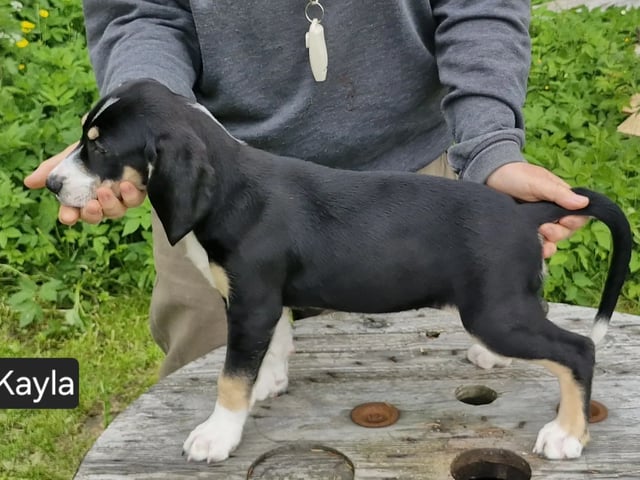
Norwegian Hound is the English name for the dunkerstövare, known as the Dunker in its native Norway. It is a tireless hunting hound that gives voice on the trail and is used primarily to hunt hare and fox. The breed is described as friendly and sociable, but its hunting instinct is a defining trait. It suits a keen hunter who also wants an affectionate companion at home.
- Size: males stand 50–58 cm at the withers and females 47–54 cm. The ideal height is 52–54 cm for males and 49–51 cm for females. The breed standard does not specify a weight range.
- Activity level: energetic and tireless, with a strong hunting instinct. Needs hunting training, daily exercise and mental stimulation.
- Grooming: the short, dense coat is easy to care for. Routine care includes bathing when needed and regular checks of the skin, ears, nails and paws.
- Life expectancy: no sufficiently reliable range for the breed as a whole could be established from the kennel club and breed sources reviewed.
- Best suited to: an owner with a strong interest in hunting who can give the dog opportunities to work as a scent hound, alongside a sociable family life.
Before buying a puppy, ask the breeder how the parents hunt, what they are like at home and what health information is available about them and their relatives. Choose the breed based on its working purpose and the daily life you can realistically offer. The Swedish Kennel Club (SKK) does not recommend it solely as a companion dog.
¶Appearance and coat
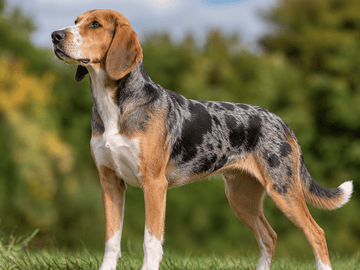
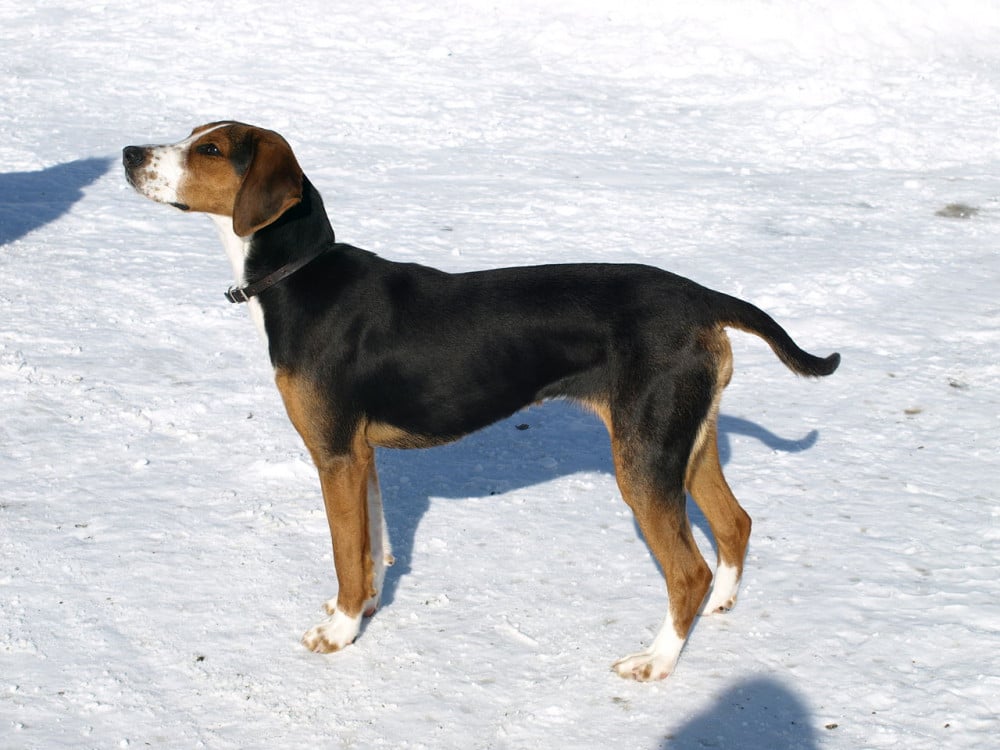
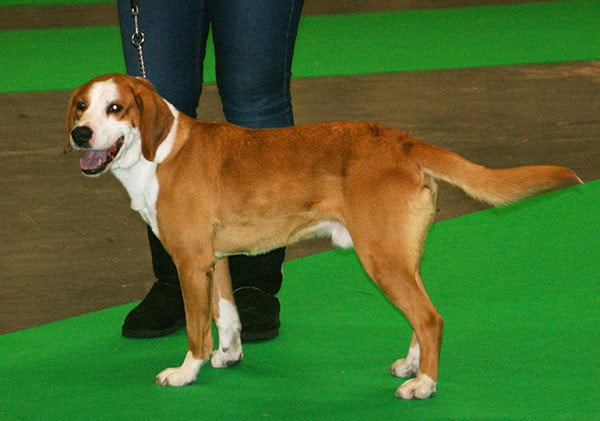
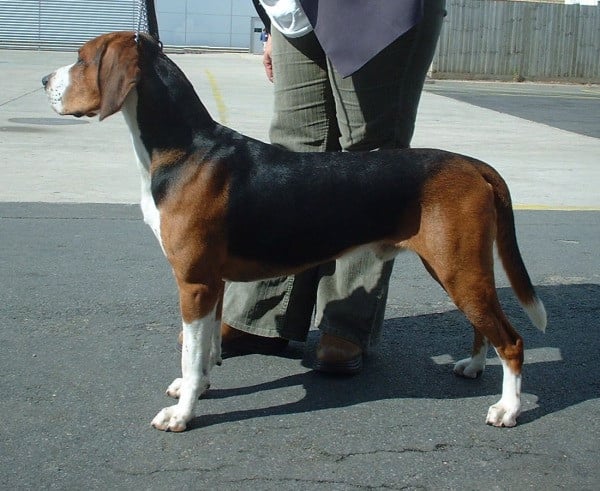
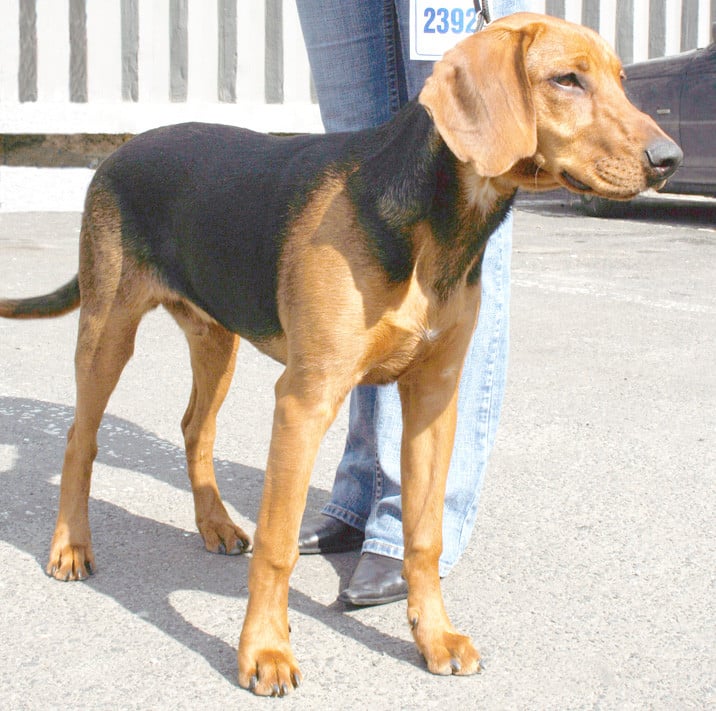
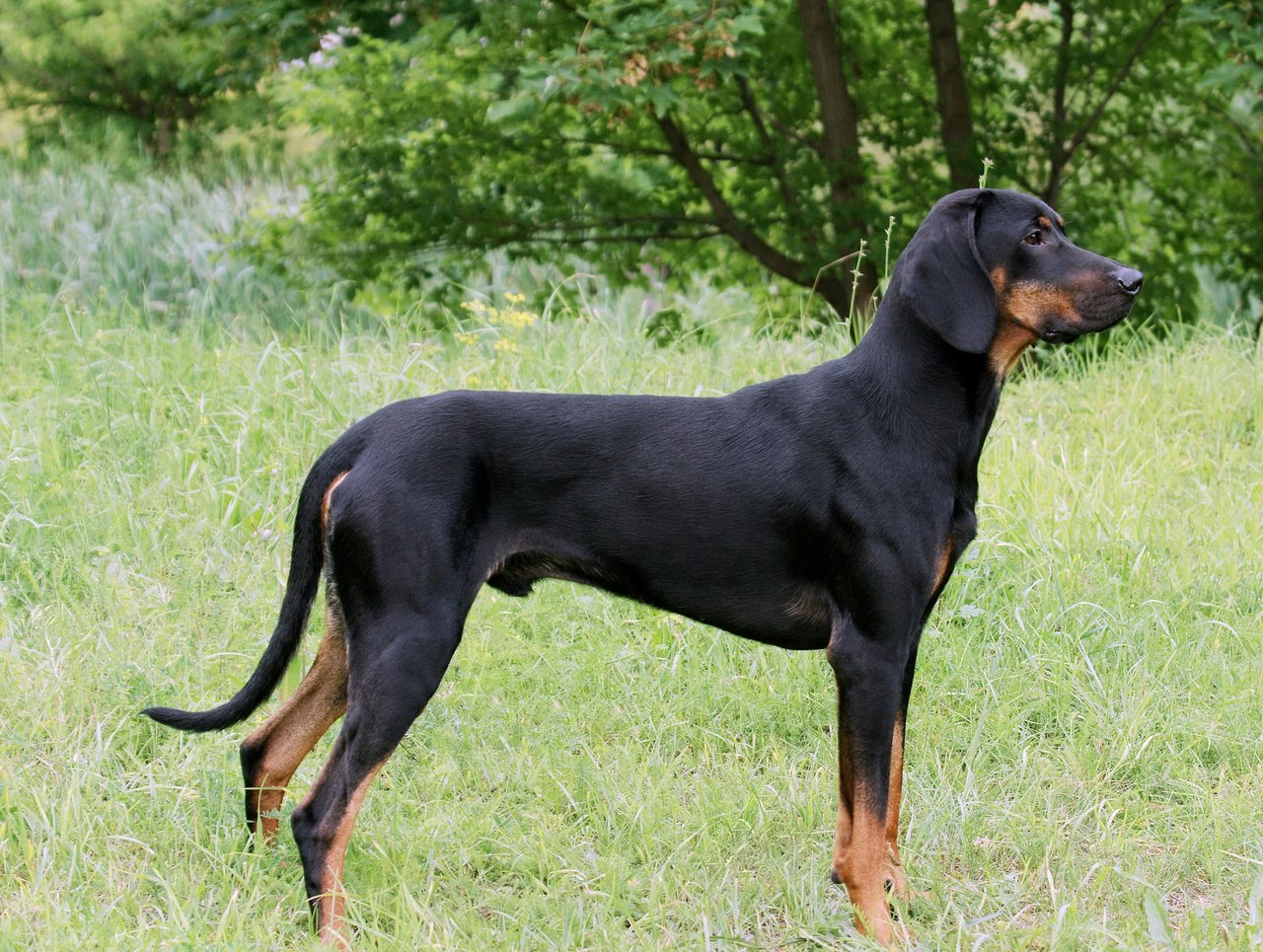
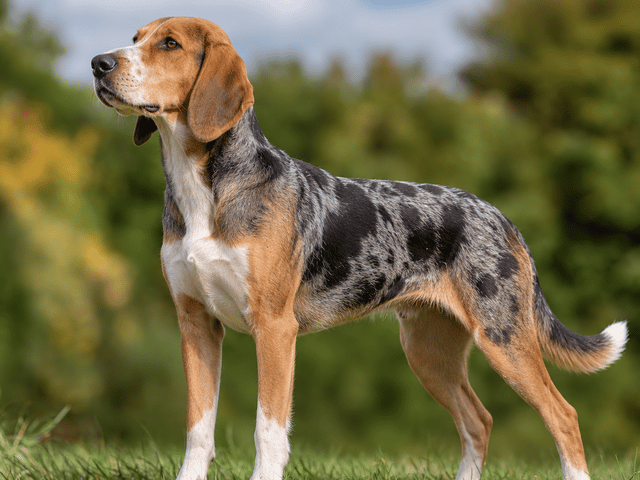
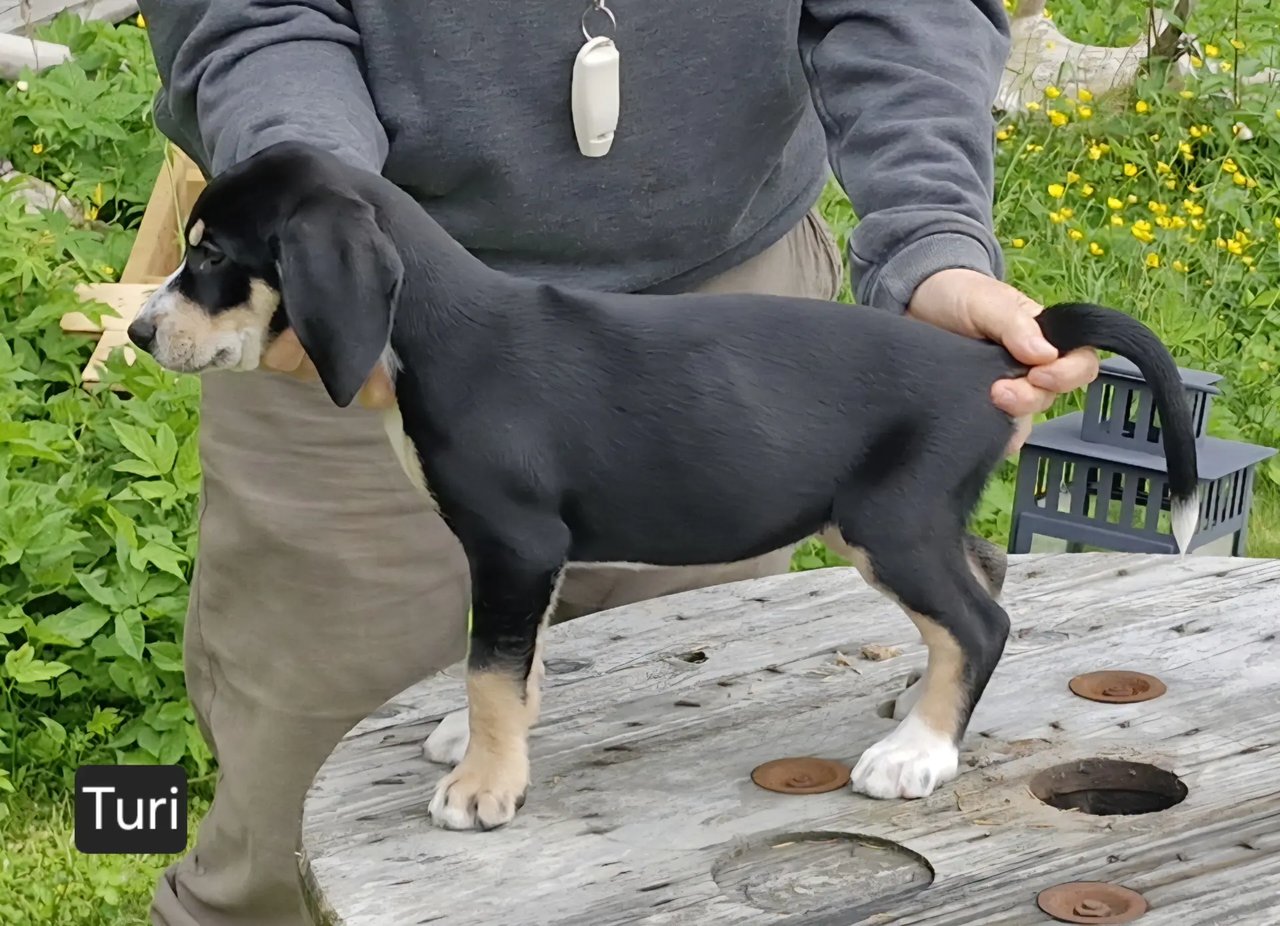
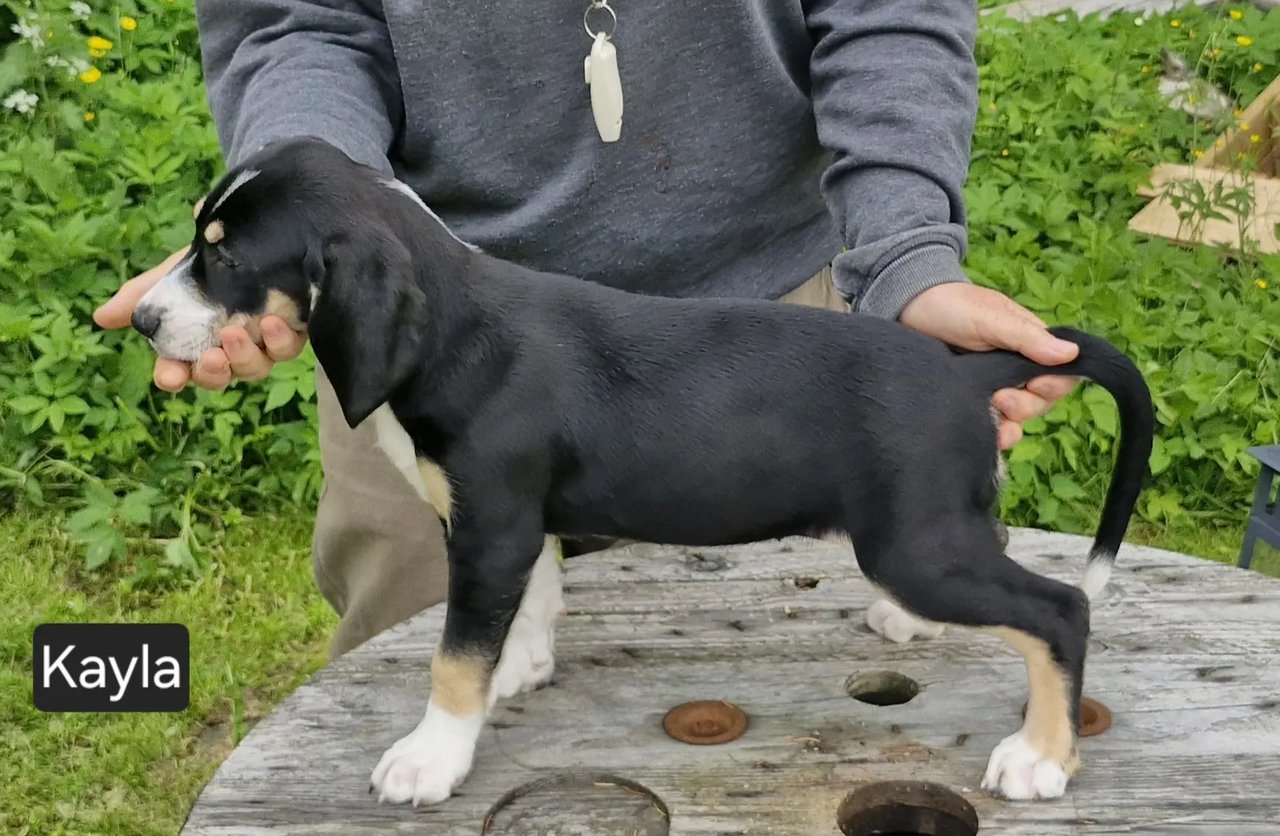
The Norwegian Hound is medium-sized and distinctly rectangular, with a powerful body that should convey stamina. It should be strong without appearing heavy. The head is elongated, and the ears hang close to the cheeks. The eyes have a calm, expressive look, and the tail is long with a slight upward curve.
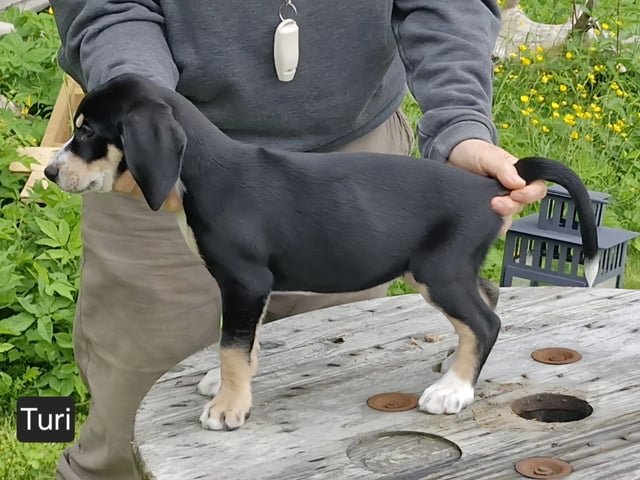
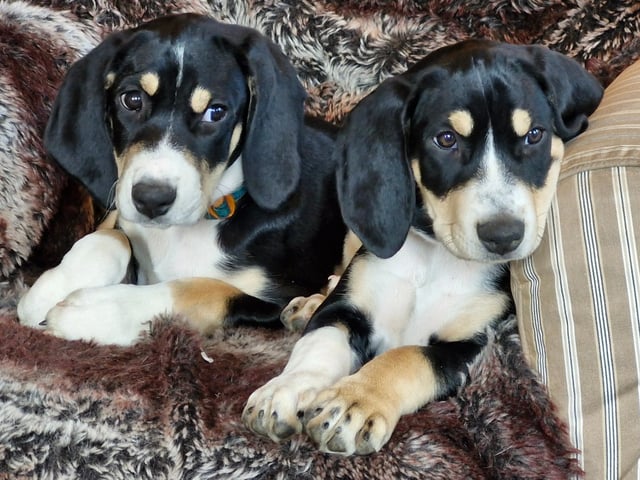
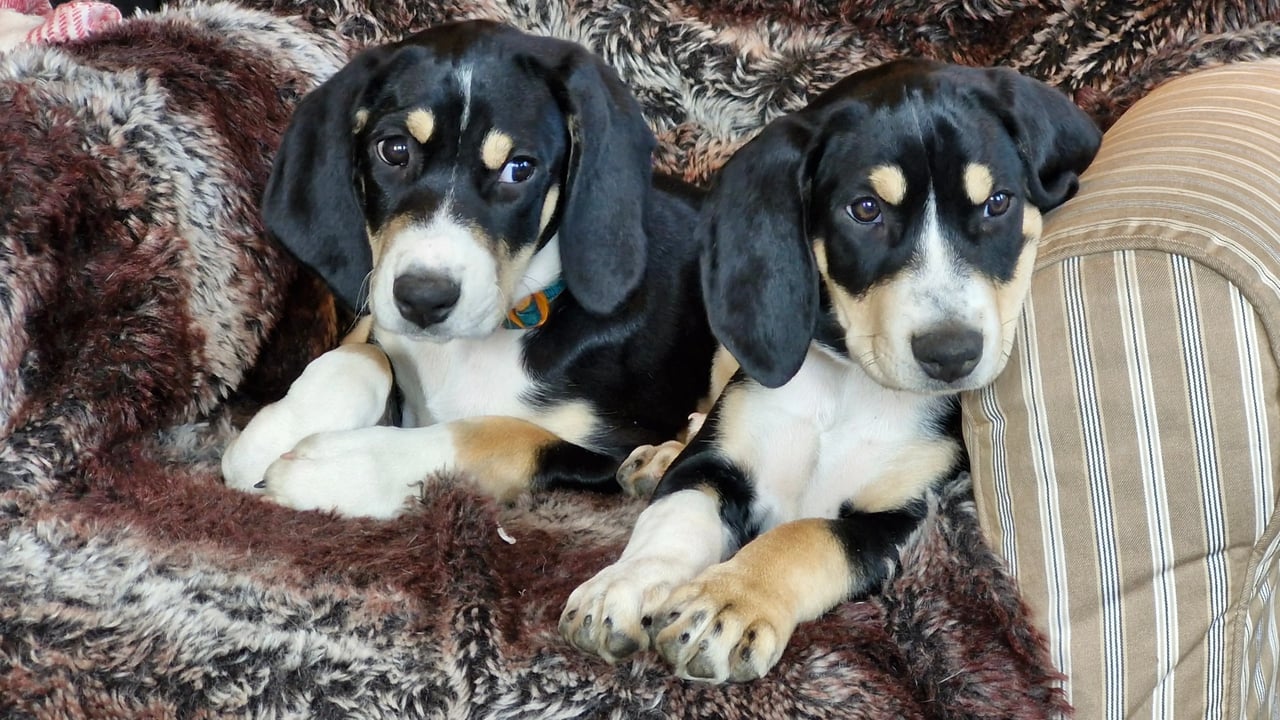
Males stand 50–58 cm at the withers and females 47–54 cm. The coat should be straight, harsh, dense and not too short. It may be diluted black with tan markings, or blue mottled, also known as dappled or merle, with pale tan markings and white markings. Blue eyes are permitted in merle dogs, although dark eyes also occur.
Coat care is relatively straightforward. Bathe the dog when it is dirty, and adjust its grooming routine to how much it works and spends time outdoors. Ask the breeder to show you how to keep the coat clean and in good condition. They can also help you choose tools for the dense coat and explain how to tailor grooming to your dog’s needs.
Make a habit of checking the body, ears, nails and paw pads. After outings over rough ground, these checks can also help you spot wounds, ticks and skin changes. Get your dog used to gentle handling from puppyhood. Start calmly, reward cooperation and ask the breeder to show you how to examine the paws and ears without making the dog uncomfortable.
¶Temperament and personality
The Norwegian Hound is described as affectionate, friendly and sociable. The breed standard highlights a steady, trusting temperament, and the Norwegian Kennel Club describes a dog that works well with its owner. These qualities can make it pleasant to live with and train. Even so, prospective puppy buyers should assess how the adult dogs actually behave in everyday family life.
The breed has a strong hunting instinct, which has been an important factor in breeding selection. It works alone as a scent hound, so it needs to solve problems in the field while maintaining a working partnership with its handler. A friendly attitude towards people does not therefore mean that the dog will automatically stay close when it picks up an interesting game trail. Everyday obedience and hunting skills need to develop side by side.
Socialisation should include calm, controlled encounters with people, dogs and different environments. The puppy needs positive experiences at a pace it can manage. Do not let it greet or play freely with every dog simply because the breed is described as sociable. The aim is for it to feel secure and remain under control even when its surroundings are exciting.
¶Training and exercise
Start from the understanding that the Norwegian Hound is a hunting dog. Hunting training and work in the field are important parts of the life it was bred for. Ask the breeder how a young dog is introduced to this work and how training can progress according to age and maturity. Hunting trials and documented information about the parents’ working qualities can tell you more than a general description of the dog as active.
Alongside hunting training, the breed needs regular exercise and mental stimulation. Walks, scent-search exercises and everyday obedience can all form part of the routine. Adjust the workload to the dog’s age, health and fitness, and build it up gradually. A puppy needs several shorter activities, while a healthy adult can cope with more extensive work. No fixed number of exercise minutes will suit every dog.
Spend time teaching engagement, recall, loose-lead walking and acceptance of handling. Begin in a quiet environment and use rewards your dog enjoys, such as food, play or praise. Make success easy before adding more challenging distractions. Keep the dog on a lead wherever you cannot reliably keep it under control. Its hunting instinct makes it especially important not to overestimate a recall that only works when there is no game nearby.
¶Health
The SKK notes that there are too few Norwegian Hounds in Sweden to assess the breed’s health reliably. However, a Norwegian health and behaviour survey conducted in 2022 received 381 responses. This provides a broader evidence base, but it relies on owners’ reports and should be read as an overview. The fact that a breed is used for demanding hunting work does not, in itself, establish that every dog or family line is healthy.
Hip dysplasia (HD) is one of the conditions being monitored. The Norwegian Kennel Club’s (NKK) breeding programme for Norwegian hare hounds recommends hip screening for breeding dogs. Ask for the parents’ identities and documented results, and find out how the breeder takes these into account. Norwegian breeding recommendations should not be confused with Swedish registration requirements; check the current rules with the relevant kennel club before buying or breeding.
Epilepsy and hypothyroidism, an underactive thyroid gland, are specific areas of focus in the Norwegian breeding programme. The health survey also includes reports of deafness or impaired hearing. Ask about illnesses in the parents, siblings and previous offspring, rather than simply whether the two prospective parents appear healthy. Problems reported in a survey do not mean that every dog in the breed faces the same risk.
Genetic diversity is another important part of efforts to safeguard health. The breed has historically had a limited breeding pool, and controlled outcrossing has been used to broaden it. Ask how the breeder chooses pairings with regard to relatedness, health and working qualities. A thoughtful breeding programme needs to weigh several sources of information and monitor outcomes over time, rather than rely on a single test result.
¶History and origins
The Norwegian Hound originated in Norway and takes its Norwegian name, Dunker, from Captain Wilhelm Conrad Dunker. During the early 19th century, he crossed various hound breeds to develop a useful hunting dog. Local Norwegian hare hounds formed part of the wider population. In 1902, the Norwegian hare hounds were divided into two main groups, which became the Dunker and the Hygen Hound. The breed’s identity remains closely tied to its work as a scent hound.
Demand declined during the Second World War but rose again afterwards, before falling once more after the 1970s. During the 1980s, the close relatedness of many dogs became a significant breeding concern. Crosses with other hound breeds were later permitted to improve genetic diversity. Conservation work continues today, focusing on both health and working ability so that the breed’s hunting qualities can be preserved within a viable population.
¶Living with the breed
A Norwegian Hound needs a home where hunting is a genuine part of life. Its sociable nature is best supported by a workable plan for work, exercise and rest. Think about the whole year, including periods outside the hunting season. Tell the breeder how often you hunt and what opportunities you have to train and occupy the dog in between.
Within a family, the breed’s friendly, affectionate nature can be a great asset. The Norwegian Kennel Club’s hunting profile describes a calm, good-natured dog at home. Children still need to learn to handle the dog gently and leave it alone while it eats or sleeps. Adults are responsible for supervising interactions and ensuring that the dog’s needs for rest and activity are met.
With other animals, you need to take its hunting instinct into account. The Norwegian behaviour survey includes reports that many of the dogs want to follow game and cats. Even a sociable dog may therefore need careful introductions and close supervision in these situations. Ask about the dog’s previous experiences, and plan encounters so that you can control distance and contact. Do not assume that animals can safely live together simply because the breed has a friendly temperament.
Your living arrangements need to allow you to meet the dog’s practical needs for work and exercise. A garden alone is not a complete activity plan. Think about noise, too: barking is part of the breed’s work, but this does not tell you exactly how vocal an individual dog will be at home. Ask the breeder about day-to-day barking, visitors and how the dogs react to things happening around the house.
Time alone must be introduced gradually, even for a dog that is confident and independent while hunting. Start with very short periods and build up carefully. Arrange company and care during working days, and take your own dog’s reactions into account. If it struggles to be alone, the arrangements need to change; independence in the field is no guarantee that it can cope with long periods without people at home.
Before buying, check how the dog will get to work, what documented health and hunting information is available, and how its adult relatives behave in an ordinary home. Ask the breeder to describe both its strengths and the areas that require training. Given the right conditions, the Norwegian Hound can combine tireless work in the woods with a friendly, sociable family life.
¶Characteristics
¶Frequently Asked Questions
¶Comparisons with Other Breeds
Compare Norwegian Hound with other breeds and see the differences in temperament, activity level, and care to make a confident choice. Show All Comparisons