
¶Table of Contents
¶Quick facts
The American Foxhound is an American scent hound with great stamina and a keen interest in scents. Often friendly and affectionate at home, it can work very independently once a trail catches its attention. The Swedish Kennel Club (SKK) emphasizes that the breed is happiest when allowed to hunt and needs extensive exercise, training, and stimulation.
- Size: males stand 56–63.5 cm at the shoulder and females 53–61 cm. The body is rectangular and built for speed, strength, and stamina.
- Activity level: very high. The breed regularly needs plenty of physical exercise, opportunities to use its nose, and activities shared with its owner.
- Grooming: a dense, easy-care coat. A brush or grooming mitt about once a week is often enough, with baths as needed.
- Life expectancy: the American Kennel Club (AKC) gives approximately 11–13 years as a general guideline for the breed. This is not a guarantee for an individual dog.
- Best suited to: an active hunter or a highly committed household with a well-thought-out plan for meeting the dog's hunting needs, providing daily exercise, and keeping it safe outdoors.
Ask the breeder what the adult dogs are used for and how they behave between working sessions. A dog raised with plenty of canine company may need a different introduction to home life than a puppy already accustomed to it. Consider the parents' behavior, health records, and working background together, so your choice is based on more than a friendly expression.
¶Appearance and coat
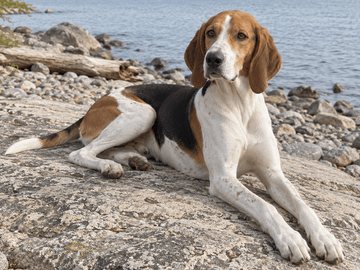
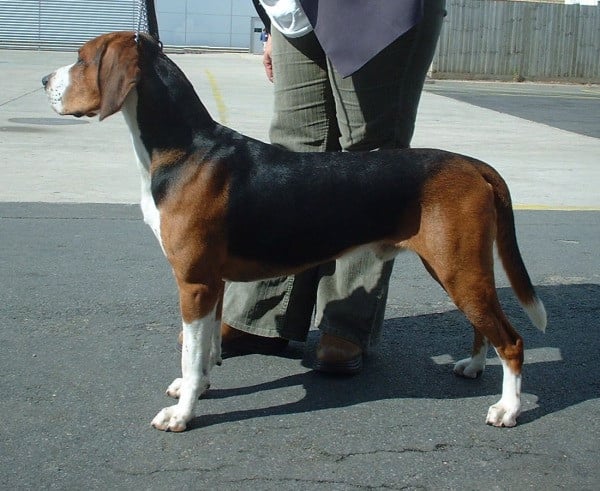
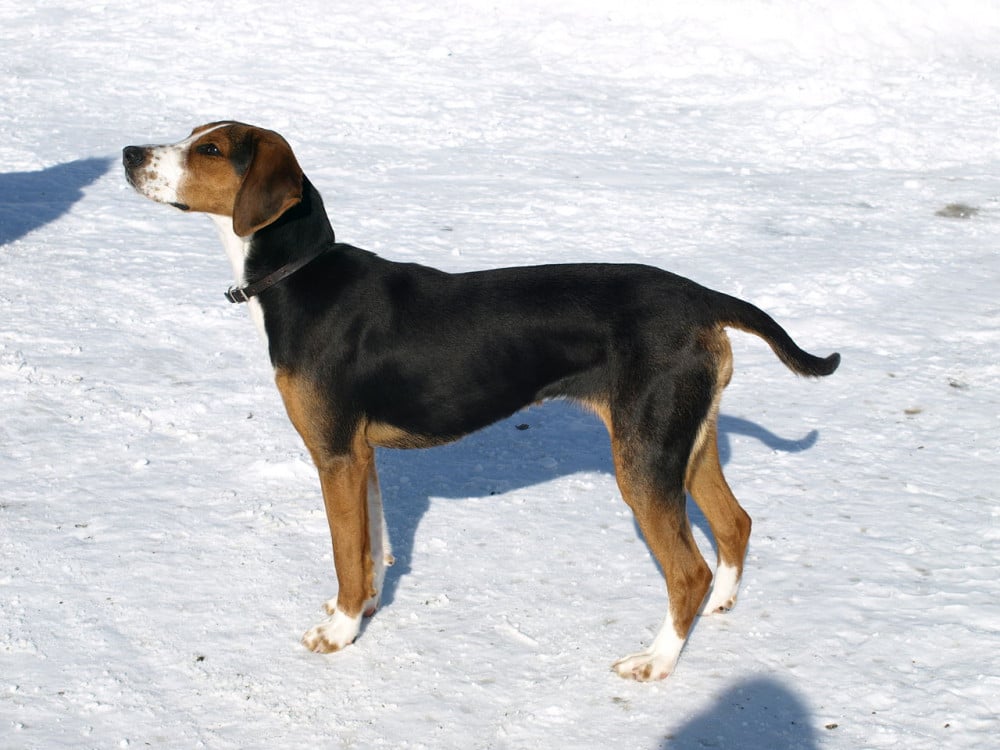
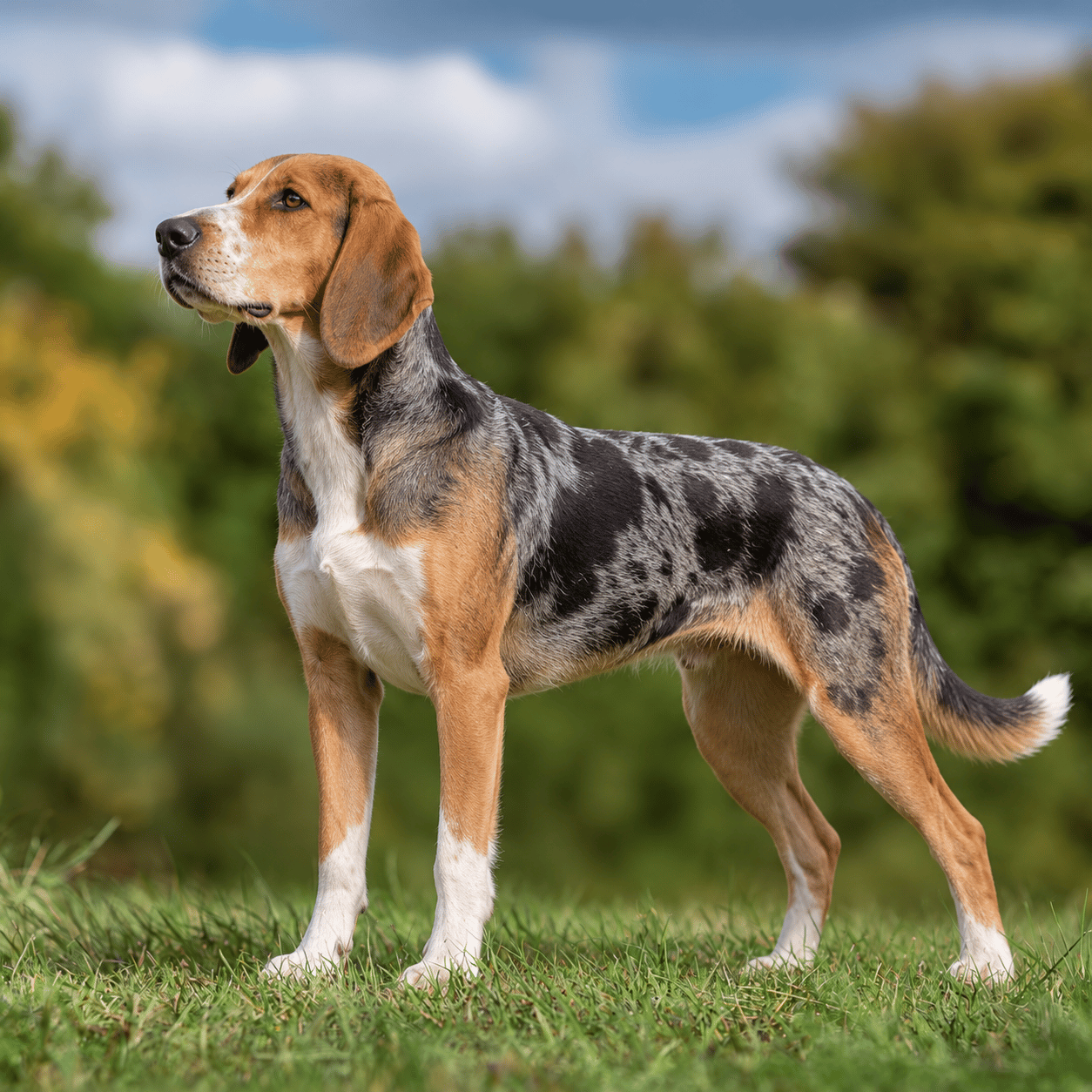
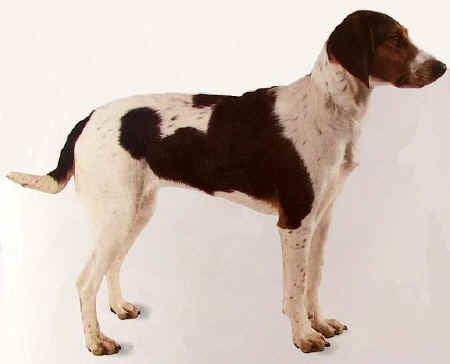
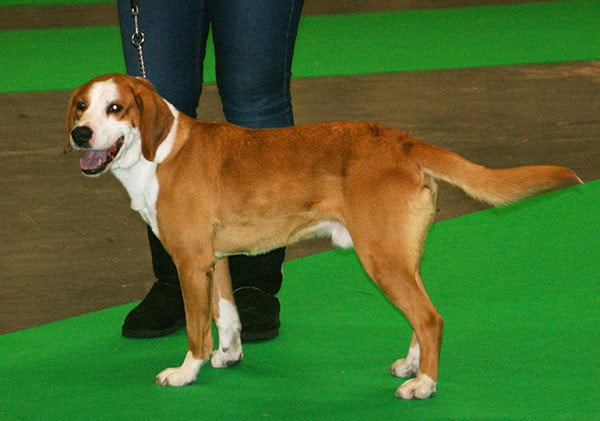
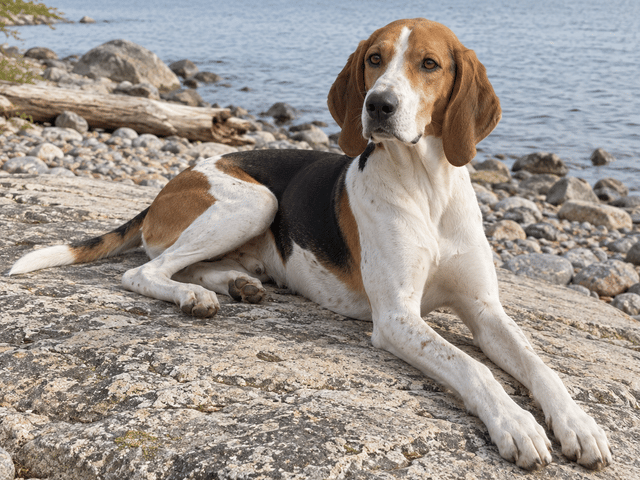
The American Foxhound is a long-legged, athletic dog with a muscular back, deep chest, and relatively long head. The eyes are brown or hazel and should have a gentle expression. The long, broad ears are set relatively low and hang close to the cheeks. The tail is carried jauntily with a slight curve, without curling forward over the back.
Males stand 56–63.5 cm at the shoulder and females 53–61 cm. The FCI standard permits all colors, with tricolor dogs in white, black, and tan being one example of the breed's variety. What matters is the overall picture: a functional body with well-developed muscles and legs capable of carrying the dog through long periods of work.
The coat lies close to the body and has a firm, protective texture. It is straightforward to care for and usually needs only regular brushing. The AKC suggests a brief weekly grooming session as a useful routine. Bathe the dog when it gets particularly dirty, and take the opportunity to check the skin as you remove loose hair and debris picked up during woodland outings.
Take particular care to get your puppy used to ear checks, having its paws handled, and nail trimming. Gently lift the ear flap to look and smell inside without making the examination unpleasant. Also check the legs and paw pads after exercise. When routine care is well established, it becomes easier to spot small wounds, chafing, or other changes and to have the dog examined when needed.
¶Temperament and personality
The SKK and AKC describe the American Foxhound as friendly and affectionate, often with a pleasant manner toward people. It may enjoy family company and get along well with other dogs. However, these breed descriptions still need to be considered alongside knowledge of the individual dog. Ask how adult relatives respond to visitors, new environments, handling, and changes in daily routines.
Its independence is especially noticeable when its nose takes over. A dog that is calm and attentive indoors can become intensely absorbed in a trail outdoors. The AKC notes that training may require patience and persistence. Owners need to build cooperation without assuming that friendliness automatically means responsiveness in every situation, particularly when game or interesting scents are nearby.
The breed's background in pack hunting makes canine companionship an important part of its history. Other dogs may be valued companions for a particular individual, but introductions and relationships still need to work in practice. Ask the breeder about both the dogs' social experiences and their ability to settle, accept handling, and take part in activities alone with a person.
¶Training and exercise
Plan for substantial daily exercise and regular activities that allow the dog to use its nose. Its hunting background is central to the breed, and the SKK describes it as an unsuitable choice solely for companionship. Long walks, hiking, and tracking can provide valuable variety. These need to form part of a routine that also takes account of the dog's drive to work, fitness, and need for recovery.
Start with short, clear exercises in engagement, recall, and leash walking. Reward the behaviors you want to see more often, and begin training in places with few distractions. Increase the difficulty gradually, and use a leash or another secure means of containment when the dog must not follow a trail. The AKC warns that the breed's interest in scent can make being off-leash outdoors unsafe, even for a trained dog.
The AKC mentions tracking, rally obedience, and other cooperative exercises as possible activities. Tailor them to the dog's age, health, and experience rather than letting a fixed number of minutes dictate everything. A puppy needs a different approach from a fit adult dog. Make time for quiet breaks and handling, too, so training involves more than speed and hunting.
¶Health
The breed is very rare in Sweden, and the SKK considers the population too small to describe its health status there reliably. Before buying, it is therefore especially valuable to obtain documented information about the particular family line. Ask about parents, siblings, and previous offspring, and have the breeder explain which examinations have been carried out and what the results actually show.
The AKC identifies hip dysplasia and thrombocytopathy as health conditions to be aware of. Thrombocytopathy is a disorder of platelet function that can affect the ability to stop bleeding. This information highlights relevant questions to ask, but does not indicate how common these conditions are in Sweden. Ask for a specific medical history, and have a veterinarian assess suspected problems or the need for further investigation.
At the same time, the AKC's separate listing of breed club health tests gives no recommended testing list for the American Foxhound. This should not be taken to mean that the breed has no health risks or that a particular litter has been screened. Ask exactly which results the breeder can provide, and check current Swedish requirements separately. A general breed description and a mandatory registration requirement are different kinds of information.
The ears need regular checks, as long ears can develop infections and collect dirt or foreign material. Seek veterinary care for pain, an unpleasant smell, or recurring irritation. Also keep an eye on body condition and feeding: the AKC describes a hearty appetite and a risk of excess weight. Appropriate portions, dental care, and regular physical checks are part of preventive care throughout the dog's life.
¶History and origins
The American Foxhound was developed in the United States, with British hunting hounds forming an important foundation. Imported dogs were used for hunting in the North American colonies, where working in packs and following the scent of game were highly valued. Continued breeding led to the development of the American Foxhound. The breed should be distinguished from the English Foxhound, although their histories are closely linked.
George Washington is one of the people associated with its development. According to historical material from Mount Vernon, he kept dogs from England and France alongside American dogs; French hunting hounds arrived in 1785. The breed still clearly reflects this working background. Stamina, hunting drive, and its distinctive voice are important to understanding both its role and the demands it places on an ordinary household.
¶Living with the breed
A good home for an American Foxhound starts with a realistic plan for its work and exercise. Think about what weekdays, weekends, and periods without hunting will look like. Ask the breeder to describe a typical week with an adult dog, and compare this with your own time and experience. An easy-care coat does not reduce the dog's activity needs.
The breed can be affectionate with children, but adults must always take responsibility for their interactions. Young children should have an adult present when they are with the dog, and the dog needs somewhere to rest undisturbed. Teach children to respect its meals, sleep, and signals that it needs space. A large, energetic dog also requires an adult who can take responsibility for walks and training.
Many American Foxhounds enjoy the company of other dogs. The AKC notes that they can also get along with cats, but their strong hunting drive means this needs to be assessed individually. Introduce animals under controlled conditions, and give the cat a way to get away. A dog accepting an animal at home does not mean you can assume it will behave the same way with unfamiliar animals outdoors.
Noise is an important consideration when assessing your home. The American Foxhound has a far-carrying hunting voice and may both bark and howl. Ask how vocal the dogs are in everyday life, and consider the distance to neighbors and your ability to establish calm routines. A yard needs secure fencing if the dog is to be off-leash there; it is no substitute for walks, tracking, or training together.
Introduce time alone gradually once the dog feels secure at home. Start with very short periods and let its reactions guide your progress. Arrange companionship or supervision when your daily routine requires it. A dog accustomed to pack life needs help adjusting to new routines, and another dog does not automatically replace training or human contact.
Before buying, you should have clear answers in three areas: how the dog's working needs will be met, how the adult dogs behave at home, and what documented health information is available. Ideally, meet more than one individual and choose a breeder who describes both the strengths and the challenges. When hunting drive, social needs, and living arrangements are well matched, the breed can be a friendly companion with plenty of stamina for an active life together.
¶Characteristics
¶Frequently Asked Questions
¶Comparisons with Other Breeds
Compare American Foxhound with other breeds and see the differences in temperament, activity level, and care to make a confident choice. Show All Comparisons