
¶Table of Contents
¶Quick Facts
- Medium sized, athletic scent hound from Croatia, originally bred to track hare, fox, and roe deer over long distances.
- Distinctive warm red and white short coat that is easy to care for but very visible in the field.
- Highly devoted to its family, often forming a particularly close bond with one person while still being gentle with children.
- Energetic working dog that needs plenty of daily exercise and mental stimulation to stay happy and relaxed at home.
- Still quite rare outside its homeland, so finding a responsible breeder or rescue may require patience and travel.

¶Appearance & Coat
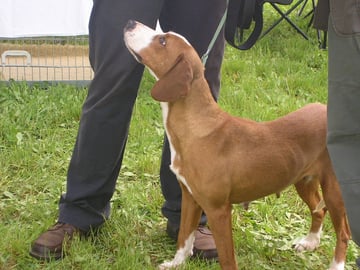
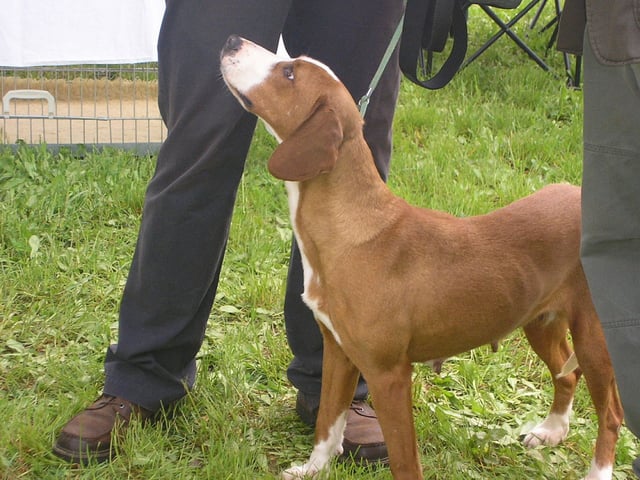
The Posavac Hound, also known as the Posavatz Hound or Posavac Bracke, is a well balanced, medium sized dog with a distinctly athletic yet friendly look. Males usually stand around 46 to 56 centimeters at the shoulder, with females slightly smaller, and most dogs weigh between 16 and 24 kilograms. The overall impression is of a compact, muscular dog that is built for endurance rather than pure speed, with a strong back, solid bone, and a deep chest that allows for good lung capacity during long hunts.
The head is fairly broad and noble without being heavy. The muzzle is long enough to carry game and to support a highly developed sense of smell. Ears are set at about eye level and hang close to the head, rounded at the tips. Their soft, expressive ears and dark, gentle eyes give the Posavac Hound a kind and intelligent expression that many people find instantly appealing. The tail is set in a natural extension of the back, fairly thick at the base, tapering towards the end, and is usually carried in a gentle curve when the dog is alert or moving.
The coat is one of the breed’s most recognizable features. It is short, dense, and close lying, with a straight texture that provides protection from weather and brush without needing intensive grooming. On the back of the thighs and the underside of the tail, the hair can be slightly longer and somewhat harsher. The color is always within the warm red to wheaten range, with clearly defined white markings. Typical patterns include a white blaze on the face, white chest, legs, and the tip of the tail. Some dogs have a larger white collar or patches on the body. The overall effect is a dog that stands out clearly against woodland and field backgrounds, which is very practical in hunting situations.
Coat care for the Posavac Hound is refreshingly simple, which makes the breed appealing to many modern owners. A weekly brushing with a rubber grooming mitt or soft bristle brush is usually enough to remove dead hair, distribute natural oils, and keep the coat shiny. During seasonal shedding in spring and autumn, you may want to brush more frequently to keep hair off furniture and clothes. Bathing is needed only occasionally, for example after a muddy outing or a particularly smelly adventure in the fields. Use a mild dog shampoo and ensure the coat dries properly, especially in cooler weather.
Regular checks of the ears are important because the breed has dropped ears, which can trap moisture and debris. After walks in tall grass or woodland, have a quick look for seeds, thorns, or small ticks around the ears, armpits, groin, and between the toes. Nails should be trimmed as needed, although an active Posavac Hound often wears them down naturally on hard ground. A simple grooming routine that combines weekly coat brushing with dental care, ear checks, and nail trims will keep the Posavac Hound looking and feeling its best with relatively little time investment.
¶Temperament & Personality
The Posavac Hound is above all a working dog with a kind heart. Traditionally bred as a pack or multi dog hunting companion, this breed is used to cooperating closely with people and other dogs, which has shaped a temperament that is both sociable and loyal. In the home, most Posavac Hounds are affectionate, calm, and surprisingly gentle, especially once their exercise needs have been met. They usually enjoy physical closeness and will happily rest at your feet or on the sofa if allowed, content simply to be near their people.
Posavac Hounds tend to form strong bonds, often singling out one person as their main reference while still being friendly and warm with the rest of the family. With children, a well bred and well socialized Posavac Hound is typically patient and tolerant. They are not usually rough or hyperactive indoors, which can make them good companions for sensible, dog aware kids. However, as with any dog, supervision is essential, and children should be taught how to interact respectfully, especially around food, toys, or when the dog is resting.
With other dogs, the Posavac Hound is usually sociable and cooperative. Their heritage as pack hunters means they are accustomed to working alongside canine partners. Many individuals enjoy doggy company and may be happiest in a multi dog household or with regular playdates. With smaller pets, things are more complicated. The Posavac Hound has a strong hunting instinct and a powerful nose, which can make coexistence with cats, rabbits, or small furries risky. Some can live peacefully with a cat they grew up with, but even then, it is wise to take care and never leave them unsupervised with prey sized animals.
In daily life, this is a curious and determined dog. Outdoors, the nose is usually on the ground, following interesting trails. Indoors, a mature Posavac Hound that has had enough exercise often settles well and enjoys a predictable routine. They are not typically noisy for no reason, but many will use their voice to communicate, especially when excited or when they catch a scent. The characteristic hound voice, somewhere between a bark and a musical bay, can be charming for enthusiasts but may surprise neighbors in more built up areas.
Common challenges for this breed revolve mainly around its working background. A bored or under exercised Posavac Hound can become restless, vocal, or destructive. Their independence in the field can also show up as stubbornness during training if the handler is inconsistent or not very engaging. Scent chasing is deeply instinctive, so recall can be unreliable unless trained carefully from an early age. Some individuals may be reserved with strangers at first, but outright aggression is uncommon in well socialized dogs. Early exposure to different people, places, and situations helps the Posavac Hound grow into a confident, balanced adult that is a pleasure to live with in a variety of homes.
¶Training & Exercise
The Posavac Hound is an active and intelligent working dog, and its training and exercise needs reflect that heritage. These dogs were bred to spend hours tracking game across fields, forest, and rough ground, often in challenging weather. As a result, they have high stamina and a strong desire to use their nose. A quick stroll around the block and a few minutes in the yard will not be enough. For a happy and well balanced Posavac Hound, you should plan on at least one to two hours of exercise each day, split between physical activity and mental challenges.
Daily exercise does not always need to be intense running. A long, brisk walk with plenty of time to sniff and explore, combined with some off lead freedom in a safe, enclosed area, is often ideal. Many Posavac Hounds enjoy activities such as hiking, canicross, tracking, mantrailing, or scent work classes, because these tap directly into their natural talents. If you are a runner or an outdoor enthusiast, this breed can be a wonderful companion that will gladly join you in all weather.
Training a Posavac Hound requires patience, clarity, and a sense of humor. They are not robots that obey every command instantly, but they are not unintelligent or untrainable. Instead, they have an independent working style and prefer to understand why they are being asked to do something. Positive reinforcement methods work best. Reward good behavior with food, praise, and play, and keep training sessions short, varied, and fun. Harsh corrections or heavy handed methods typically backfire with this sensitive breed and can damage trust.
Important training priorities for a Posavac Hound include:
- Reliable recall, practiced on a long line in safe areas before allowing full off lead freedom.
- Loose leash walking, because a strong hound with its nose glued to the ground can easily pull an unprepared owner.
- Calm behavior at home, including settling on a mat and responding to simple cues, so the dog can switch off after exercise.
- Confidence building early socialization around people, dogs, traffic, and different environments.
Because of their scent driven nature, many Posavac Hounds find repetitive obedience drills a bit dull. Mixing in nose based games is very effective. You can scatter part of their meal in the grass and let them sniff it out, hide treats around the house, use puzzle feeders, or create basic scent trails in the yard. These simple activities tire the mind, which is just as important as tiring the body.
Hunting work remains the traditional field of the Posavac Hound, and in countries where this is allowed, they shine when allowed to practice their original role. However, even in non hunting homes, they can be very satisfied with sport or hobby level scent work. Agility or obedience can also be enjoyable for some individuals, provided the atmosphere stays positive and the dog is not forced into rigid patterns.
For owners who are prepared to invest time in consistent, reward based training and who enjoy being outdoors, the Posavac Hound can be an immensely rewarding partner. Without that commitment, though, the breed may become frustrated, distant, or challenging, so realistic expectations are essential before bringing one home.
¶Health
The Posavac Hound is generally considered a robust and hardy breed, shaped by generations of practical hunting use. Farmers and hunters traditionally selected dogs that could work long hours in tough terrain and remain healthy. As a result, many Posavac Hounds enjoy a long and active life, often reaching 12 to 14 years or more with good care. However, like all breeds, they have some health considerations that prospective owners should be aware of.
Because the breed is relatively rare outside its homeland, comprehensive health data is not as widely published as for more common breeds. That said, a few issues are worth discussing. As a medium sized dog, the Posavac Hound may be at some risk of hip dysplasia, a developmental condition where the hip joint does not fit perfectly and can lead to arthritis later in life. Responsible breeders usually have their breeding dogs checked by hip scoring or similar evaluations and will share the results with buyers. Elbow dysplasia may also be screened, depending on local practices.
Ear health is another practical consideration. The Posavac Hound’s hanging ears reduce air flow to the ear canal, which can encourage wax build up or infections, particularly in dogs that swim frequently or run through wet undergrowth. Regular ear checks and gentle cleaning with a vet approved solution help prevent problems. If the dog is shaking its head, scratching at the ears, or if there is a strong odor, a veterinary visit is advisable.
Like many scent hounds, some Posavac Hounds may be prone to obesity if their food intake is not carefully controlled, especially when living as pets rather than working dogs. Extra weight puts unnecessary strain on joints and can increase the risk of other health conditions. Feeding a balanced diet, measuring portions, and maintaining daily exercise are key. Bloat or gastric torsion is a risk that affects some deep chested breeds. While there are no strong indications that the Posavac Hound is heavily affected, it is wise to be aware of symptoms such as sudden distended abdomen, restlessness, unproductive retching, and signs of pain, and to seek emergency veterinary care if they appear.
Routine preventative care plays a huge role in keeping a Posavac Hound healthy. This includes:
- Vaccinations according to your veterinarian’s advice.
- Regular parasite control against fleas, ticks, and worms, which is especially important for dogs that spend time in fields and forests.
- Dental care, such as brushing with dog toothpaste several times a week, to prevent periodontal disease.
- Annual or biannual checkups to catch age related changes early.
When searching for a puppy, ask breeders about the health tests they perform and the longevity of their lines. Ideally, both parents should be temperamentally sound, physically fit, and free from major hereditary problems. If you adopt an adult Posavac Hound from a rescue, arrange a thorough veterinary exam as soon as possible and discuss any findings openly, so you can plan for future care.
Overall, the Posavac Hound tends to be a sturdy and capable breed with fewer extreme conformational issues than some more popular dogs. With sensible breeding, good nutrition, regular exercise, and timely veterinary attention, many individuals remain lively and active well into their senior years.
¶History & Origins
The Posavac Hound has deep roots in the Sava River valley region of Croatia, an area of lowlands, meadows, and wooded terrain. The name itself reflects this origin, as it refers to the Posavina, the area along the Sava. For centuries, local hunters and farmers relied on practical, efficient scent hounds that could track game quietly and persistently over long distances. The Posavac Hound developed in this context as a functional hunting helper rather than as a showpiece.
Historical references to similar red and white hounds in the region stretch back several hundred years. Old documents and drawings mention small rustic hounds used to hunt hare and fox, with descriptions that closely match today’s Posavac Hound in color and outline. These dogs were selected primarily for their working ability. Hunters kept only those that showed strong scenting skills, good voice, endurance, and cooperative temperament. The result was a regional type that slowly became more uniform over time.
In the early twentieth century, as dog breeding became more organized, Croatian enthusiasts began to standardize the Posavac Hound. The first written breed standard appeared in the 1920s, and the dogs gradually gained recognition beyond their local area. The breed was officially acknowledged by international kennel organizations later in the century, which helped secure its status and support structured breeding programs. Still, compared to many other hound breeds, the Posavac Hound remained relatively unknown outside of Central and Eastern Europe.
The breed’s traditional role has always been that of a versatile scent hound. Posavac Hounds work on the trail of hare, fox, and sometimes roe deer, using their nose to follow a scent line and their clear, melodious voice to indicate the progress of the chase. They are typically used as single dogs or in small groups, depending on the type of game and the terrain. Their relatively moderate size, agility, and distinct coloration make them well suited to the dense vegetation of their homeland.
In modern times, the Posavac Hound continues to be valued as a hunting companion in Croatia and neighboring countries, where many dogs still live with hunters and spend their weekends in the field. At the same time, a growing number of Posavac Hounds are kept primarily as family dogs and active companions. Their friendly temperament, moderate size, and simple grooming needs have attracted interest from dog lovers who appreciate rare and functional breeds.
Outside its native region, the Posavac Hound is still uncommon, although small populations exist in various European countries. Breed clubs and dedicated fanciers work to preserve the traditional working abilities while also helping the breed adapt to life as a companion dog in more urban or suburban settings. This balance between respecting the history and meeting modern expectations is central to the ongoing story of the Posavac Hound.
¶Living with the Breed
Living with a Posavac Hound can be a deeply rewarding experience for the right family, but it does require commitment and realistic expectations. This is not a couch potato breed. Even though many Posavac Hounds are calm and affectionate at home, they are happiest when they have a meaningful outlet for their energy and instincts. Future owners should plan their lifestyle around daily outdoor time and regular training, rather than hoping the dog will simply adapt to a very sedentary routine.
In terms of housing, a Posavac Hound can adapt well to various environments. A home with a secure, reasonably sized garden is ideal, as it gives the dog space to sniff and explore safely. However, a dedicated owner in an apartment can also succeed if they provide ample exercise and mental enrichment every day. What matters most is not the size of the home but the time and energy the owner is willing to invest. Fencing needs to be secure and high enough that the dog cannot jump out, as a tempting scent outside may encourage escape attempts.
Daily life with a Posavac Hound usually involves a combination of:
- At least one good walk or run, plus shorter toilet breaks.
- Nose based games, puzzle feeders, or simple training sessions.
- Calm time indoors with the family, where the dog learns to settle.
Financially, the annual costs of keeping a Posavac Hound are similar to those of other medium sized dogs. You should budget for quality food, routine veterinary care, vaccinations, parasite prevention, and occasional emergencies or health tests. Pet insurance, where available, can help manage unexpected bills and is worth considering. Additional costs include equipment, training classes, and possibly travel crates or car harnesses for safe transport to walks and holidays.
Useful equipment for a Posavac Hound includes a comfortable, well fitting harness, a sturdy leash, and a long line for safe controlled freedom while you are working on recall. Because these dogs can pull when they catch an interesting scent, a harness is often gentler on the neck than a collar. A secure crate or bed provides the dog with a safe resting place in the house. Chew toys, interactive feeders, and durable toys are helpful to prevent boredom, especially in young or adolescent dogs.
This breed tends to be very people oriented, so leaving a Posavac Hound alone for long hours on a regular basis is not ideal. They can learn to cope with reasonable periods of solitude if this is introduced gradually, but they generally thrive in households where someone is home for much of the day or where the dog can accompany the owner to work in a dog friendly environment. A second compatible dog can be a good companion, although it is not a substitute for human attention.
Grooming time is modest compared to many breeds, which is a plus for busy families, but this should not be mistaken for an easy overall package. The primary investment with a Posavac Hound is in exercise, interaction, and training. For active individuals or families who enjoy being outdoors, appreciate a dog with real working heritage, and have patience for a sometimes independent mind, the Posavac Hound can be a loyal, affectionate, and entertaining partner for many years. For those who prefer a low activity lifestyle or want a dog that is off lead reliable without much training, this breed may not be the best match.
Understanding and respecting the needs of the Posavac Hound, from its strong nose to its gentle heart, is the key to a harmonious life together. With the right home, this relatively rare Croatian hound can shine as both a capable worker and a deeply cherished family companion.
¶Characteristics
| Characteristic | Value |
|---|---|
| Breed Type | Purebred |
| Aggressiveness | 2/5 |
| Child Friendly | 3/5 |
| Energy | 4/5 |
| Hair Shedding | 3/5 |
| Health | 3/5 |
| Intelligence | 3/5 |
| Grooming Needs | 3/5 |
| Learning Ability | 3/5 |
| Barking Level | 4/5 |
| Height | 46 – 58 cm |
| Weight | 15 – 21 kg |
| Life Expectancy | 10 – 15 years |
¶Frequently Asked Questions
What is a Posavac Hound and what was it originally bred for?
The Posavac Hound is a medium sized scent hound from the Sava Valley region of Croatia, developed primarily for tracking and driving hare and fox. It is known for its strong nose, stamina in the field, and methodical tracking style. The breed is still used as a working dog in its homeland and is less common as a purely urban companion.
What is the typical temperament of a Posavac Hound in the home?
In the home, this hound is usually gentle, affectionate, and attached to its family, but can be reserved with strangers. It tends to be calmer indoors if its exercise needs are met, yet retains a strong hunting instinct outdoors. Many are vocal and will use their distinctive bay when excited or when they pick up a scent.
How much exercise does a Posavac Hound need each day?
This is an active working breed that generally needs at least 1.5 to 2 hours of physical activity daily, plus regular scent focused mental enrichment. Long walks, secure off leash running, and tracking style games help keep it satisfied. Without enough activity, it may become noisy, restless, or prone to roaming.
Can a Posavac Hound live in an apartment or city environment?
Apartment or city living is possible but challenging because of the breed’s energy level, voice, and hunting drive. It does best with access to secure outdoor space and owners who can provide frequent, substantial exercise. Good soundproofing, consistent training, and management of its baying are important in close neighborhoods.
How trainable is the Posavac Hound and is it suitable for first time owners?
The breed is intelligent and learns quickly, but it is independent and easily distracted by scents. Training works best with calm consistency, high value rewards, and short, focused sessions. A dedicated first time owner with guidance can succeed, but those expecting instant obedience may find it challenging.
How vocal is the Posavac Hound and can its baying be controlled?
This hound is naturally vocal and uses a deep, carrying bay to communicate during hunting or when it is excited. You cannot eliminate the tendency entirely, but you can teach a reliable “quiet” cue and manage triggers through training and adequate exercise. Prospective owners in shared housing should consider whether this vocal nature is acceptable.
What health problems are Posavac Hounds prone to?
Overall, the breed is considered relatively robust, but like many medium hounds it can be prone to ear infections, joint issues such as hip dysplasia, and obesity if under exercised. Regular ear checks, weight control, and screening by responsible breeders help reduce risk. As a deep chested dog, monitoring for signs of bloat is also wise.
How much grooming does a Posavac Hound need and do they shed a lot?
The short, dense coat is low maintenance and benefits from weekly brushing to remove loose hair and keep the skin healthy. Shedding is moderate, with heavier seasonal shedding in spring and autumn. Regular ear cleaning and nail trimming are more important than elaborate coat care.
Is the Posavac Hound good with children and other pets?
When properly socialized, many are patient and gentle with respectful children, though their enthusiasm can be too much for very small kids. They often get along well with other dogs, especially if raised together, but their hunting instinct can be strong toward small animals. Early introductions and careful management around cats or small pets are important.
What kind of home and lifestyle suits a Posavac Hound best?
This breed suits active households that enjoy long walks, hiking, or working activities such as tracking or mantrailing. A securely fenced yard and owners who appreciate a traditional hunting dog’s independence and voice are ideal. It is less suited to very sedentary homes or those seeking a quiet, always compliant companion.
¶Comparisons with other breeds
Compare Posavac Hound with other breeds and see the differences in temperament, activity level, and care to make a confident choice. Show all comparisons