
¶Table of Contents
¶Quick Facts
- Males stand 61–68 cm at the shoulder, females 57–64 cm, according to the FCI.
- High. Needs daily physical exercise and mental stimulation.
- A dense, wiry double coat that needs checking during shedding and after work in the field.
- 14–16 years according to the AKC, as a general guide.
- An experienced dog owner looking for a versatile hunting or working partner.
¶Appearance & Coat
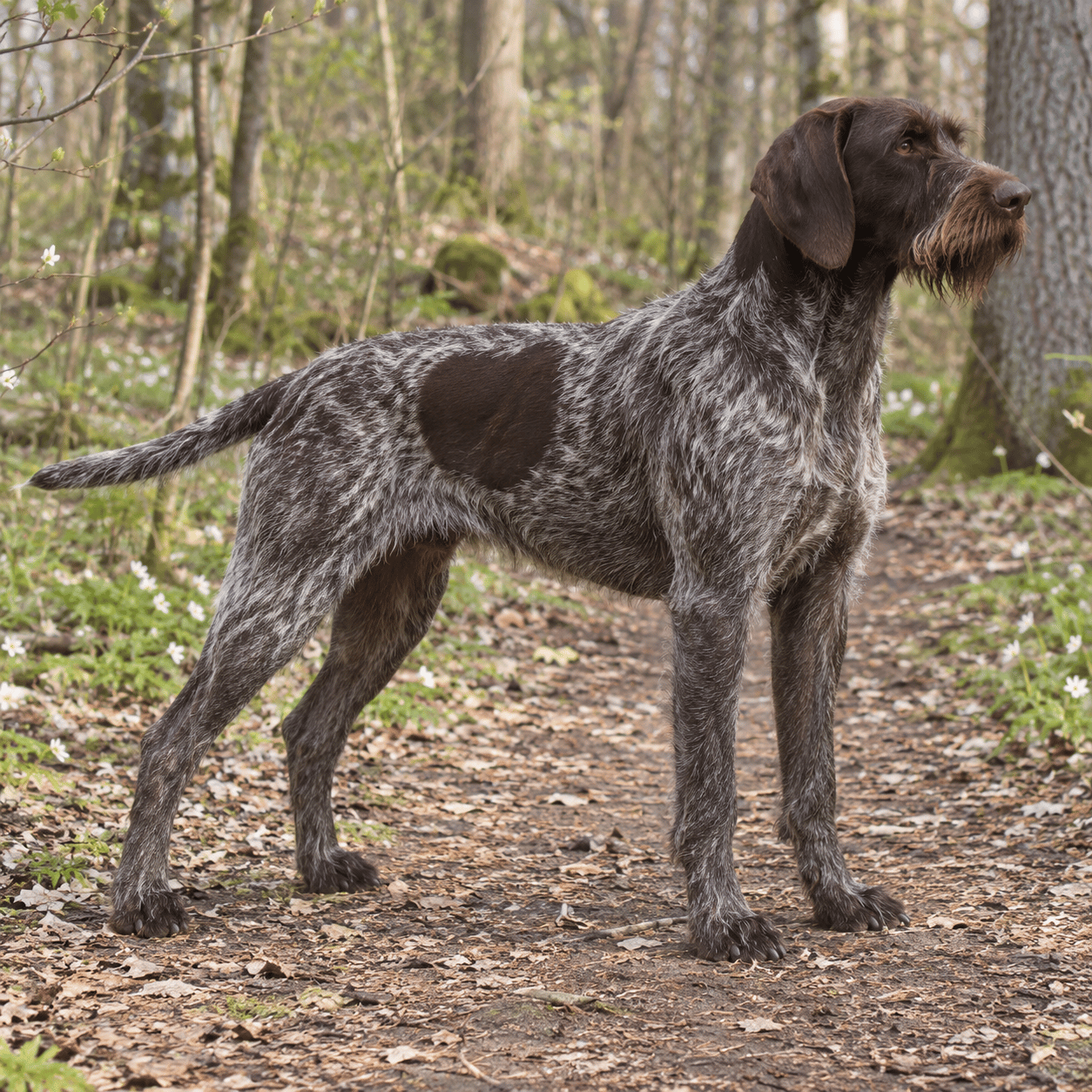
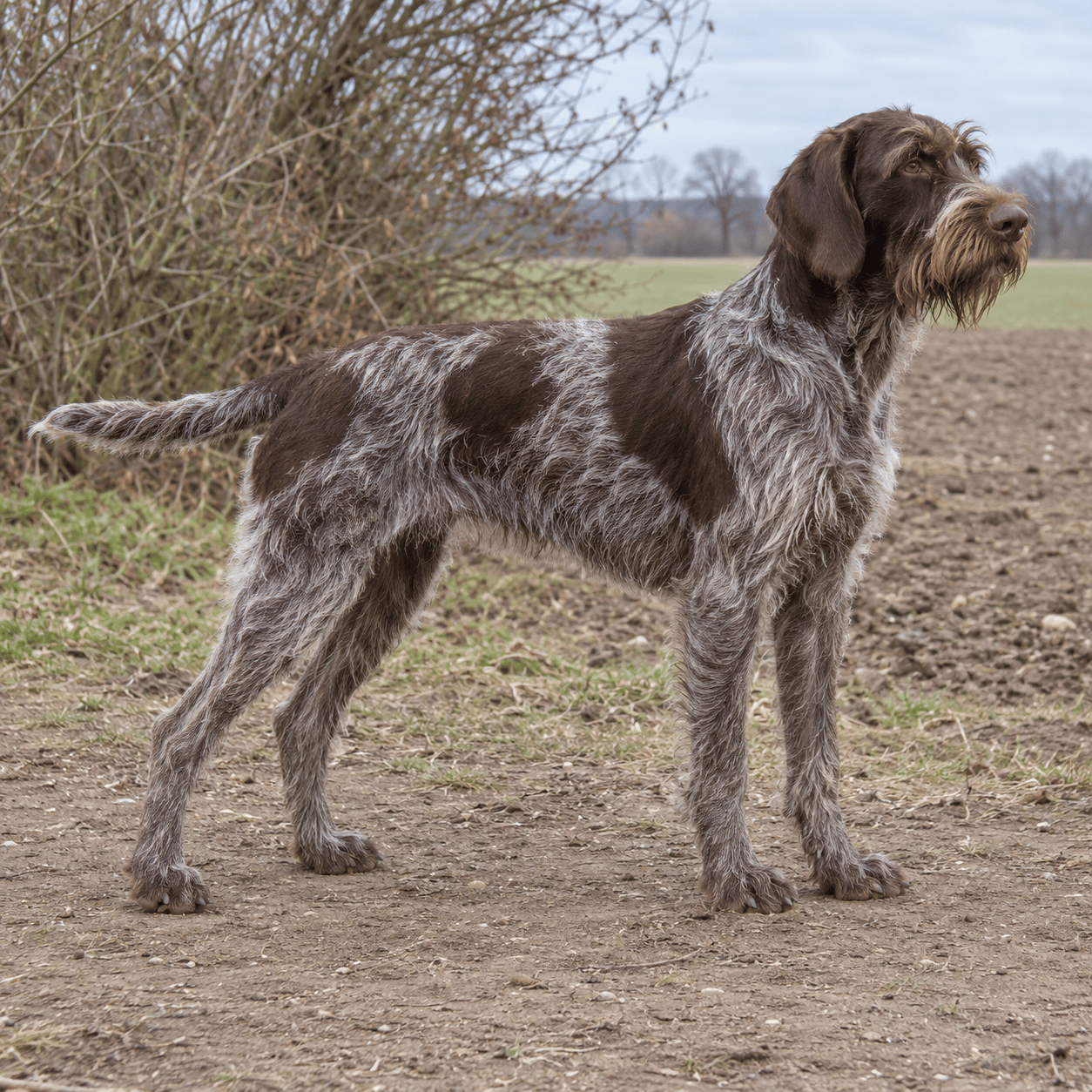
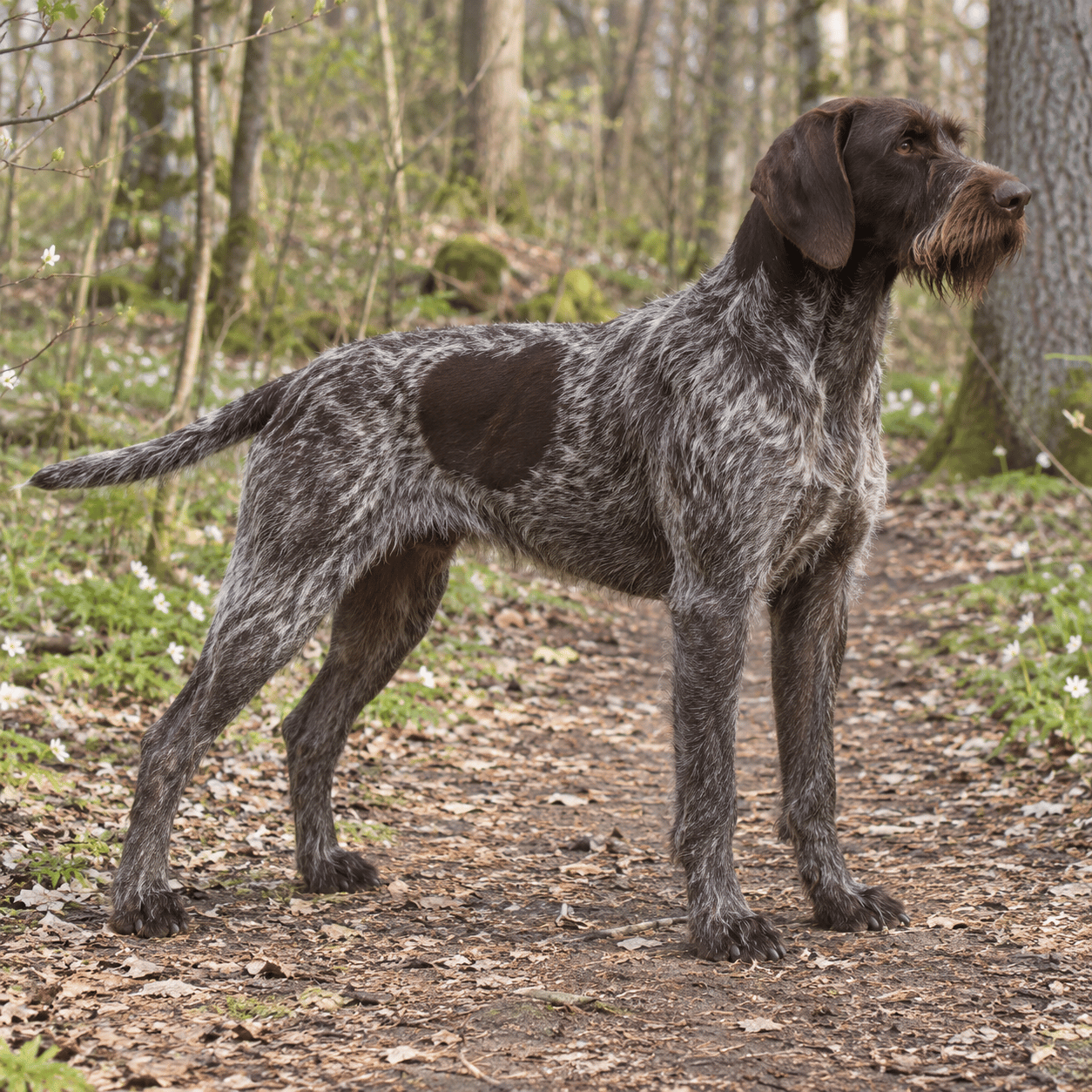
The German Wirehaired Pointer, also known as the Deutsch Drahthaar, is a German hunting dog developed for a wide range of tasks. It is bred to find and point game birds, retrieve, and track. Its drive to work for long periods, even in difficult terrain, makes careful planning of daily life essential.
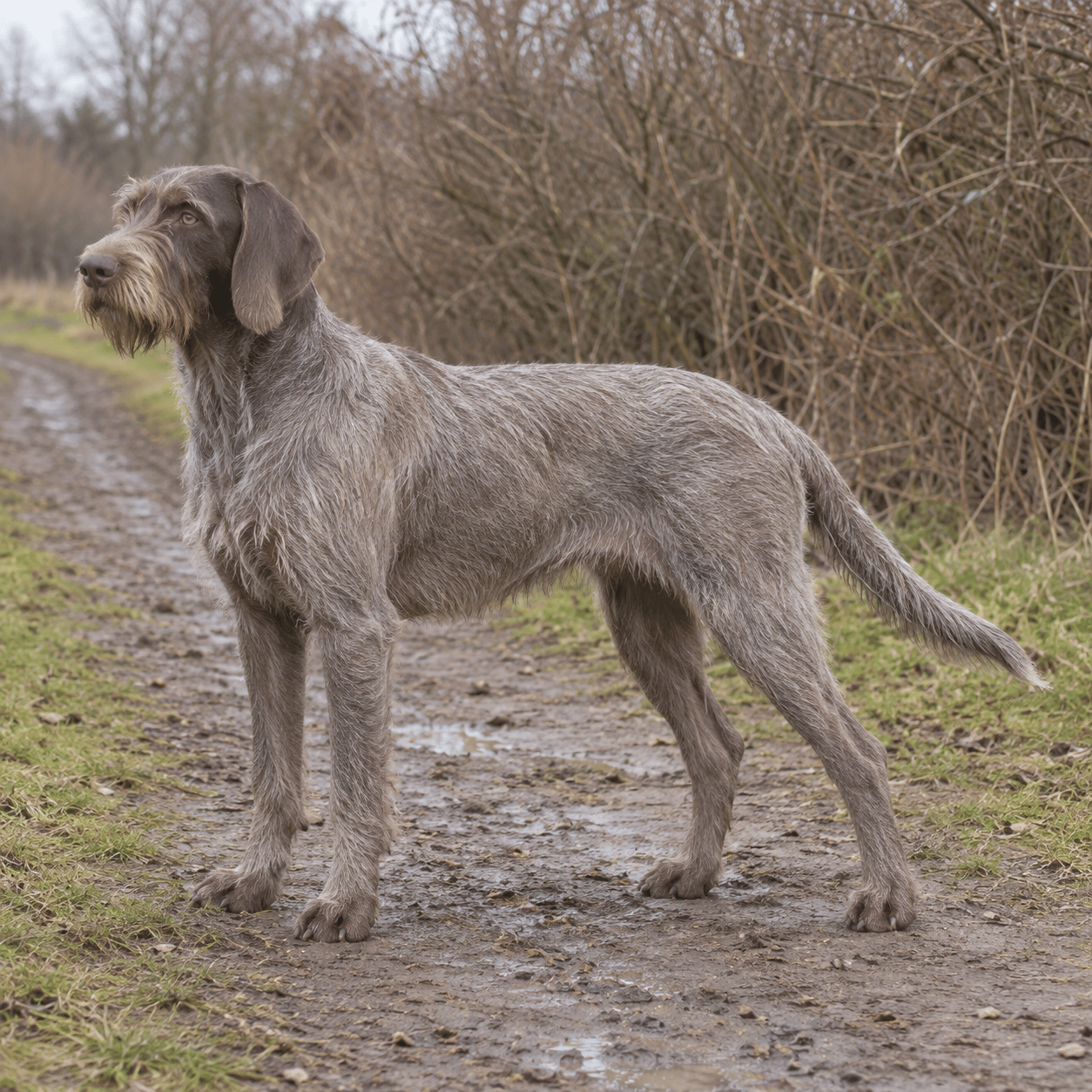
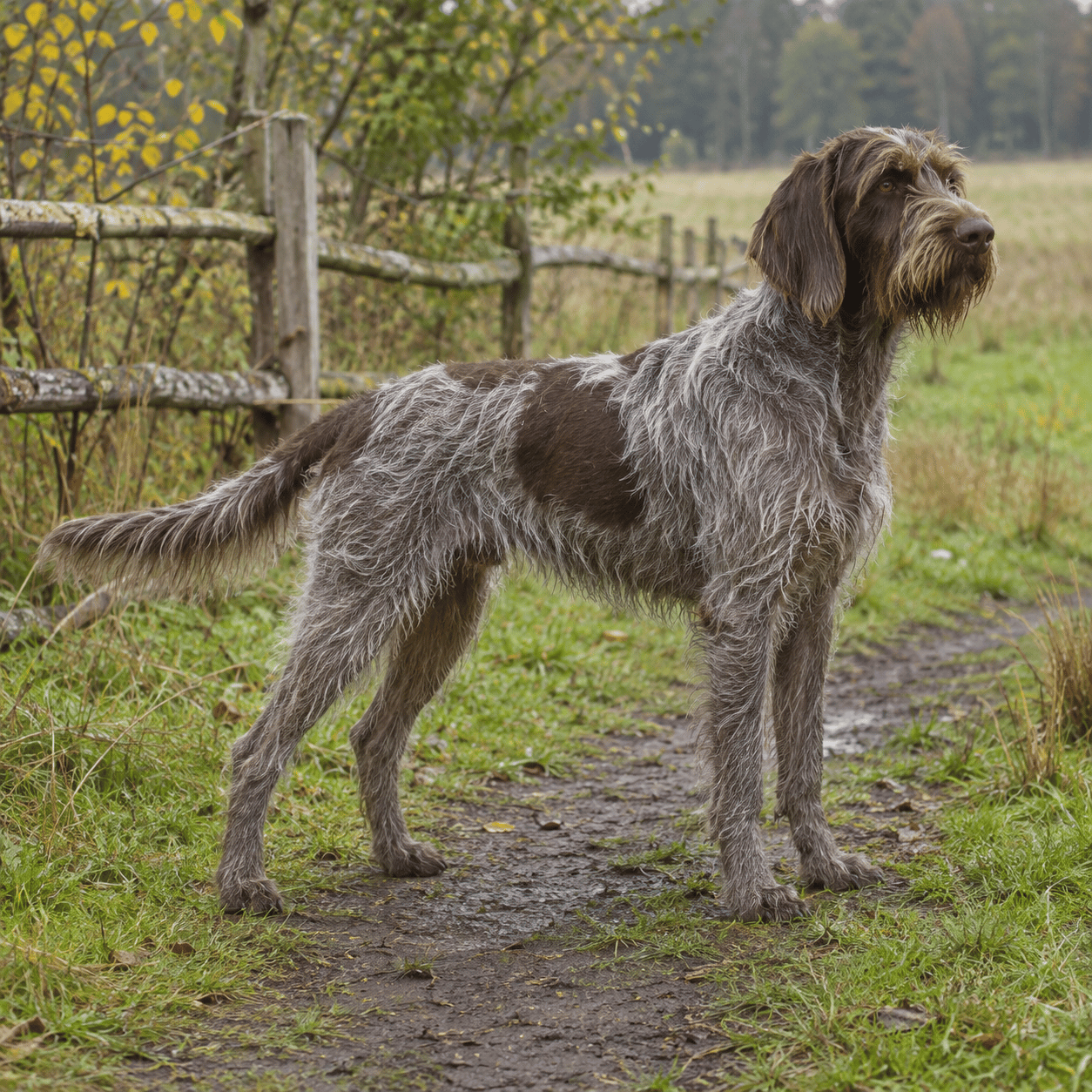
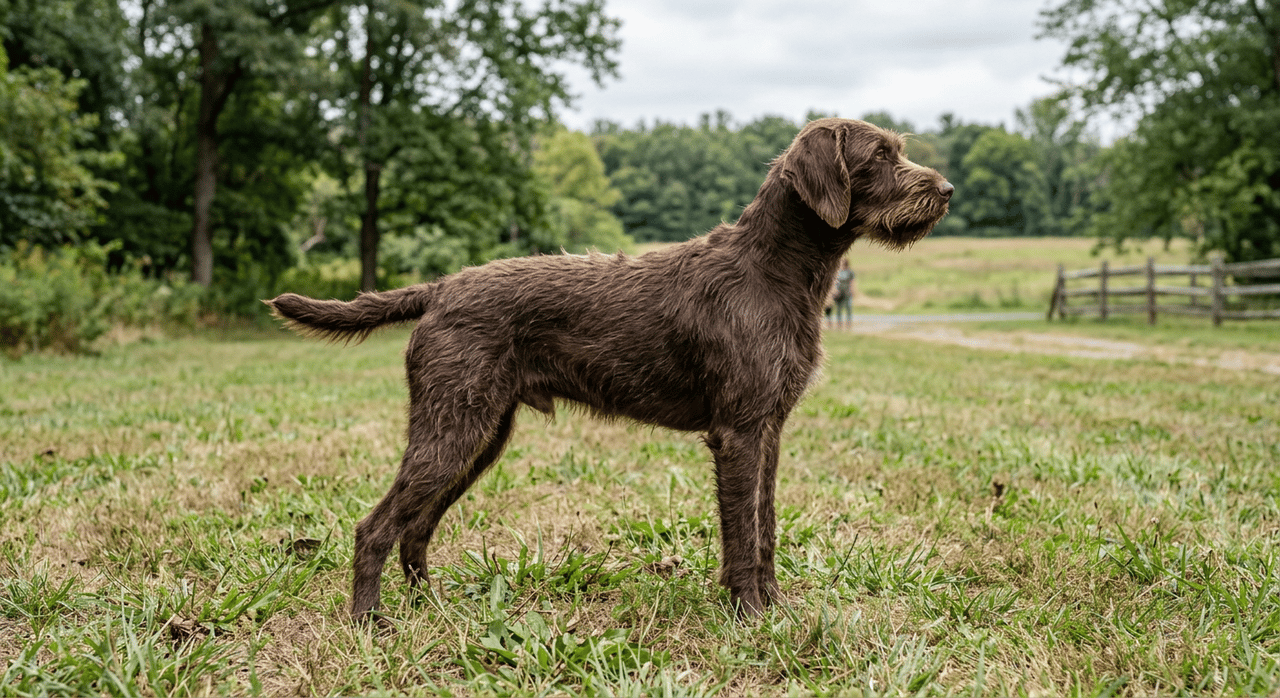
This is a powerful dog with a wiry beard and pronounced eyebrows. Dense, harsh outer hair and a water-repellent undercoat offer protection when working in wet conditions and thick vegetation. Colours recognised by the breed standard include brown roan, black roan, and solid brown. Grooming should be tailored to the coat’s texture. Check the beard, paws, and coat after work.
¶Temperament & Personality
The breed is alert, eager to work, and often steady in familiar situations. Its hunting drive and courage can take it a long way from its handler if its training is not sufficient for the task. Build a strong relationship and learn how your dog switches between work and rest.
¶Training & Exercise
Bird work, tracking, water retrieves, and search work can provide a well-planned variety of activities. Seek help from an experienced instructor, particularly when the environment or the presence of game makes the task more challenging. Start teaching engagement, steadiness, and recall early. Adjust the duration and intensity of exercise to the dog’s fitness and age.
¶Health
The Swedish Kennel Club (SKK) notes that hip dysplasia occurs in the breed. Ask for the parents’ official joint screening results and find out which health issues the breeder monitors in related dogs. Breeding strategies and registration rules are separate sources of information. Discuss the proposed mating with the breeder and base your assessment on documented results.
¶History & Origins
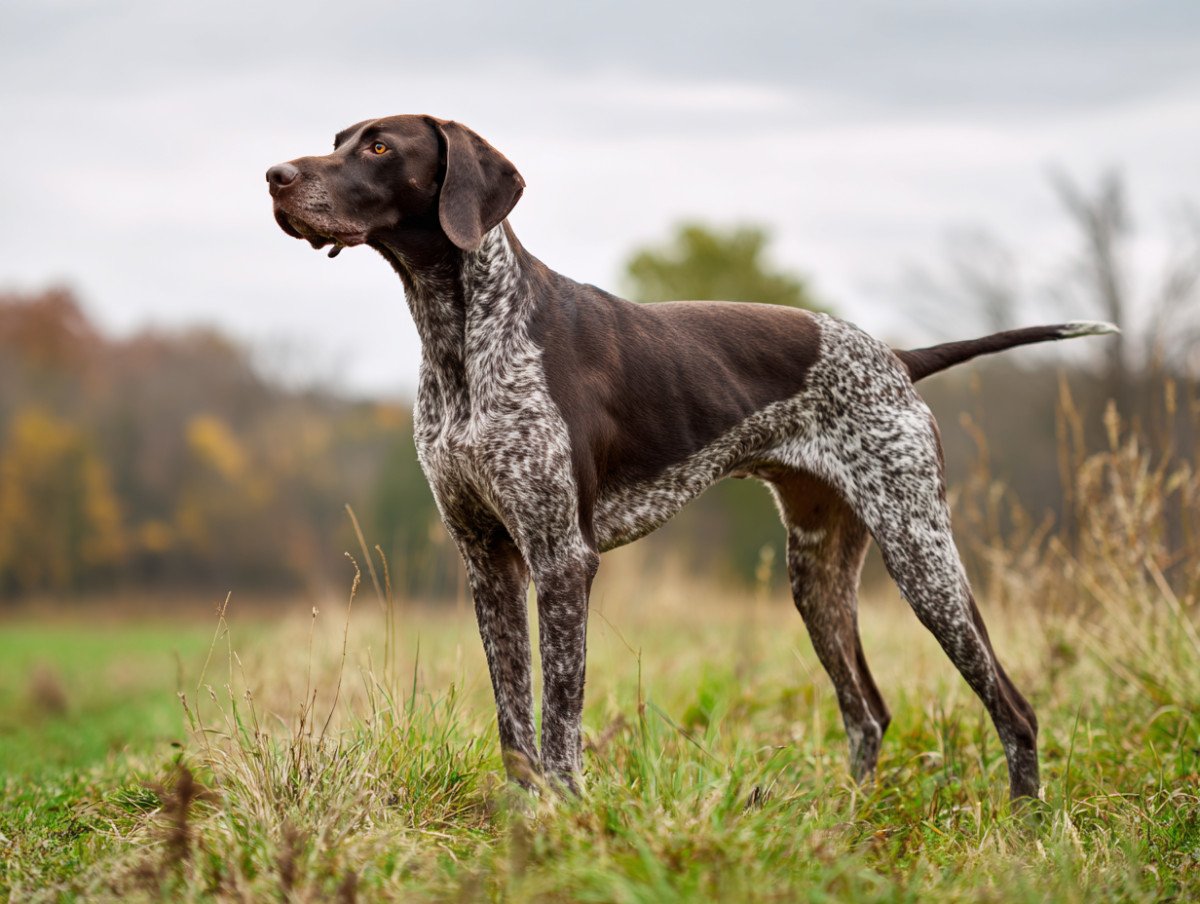
The breed was developed in Germany in the late 19th century. Sigismund von Zeidlitz und Neukirch, known as Hegewald, advocated practical wirehaired hunting dogs capable of a broad range of work. Several wirehaired hunting breeds, along with the German Shorthaired Pointer, contributed to its development.
¶Living with the Breed
Plan for working activities outside the hunting season too. A large dog with a strong desire to investigate scent trails needs safe opportunities to exercise and a quiet place to rest at home. Introduce other pets carefully, and before buying, ask how adult relatives cope with everyday disturbances and settle down to rest.
¶Characteristics
¶Frequently Asked Questions
¶Comparisons with Other Breeds
Compare German Wirehaired Pointer with other breeds and see the differences in temperament, activity level, and care to make a confident choice. Show All Comparisons