
¶Table of Contents
¶Quick Facts
- Males stand 58–64 cm at the withers and females 54–60 cm, according to the FCI.
- High. Needs daily exercise, opportunities to search, and activities that involve working with its handler.
- A dense, wiry coat with a protective undercoat. The beard and paws need checking after work.
- 12–14 years according to the AKC, as a general guide.
- An active owner who wants to put the dog's enthusiasm for searching and retrieving to use.
¶Appearance & Coat
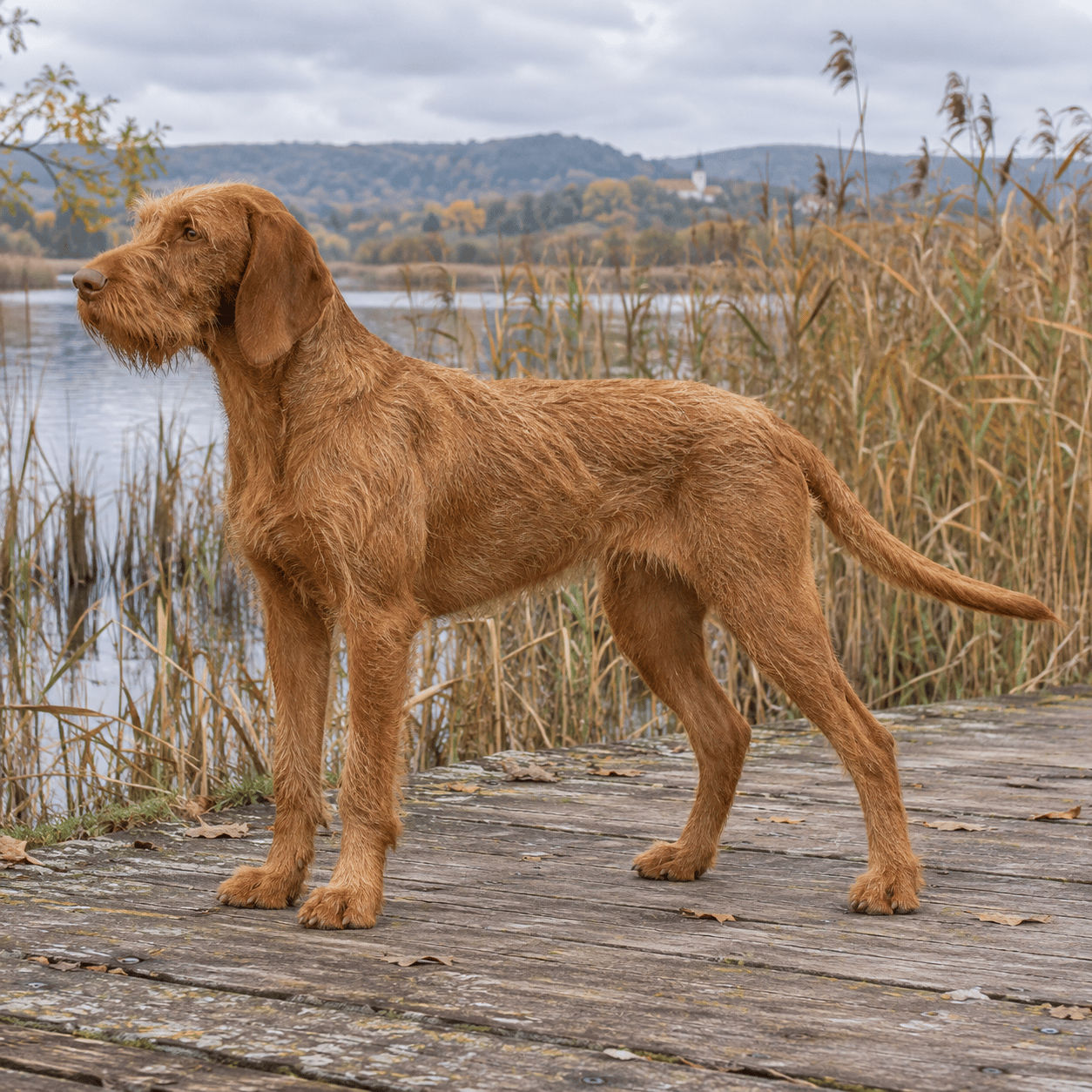
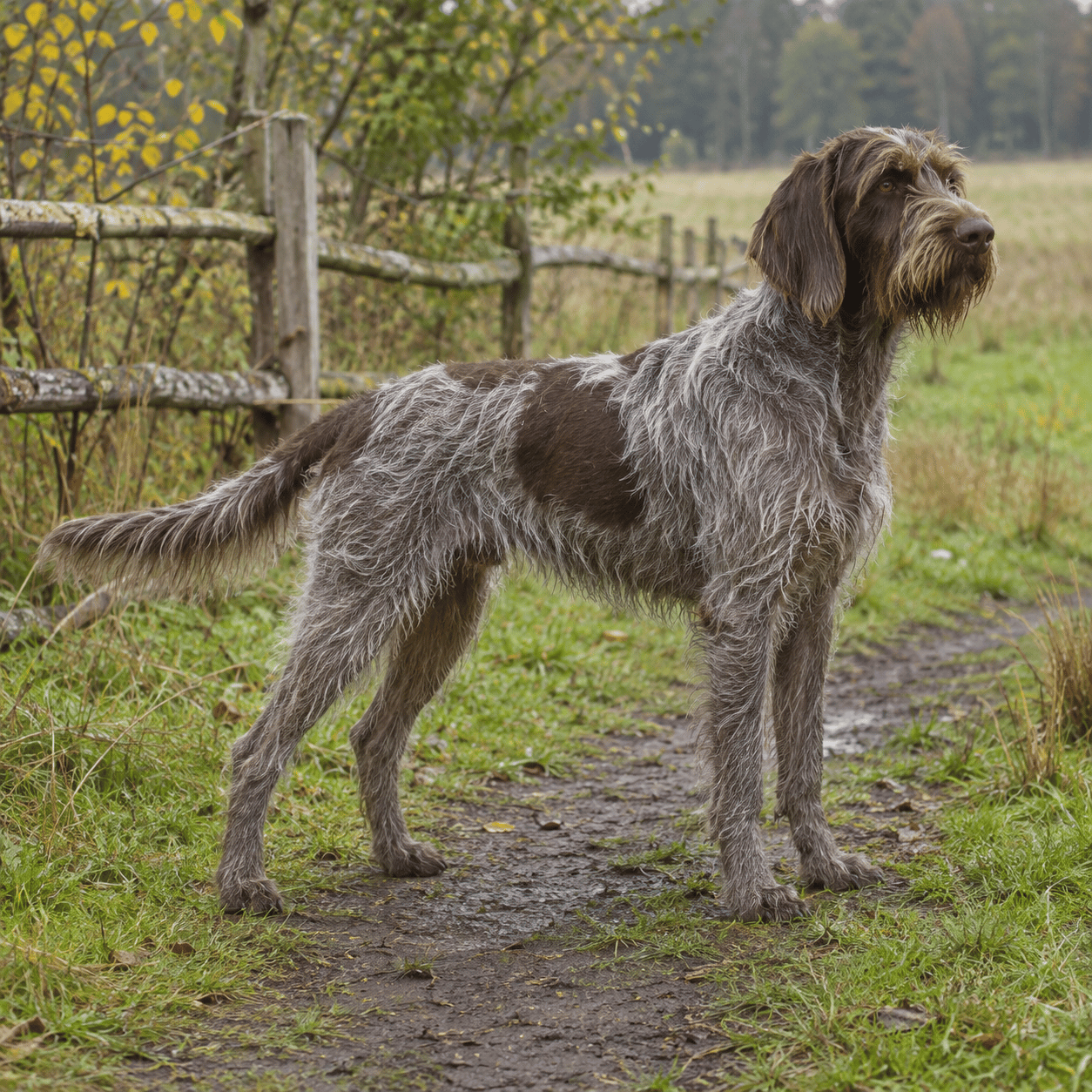
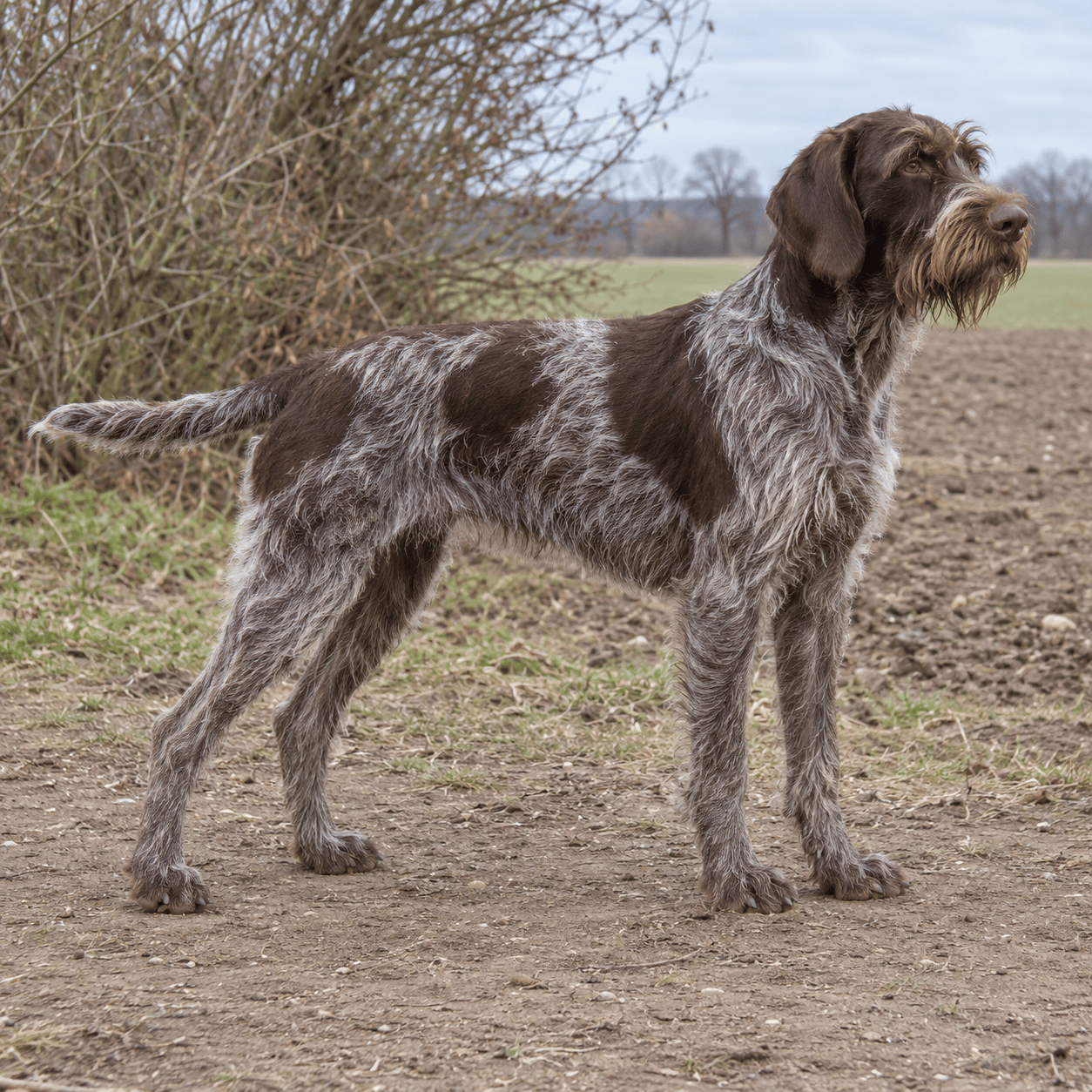
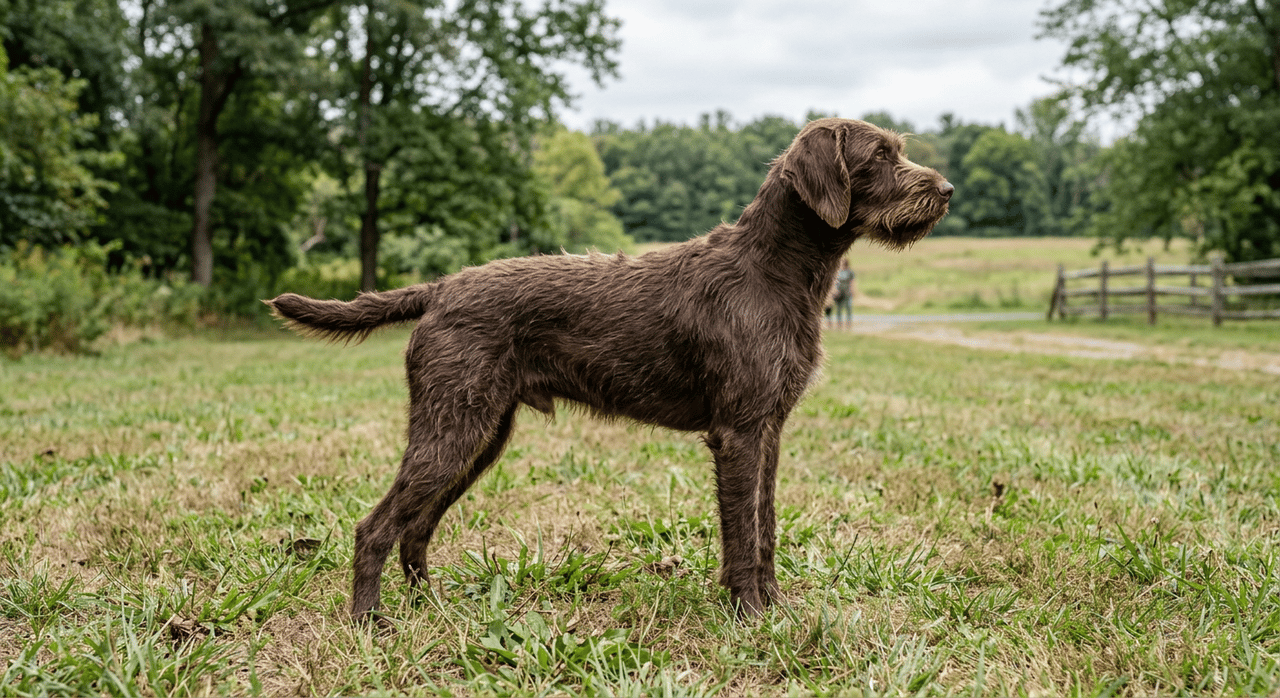
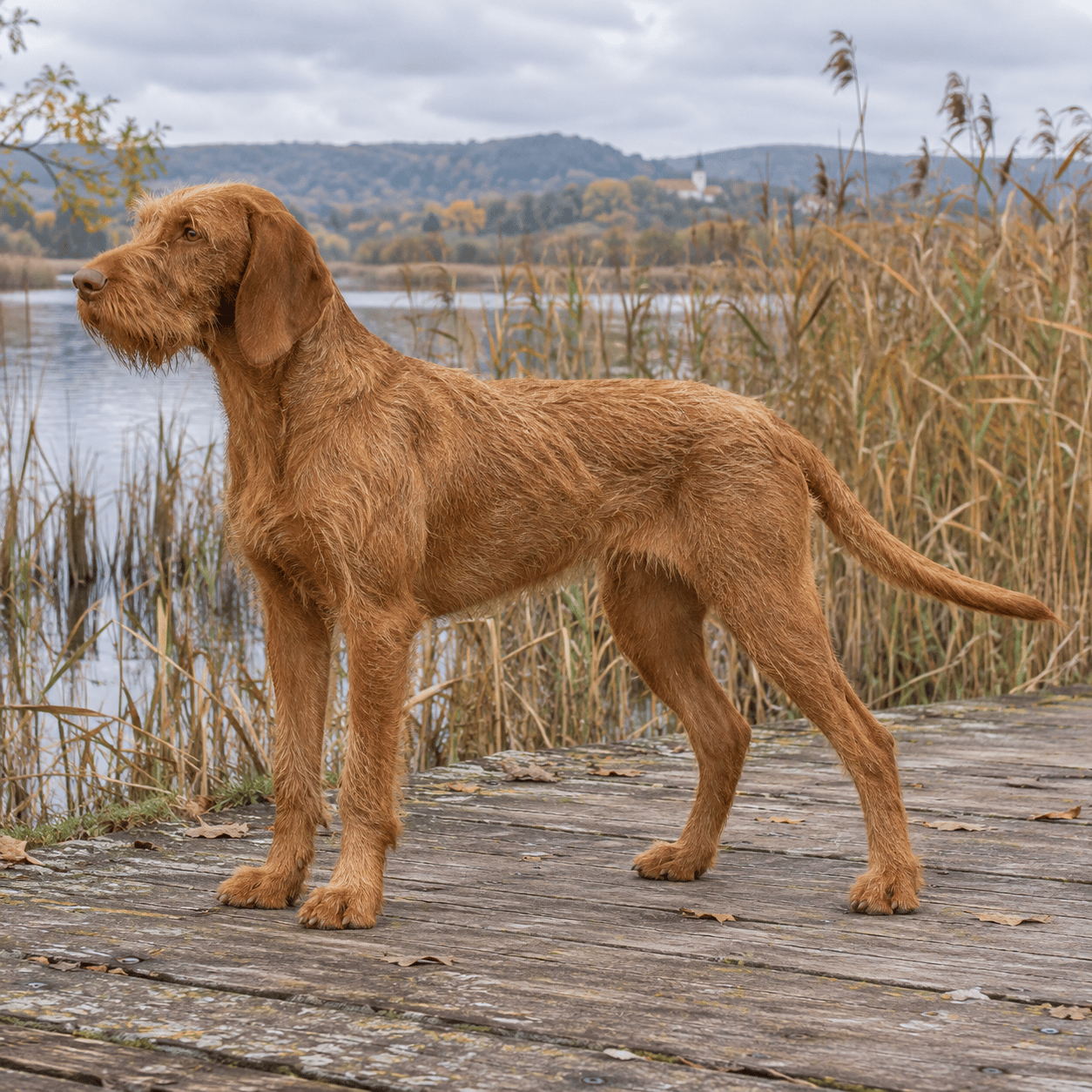
The Wirehaired Vizsla is a pointing gundog bred to work across varied terrain and in water. It has a slightly sturdier build than its shorthaired counterpart and a wiry coat that protects it when working in vegetation and cold weather.
This medium-sized breed has a firm, athletic body, drop ears, and a focused expression. Its coat comes in shades of golden rust. A beard and pronounced eyebrows frame the face. Beneath the outer coat, which the breed standard describes as normally 2–3 cm long, lies a dense undercoat. Brush as needed, and check the beard, paws, and skin in particular after work.
¶Temperament & Personality
The breed has a strong hunting instinct and is described by the Swedish Kennel Club (SKK) as affectionate and eager to learn. Its ability to work closely with its handler is useful both when hunting and during everyday training. These dogs need help learning to settle once an exciting activity is over.
¶Training & Exercise
Include searching, steadiness training, and retrieving in the dog's routine. Start in straightforward settings, then gradually introduce distractions and build stamina. Use a long line where scents and birds might draw the dog far away. Walks are part of daily life, but the breed also needs regular tasks with a clear beginning and end.
¶Health
The available Swedish data is limited. Read the Swedish breed-specific breeding strategy and ask the breeder which joint assessments and other health screenings the parents have undergone. Ask for documented results and find out how dogs from previous pairings have developed.
¶History & Origins
Development of the breed began in Hungary in the 1930s by crossing the shorthaired Hungarian Vizsla with the German Wirehaired Pointer. The aim was to create a versatile working gundog with a coarser coat. Today, the Wirehaired Vizsla has its own breed standard.
¶Living with the Breed
Expect to spend plenty of time together, both working outdoors and at home between activities. Plan daily routines and time off to accommodate the dog's need for exercise and companionship. Talk to the breeder about how hunting instincts are expressed in the particular family line, especially around other pets and in areas with wildlife.
¶Characteristics
¶Frequently Asked Questions
¶Comparisons with Other Breeds
Compare Wirehaired Vizsla with other breeds and see the differences in temperament, activity level, and care to make a confident choice. Show All Comparisons