
¶Table of Contents
¶Quick Facts
- The FCI’s ideal height is approximately 56 cm for males and 52 cm for females.
- High. Needs daily exercise and regular work.
- A short, dense coat that is easy to maintain.
- Around 14 years, according to the AKC.
- An owner with time for active training and plenty of outdoor activity.
¶Appearance & Coat
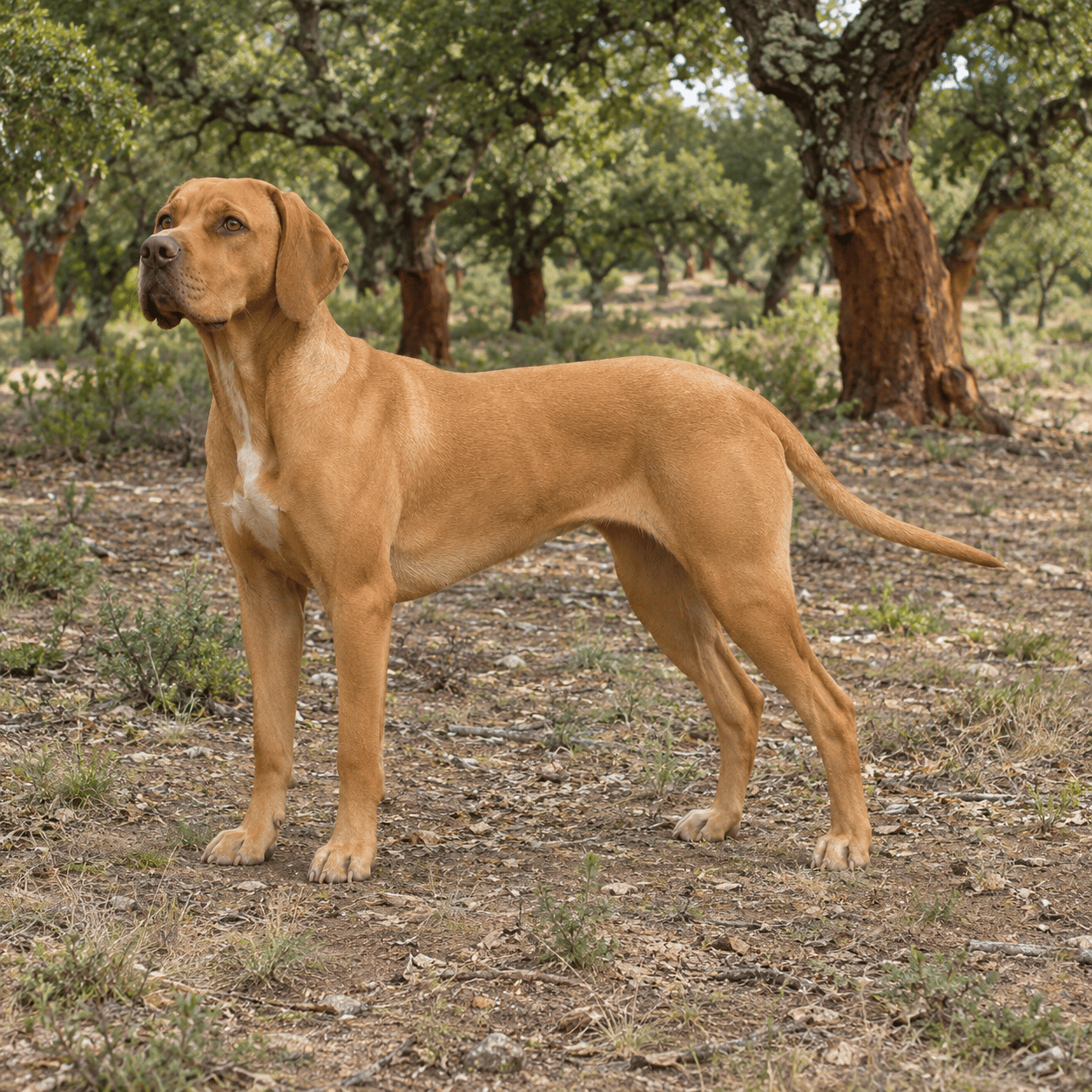
The Portuguese Pointer is a versatile pointing dog with good stamina in the field. It makes a close working partner for an owner who can provide meaningful activity year-round.
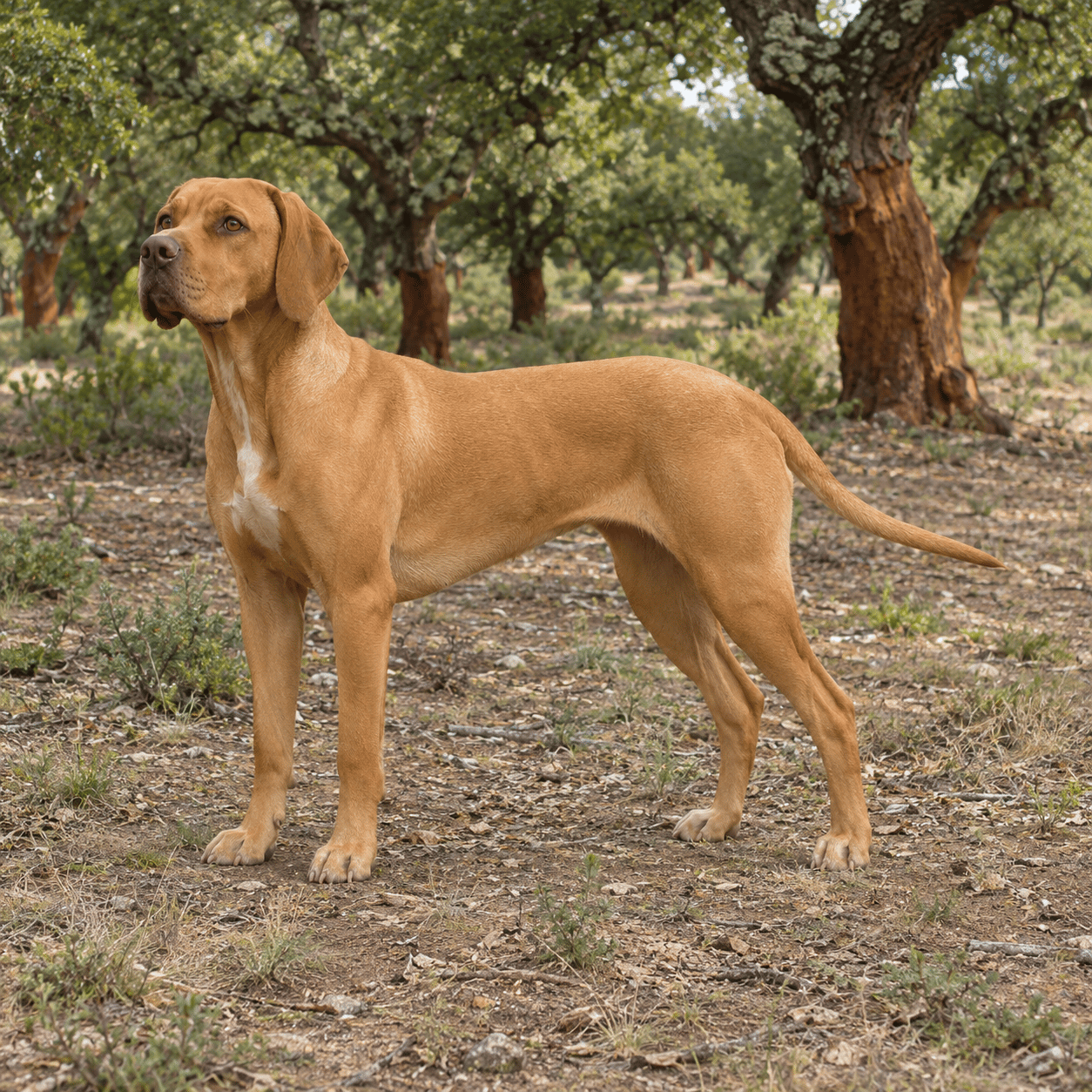
The body is strong and relatively rectangular. The coat comes in various shades of yellow, sometimes with white markings. It is short and dense, without a thick undercoat. Check the skin and paws after outings through thorns and sharp vegetation.
¶Temperament & Personality
The breed works energetically but can be calm indoors once it has had a job to do. It enjoys close contact with its handler. Establish a routine that gives it opportunities to work while also teaching it to relax between sessions.
¶Training & Exercise
Tracking, retrieving and searching for game birds provide tasks that suit the breed’s background. Practise steadiness and recall before introducing challenging distractions. Adjust longer sessions to the dog’s fitness, the heat and the terrain.
¶Health
There are too few dogs of this breed in Sweden for the Swedish Kennel Club (SKK) to assess its health reliably. Ask for documented health screening results, particularly for dogs in the relevant family line. Ask how older relatives cope with everyday life.
¶History & Origins
The Portuguese Pointer has ancient roots. In the early 20th century, breeders worked together to preserve and promote the type that later formed the basis of the breed standard.
¶Living with the Breed
Meet adult dogs and ask how they behave when they have to wait or when they find game birds. Have a training plan for periods when you are not hunting, too.
¶Characteristics
¶Frequently Asked Questions
¶Comparisons with Other Breeds
Compare Portuguese Pointer with other breeds and see the differences in temperament, activity level, and care to make a confident choice. Show All Comparisons