
¶Table of Contents
¶Quick facts
The Yakutian Laika, known in Swedish as jakutskaja lajka, comes from Yakutia in northeastern Russia. The breed has a long history as a sled dog and hunting dog and is described as lively, friendly, and sociable. It needs regular opportunities to work and has a strong hunting instinct. An active, knowledgeable owner who enjoys training and spending time outdoors with their dog is best placed to meet its needs.
- Size: males stand 55–59 cm at the shoulder and females 53–57 cm. The FCI breed standard does not specify a weight range.
- Activity level: very high. The breed needs plenty of exercise and work and is particularly well suited to pulling activities.
- Grooming: a thick double coat that needs regular brushing, with extra attention when the undercoat sheds. Outside shedding periods, the coat is relatively easy to maintain.
- Life expectancy: the AKC gives approximately 10–12 years as a general breed estimate. Individual lifespans vary.
- Best suited to: an active, committed owner who can provide regular work, mental stimulation, and close companionship, and who can manage a dog with a strong hunting instinct.
Ask the breeder how their adult dogs perform at work, behave around other dogs, and fit into an ordinary home. Also ask what documented joint, hearing, and eye examinations are available. Good looks or a friendly breed description need to be backed up by knowledge of the individual dog and the proposed pairing.
¶Appearance and coat
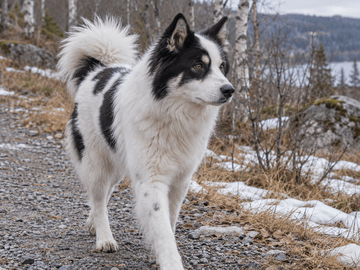
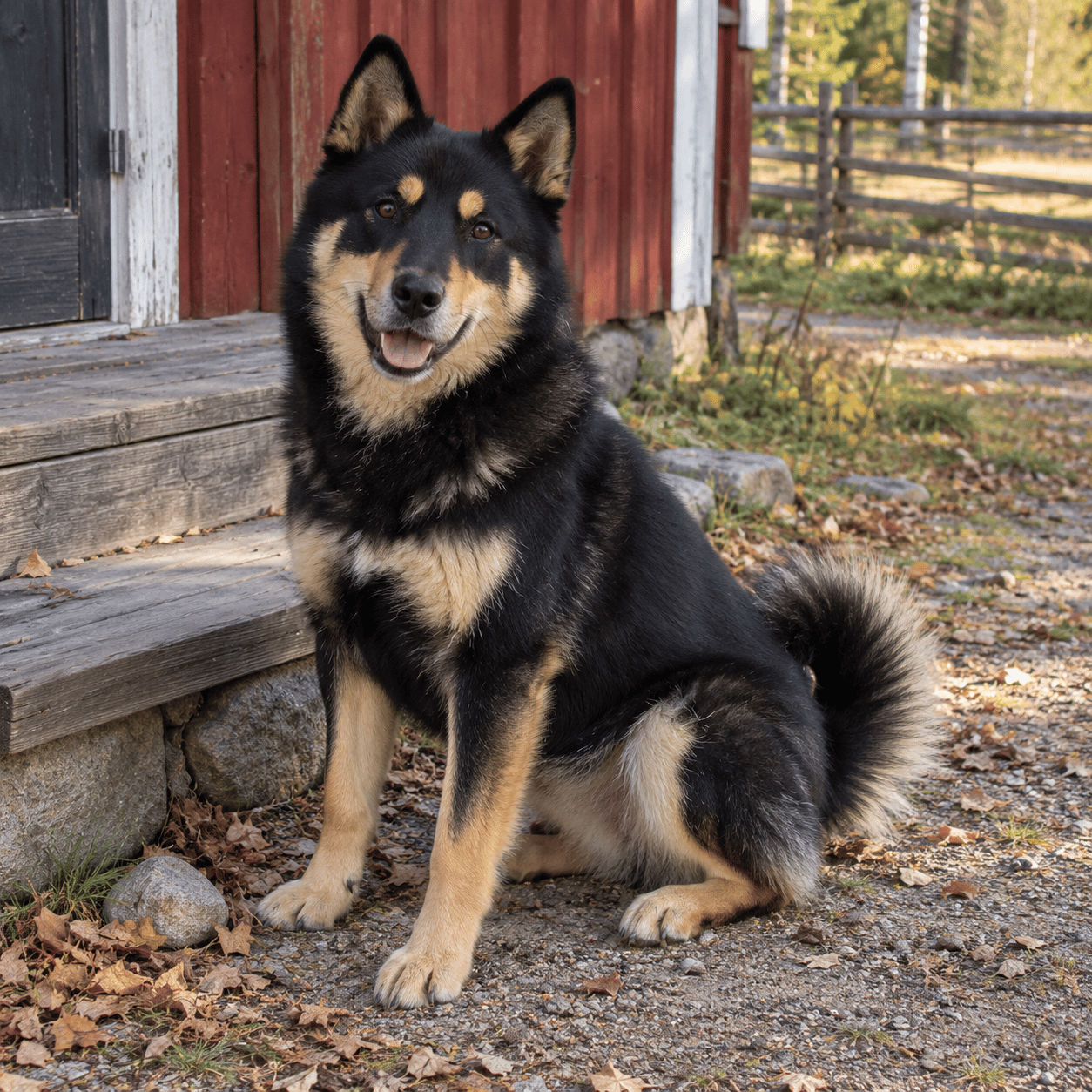
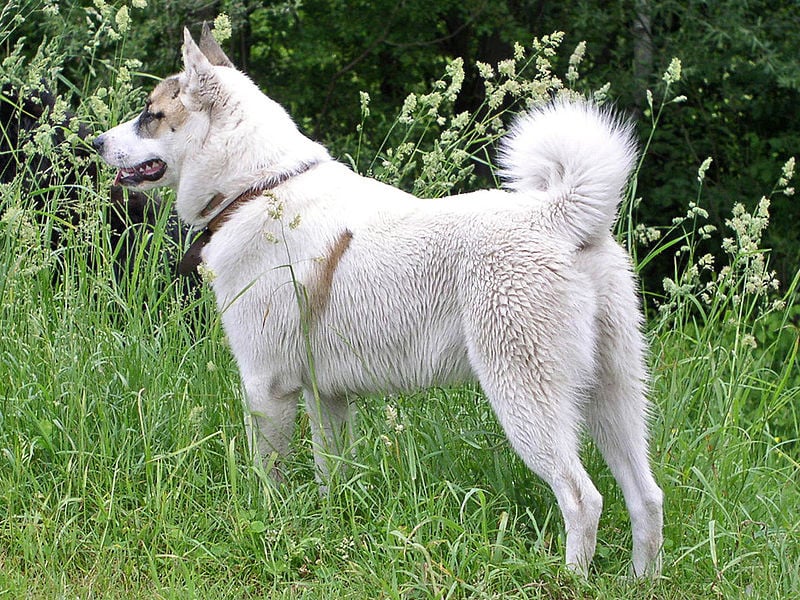
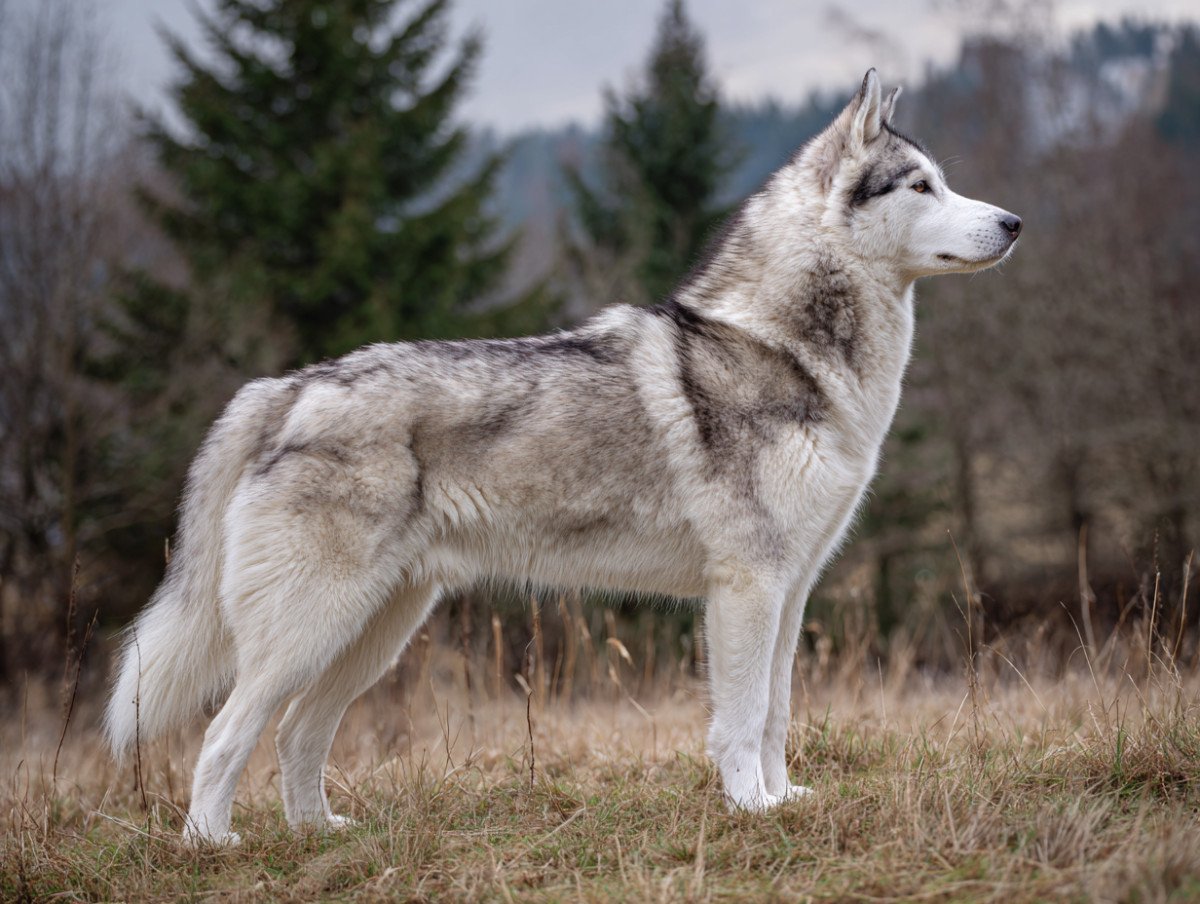
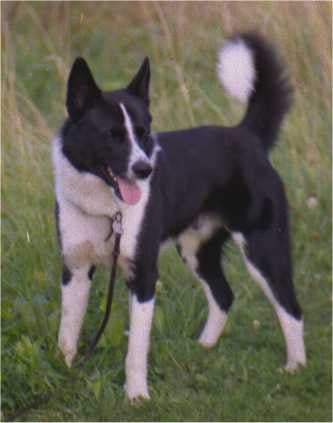
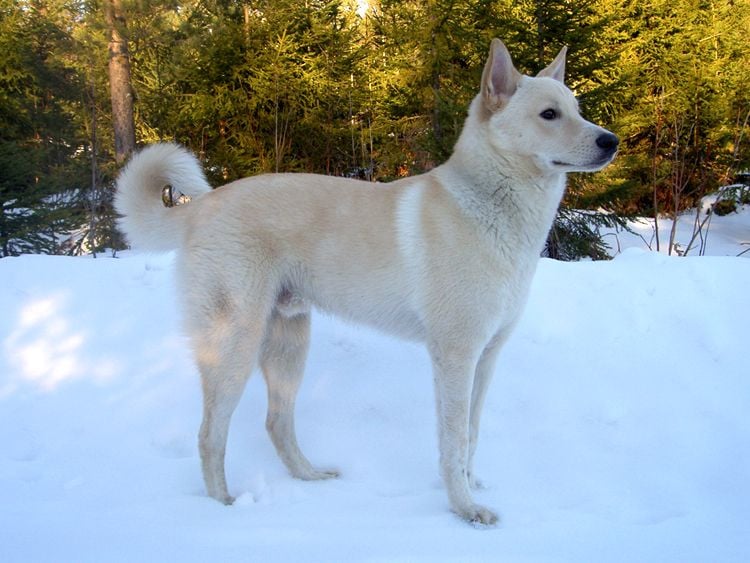
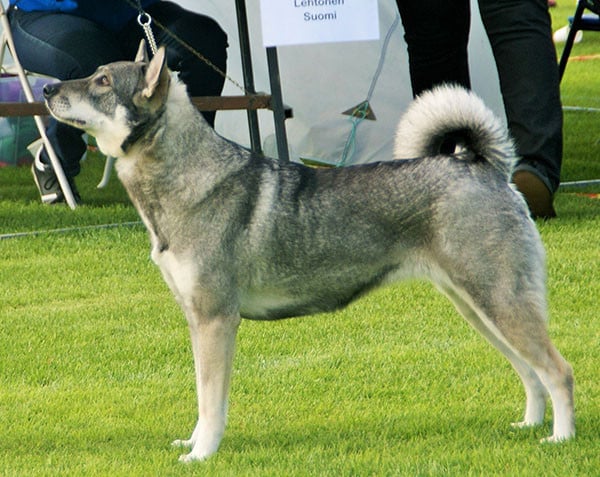
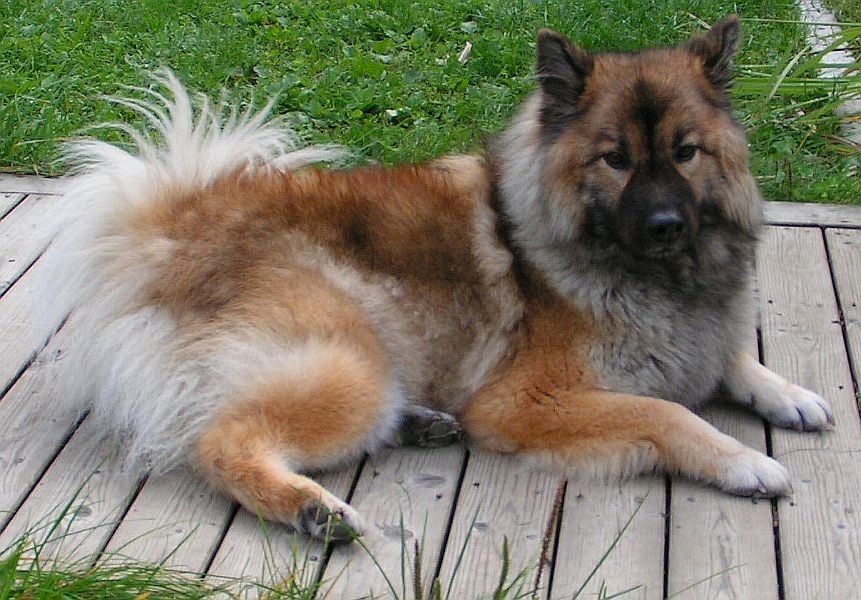
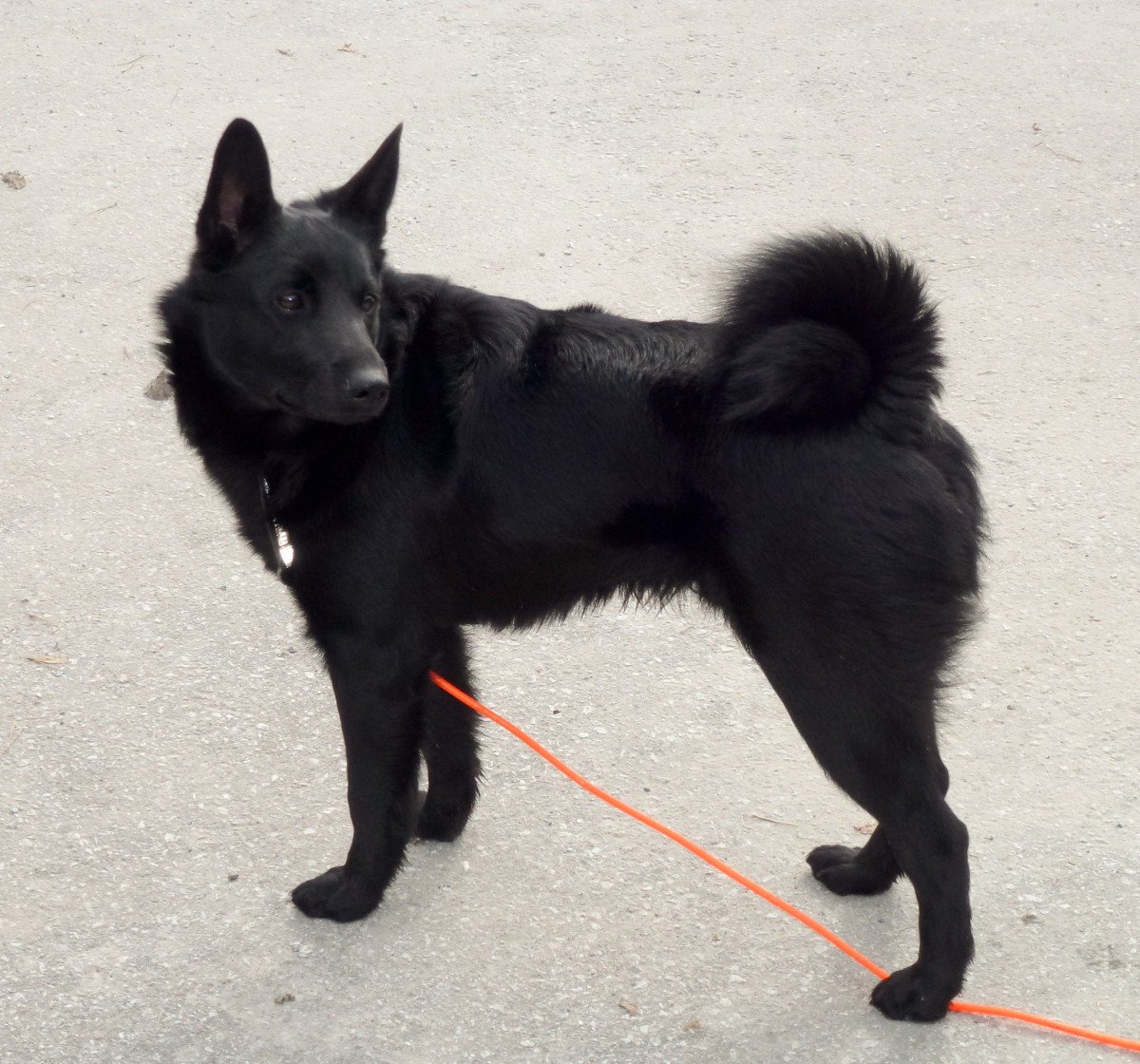
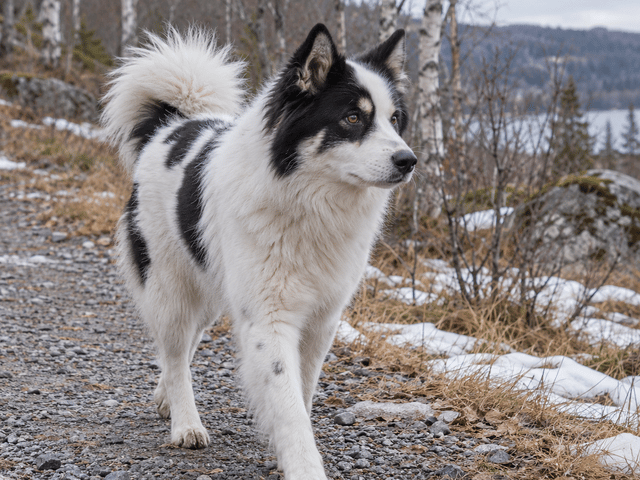
The Yakutian Laika is a medium-sized, strong, well-muscled dog with moderately long legs. Its body is slightly longer than its height at the shoulder and should give a compact, functional impression. The head is wedge-shaped, and the triangular ears are either erect or tipped over at the ends. The heavily coated tail is set high and may be carried in a curve over the back.
Males stand 55–59 cm at the shoulder and females 53–57 cm. The almond-shaped eyes may be dark brown, blue, or different colors; blue sections within a brown iris are also permitted. The coat is white with patches of various colors, or solid white. Neither a particular eye color nor a specific pattern of markings tells you how a dog behaves or how healthy it is.
The coat consists of straight, coarser guard hairs and a dense, well-developed undercoat. The hair is shorter on the head and the fronts of the legs, with more abundant hair around the neck, behind the legs, and on the tail. Brush the coat thoroughly on a regular basis, increasing the frequency during shedding. Ask the breeder to demonstrate tools and techniques that remove loose undercoat without making grooming uncomfortable for the dog.
Get your puppy used to being examined and groomed from an early age. Start with short sessions in which you feel over its body, lift a paw, and look inside its ears, rewarding calm cooperation. At the same time, make a habit of checking the skin, nails, and paw pads. With an active dog, it is helpful to spot chafing, wounds, and other changes before the next training session or outing.
¶Temperament and personality
The breed standard describes a brave, lively, people-oriented, friendly, and sociable dog. It developed through close cooperation with people and may enjoy both shared activities and companionship at home. The AKC highlights its affectionate nature and versatility. Even so, an individual dog's confidence and outgoing nature need to be assessed on their own merits, ideally with the help of meetings with adult relatives.
Its background as a sled dog means that cooperation with other dogs has been important. Many enjoy canine company, but introductions still need to be controlled and take account of the individuals that will be living together. Ask the breeder how their dogs behave in different groups and when meeting other dogs. Sociability does not replace training or the need to give a dog peace and its own space.
A strong interest in hunting is a clear feature of the breed. A dog that is affectionate and responsive at home may become intensely focused on scents and movement outdoors. Build engagement and everyday routines early, and let your puppy experience new environments at a pace it can handle. Socialization should provide positive experiences with people and animals without involving unrestricted greetings or play in every situation.
¶Training and exercise
Plan daily life around the dog's need to work. The Swedish Kennel Club (SKK) describes the breed as particularly suited to regular sled work, and sled dog sports offer a natural outlet for its abilities. Walks, hiking, and other shared activities can complement training. Ask the breeder or an experienced handler to show you how to introduce a young dog to a harness and pulling work, and how to develop the training as the dog matures.
Physical exercise needs to be combined with tasks that engage the dog's mind. Everyday obedience, search exercises, and learning new skills can provide variety, and the AKC mentions agility among the possible activities. Adapt the workload and difficulty to the individual dog's age, health, and fitness. The dense coat and high activity needs also mean that summer training must be planned around the temperature and opportunities to cool down.
Use clear cues and rewards the dog values. Start in quiet environments and gradually increase distractions, building a thoughtful foundation for engagement and recall. Its strong hunting instinct means you need to be able to maintain physical control when the surroundings require it. A successful training session without wildlife distractions does not tell you how the dog will react when an animal runs past.
¶Health
The SKK emphasizes that the number of registered dogs in Sweden is too small to assess the breed's health reliably. This makes it especially important to examine the available information carefully before buying a puppy. Ask for documented examination results and information about parents, siblings, and previous offspring. A dog appearing lively, or the breed having a long working history, is no substitute for information about the health of that particular family.
Hips and elbows are discussed in health materials from the Russian national breed club, which cover X-ray examinations as part of breeding selection. Ask the breeder to show you the parents' official joint assessment results and explain how these were considered when planning the pairing. Recommendations from foreign breed clubs are not automatically Swedish registration requirements. Check the current requirements with the SKK and ask what documentation supports each claim about completed health checks.
Hearing is another topic to discuss. Deafness has been reported in the breed, and the breed club's materials cover hearing checks and BAER testing. A BAER test objectively assesses hearing function and can distinguish between hearing in one ear and hearing in both. Ask for the results for the dog that was tested. Do not judge hearing by blue eyes, coat color, or responses to sounds in everyday situations alone.
The breed club's materials also discuss clinical eye examinations and the limitations of genetic tests. Ask exactly what an eye examination certificate or DNA result covers and whether the test is relevant to the breed. A long list of tests is not the same as a comprehensive health assessment. Results, dates, and the dog's identity should be verifiable, and a veterinarian's assessment should guide decisions when vision or hearing problems are suspected.
¶History and origins
The Yakutian Laika comes from Yakutia in northeastern Siberia, where dogs have long helped Indigenous people with transport and hunting. Breed sources describe how they also performed other everyday tasks, including helping with reindeer herding and transporting goods. Written records of the area's dogs date back to the 17th century, and a specific description of the dog type was published in 1843. Its history is closely tied to life and work in a harsh climate.
Formal organization around the modern breed is much more recent. Preservation efforts gained momentum during the 1990s, and the Russian kennel organization published a breed standard in 2005, based on an older sled dog standard. According to the SKK, the first individual was registered in Sweden in 2019. This combination of an old working dog type and relatively recent international breed organization makes documentation of working ability, health, and temperament particularly valuable as the breed becomes established in more countries.
¶Living with the breed
The Yakutian Laika suits a lifestyle in which the dog can be involved and the owner wants to devote time to exercise and training. Plan for both working days and time off, and consider what activities you will offer throughout the seasons. The dog needs a balanced combination of activity, social contact, and rest. Ask the breeder to describe a typical week with an adult dog and compare it with your own life.
The breed is often described as affectionate toward its family, but children and dogs must always get to know each other safely. The dog's energy and size can be a lot for a small child to handle. Adults are responsible for managing interactions and should be present whenever young children are with the dog. Teach children to respect the dog's rest, food, and signals that it wants space.
Canine company may be welcome, but relationships with cats and other smaller animals need to be assessed with particular care because of the breed's hunting instinct. The AKC stresses that these encounters require supervision even with a sociable dog. Introduce the animals calmly and under control, and let previous experience and actual behavior guide how you proceed. Do not assume that a dog that gets along with a cat at home is also safe around unfamiliar cats outdoors.
Your living arrangements need to allow you to meet the dog's exercise and working needs every day. If you live in a building where sound carries easily, it is also wise to ask how vocal the dogs are. In a breed interview published by the Canadian Kennel Club, the Yakutian Laika is described as a dog that may use several different vocalizations, including howling. This is an account based on experience, not a measure of how vocal every individual will be.
Introduce time alone gradually, starting with very short periods when the dog feels secure. Build up according to its response, and arrange companionship or other supervision when needed. An interest in other dogs does not mean that just any canine companion will be a good match, or that human contact can be replaced entirely. The dog's social needs must also be met while you are working or occupied with other things.
Before buying, focus above all on three things: how you will meet the dog's need to work, how the breeder monitors health, and how the adult dogs behave in an ordinary home. Ideally, meet more than one individual and ask about both strengths and challenges. When the breed's drive to work and hunting instinct suit the household's circumstances, it can become an enthusiastic companion for an active life together.
¶Characteristics
¶Frequently Asked Questions
¶Comparisons with Other Breeds
Compare Yakutian Laika with other breeds and see the differences in temperament, activity level, and care to make a confident choice. Show All Comparisons