
¶Table of Contents
¶Quick facts
The East Siberian Laika, known in Swedish as östsibirisk lajka, is a versatile hunting dog from Russia. It combines a strong hunting drive with independence and a substantial need for work. The breed is primarily used for off-leash hunting and suits an owner with access to hunting grounds who wants to build a working partnership both in the field and at home.
- Size: males stand 57–64 cm at the withers and females 53–60 cm. The breed is powerfully built with well-developed muscles.
- Activity level: very high. It needs extensive physical and mental stimulation, along with opportunities to use its hunting abilities.
- Grooming: an easy-care double coat that needs brushing during shedding and bathing as required. The dense undercoat means recurring periods of more intensive grooming.
- Life expectancy: the kennel club and breed club sources reviewed do not provide a reliable breed-specific range. Ask the breeder about the lifespan and causes of death of older relatives.
- Best suited to: an active hunter with time for introducing the dog to hunting, fitness training and everyday obedience, who wants to live with an independent working dog.
Start your search for a puppy by describing the type of hunting you do and what the dog’s daily life will look like between hunting days. Ask the breeder to explain the parents’ working styles, hunting trial results and health screening results. A dog that suits one hunter or hunting ground may not be right for another, even when both are looking for the same breed.
¶Appearance and coat
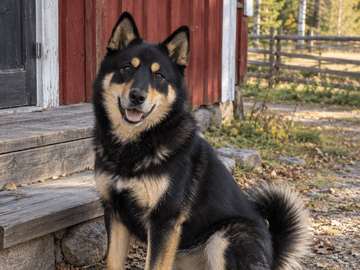
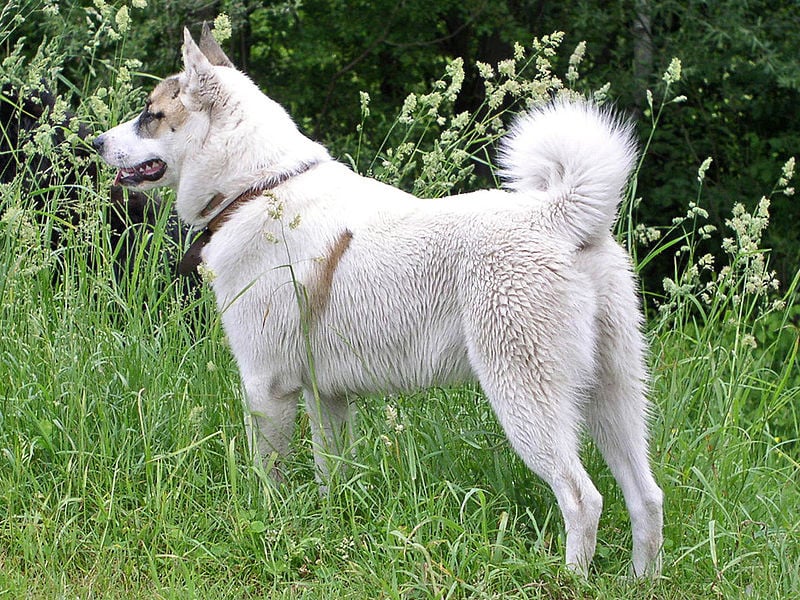
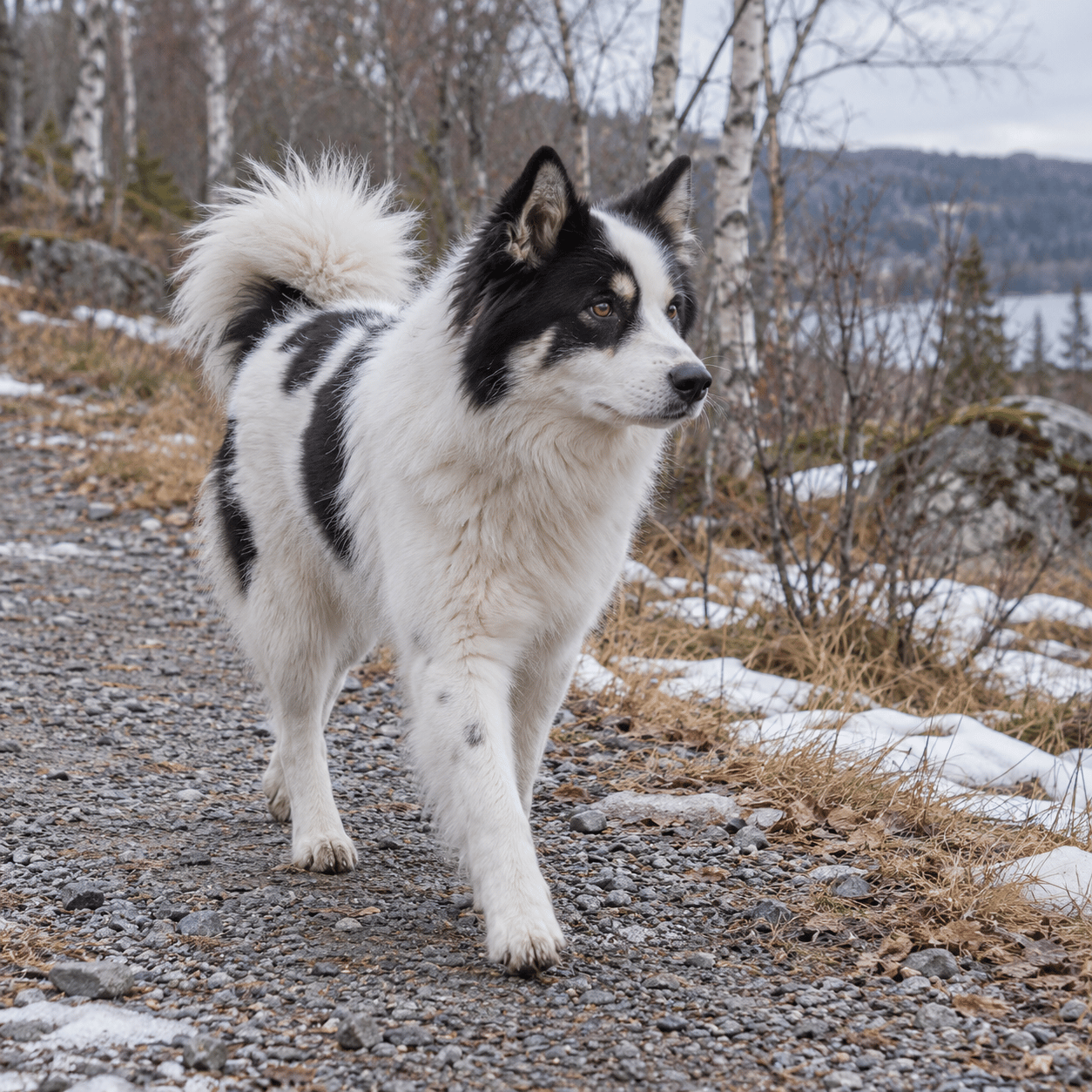
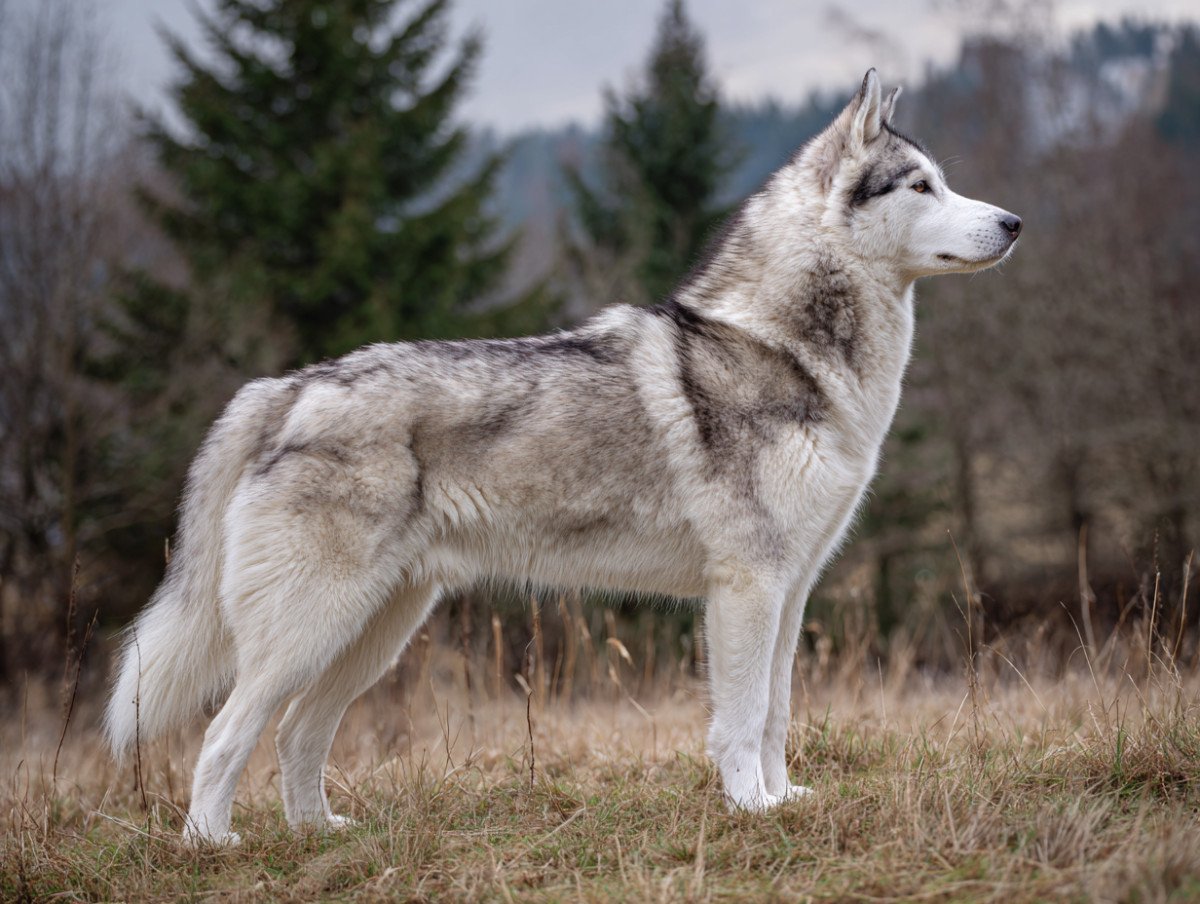
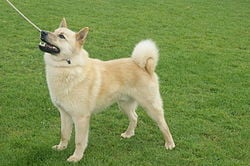
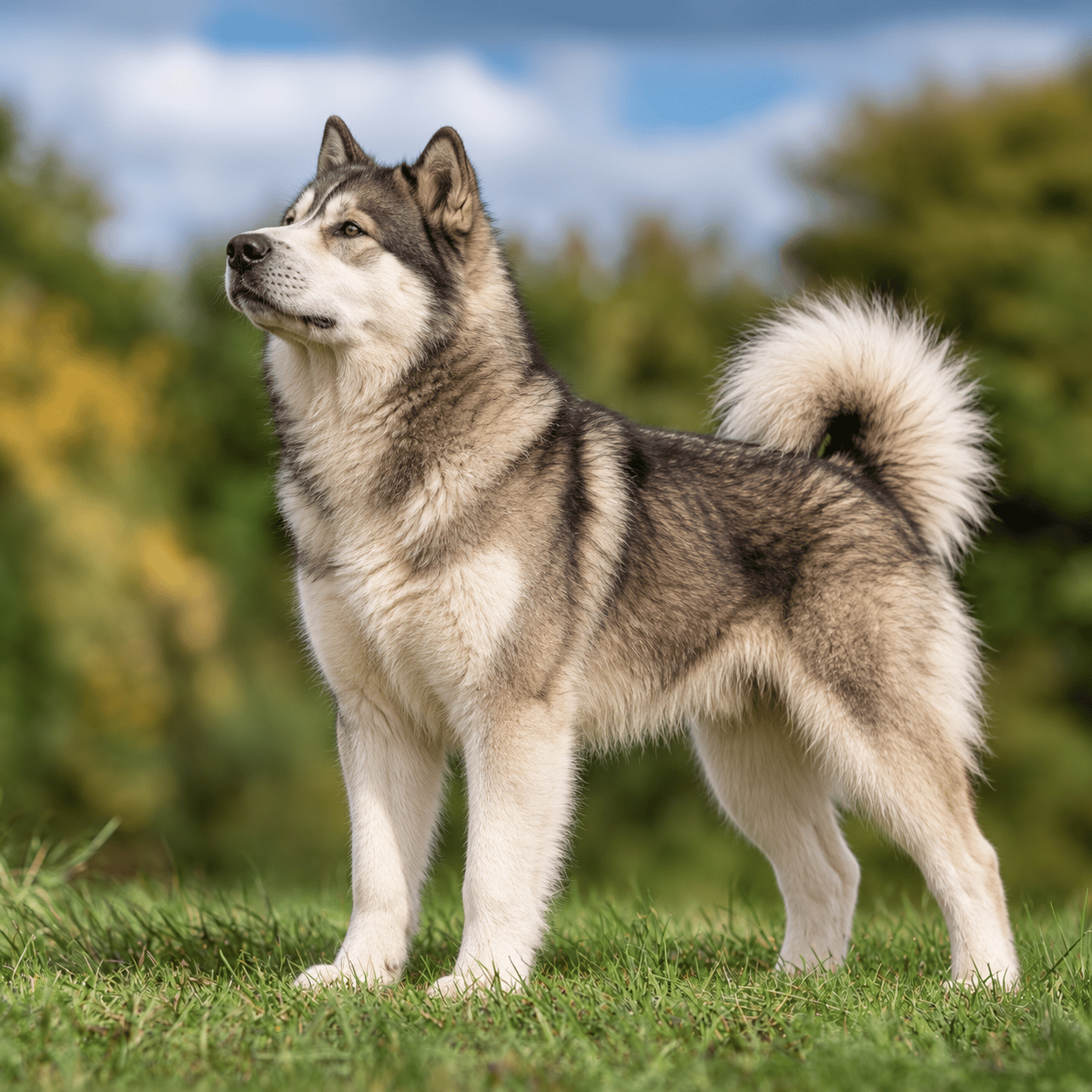
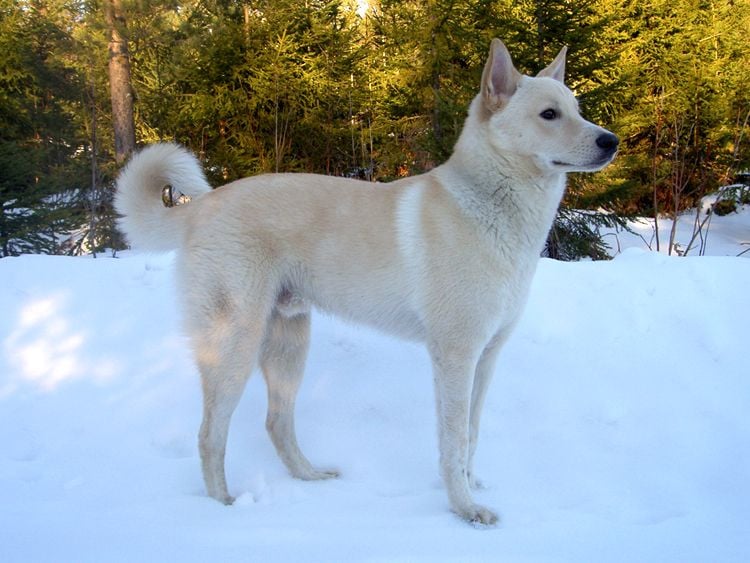
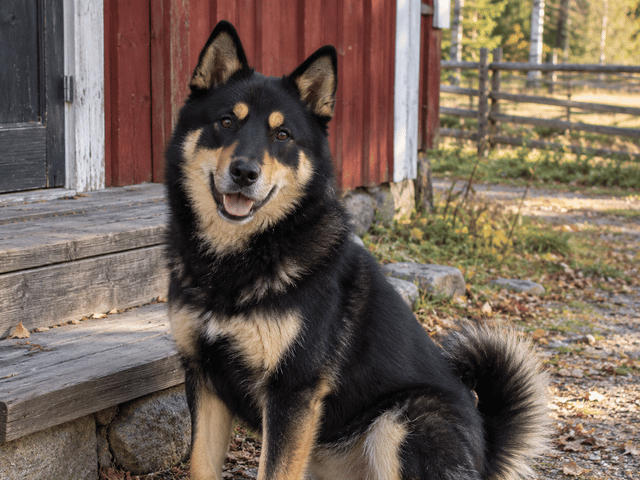
The East Siberian Laika is a strong, muscular spitz-type dog with substantial bone and a body slightly longer than it is tall. It has a broad, wedge-shaped head, erect ears and a tail carried curled or sickle-shaped over the back. Its expression should be friendly and alert, with oval, slightly slanted eyes in shades of brown.
Males stand 57–64 cm at the withers and females 53–60 cm. The FCI standard lists black and tan, black, black and white, white, and white with patches among the typical colours. Appearance varies within the breed, where hunting ability has long played a major role in breeding decisions. Its build and movement should enable it to work effectively across the terrain.
The coat consists of straight, coarse guard hairs over a soft, dense undercoat. Hair is more abundant around the neck and shoulders, while the head, ears and fronts of the legs have shorter hair. Brush out loose hair during shedding and bathe the dog when needed. Ask the breeder to show you how to work through the undercoat with suitable tools without pulling on the skin.
Make a physical check a routine part of finishing a woodland outing. Run your hands over the skin and legs, examine the paw pads and check that nothing is caught between the toes. Keep an eye on the nails, ears and mouth as well. Calm handling from an early age makes care easier and helps you spot ticks, wounds or other changes before they become bigger problems.
¶Temperament and personality
The breed standard describes an even-tempered, balanced dog that is friendly and trusting towards people. At the same time, it has a strong hunting drive and works independently in the forest. These traits can coexist in the same dog: one that enjoys family company may work a long way from its handler when searching for game. Assess both everyday behaviour and working style before buying a puppy.
Courage, energy and the ability to handle demanding hunting situations are important parts of the breed’s background. The Swedish Laika Club also highlights willingness to cooperate as an important quality. For owners, this means building the relationship through shared experiences and clear training. Independence when hunting does not make everyday obedience any less important, and the dog’s desire to work needs a carefully planned outlet.
Try to meet adult dogs and ask how they behave with visitors, when encountering other dogs and during handling. The UKC notes that conflicts with other dogs, particularly those of the same sex, can occur; each dog needs to be assessed individually. Give your puppy positive experiences in different environments and calm encounters, without expecting it to want to greet or play with everyone.
¶Training and exercise
The East Siberian Laika needs a daily routine built around its role as a hunting dog. The Swedish Kennel Club (SKK) stresses that the breed is not suitable solely as a companion and that its owner should have access to hunting grounds. Ordinary walks and occasional outings therefore do not meet the full range of its needs. Plan for an introduction to hunting, regular work and physical conditioning, including during periods when you are not hunting.
Build a foundation of engagement, recall, lead walking, handling and the ability to wait calmly. Use rewards the dog values, and begin training in situations where it has a good chance of succeeding. Then gradually increase distractions. Its hunting drive means you must be able to keep it secure wherever it should not be searching for game; a reliable recall at home needs to be developed further in much more challenging environments.
Woodland walks, tracking and gradually developed fitness training can complement hunting. The breed is also used for pulling and carrying packs, but the workload needs to suit the dog’s age, health and training experience. Seek advice from the breeder or an experienced handler when planning a young dog’s development. Balance activity with recovery and adjust sessions to the weather and temperature, particularly when the dog is working hard.
¶Health
The SKK describes the breed as generally healthy but notes that hip dysplasia (HD) occurs. For puppies to be registered in Sweden, both parents must have an official hip assessment before mating. The breed is also subject to specific rules on breeding from dogs affected by HD. Ask for registration numbers and check results in the SKK database, along with information about siblings and previous offspring.
Elbow dysplasia (ED) is addressed in the Swedish Laika Club’s breeding strategy. It recommends litters from parents that have been X-rayed before mating with a result of ED 0, meaning no detectable changes. Distinguish between the club’s recommendations and the SKK’s registration rules, and ask the breeder to explain how the proposed pairing has been assessed. Good results do not remove the need for follow-up as the dog grows and begins working.
Primary open-angle glaucoma (POAG) is another issue to discuss. The breed club and specialist club have reported glaucoma in the East Siberian Laika, and the disease can cause pain and loss of vision. Ask about eye problems in the family, which clinical examinations have been carried out and what DNA results are available. A general assurance that the line is healthy is less informative than documented results and a clear medical history.
POAG test results require careful interpretation. The breed club provides information about testing for a variant in ADAMTS10, but in May 2026 the SKK requested further scientific evidence to validate the test specifically for this breed. A DNA result alone should therefore not be treated as equivalent to a clinical eye diagnosis. Check the latest guidance from the SKK and the breed club, and have any suspected eye problems assessed by a veterinarian.
¶History and origins
The East Siberian Laika developed from local hunting dogs in central and eastern Siberia, where forests and mountains placed considerable demands on their work. The FCI describes Tungus, Yakut, pre-Baikal and Amur-related Laika types among its ancestors. The dogs were used to hunt various kinds of game, and the breed’s versatility as a hunting dog remains an important part of its identity.
The breed gained separate breed status in 1947 and a provisional standard in 1949. The FCI recognised it in 1980; the historical summary in the standard also states that a definitive standard was approved in 1981. The first East Siberian Laika was imported into Sweden in 1978. There, work with game including moose, wild boar and predators has become particularly important, and hunting trials are used to document qualities worth preserving.
¶Living with the breed
The most important consideration before buying is whether hunting and everyday life will fit together. Think through how often the dog will work, how you will maintain its fitness and who will look after it when you are busy. Talk to the breeder about both the hunting season and the rest of the year. Access to woodland is valuable, but it needs to be combined with a concrete plan for the dog’s work.
An East Siberian Laika may enjoy close family contact while also having a strong desire to work. Children and dogs should get to know each other under adult supervision, and an adult should be present whenever young children interact with the dog. Provide a resting place where the dog can be left undisturbed, and teach children to respect its meals, rest and signals that it wants space. Ask how the parents behave at home.
Other dogs and smaller pets require carefully managed introductions. The breed was developed to hunt different kinds of game, so do not assume that friendliness towards people means cats or small animals will be safe around it. Use distance and separation where necessary, and let the dog’s actual behaviour guide your decisions. Also ask the breeder about relationships between adult dogs and how any conflicts are handled.
Your home’s location needs to work for both training and the surrounding community. Barking is a working tool for a hunting dog that holds game at bay, but barking during a hunt does not tell you exactly how vocal an individual will be at home. If sound carries easily in your home, it is wise to ask about everyday barking and establish calm routines around noises and visitors. A garden provides space but does not replace working alongside the handler.
Introduce time alone in small steps once the puppy feels secure at home. Begin with short periods and increase them according to the dog’s response, while arranging care when it needs company. Independence when hunting shows how a dog works with game; it does not tell you how long it can cope with being alone. Assess that part of daily life separately.
Above all, choose a breeder who can explain their breeding goals and show how health, temperament and hunting ability are monitored. Read the parents’ results and discuss what they mean for the type of hunting you want to do. When the breed’s qualities suit the owner’s experience, hunting grounds and daily life, there is a strong foundation for a lasting partnership with a willing and versatile hunting companion.
¶Characteristics
¶Frequently Asked Questions
¶Comparisons with Other Breeds
Compare East Siberian Laika with other breeds and see the differences in temperament, activity level, and care to make a confident choice. Show All Comparisons