
¶Table of Contents
¶Quick Facts
- Males 52–60 cm and females 49–57 cm, according to the Swedish Kennel Club’s (SKK) judges’ guide. The Koko Genetics breed guide gives a weight of approximately 25–35 kg.
- Regular fitness training and hunting or advanced scent work.
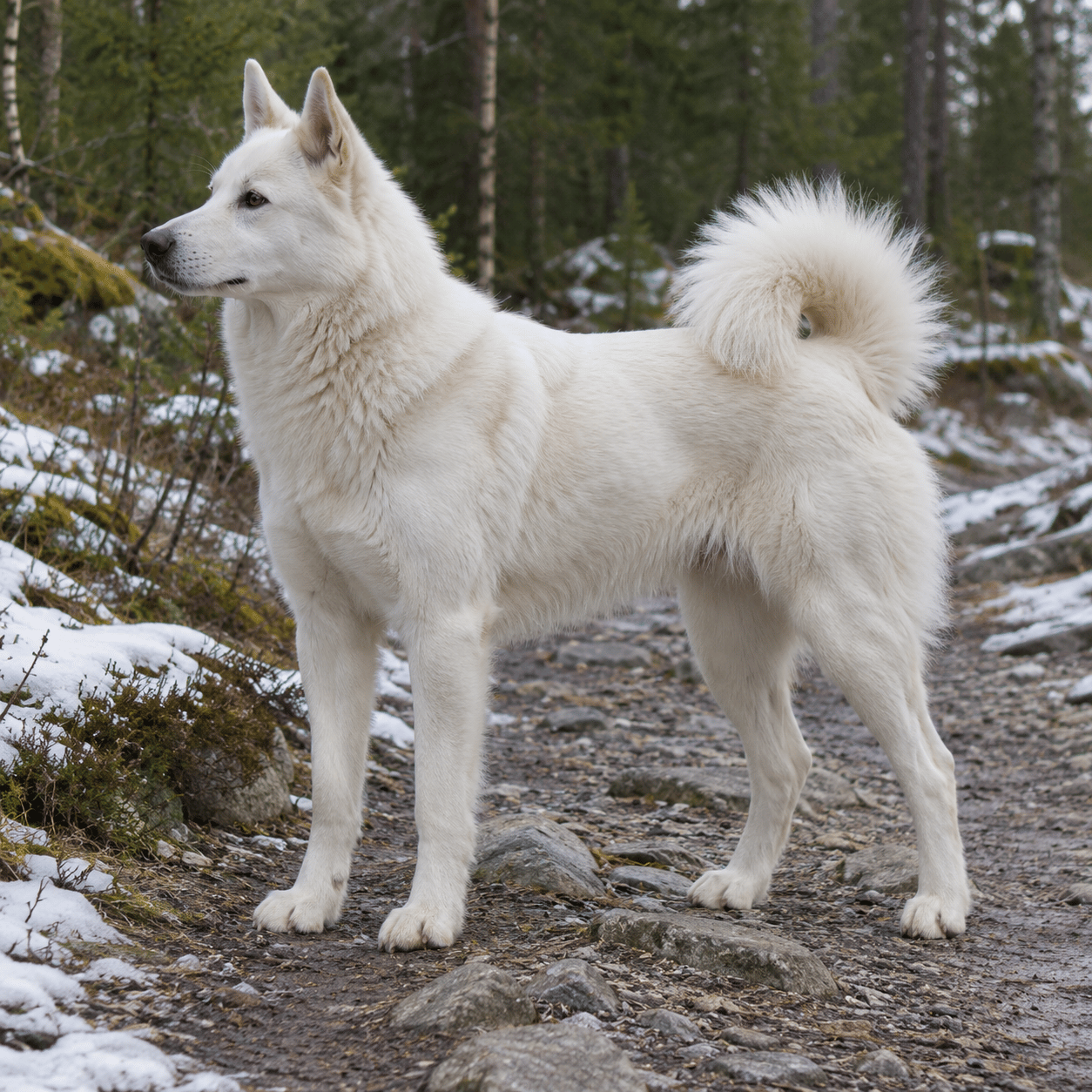
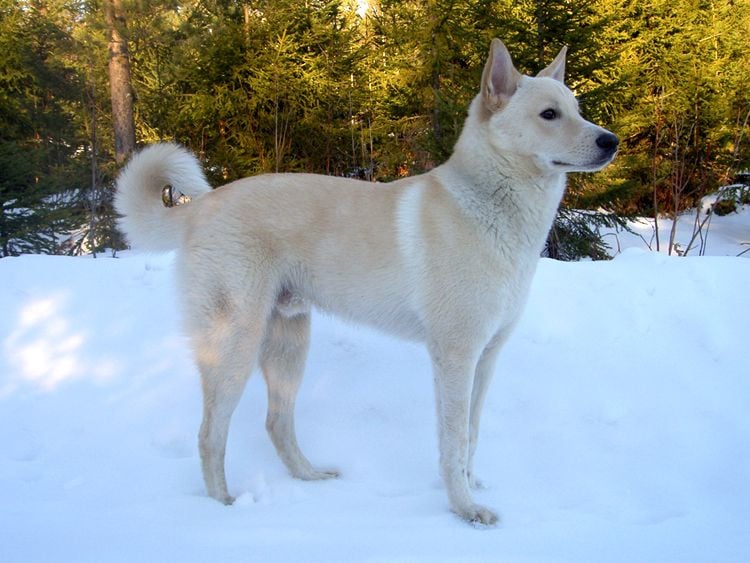
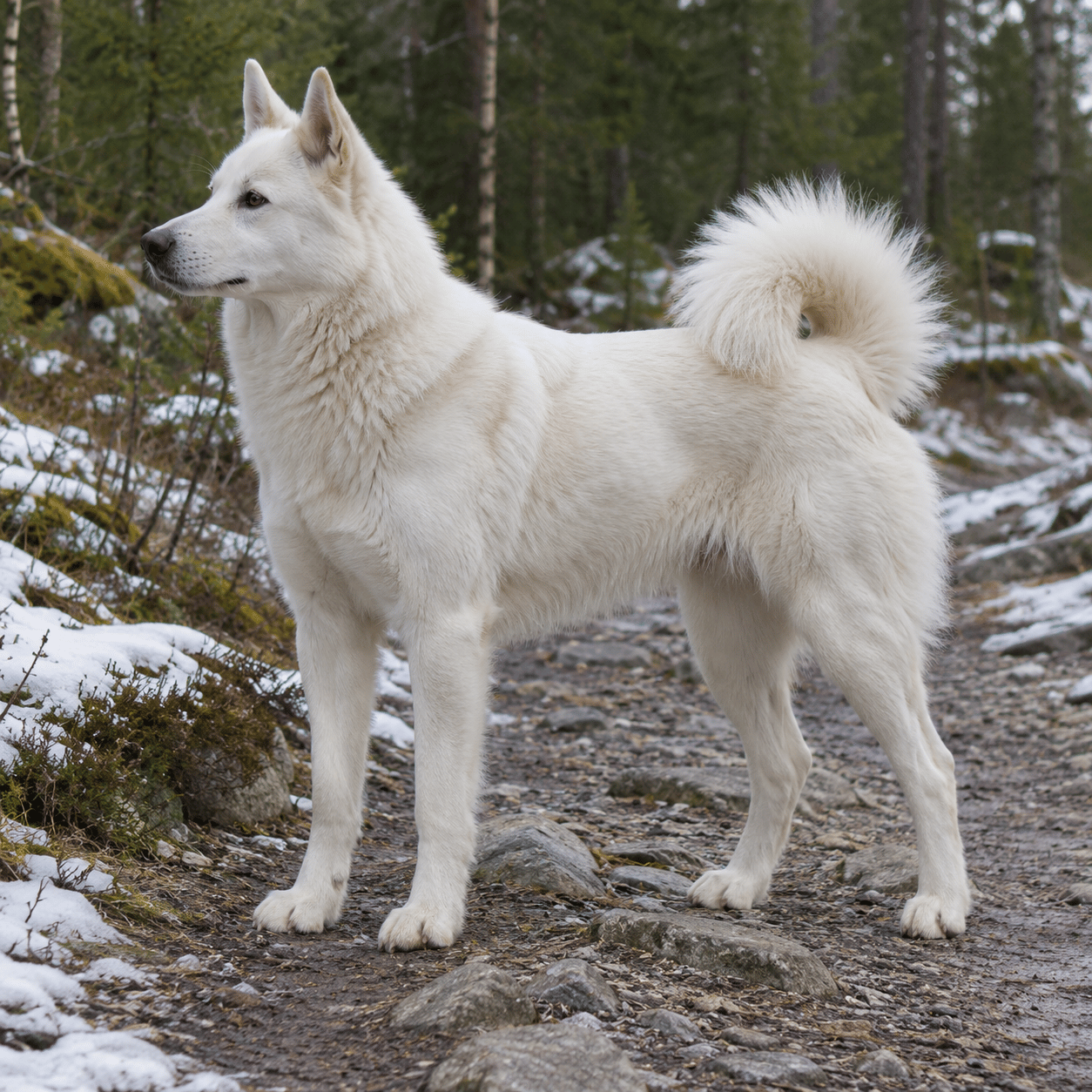
- A dense white double coat with relatively straight guard hairs and a soft undercoat.
- Approximately 12–14 years, according to the Koko Genetics breed guide.
- Someone who can provide plenty of time in the countryside and understands an independent hunting spitz.
¶Appearance & Coat
The Swedish White Elkhound is an agile, medium-sized spitz that works independently in the forest. Its hunting drive and ability to search large areas shape everyday life.
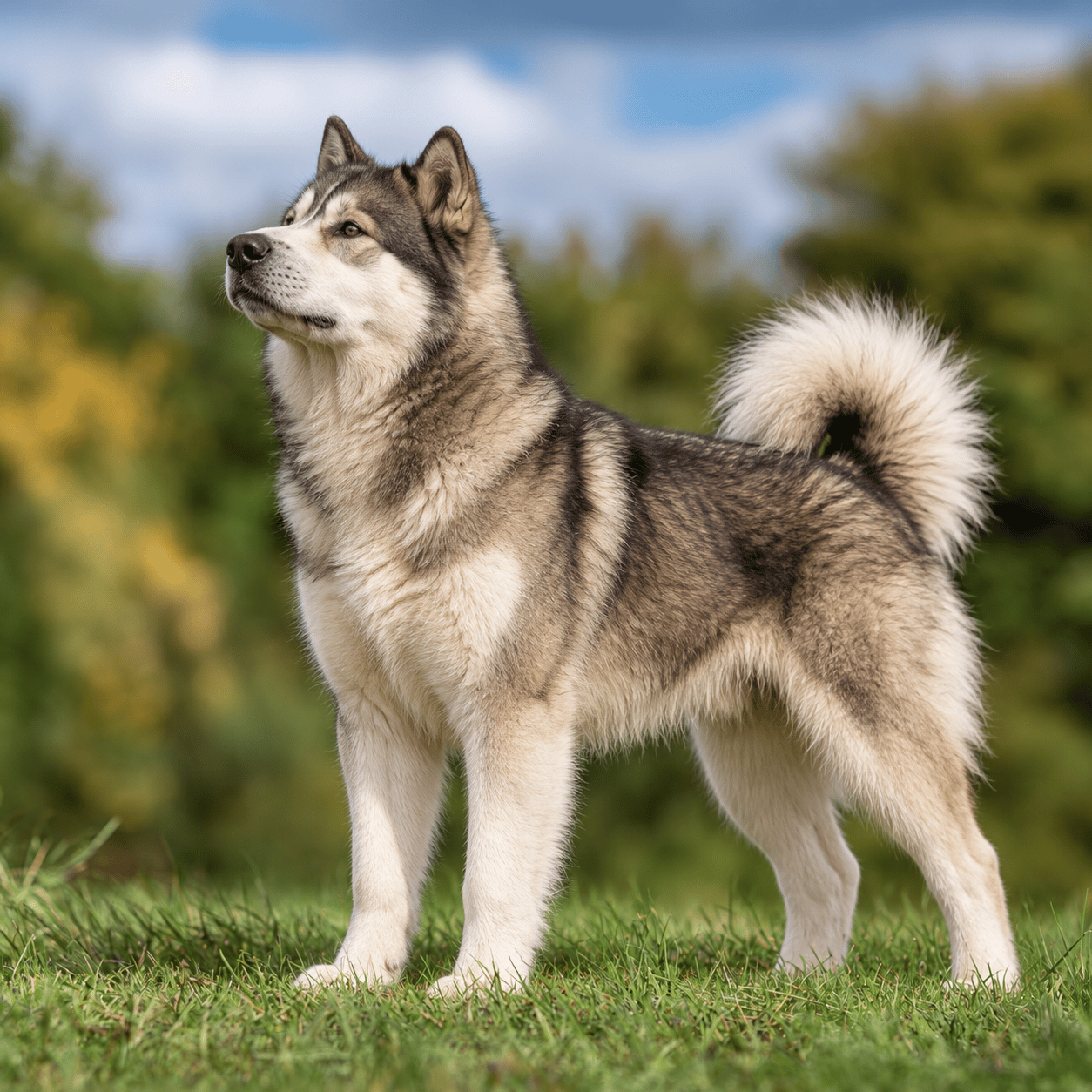
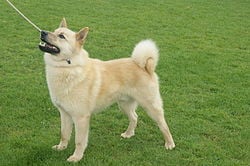
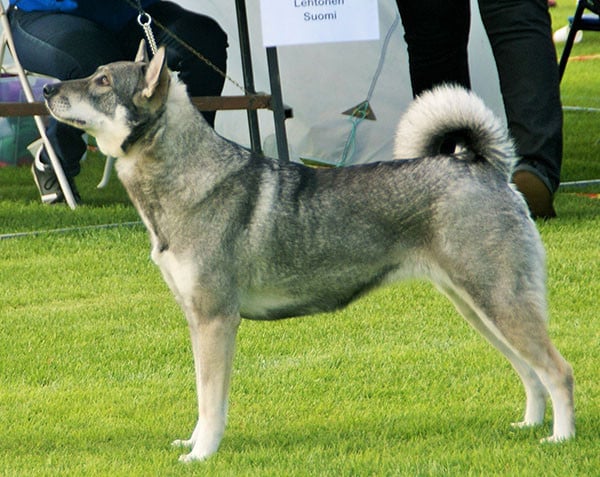
The breed is well-proportioned and slightly rectangular in build, with pricked ears and a curled tail. The coat is white, sometimes with a faint yellowish tinge.
¶Temperament & Personality
When hunting, the dog searches independently and uses its bark to keep game in place. Rewarding check-ins and maintaining clear routines help in everyday life.
¶Training & Exercise
Practise recall and steadiness before progressing to more demanding work in the forest. Tracking, exercise and quiet recovery time are important throughout the year.
¶Health
The breed’s breeding strategy monitors health and genetic diversity, among other factors. Ask the breeder about joint screening results, health checks and health trends in related dogs.
¶History & Origins
The breed developed from Swedish and Norwegian elkhound populations and was recognised by the SKK as a Swedish breed in 1993.
¶Living with the Breed
Brush out loose hair during shedding and check the paws after longer outings. Have a plan for managing hunting instincts and barking, even close to home.
¶Characteristics
¶Frequently Asked Questions
¶Comparisons with Other Breeds
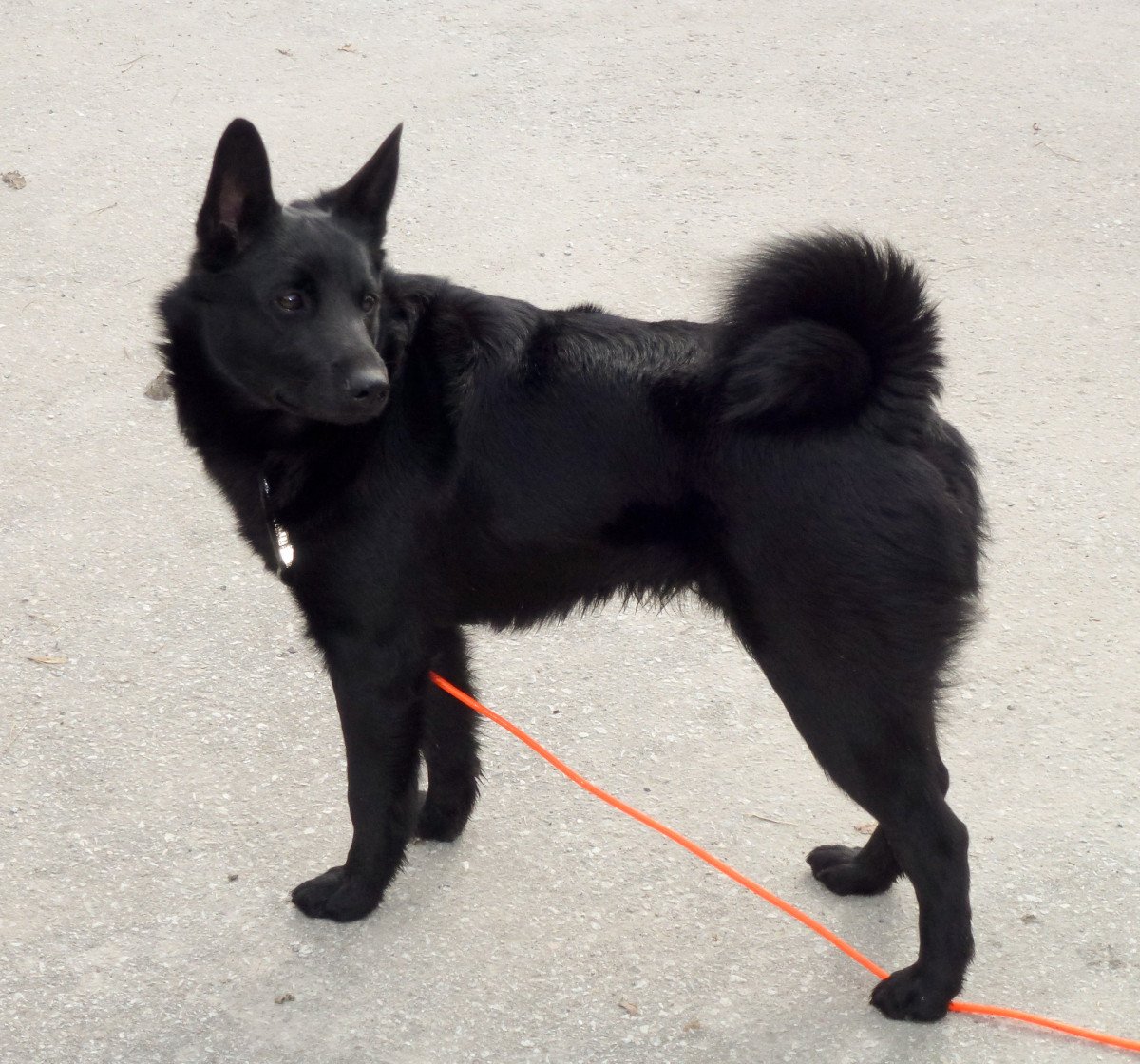
Compare Swedish White Elkhound with other breeds and see the differences in temperament, activity level, and care to make a confident choice. Show All Comparisons