
¶Table of Contents
¶Quick facts
The Pharaoh Hound, known in Swedish as the faraohund, is a lively, medium-sized dog from Malta. Behind its elegant appearance is a fast, alert rabbit hunter that uses sight, scent and hearing. In Sweden, it is primarily kept as an active companion and sporting dog. It combines affection and playfulness with independence, and its prey drive needs to be taken seriously in everyday life.
- Size: males stand 56–63.5 cm at the withers and females 53–61 cm. The body should be supple and muscular, slightly longer than it is tall.
- Activity level: high. The breed needs daily walks, mental stimulation and safe opportunities to run and exercise.
- Grooming: a very low-maintenance, short coat. Regular wiping or brushing and bathing as needed are usually enough, along with nail, ear and dental care.
- Life expectancy: the AKC gives approximately 12–14 years as a general guide for the breed. Individual lifespans vary.
- Best suited to: an active owner who appreciates a playful, independent dog and can provide safe outdoor exercise, shared activities and close contact at home.
Ask the breeder how the adult dogs cope with everyday noises, unfamiliar people, encounters with other dogs and time alone. The breed matures relatively slowly, so puppyhood and adolescence should not be rushed. Also ask how health and temperament are monitored within the family line and how the dogs’ prey drive is managed in everyday family life.
¶Appearance and coat
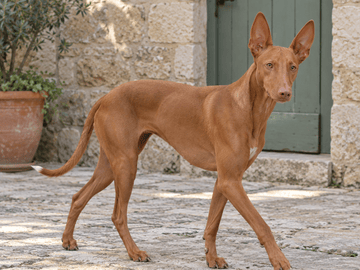
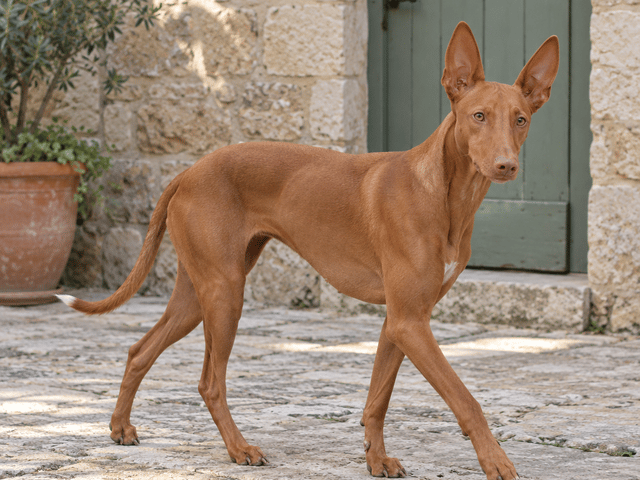
The Pharaoh Hound has clean lines, a long neck, a deep chest and well-developed muscles without looking heavy. The head is elongated and forms a blunt wedge, with a muzzle slightly longer than the skull. The large, fine ears are highly mobile and held erect when the dog is alert. The eyes are oval and amber in colour.
Males stand 56–63.5 cm at the withers and females 53–61 cm. The coat is reddish-brown in lighter or deeper shades, and the nose colour should blend with the coat. A white tail tip is particularly desirable under the breed standard; small white markings on the chest and toes, as well as a narrow blaze, are also permitted. The long tail tapers towards the tip and is carried in a curve when the dog is moving.
The short coat is glossy and may be fine and close-fitting or slightly harsher. Grooming takes little time: wipe or brush away dirt and loose hair, and bathe as needed. The thin coat also means the dog may need a warm coat in winter. Adjust time outdoors to suit the weather and the individual dog, and provide a warm, dry place to rest.
Make handling a calm part of daily life from puppyhood. Get your dog used to having its ears checked, the spaces between its toes felt and its mouth examined. Keep nails short and check the paw pads and skin after running. Regularly feeling over your dog’s body helps you learn what is normal for that individual, making it easier to notice wounds, tenderness or lumps.
¶Temperament and personality
The Pharaoh Hound should be friendly, affectionate, intelligent and playful. Many form close bonds with their families and like to join in whenever something is happening. An adult dog can be calm indoors when daily life provides enough exercise and stimulation. A fast, alert adolescent, however, may need plenty of guidance before settling down and everyday routines come as easily.
With unfamiliar people, the Pharaoh Hound may be reserved or fairly uninterested. The Swedish Kennel Club (SKK) distinguishes this reserve from fear, an important difference to discuss with the breeder. Ask how the dogs recover from surprises and how they react to loud noises. The Swedish breeding strategy identifies noise sensitivity as an area to monitor, so positive, reassuring introductions to new situations are valuable.
The breed’s prey drive can quickly become apparent when something moves or a scent catches its interest. Pharaoh Hounds use several senses when hunting, so a dog may become interested in game even without having seen it. Build a strong connection and good habits from the start, but include secure fencing and boundaries in your plans. An affectionate relationship with the owner does not guarantee that a dog will refrain from chasing.
¶Training and exercise
Daily life should include walks, exercises that encourage cooperation and opportunities to run in a safe place. SKK lists lure coursing, agility and game tracking as activities that may suit the breed. In lure coursing, the dog follows an artificial lure, providing an outlet for elements of its hunting behaviour. Seek help from an experienced organiser when introducing your dog, and tailor participation to its maturity and fitness.
Train with clear cues, rewards and tasks of an appropriate difficulty. Pharaoh Hounds learn readily but can also be independent and impulsive. Short sessions practising recall, lead walking, handling and waiting calmly will help in many situations. Start with mild distractions and build up gradually, giving your dog experience of succeeding even as its surroundings become more tempting.
Off-lead freedom needs to be managed with the hunting instinct in mind. The AKC warns that even good obedience is not a reliable basis for letting this breed off lead in an unfenced area. Check fencing carefully and use a lead where needed. Adjust physical demands to age and health as well; a young dog needs a different approach from an adult that has already built up the fitness for fast-paced exercise.
¶Health
SKK describes the Pharaoh Hound as a generally healthy breed, but that does not mean every individual is free from hereditary or other health problems. Before buying a puppy, ask for specific information about its parents, siblings and previous offspring. Documented examinations and an openly shared medical history tell you more than a general assurance that the breed is usually healthy.
According to SKK, occasional cases of patellar luxation, in which the kneecap can move out of its normal position, do occur. The Swedish breeding strategy also addresses hip health and encourages voluntary screening where relevant. Ask which knee and joint examinations have been carried out in the particular family line. Lameness or a change in movement should be assessed by a vet, even in a dog that is still keen to run and play.
According to the AKC, the American breed club recommends examinations of the kneecaps, hips, eyes and thyroid. These are American recommendations and should not be presented as mandatory Swedish registration requirements. Ask to see the exact results, dates and identity of the dog examined. A normal result applies to the examination performed; it does not mean that every possible health problem has been ruled out.
The Swedish breeding strategy from 2019 identifies conditions including tumours, eye disorders and thyroid disease as areas for continued monitoring. Some of the evidence comes from older owner surveys and cannot reliably describe current disease rates. Ask about recurring diagnoses in the family line and respond to new lumps, persistent skin problems or other changes. When a dog shows symptoms, a vet’s assessment should guide decisions.
¶History and origins
The Pharaoh Hound originates from Malta and Gozo, where it has been used to hunt rabbits in rocky terrain. Its name and resemblance to dogs in ancient Egyptian depictions have contributed to theories of a very ancient Mediterranean background. That resemblance alone, however, does not demonstrate an unbroken line of descent from the pharaohs’ dogs. Malta’s hunting tradition provides the clearest starting point for an account of the breed.
A few dogs reached Britain early on, but according to SKK, the breed became established there during the 1960s and subsequently spread internationally. The first Pharaoh Hound was imported into Sweden in 1971, and the first Swedish litter was born in 1974. In Sweden, showing, family life and activities such as lure coursing have become important, while the breed’s speed and hunting abilities still need appropriate outlets.
¶Living with the breed
The Pharaoh Hound suits someone who wants a close companion with a sense of humour, plenty of energy and a mind of its own. Plan daily life to provide exercise and tasks, as well as help with winding down. Safe exercise arrangements are a practical matter to resolve before bringing a puppy home. Ask the breeder to show you what everyday life with adult dogs looks like, including on days without competitions or other major activities.
Children in the family need to get to know the dog in safe, supervised circumstances. A friendly breed description does not replace adult responsibility, and young children should always have an adult present when they are with the dog. Provide a resting place where the dog can be left undisturbed, and teach children to respect its meals, sleep and signals that it needs space. Adults are also responsible for walking and handling a fast, strong dog.
Many Pharaoh Hounds get along well with other dogs, but introductions still need to be tailored to the individuals involved. Cats and other small animals require particular care because of the breed’s prey drive. Let the animals become accustomed to one another under controlled conditions, and keep them separated when necessary. Knowing an animal at home does not mean the dog will react in the same way to an unfamiliar cat or another small animal outdoors.
The home environment needs to allow for both rest and safe activity. The breed may bark to alert you when something happens, so ask about everyday barking among adult relatives and how they cope with noises and visitors. The short coat also makes warm sleeping places and adjustments for winter weather important practical considerations. A fenced garden can be useful, but it does not replace walks, training and contact with people.
Introduce time alone in small steps once your dog feels secure at home. Start with brief periods and adjust your progress to its response. Arrange company or supervision if your absence would otherwise be too difficult for the dog to cope with. Independence while hunting does not tell you how a dog feels about being home alone, and there is no set length of time that every Pharaoh Hound can automatically manage.
Before buying, make sure you receive clear answers about managing prey drive, how the breeder works to develop stable temperaments and what health information is available for the planned litter. If possible, meet adult dogs and choose a breeder who discusses both the benefits and the challenges. When the dog’s exercise, safety and social needs fit the household, there is a strong foundation for an affectionate, playful companion with whom to enjoy many shared activities.
¶Characteristics
¶Frequently Asked Questions
¶Comparisons with Other Breeds
Compare Pharaoh Hound with other breeds and see the differences in temperament, activity level, and care to make a confident choice. Show All Comparisons