
¶Table of Contents
¶Quick facts
The Greenland Dog, known in Swedish as the grönlandshund, is a powerful polar dog originating in Greenland. The breed was developed for sustained work as a sled dog in Arctic conditions. It is energetic, independent and generally friendly towards people, but also has a strong prey drive. Its need to work, physical strength and need for a stable social life are important considerations before choosing this breed.
- Size: males should stand at least 60 cm at the withers and females at least 55 cm. The FCI standard specifies neither an upper height limit nor a fixed weight range.
- Activity level: very high. The breed needs regular opportunities to use its strength and stamina through activities such as pulling work and active outdoor pursuits.
- Coat care: a dense double coat that needs regular brushing, with more attention when the undercoat sheds. The Royal Kennel Club gives weekly grooming as a general guideline.
- Life expectancy: the Royal Kennel Club lists over 10 years as a general breed guideline. This is not a guarantee for an individual dog.
- Best suited to: an experienced, committed owner who wants to take part in pulling work, hiking and other physical activities, and can provide the dog with a secure social life.
Ask the breeder how their adult dogs work, how they get along with people and other dogs, and what health test results are available. Choosing this breed should be about more than an interest in its appearance. You also need to want to live with its enthusiasm for work, independence and prey drive for many years.
¶Appearance and coat
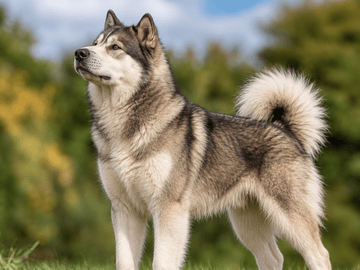
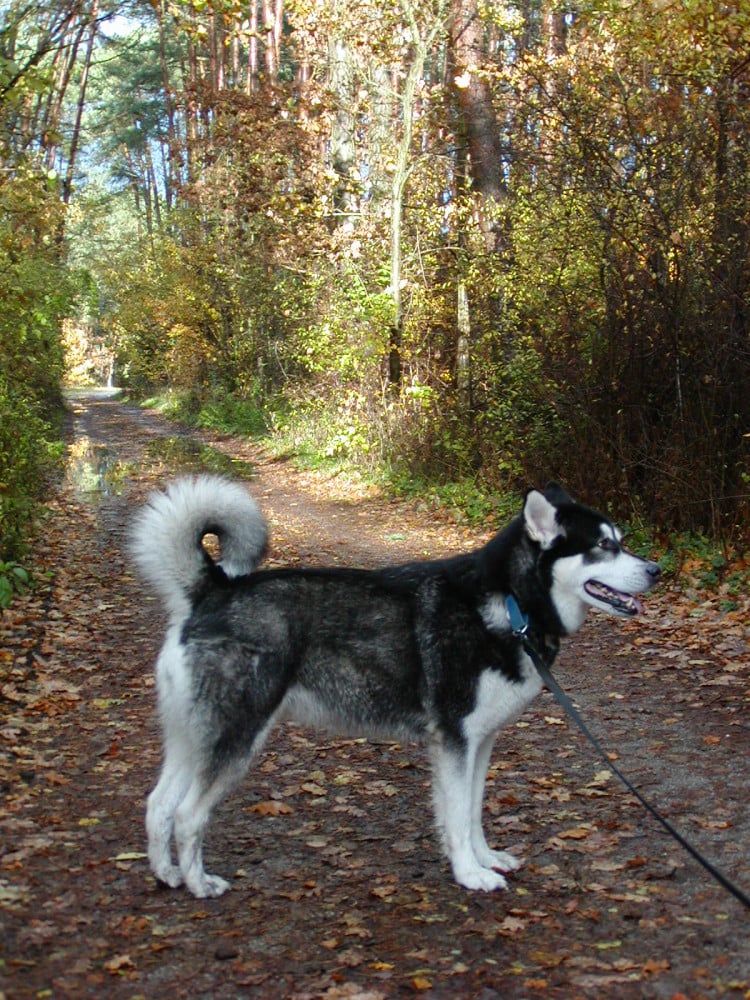
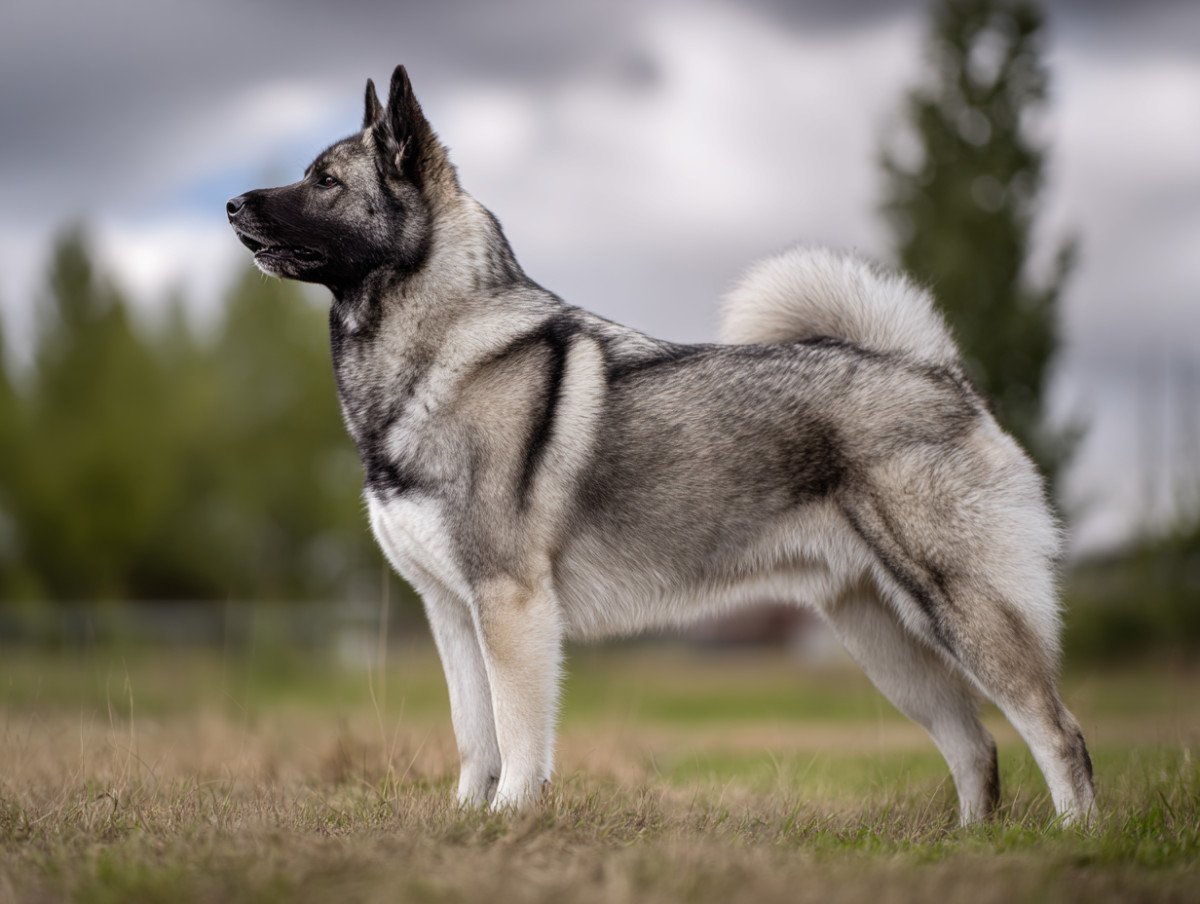
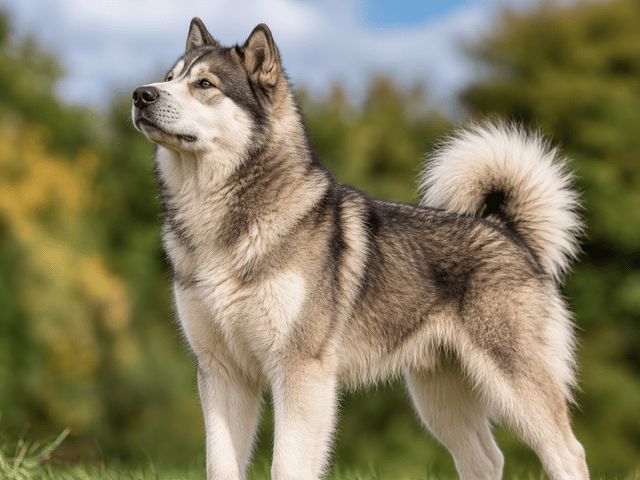
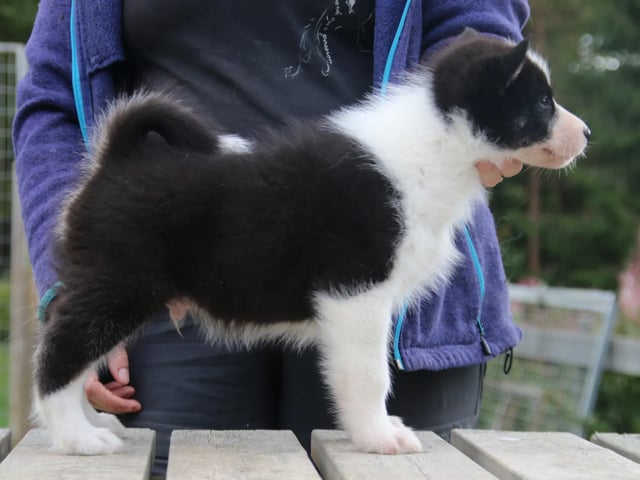
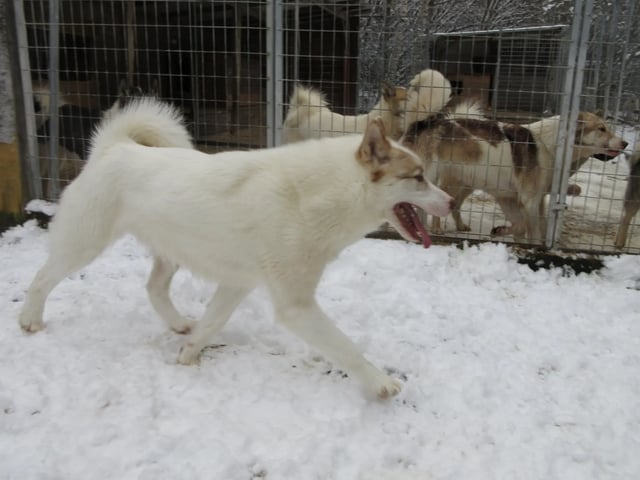
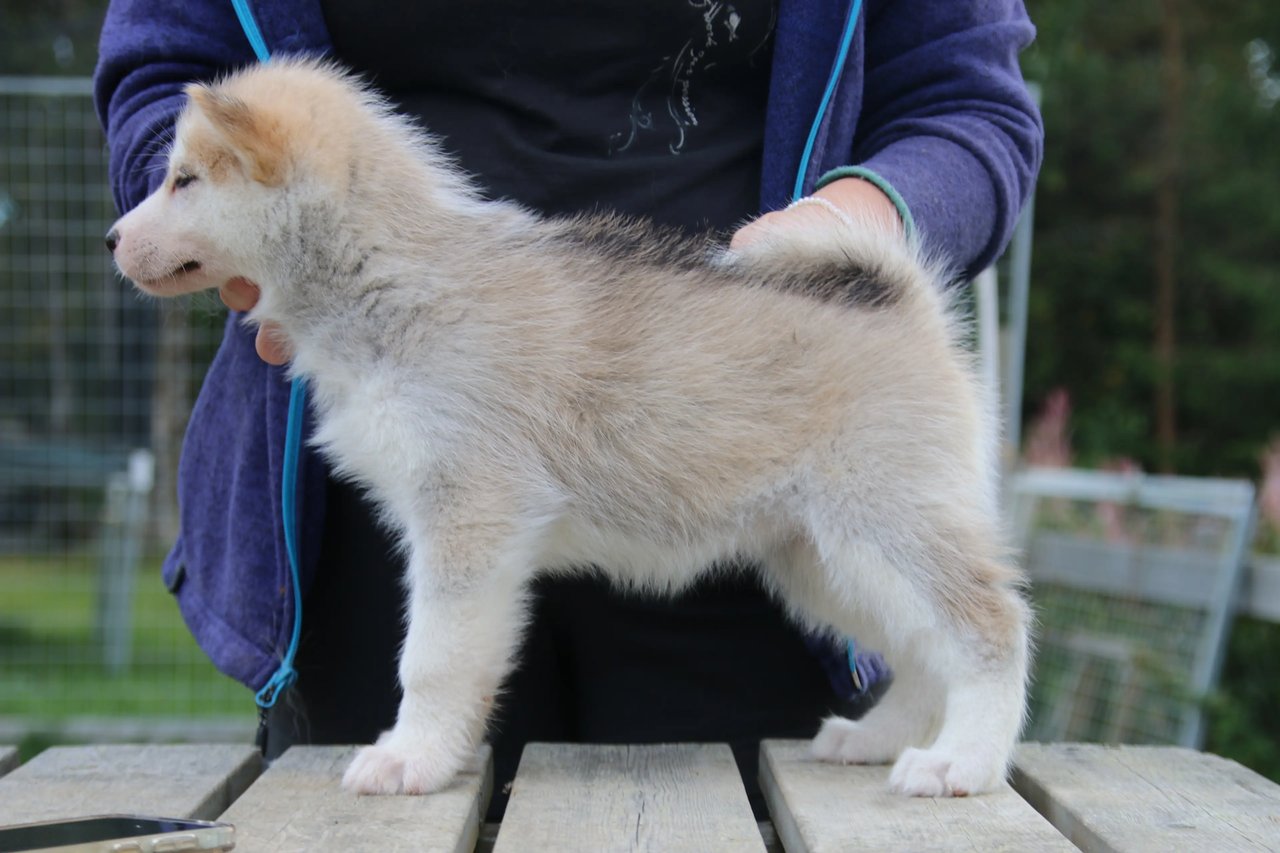
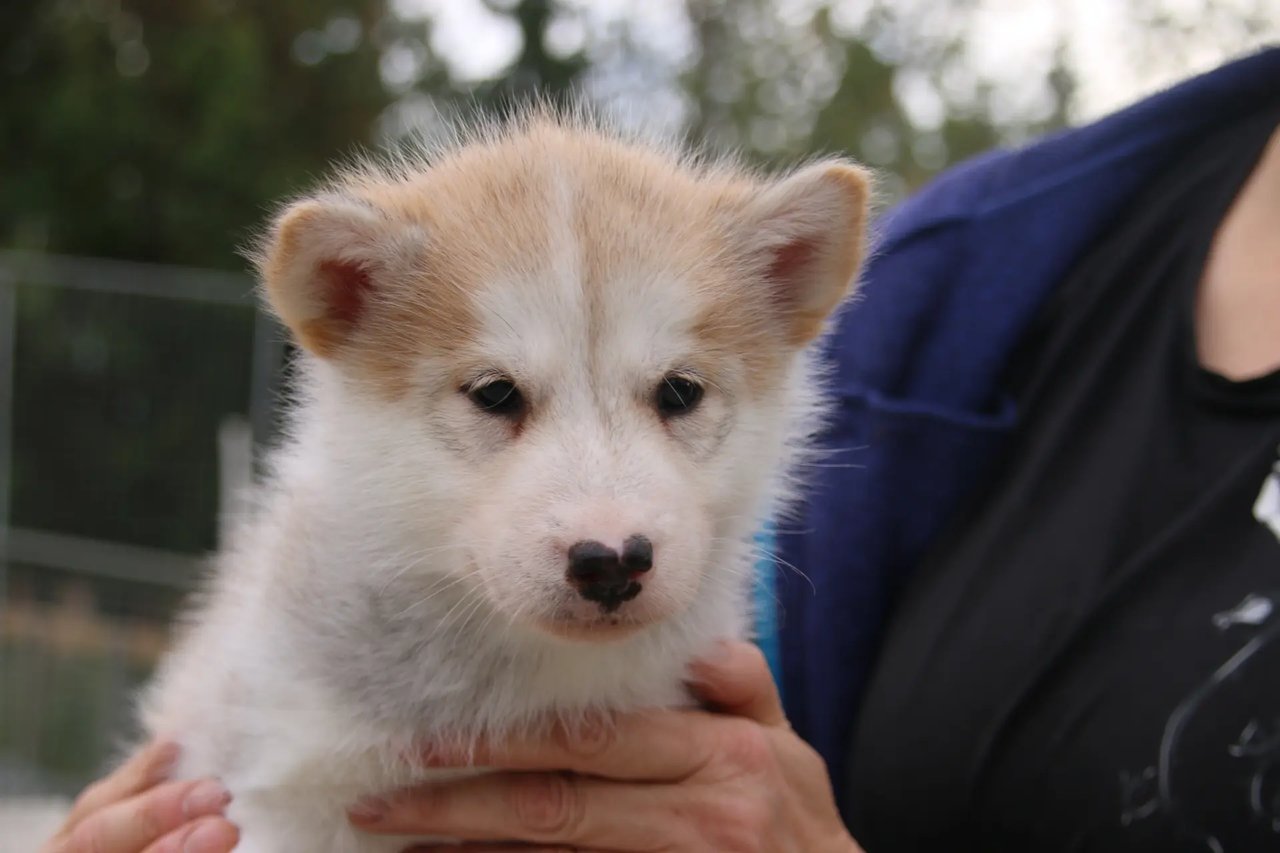
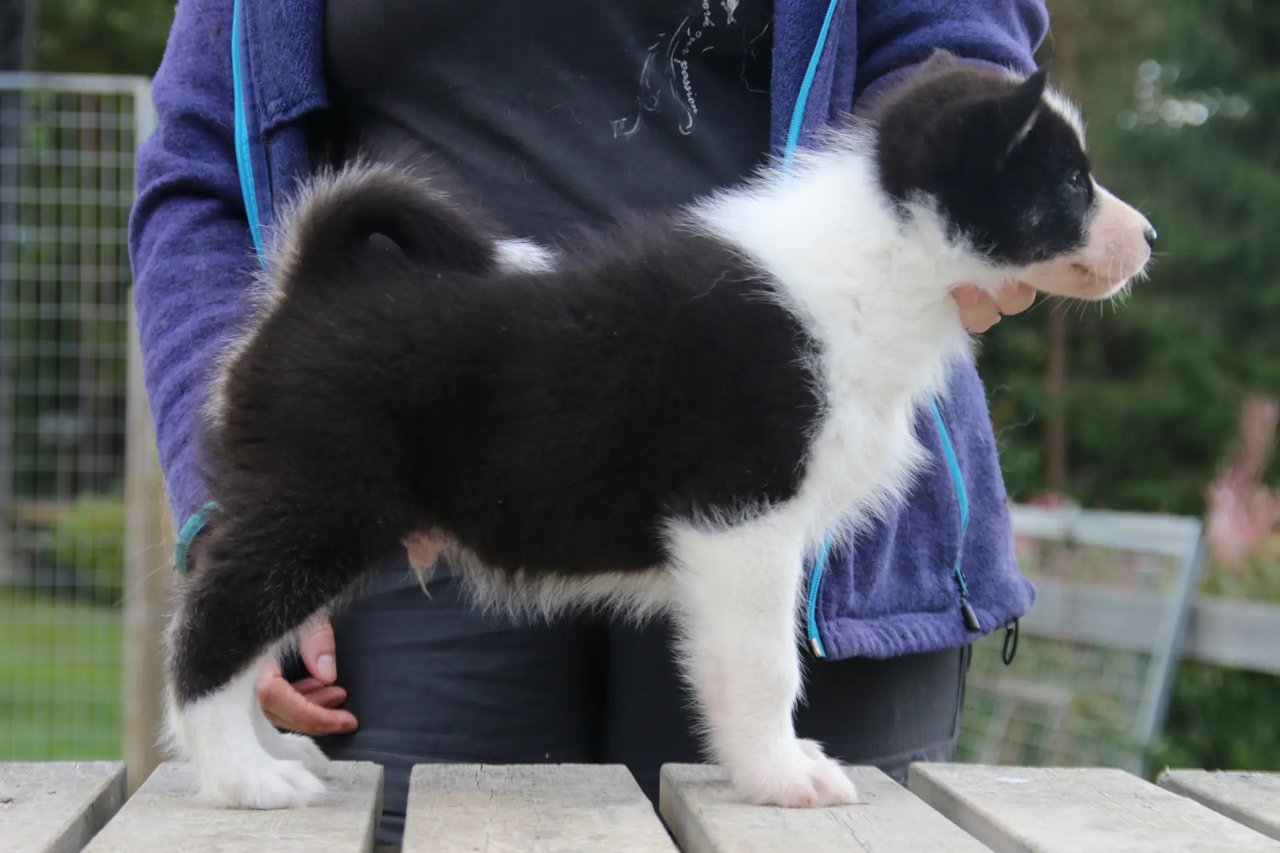
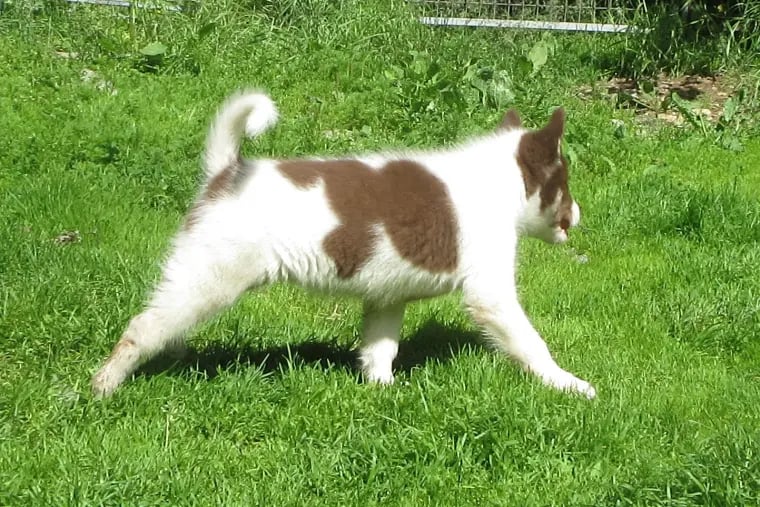
The Greenland Dog is a very strong spitz-type dog with substantial bone, well-developed muscles and a body that is slightly longer than its height at the withers. The head is broad, the muzzle powerful, and the ears relatively small, triangular and upright. The tail is set high and carried curved or loosely curled over the back. Its overall build should support sustained work in demanding terrain and weather.
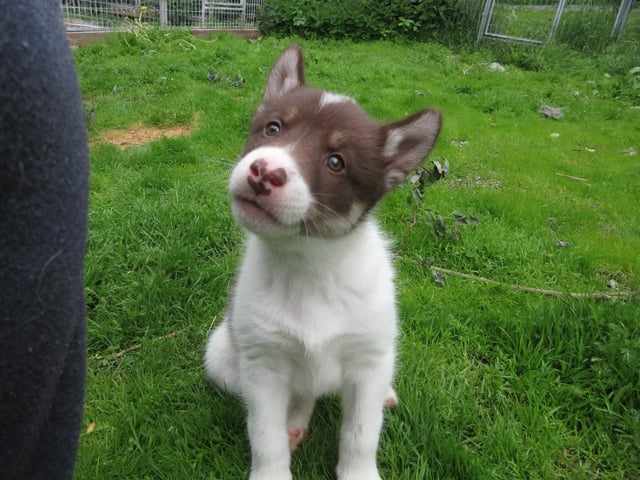
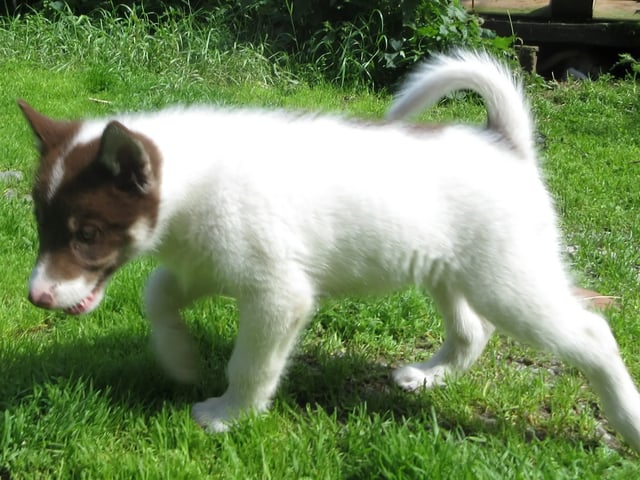
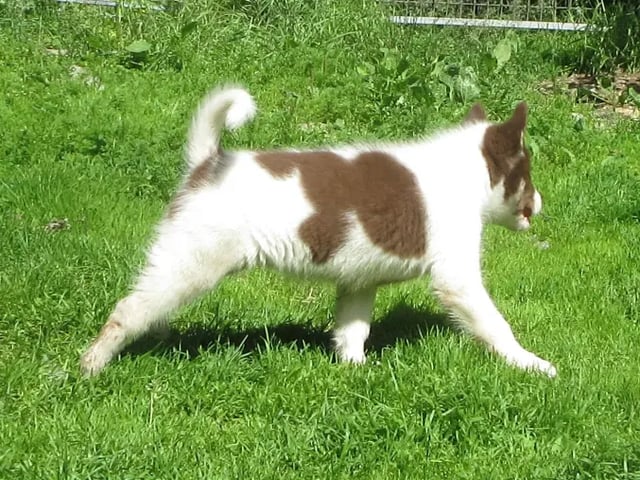
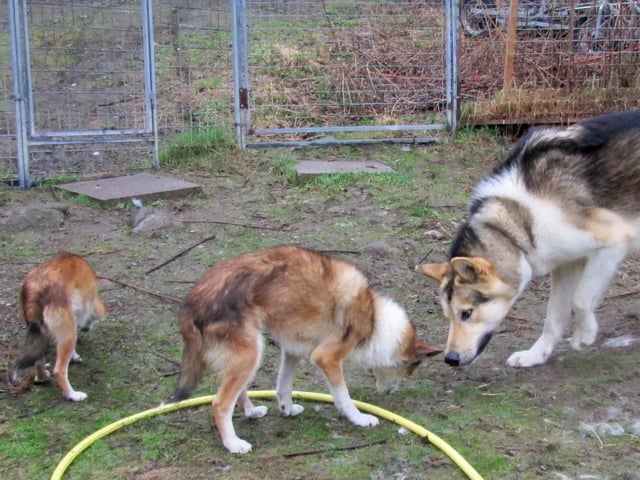
Males should stand at least 60 cm and females at least 55 cm at the withers. Some variation in size is accepted as long as function and proportions are maintained. The coat consists of a soft, dense undercoat and straight, coarser guard hairs. Solid and multicoloured coats are permitted, but the 2022 FCI standard excludes albinism and merle markings. Blue eyes and eyes of different colours are also disqualifying faults under the standard.
Coat care mainly involves keeping the dense coat in good condition and removing loose undercoat during shedding. At these times, grooming needs can be much greater than during the rest of the year. Check the coat regularly and ask the breeder to demonstrate suitable tools. Adapt your routine to your dog's coat and shedding cycles rather than assuming the same amount of work will be needed every week.
Check the skin, ears, nails and paws at the same time. A dog that works and spends a lot of time outdoors needs regular checks so that you can spot chafing, wounds and other changes. Get your puppy used to having its body touched, its paws lifted and its ears examined. Calm, brief handling sessions and rewards for cooperation make ongoing care easier.
¶Temperament and personality
The Greenland Dog should be energetic, mentally resilient and fearless. It is described as friendly even towards unfamiliar people, and the breed standard states that it is not suitable as a guard dog. As a sled dog, it has not been bred to depend on one particular handler. This creates a different basis for teamwork than with dogs that constantly look to their owner for guidance.
The breed is independent and has a strong pack instinct. A good social life is important, but this does not mean that every individual will do well in a large group of dogs. The Swedish Kennel Club (SKK) notes that the breed is not always comfortable in large packs. Ask how the parents get along with other dogs, how introductions are handled, and what the breeder does when dogs need more space or different group arrangements.
The breed ideal does not tell you everything about an individual dog. The Swedish breed-specific breeding strategy (RAS) from 2025 highlights the need for continued work on confidence and sound temperament, partly following observations of fearfulness at events. Try to meet adult dogs and ask how they react to unfamiliar people and environments. Give your puppy calm, positive experiences and avoid pushing it into interactions it is not ready for.
¶Training and exercise
Start with the breed's role as a working sled dog. Pulling a sled or pulk, skijoring and hiking with a dog pack are examples of activities mentioned in breed sources. Ask an experienced handler or breeder to help you plan how to introduce your dog to equipment and work. The parents' documented working achievements can provide valuable insight into the traits the breeder prioritises.
Build physical capacity gradually and adapt the work to the dog's age, health and fitness. A puppy needs shorter activities, and the workload must change as the dog develops. Plan around the weather and temperature, too. The thick coat and high exercise needs make it important to offer suitable activity even when the weather limits harder work. In warm weather, adjust the level of exertion and ensure the dog has access to water and somewhere cool.
Everyday training deserves as much attention as physical conditioning. Work on engagement, waiting, handling and walking on a lead in quiet settings before increasing the difficulty. Use rewards your dog values and be consistent about which behaviours are rewarded. A strong prey drive means you need to plan for safe walks and controlled training environments. Do not assume that good teamwork in harness automatically means reliable recall when wildlife appears.
¶Health
Kennel club sources describe the Greenland Dog as a generally healthy working breed, but health should be assessed using documented information. Hip dysplasia (HD) does occur. Because not all dogs are X-rayed, results from those examined cannot reliably be used to establish the prevalence of the condition across the whole breed. Ask for officially recorded results and information about the health of close relatives.
Under SKK's 2026 registration rules for the Greenland Dog, both parents must have an official hip score before mating for their offspring to be eligible for registration. In its 2025 RAS, the breed club also recommends that breeding dogs have an HD grade of A or B. Distinguish between the requirement for a known result and the club's recommendation about which results should be used for breeding. Ask to see the parents' identities and exact results.
The 2025 RAS also draws attention to reports of gastric torsion, including in younger dogs, but states that official insurance statistics are not available for the breed. Gastric torsion is an acute, life-threatening emergency. Signs may include attempts to vomit without bringing anything up, restlessness, excessive salivation or a swollen abdomen. Contact a vet immediately if you suspect it; do not wait for all the symptoms to appear together.
A sufficiently broad breeding base is also important for the breed's future health. The breed club works to preserve genetic diversity and enable more suitable dogs to contribute to breeding. Ask the breeder how the planned pairing was chosen in terms of relatedness, temperament and working ability. A health assessment is more useful when it considers the individual dogs, their families and the planned pairing.
¶History and origins
The Greenland Dog descends from the sled dogs of Greenland's Inuit people. It has long played a role in transport, hunting and subsistence in a harsh Arctic climate. Strength, hardiness and stamina were crucial in determining which dogs could work and pass on their traits. The FCI lists Greenland as the country of origin and Denmark as the breed's patron country, responsible for its standard.
The breed also played a part in the history of polar exploration. Dogs that accompanied expeditions contributed to the Norwegian population, and exchanges with Norway have been important for Greenland Dogs in Sweden. In Sweden, the breed has mainly been kept by people using it on trips through forests and mountains. The Swedish RAS continues to emphasise preserving pulling ability, hardiness and an effective working style alongside sound conformation and temperament.
¶Living with the breed
A Greenland Dog is best suited to someone who wants to devote a substantial part of their free time to their dog and to active outdoor pursuits. Plan for the whole year, including periods without snow or when temperatures make pulling work more difficult. Ask the breeder what a typical week looks like and what experience you need to get started. The breed needs an owner who can provide meaningful work and a well-managed daily life.
Friendliness towards people is a valued trait, but the dog's strength means adults must take responsibility in a family with children. Teach children to treat the dog gently and respect its rest and mealtimes. Young children should always have an adult present when they are with the dog. Also ask what experience the parents and puppies have with children and the various situations they will encounter in family life.
The prey drive needs to be taken seriously in homes with cats, small pets or poultry. The Danish Kennel Club (DKK) notes that these animals can trigger hunting behaviour, while SKK stresses that the breed is difficult to let off lead in the countryside. Plan for physical control and secure enclosures. A friendly attitude towards people does not mean the dog can be left unsupervised with other species.
The breed is well adapted to spending a great deal of time outdoors, but its environment must also meet its needs during warm periods. Think through access to shade, water, a cool place to rest and ways to adapt activities. A garden or dog run needs to be combined with companionship and working together. Choose your living arrangements and routines around the dog's actual needs for exercise, social contact and recovery.
Even an independent polar dog needs to learn to feel secure when left alone. Start with short periods and increase them gradually according to the dog's response. Arrange care and company during working days. The fact that a dog enjoys the presence of other dogs does not mean that any canine companion will be a good match, or that people are no longer needed in its daily life.
Before buying, check three things: how you will meet the dog's need to work, how you will provide a secure social life, and what documented health information and working records are available for the planned pairing. When these elements fit together, the Greenland Dog can be a tireless companion for someone who wants their dog to play an active part in life outdoors.
¶Characteristics
¶Frequently Asked Questions
¶Comparisons with Other Breeds
Compare Greenland Dog with other breeds and see the differences in temperament, activity level, and care to make a confident choice. Show All Comparisons