
¶Table of Contents
¶Quick Facts
- Males 65–72 cm at the withers and females 60–68 cm according to the FCI standard.
- Daily walks and regular work suited to the dog's age and fitness.
- Brush the dense double coat regularly, especially during shedding.
- 8–11 years, an AKC breed estimate.
- An active owner with time and space for a large, watchful working dog.
¶Appearance & Coat
The Greater Swiss Mountain Dog is the largest of the four Swiss mountain and cattle dogs. It worked as a draught dog, cattle dog and farm sentinel. Substantial bone goes with efficient movement. The breed bonds closely with its family and needs early training to make everyday handling straightforward.
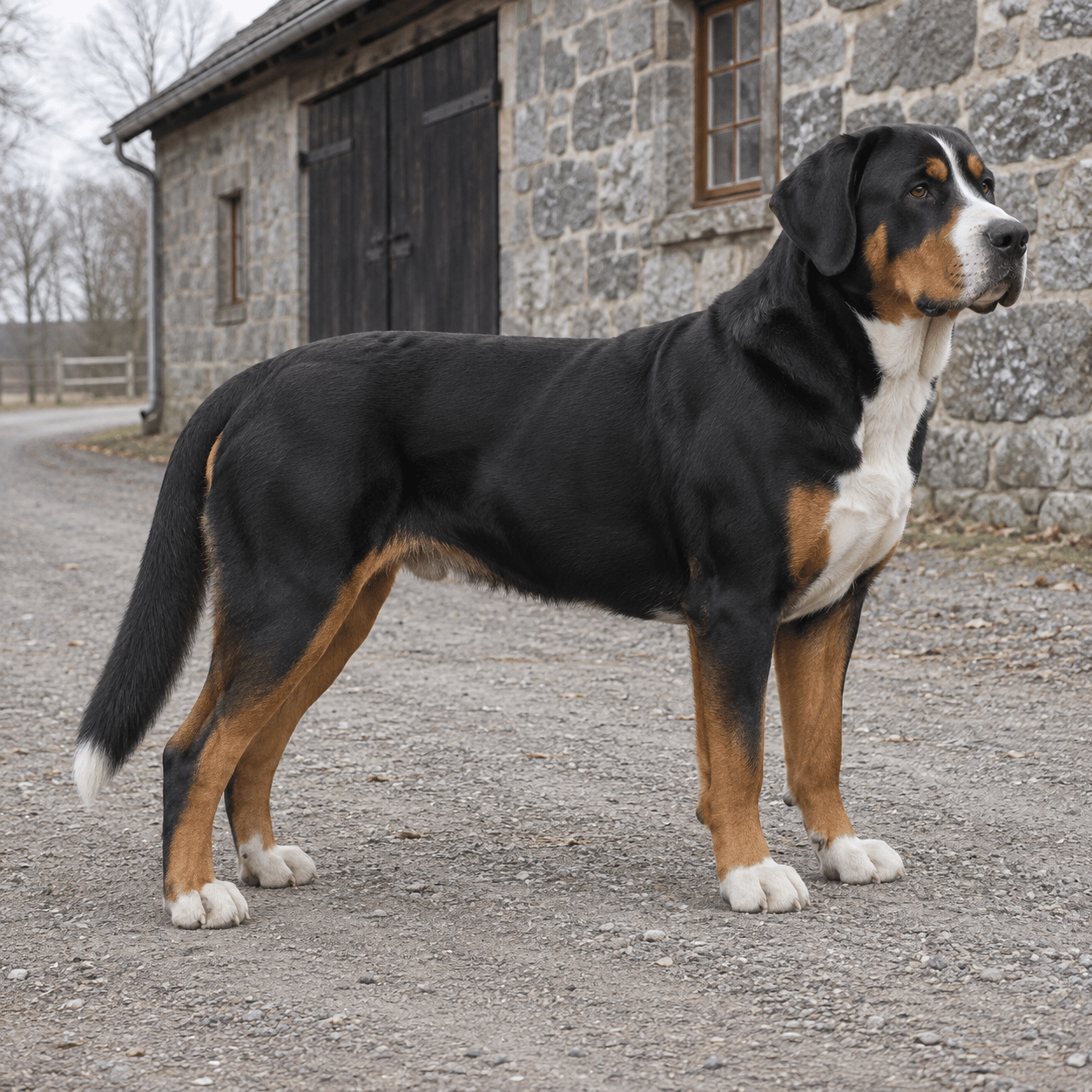
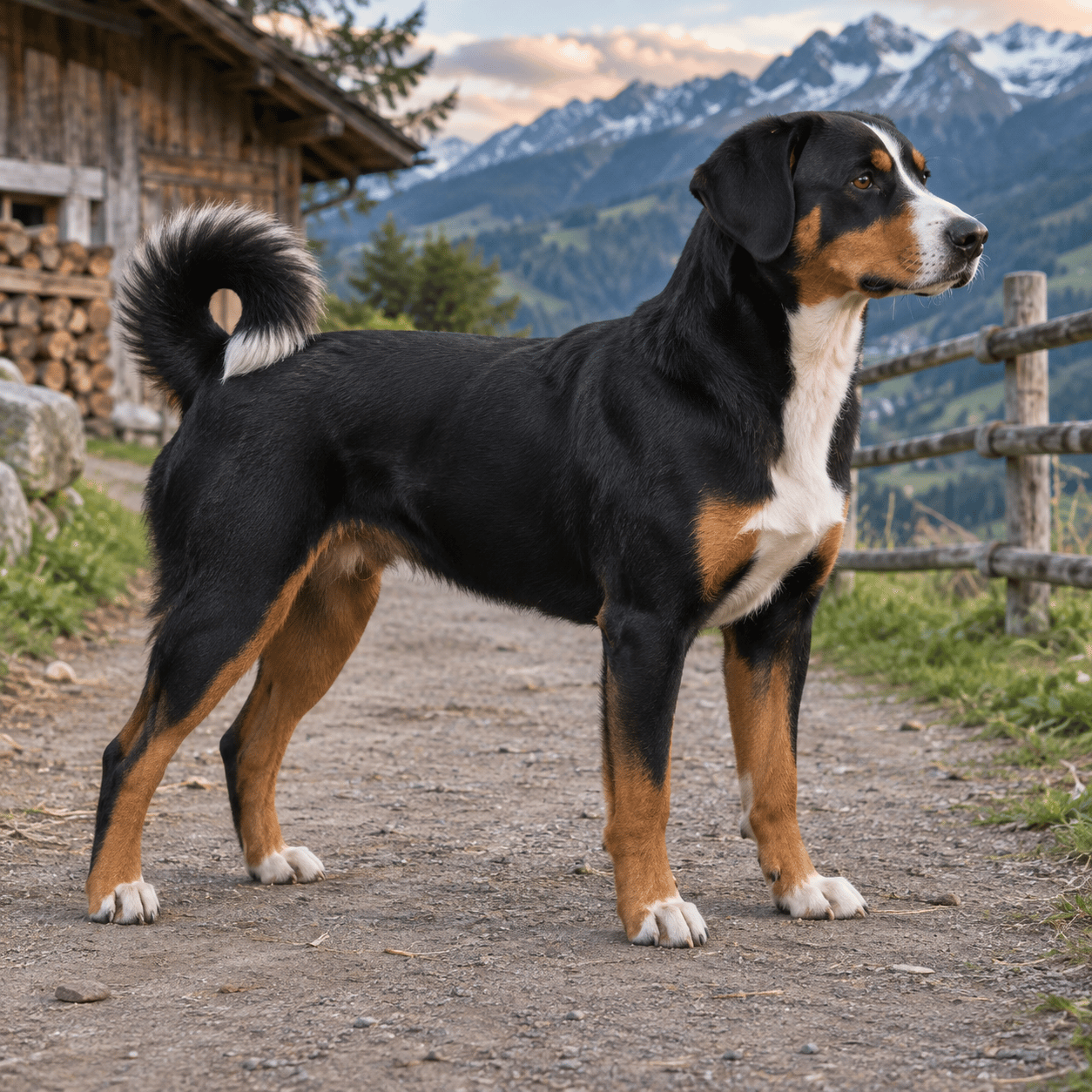
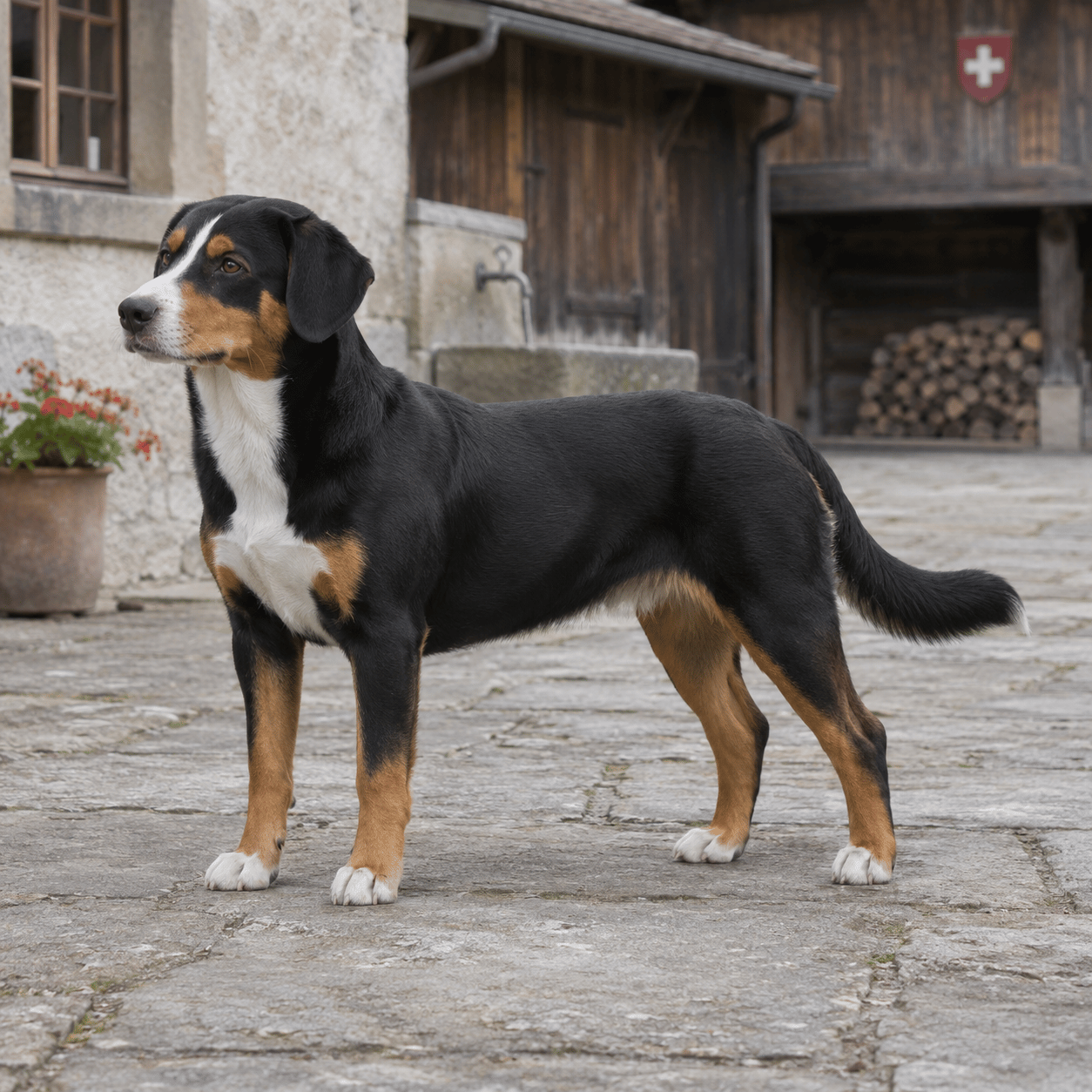
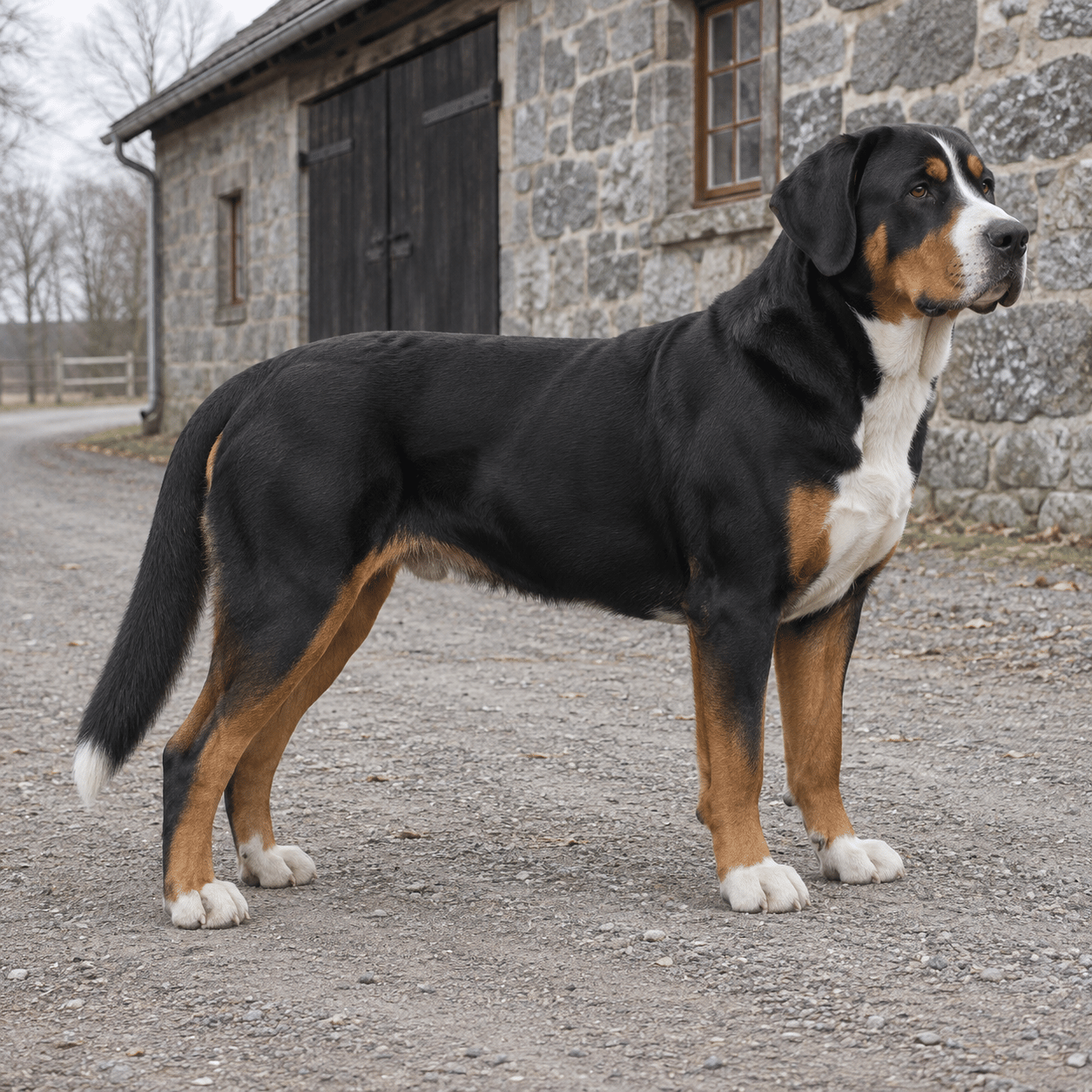
The dog is large and powerful, with a deep chest, strong legs and substantial muscle. Its dense coat has a black base, reddish tan over the eyes and on the cheeks and legs, and white markings on areas including the chest and face. The topcoat covers a thick undercoat.
Brush more frequently when the undercoat sheds. Get the puppy used to nail trims, tooth brushing and checks of the feet. A large dog that stands calmly makes regular care easier.
¶Temperament & Personality
A Greater Swiss is often devoted to its household and watchful when people arrive or activity changes. Give the dog positive experience of everyday surroundings and practise a calm routine for visitors. Ask the breeder how adult relatives respond to unfamiliar people.
¶Training & Exercise
Walking and cooperative training suit a healthy adult. Tracking and obedience add variety. Draught work reflects the breed's original role. Learn from an experienced instructor and build the load gradually once the dog is fully mature. Start loose-lead walking, recall and calm passing early.
¶Health
The Swedish Kennel Club highlights hip and elbow dysplasia, osteochondrosis in the shoulder, epilepsy and gastric torsion among concerns. Ask to see the parents' documented joint results and ask how older relatives have fared. The Swedish breed club's breeding strategy gives background on monitoring. Health information across the family gives more context than a single screening result.
¶History & Origins
Swiss farmers and tradespeople needed a dog to haul loads, move cattle and keep watch over the farm. At a show in 1908, Albert Heim identified two dogs as examples of an older working type. The Swiss Kennel Club recognised the breed separately in 1909. The FCI first published a standard in 1939.
¶Living with the Breed
Check how a large dog will manage the stairs, vehicle, walkways and resting areas in your home. Plan how to transport and support the dog if it gets ill or grows old. Give it a quiet place to rest when people visit. Adults should supervise interactions with small children, especially in enclosed spaces. A friendly, enthusiastic dog of this size can easily bump into someone.
¶Characteristics
¶Frequently Asked Questions
¶Comparisons with Other Breeds
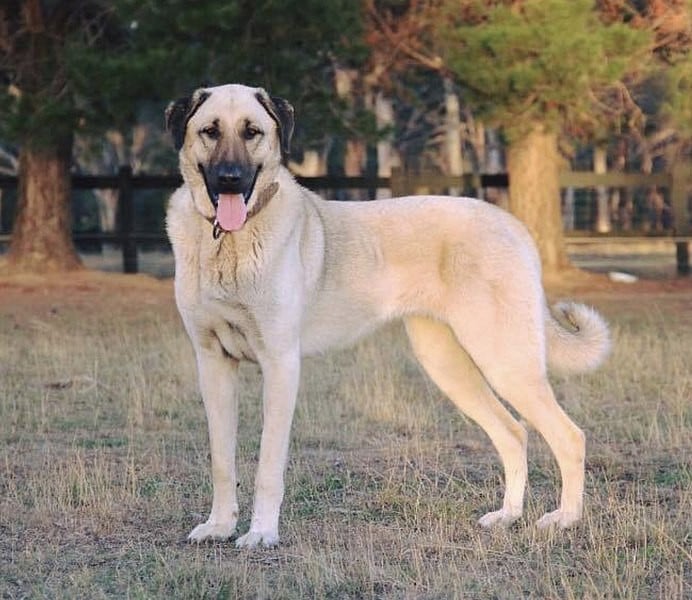
Compare Greater Swiss Mountain Dog with other breeds and see the differences in temperament, activity level, and care to make a confident choice. Show All Comparisons