
¶Table of Contents
¶Quick Facts
- Males 44–50 cm at the withers, females 42–48 cm according to the FCI standard ranges.
- High. Plan for daily exercise, tasks and time to rest.
- Easy-care short double coat. Brush more often when the undercoat sheds.
- 11–13 years, an AKC breed estimate.
- An active owner who appreciates an alert farm dog and enjoys regular training.
¶Appearance & Coat
The Entlebucher Mountain Dog is the smallest of the four Swiss mountain and cattle dogs. It once moved livestock and guarded farms. That background shows in a quick, watchful dog that likes to take part in whatever its people are doing. Its compact size makes it easy to take along, while its energy and guarding instincts call for regular training.
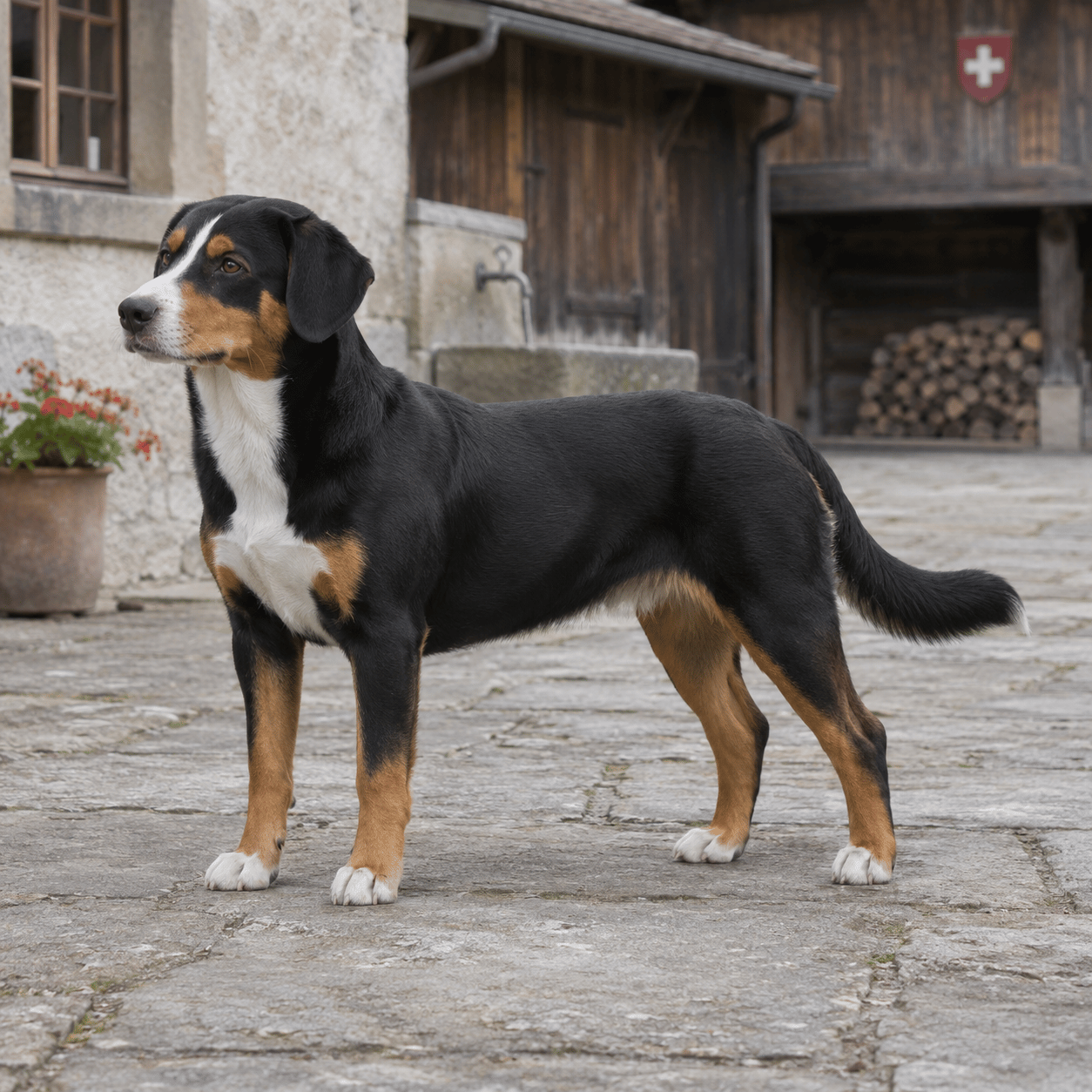
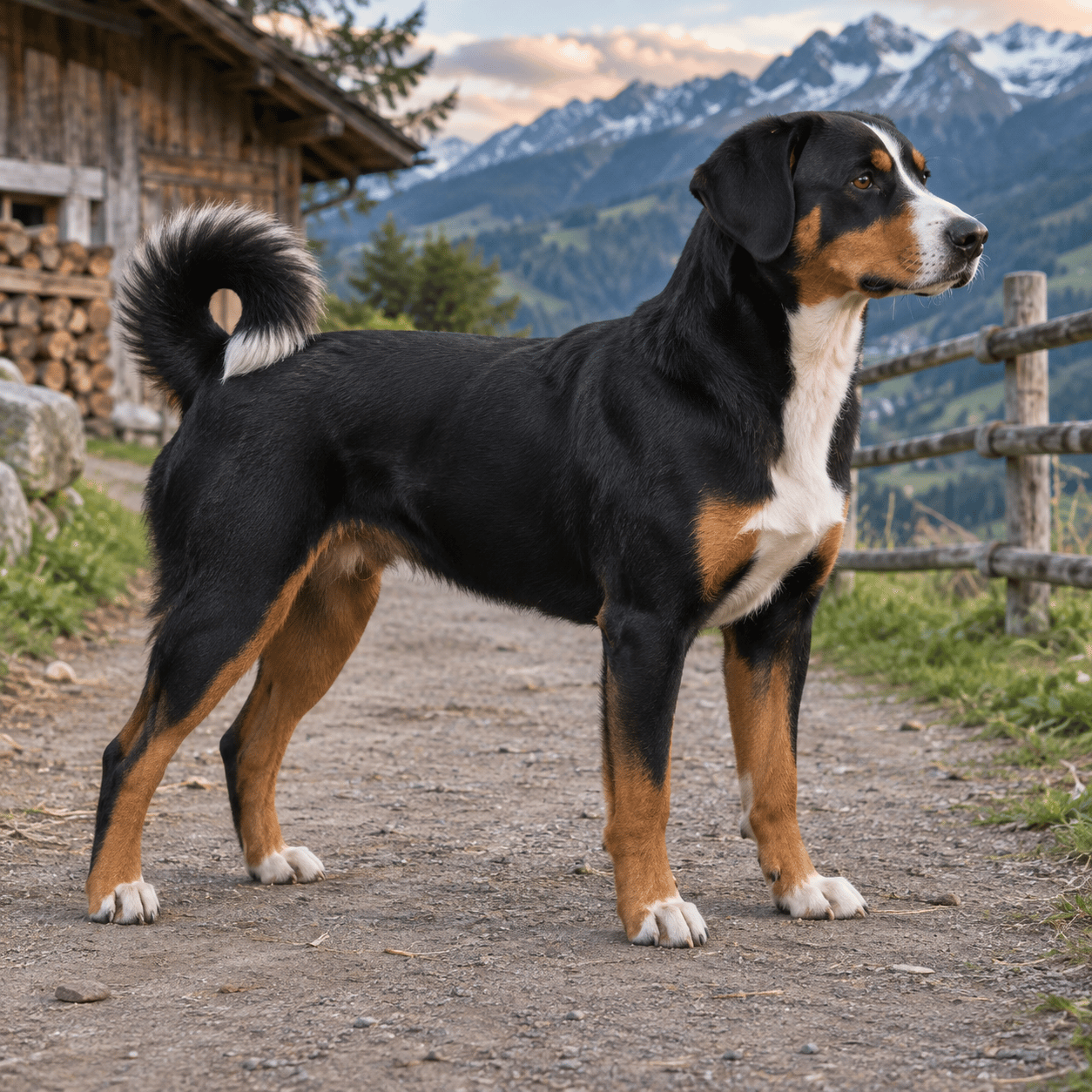
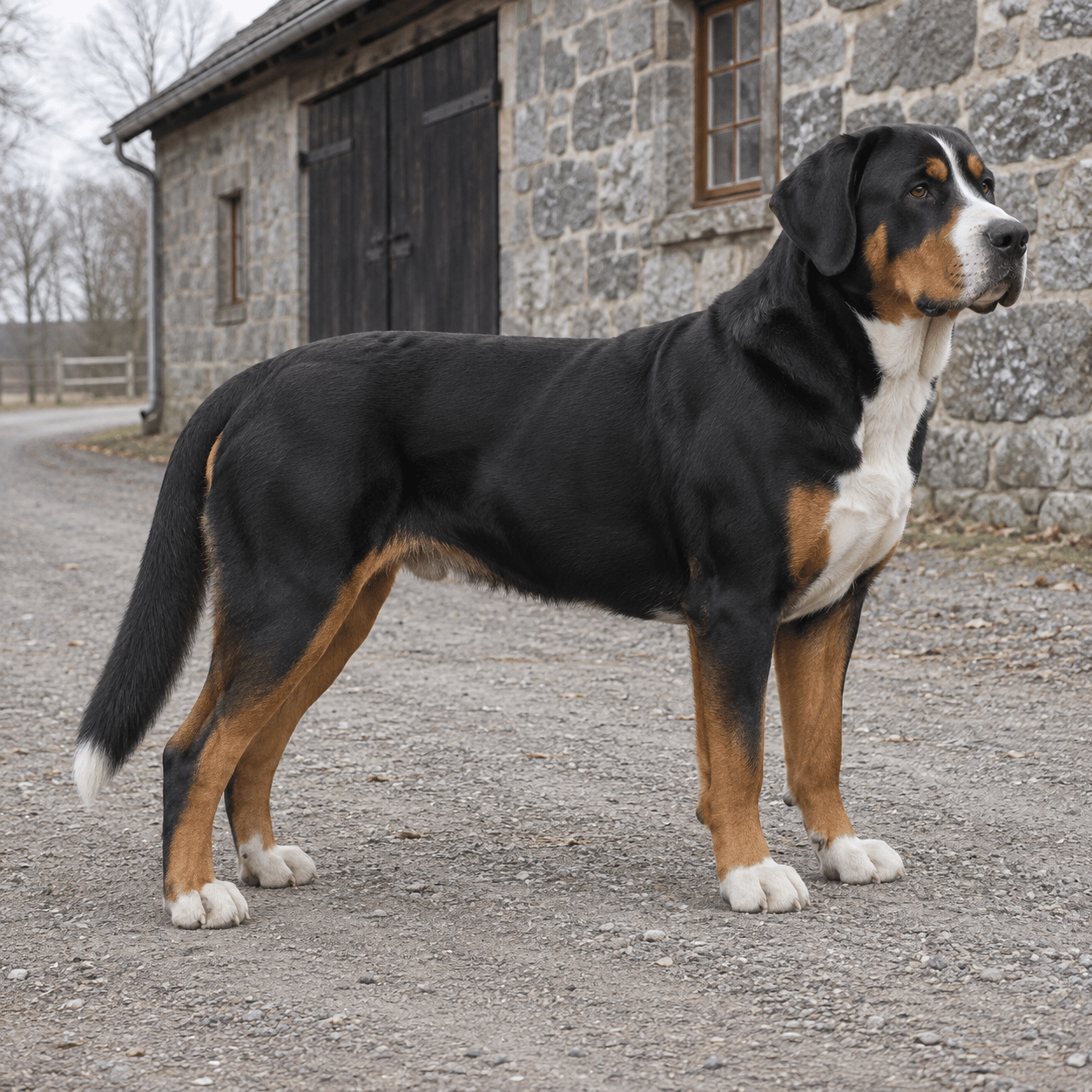
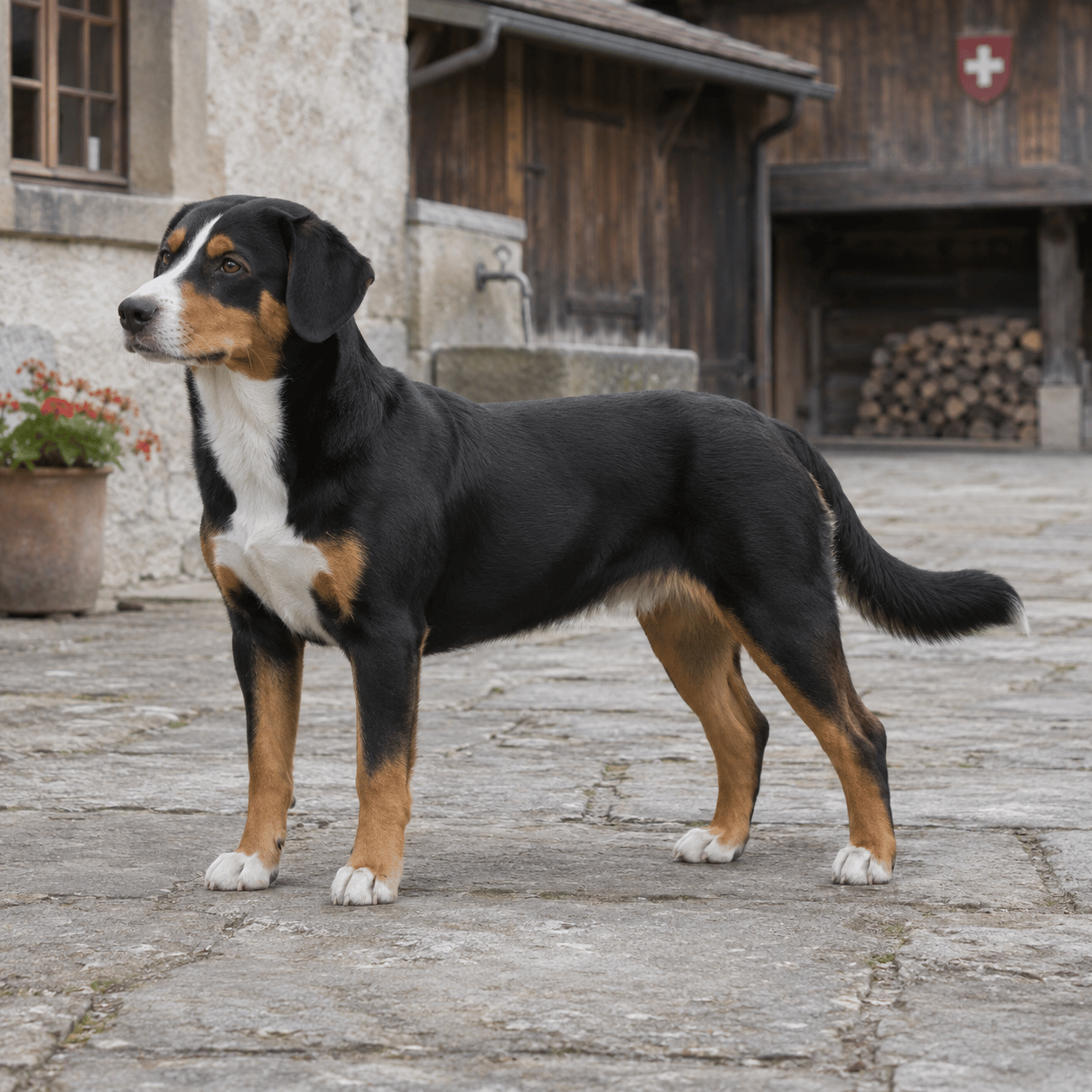
The Entlebucher is compact and muscular, with a body slightly longer than it is tall. Its triangular ears hang close to the head. The dense black coat has rust markings over the eyes and on the legs, with white on the head, chest and feet. The breed may have a long tail or a natural bobtail.
A close-lying topcoat covers a soft undercoat. Brush regularly and more often during shedding. Use grooming time to check the paws, nails and ears, and help a puppy get used to being handled in short, gentle sessions.
¶Temperament & Personality
The breed is lively and affectionate with familiar people. An Entlebucher may hang back when a stranger approaches and often alerts its family to a sound or movement. Let the dog first observe visitors at a comfortable distance. Teach a calm routine at the door and offer a place to retreat.
Moving cattle called for cooperation and independent decisions. Keep cues clear and sessions short. Reward the behaviour you want and watch for signs that the dog is unsure about the task.
¶Training & Exercise
A healthy adult needs daily exercise on varied ground and regular chances to use its nose or work with its handler. Tracking, rally and obedience give the dog and owner something to practise together. Adjust the workload and difficulty to the dog's age and fitness.
Practise attention, recall and passing people or animals calmly. Teach the dog to rest while the household is going about its business. A predictable routine with breaks between sessions helps an alert dog wind down.
¶Health
The Swedish Kennel Club highlights progressive retinal atrophy (PRA), ectopic ureters and hip dysplasia. PRA impairs retinal function. An ectopic ureter opens in an abnormal location and may cause urine leakage. Ask the breeder what has been checked in the parents and their relatives and which results are recorded.
The Swedish breed club's breeding strategy puts these checks in context. Ask what a prcd-PRA test covers and what other eye examinations have been done. A veterinarian can assess urinary leakage, changes in vision or pain when moving.
¶History & Origins
The breed comes from Switzerland's Entlebuch valley. Farmers used the dogs to move and guard livestock and keep watch over the farm. An early written mention dates to 1889. The Entlebucher and Appenzeller were grouped together for many years. The Swiss breed club was founded in 1926, and the first standard was established in 1927.
¶Living with the Breed
Make room for exercise and time together. A watchful dog needs somewhere quiet to rest when people pass by or come to visit. Adults should supervise interactions with children and protect the dog's resting place. An enthusiastic dog can knock over a small child during play.
Introduce other animals gradually and give them places to retreat. Once the dog feels safe at home, start alone-time training with very short absences. Ask how adult relatives cope with guests, being alone and everyday noises. Consider how their behaviour fits the routine you can offer year-round.
Meet adult dogs before committing. Listen to how much they bark, see how they react to visitors and notice how they settle between activities.
¶Characteristics
¶Frequently Asked Questions
¶Comparisons with Other Breeds
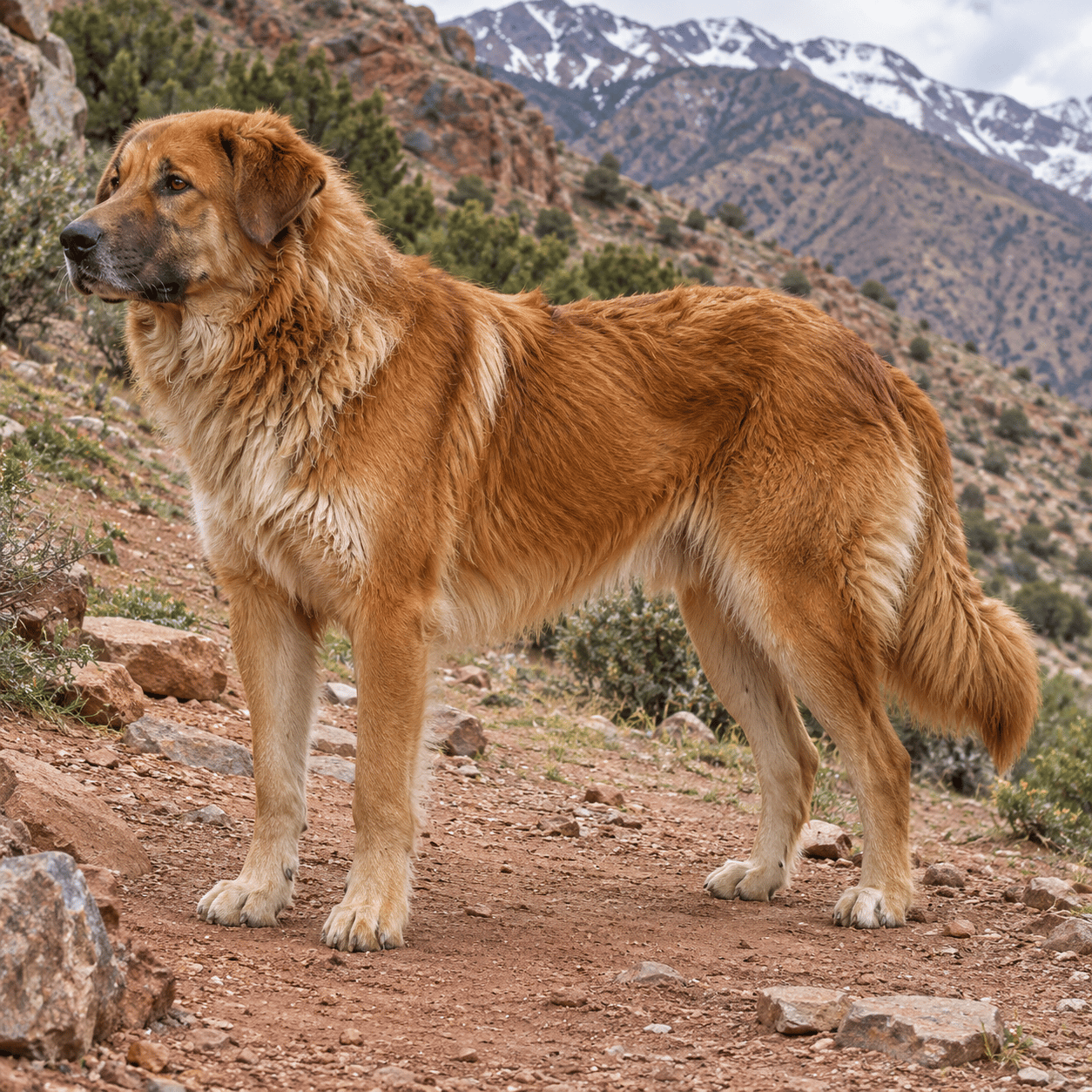
Compare Entlebucher Mountain Dog with other breeds and see the differences in temperament, activity level, and care to make a confident choice. Show All Comparisons