
¶Table of Contents
¶Quick Facts
- Ancient livestock guardian breed from Turkey, traditionally used to protect flocks against wolves and other predators
- Large, powerful dog with a calm, observant nature and a strong instinct to protect its family and territory
- Deeply loyal and affectionate with its own people, but typically reserved and watchful with strangers
- Needs an experienced owner who understands guardian breeds, with careful early socialisation and consistent training
- Best suited to homes with secure space, clear boundaries, and a lifestyle that respects the Kangal Shepherd Dog’s independence

¶Appearance & Coat
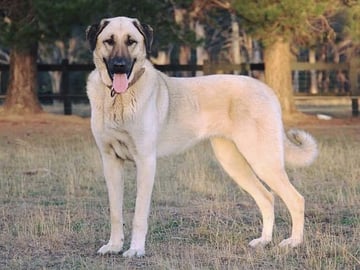
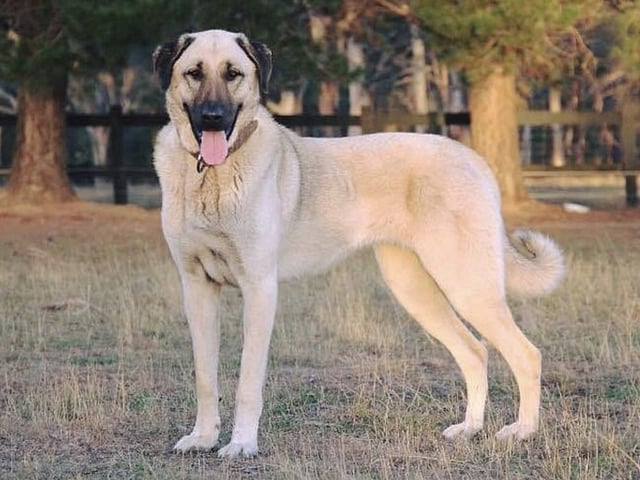
The Kangal Shepherd Dog is a large, impressive dog that carries itself with calm confidence rather than showy flashiness. It is strongly built and well muscled, but never clumsy or heavy. At a glance, you can see why this breed has guarded flocks in harsh conditions for centuries. Its body is slightly longer than it is tall, giving it the ability to trot tirelessly over long distances. The back is firm and straight, the chest deep, and the legs are strong and straight with good bone. This is a dog built for function and endurance more than fancy looks.
Males are noticeably larger than females. Adult males commonly stand around 72 to 78 centimetres at the shoulder, while females are usually around 65 to 73 centimetres. Weight typically matches the dog’s height and build, and responsible breeders aim for a strong but athletic frame rather than extreme size. A well kept Kangal Shepherd Dog should look powerful yet athletic, not overweight or bulky.
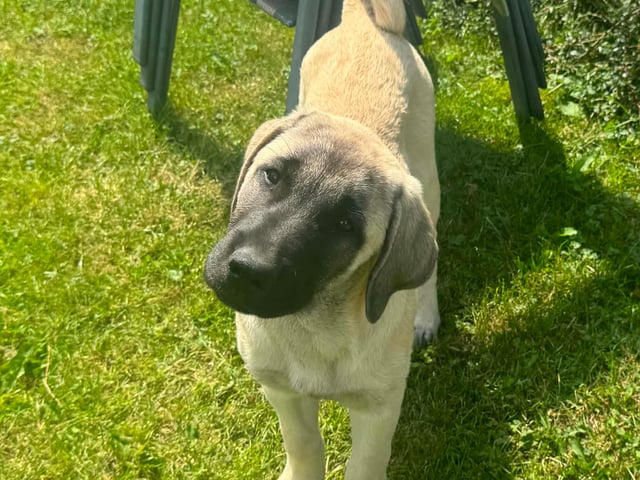
One of the most striking features of the Kangal Shepherd Dog is its head. The skull is broad with a slightly rounded top, a strong, wide muzzle, and a clearly defined stop. The dark, almond shaped eyes give a thoughtful, sometimes serious expression. Ears are medium sized, triangular, and carried close to the head, often with a slightly rounded tip. The black mask over the muzzle and around the eyes contrasts with the lighter body, giving the breed its characteristic look.
The coat is double layered to protect the dog in both heat and cold. The outer coat is short to medium in length, dense, and slightly coarse to the touch, which helps shed dirt and water. The undercoat is thick and softer, especially more abundant in colder seasons. Coat length can vary slightly depending on climate, with dogs in colder areas often having a slightly fuller coat.
Accepted coat colours are usually in shades of fawn, from light cream to darker grey fawn, always with a distinct black or very dark mask on the face. The ears are typically dark as well. Limited white markings on the chest, tail tip, or toes can appear, but the overall impression should always be of a solid coloured dog with a dark mask.
Coat care for the Kangal Shepherd Dog is quite practical, but the size of the dog means grooming still needs some commitment. The breed sheds moderately throughout the year and heavily during seasonal coat changes, often in spring and autumn. To keep the coat and skin healthy:
- Brush thoroughly at least once or twice a week with a slicker brush or firm bristle brush
- During shedding seasons, step up to daily brushing and use an undercoat rake to remove dead hair
- Check for mats behind the ears, under the collar, and around the thighs and tail, although the coat usually resists matting if groomed regularly
Bathing can be kept relatively infrequent. Many Kangal Shepherd Dogs only need a bath a few times a year, unless they have rolled in something unpleasant. Too many baths can strip the natural oils that keep the coat weatherproof. Nail trimming, ear cleaning, and regular checks of teeth and paws should be part of the routine. Because of the dog’s size, it is wise to get puppies used to grooming early so that handling an adult dog is calm and safe.
¶Temperament & Personality
The Kangal Shepherd Dog is first and foremost a livestock guardian breed, and its character reflects this ancient role. Instead of being excitable or eager to please everyone, the Kangal is calm, thoughtful, and naturally reserved. With its own family, it is surprisingly affectionate and gentle, often forming deep bonds with one or two key people while still being attached to the whole household. Many owners describe the feeling of having a quiet, steady presence that is always watching over the family.
With children, a well socialised Kangal Shepherd Dog can be patient and protective. Many Kangals seem to recognise that children are more fragile and will moderate their behaviour around them. They may quietly position themselves between children and strangers or follow kids around the garden, taking up a resting spot where they can keep an eye on things. However, their sheer size means that supervision is essential, particularly around very small children who could be knocked over by accident. Teaching children to respect the dog’s space, not to climb on it or disturb it while eating or sleeping, is crucial.
Kangals are usually polite but aloof with strangers. They are not typically aggressive without reason, but they are always assessing new people and situations. A Kangal Shepherd Dog that has been properly socialised from a young age will learn to accept visitors when the owner is calm and welcoming. Still, most will never be the kind of dog that enthusiastically greets every stranger. Instead, expect a quiet dog that keeps its distance, watches carefully, and only relaxes when it decides there is no threat.
With other dogs and animals, the picture can be mixed and depends heavily on upbringing and management. The breed is capable of living peacefully with other dogs, cats, and livestock, especially when introduced thoughtfully and at a young age. Many working Kangals live with flocks of sheep, goats, or cattle and treat them as their responsibility. However, their guarding instinct and natural territorial nature can lead to clashes with unfamiliar dogs, especially those that challenge them, enter their space uninvited, or behave rudely. Intact males can be particularly prone to same sex rivalry. Good fencing, careful introductions, and clear rules about interactions with visiting dogs are all important.
Common challenges with the Kangal Shepherd Dog centre around its independence and guarding drive. This is not a typical companion breed that lives to follow commands or perform tricks. The Kangal evaluates situations for itself and can be stubborn if it disagrees with what is being asked. It may decide to ignore a recall if it feels a boundary must be guarded or if it thinks a perceived threat needs to be monitored. The breed also tends to bark to warn off anything it considers suspicious. In a rural environment this is a valuable trait, but in a suburban neighbourhood it can cause friction with neighbours if not managed.
Despite these challenges, people who understand the nature of livestock guardians often find the Kangal Shepherd Dog deeply rewarding. Owners who appreciate a dog that does not constantly seek attention yet is always quietly watching and protecting are often strongly drawn to the breed. The Kangal is not a dog for everyone, but in the right hands it can be a calm, stable, dignified companion with a heart devoted to its family.
¶Training & Exercise
Training a Kangal Shepherd Dog is a very different experience from training a typical herding or sporting breed. Instead of quick, automatic responses and a constant drive to please, you will find a dog that thinks deeply, weighs your request, and sometimes asks silently, “Is this really necessary?” This independent thinking is not disobedience in the usual sense. It is part of what has made the breed so successful at its traditional job, where a dog had to make decisions on its own while working far from the shepherd.
The key to training a Kangal is mutual respect. Harsh methods, heavy corrections, or trying to dominate the dog usually backfire, create resistance, or even damage the relationship. A Kangal Shepherd Dog responds best to calm, confident leadership combined with clear boundaries and positive reinforcement. Short training sessions that blend rewards such as high value treats, praise, and sometimes toys work better than long, repetitive drills. Many Kangals quickly grow bored with too much repetition, so variety and real life training are helpful.
Focus on strong foundations:
- Reliable recall within safe, fenced areas or quiet spaces
- Solid sit, down, and stay commands
- Calm leash walking, especially because the breed is large and strong
- Controlled greetings with visitors and other dogs
Early socialisation is absolutely vital. From puppyhood, the Kangal Shepherd Dog should meet a wide range of people, hear different sounds, and experience various environments in a carefully positive way. This does not mean overwhelming or forcing the puppy. Instead, the goal is to teach the dog that the world is wide, that not every stranger is a threat, and that the owner is a trustworthy guide in new situations. Puppy classes with experienced trainers who understand guardian breeds can be very helpful, as long as the environment is controlled and not chaotic.
Exercise needs for the Kangal Shepherd Dog are moderate but steady. They are not sprinters that need constant high energy games, nor are they couch potatoes. Traditionally, these dogs would patrol hillsides and fields for hours at a relaxed trot, always watching and listening. In a modern home, they are often content with:
- One or two solid walks a day, combined with time to explore and sniff
- Access to a secure garden or yard where they can move, watch, and patrol
- Mental stimulation in the form of training, scent games, or problem solving
Long, forced runs on hard surfaces are not ideal, particularly for young dogs whose joints are still developing. High impact activities like jumping off high structures or intense agility are less suitable for this heavy, powerful breed. However, they often enjoy:
- Steady hikes in natural areas
- Accompanying their owner on long countryside walks
- Low impact tasks that involve using their senses and guarding instinct, such as quietly watching over a property or livestock
Many Kangal Shepherd Dogs also respond well to simple "jobs" around the home, such as being asked to stay at a certain spot when the doorbell rings, or walking boundaries of the property with their owner. This kind of work taps into their natural desire to oversee and protect.
Off leash freedom needs to be granted carefully. In unfenced open areas, a Kangal may roam further than expected and may choose to place itself between its owner and anything unfamiliar. In some regions, this can become a legal or safety issue. Solid recall training, using long lines during adolescence, and awareness of local laws are important for responsible ownership.
In short, the Kangal Shepherd Dog thrives with fair, thoughtful training and a lifestyle that respects its instincts. It does not need extreme sport level exercise, but it does need structure, steady movement, and a meaningful role within its family.
¶Health
The Kangal Shepherd Dog is generally considered a robust and hardy breed, shaped by centuries of working in challenging environments. However, like all large and giant breeds, it has certain health concerns that responsible owners and breeders must keep in mind. Good breeding practices, appropriate nutrition, and sensible exercise during growth all play a role in raising a healthy dog.
Orthopedic issues are among the most important health topics for the Kangal. Hip dysplasia and elbow dysplasia can occur, as in many large breeds. These conditions involve abnormal development of the joints, which can lead to pain, lameness, and arthritis, sometimes appearing early in life. Responsible breeders screen their breeding dogs using official hip and elbow scoring schemes and only breed individuals with acceptable scores. As a prospective owner, asking about these results is essential. Buying from lines where hip and elbow health has been carefully monitored over generations can significantly reduce risk, although it can never fully guarantee a problem free dog.
Another concern common in deep chested, large breeds is gastric dilatation volvulus, often known as bloat. This is a serious, potentially life threatening condition in which the stomach fills with gas and can twist. It requires urgent veterinary treatment. While not every Kangal Shepherd Dog will experience this, owners should be aware of the signs, such as sudden abdominal swelling, unproductive retching, drooling, restlessness, and signs of pain. Simple preventive measures include feeding two or three smaller meals instead of one large meal, avoiding heavy exercise immediately before or after eating, and keeping stress around meal times low.
Some Kangals may be prone to eye issues, such as entropion or ectropion, where the eyelids roll inward or outward and irritate the eye. Responsible breeders will have their dogs' eyes checked by veterinary specialists when needed, and any dogs with severe structural eyelid problems should not be bred. Regular checks of your dog’s eyes for redness, discharge, or squinting can help catch problems early.
As a large and heavy breed, joint and skeletal development in young dogs must be managed carefully. Growing puppies should not be encouraged to jump on and off high furniture or run long distances on hard surfaces. Excess body weight at a young age puts extra strain on developing joints. A balanced diet formulated for large breed puppies and steady, moderate exercise help the bones and joints to grow at a healthy rate.
Routine health care is still important, even for a hardy working breed. Vaccinations, parasite control, and yearly veterinary check ups allow early detection of issues such as dental disease, heart murmurs, thyroid problems, or skin conditions. The coat and skin of the Kangal Shepherd Dog usually do well in most climates, but long periods in damp conditions or poor nutrition can lead to dull coat and itching. A high quality diet with appropriate protein and essential fatty acids supports a healthy coat and overall body condition.
In terms of lifespan, the Kangal Shepherd Dog generally lives around 10 to 13 years when well cared for, which is respectable for a dog of this size. Some individuals reach a higher age, especially when they maintain a good body weight, receive sensible exercise, and have proactive veterinary care throughout their life.
Prospective owners should look for breeders who:
- Hip and elbow score all breeding dogs
- Are honest about any health problems in their lines
- Provide clear information on diet, growth, and exercise for puppies
- Encourage or require health checks for breeding stock, such as eye examinations
Getting pet insurance or setting aside savings for potential health issues is wise with any large breed. While the Kangal is not considered overly delicate, its size alone means that any surgery, treatment, or hospital stay can be more costly than for a small dog. Informed preparation allows owners to enjoy many years with their Kangal Shepherd Dog with peace of mind.
¶History & Origins
The Kangal Shepherd Dog has its roots in the rugged landscapes of central Turkey, particularly the Sivas region. For centuries, this area has been home to flocks of sheep and goats that graze on open pastures, vulnerable to wolves, bears, and human thieves. Shepherds needed a dog that could live outdoors in all weathers, think for itself, and confront formidable predators if necessary. Over generations, such dogs were carefully selected not for show ring beauty, but for bravery, steadiness, and reliability with livestock.
Many experts believe that the Kangal Shepherd Dog is closely linked to old guardian types that developed alongside human pastoral cultures. Whether or not every detail of ancient origin stories can be proven, there is no doubt that the breed is deeply rooted in Turkey’s working traditions. In its homeland, the Kangal is often respected as a national treasure, symbolising strength, loyalty, and protection. Traditional lines were guarded by families and communities, and breeding was often more about maintaining proven working ability than about formal pedigrees.
The name “Kangal” is widely thought to come from the town or district of Kangal in Sivas Province, an area historically known for producing particularly capable guardian dogs. These dogs were valued not only for their ability to protect flocks, but also for their calm attitude toward the animals in their care. A proper livestock guardian must be gentle with sheep and goats while being ready to stand firm against wolves or other threats.
During the 20th century, people from outside Turkey began to take an interest in these powerful shepherd dogs. Some were imported to Europe and later to other parts of the world, often initially as working dogs for protecting flocks in areas where predators were returning or where traditional livestock guarding practices were being revived. Over time, kennel clubs in various countries recognised the breed and developed standards to describe its appearance and character.
Today, the Kangal Shepherd Dog is recognised internationally in the pastoral or guardian dog group. In some countries, it is still primarily a working livestock guardian, living outdoors with sheep, goats, or cattle and patrolling fields and hills. In others, it is also kept as a family guardian and companion, particularly in rural or semi rural settings. The breed’s reputation as a calm yet formidable protector attracts people who want a serious guardian with a stable temperament.
However, the spread of the Kangal Shepherd Dog beyond its original homeland has brought challenges as well. There is ongoing discussion about preserving the authenticity of the breed and avoiding mixing with other large guardian types that may dilute its particular qualities. Responsible breeders outside Turkey often work hard to respect the traditional characteristics that made the Kangal so valued by Turkish shepherds in the first place.
In modern times, you can find Kangal Shepherd Dogs in a variety of roles:
- Traditional flock guardians on farms facing predators such as wolves, coyotes, or large cats
- Estate or property guardians, especially on larger rural properties
- Loyal family protectors for experienced owners who understand the breed
- Occasionally, demonstration or ambassador dogs that help educate people about livestock guardian breeds and non lethal predator control
Despite these newer roles, at its core the Kangal Shepherd Dog remains what it has always been: a thoughtful, independent guardian shaped by centuries of partnership with humans in a demanding environment. Understanding this history is vital for anyone considering the breed, because those ancient instincts are still very present in the modern Kangal.
¶Living with the Breed
Living with a Kangal Shepherd Dog is not just owning a pet. It is sharing your home and life with a serious guardian who sees your family and property as its responsibility. For the right person, this can be an immensely rewarding partnership, but it also brings commitments that are quite different from those of more easygoing companion breeds.
First, space and environment matter. The Kangal Shepherd Dog is best suited to homes with a secure, well fenced garden or land. A small flat or busy city environment is rarely a good match. Even if exercise needs can be met with long walks, the constant close contact with unfamiliar people, dogs, and noise can be stressful for a breed that naturally prefers to observe from a distance. Good fencing is essential, both to prevent the dog from wandering while on patrol and to protect visitors or passing animals from being confronted by a serious guardian that believes it is defending its territory.
Time and attention are also important. While the Kangal is not highly demanding in terms of constant interaction, it needs consistent presence from its people. This is not a breed that thrives when left entirely alone in a yard with little contact. Daily routines should include:
- Regular walks or patrols with the owner, which also strengthen the bond
- Calm time together in the house or garden, where the dog can relax but still feel included
- Ongoing training and reinforcement of boundaries, especially about who is allowed to enter the property and how the dog should behave around guests
Financially, prospective owners should budget for higher costs than with many smaller breeds. Food alone can be a significant monthly expense, since a large, active guardian needs high quality nutrition to stay in good condition. Veterinary costs for routine care, vaccinations, and parasite prevention may scale with size, and any surgery or emergency care can be considerably more expensive. Pet insurance or a dedicated savings fund is strongly recommended.
Equipment for living comfortably with a Kangal Shepherd Dog includes:
- A strong, well fitted collar or preferably a sturdy harness, paired with a robust leash
- Secure, high fencing appropriate for a large, agile dog
- A spacious, comfortable bed in a quiet spot where the dog can rest but still see what is happening
- Heavy duty food and water bowls that cannot easily be pushed around
- Grooming tools such as a slicker brush, undercoat rake, and nail clippers suitable for large dogs
Many owners also find that using baby gates inside the home can help manage access to doorways or certain rooms, which is useful when visitors arrive. A crate can be helpful if introduced positively in puppyhood, but it should be large enough for the dog to stand up, turn around, and lie comfortably. Some Kangals prefer a cool, quiet corner or covered outdoor space for rest, especially in warm climates.
New owners should be ready for the way a Kangal quietly monitors everyday life. The dog may lie near an entrance, watch the street from a safe vantage point, or position itself where it can see the whole family. At night, some Kangals like to sleep near doors or windows, and in rural homes they may choose an outdoor sleeping spot that allows them to hear and smell any unusual activity. Appreciating and channelling this behaviour, rather than fighting it, is part of living harmoniously with the breed.
Social responsibility is also a major aspect. Because of their size and protective nature, Kangal Shepherd Dogs must be carefully managed in public. Owners need to be confident in handling a strong dog and must be ready to advocate for their space. This may mean calmly turning away overly enthusiastic strangers or choosing quieter walking routes where the dog can remain relaxed. A well socialised Kangal that feels supported by its owner is far less likely to react defensively.
Finally, emotional commitment should not be underestimated. This breed often forms a deep, almost solemn bond with its family. A Kangal Shepherd Dog that trusts you will quietly follow your lead, share your routine, and take your safety to heart. In return, it asks for respect, clarity, and a stable environment. When these needs are met, living with a Kangal can bring a sense of security and companionship that is very special, rooted in the ancient partnership between guardian dogs and the people they protect.
¶Characteristics
| Characteristic | Value |
|---|---|
| Breed Type | Purebred |
| Aggressiveness | 1/5 |
| Child Friendly | 3/5 |
| Energy | 4/5 |
| Hair Shedding | 3/5 |
| Health | 5/5 |
| Intelligence | 4/5 |
| Grooming Needs | 4/5 |
| Learning Ability | 4/5 |
| Barking Level | 3/5 |
| Height | 71 – 81 cm |
| Weight | 40 – 65 kg |
| Life Expectancy | 12 – 15 years |
¶Frequently Asked Questions
What kind of temperament does the Kangal Shepherd Dog have with family and strangers?
This breed is typically calm, loyal and very affectionate with its own family, including children who behave respectfully. With strangers it is naturally reserved and watchful rather than social, evaluating new people before relaxing. Its guarding instincts are strong, so consistent guidance on how to behave around visitors is important from a young age.
Is a Kangal Shepherd Dog suitable for first-time dog owners?
This is generally not a beginner breed because it is large, powerful and highly independent. It tends to think for itself and may ignore commands if it believes it knows better, which can overwhelm inexperienced owners. Someone considering this dog should be confident, calm, consistent and ideally have prior experience with guardian or working breeds.
How much space and what type of home does a Kangal Shepherd Dog need?
This breed does best in a home with a large, securely fenced yard or rural property where it can patrol and move freely. It is not suited to apartment living or very dense urban environments due to its size, guarding instincts and need to survey its territory. Strong fencing is essential because it may roam if it perceives a wider area as its responsibility.
How much exercise and mental stimulation does a Kangal Shepherd Dog require?
Daily long walks along with free movement in a secure area are important to keep this dog fit and settled. While it does not usually demand intense, fast-paced exercise like some sport breeds, it benefits from purposeful activity such as patrolling, scent work or farm chores. Mental stimulation and structured tasks help prevent boredom that can lead to nuisance barking or boundary testing.
Are Kangal Shepherd Dogs aggressive or dangerous by nature?
They are bred as livestock guardians, so they are naturally protective and can be very serious about perceived threats. When well bred, socialized and managed, they are not indiscriminately aggressive but will respond firmly if they believe their family or territory is at risk. Responsible ownership, early training and controlled exposure to various situations are essential to keep their protective drive appropriately channeled.
How well do Kangal Shepherd Dogs get along with other dogs and pets?
They can coexist peacefully with other animals they have been raised with, especially when introduced carefully and at a young age. However, they may be dominant or intolerant toward unfamiliar dogs, particularly of the same sex, and may not enjoy busy dog parks. Their strong guarding instincts can extend to protecting resident animals, so supervision and thoughtful introductions are important.
What are the common health issues seen in Kangal Shepherd Dogs?
Like many large breeds, they are at risk for hip and elbow dysplasia, as well as joint issues related to rapid growth. Some individuals may be prone to bloat, so careful feeding practices are recommended. Ethical breeders typically screen for orthopedic problems and work to maintain strong, functional structure rather than exaggerated size.
How difficult is it to train a Kangal Shepherd Dog?
They are intelligent and capable learners but have a strong independent streak and were bred to make decisions without human direction. Training must be calm, firm and respectful, with clear boundaries and consistent follow-through rather than harsh methods. They respond best when they trust the handler and understand the purpose behind what is being asked.
What kind of grooming does a Kangal Shepherd Dog need and how much do they shed?
They have a dense double coat that is relatively low maintenance most of the year and usually needs only weekly brushing. Shedding increases heavily once or twice a year when they blow their coat, at which time more frequent brushing helps manage loose hair. Regular nail trims, ear checks and dental care are still important even though the coat itself is fairly practical and weather resistant.
Are Kangal Shepherd Dogs legal to own everywhere and are there any special regulations?
In some countries or regions, livestock guardian breeds including this one may be restricted or subject to additional rules such as mandatory registration or insurance. Local authorities or landlords may be unfamiliar with the breed and classify it with other large guard-type dogs. Anyone considering ownership should check local laws and housing policies before acquiring a puppy or adult.
¶Comparisons with other breeds
Compare Kangal Shepherd Dog with other breeds and see the differences in temperament, activity level, and care to make a confident choice. Show all comparisons