
¶Table of Contents
¶Quick Facts
- Males 52–56 cm at the shoulder, females 50–54 cm, according to the FCI’s standard measurements.
- High. Needs daily exercise and activities that involve working with its handler.
- Short double coat. Brush regularly, and more often during shedding season.
- 13–15 years according to the AKC, as a general guide.
- An active owner who appreciates an alert, vocal dog and wants to train regularly.
¶Appearance & Coat
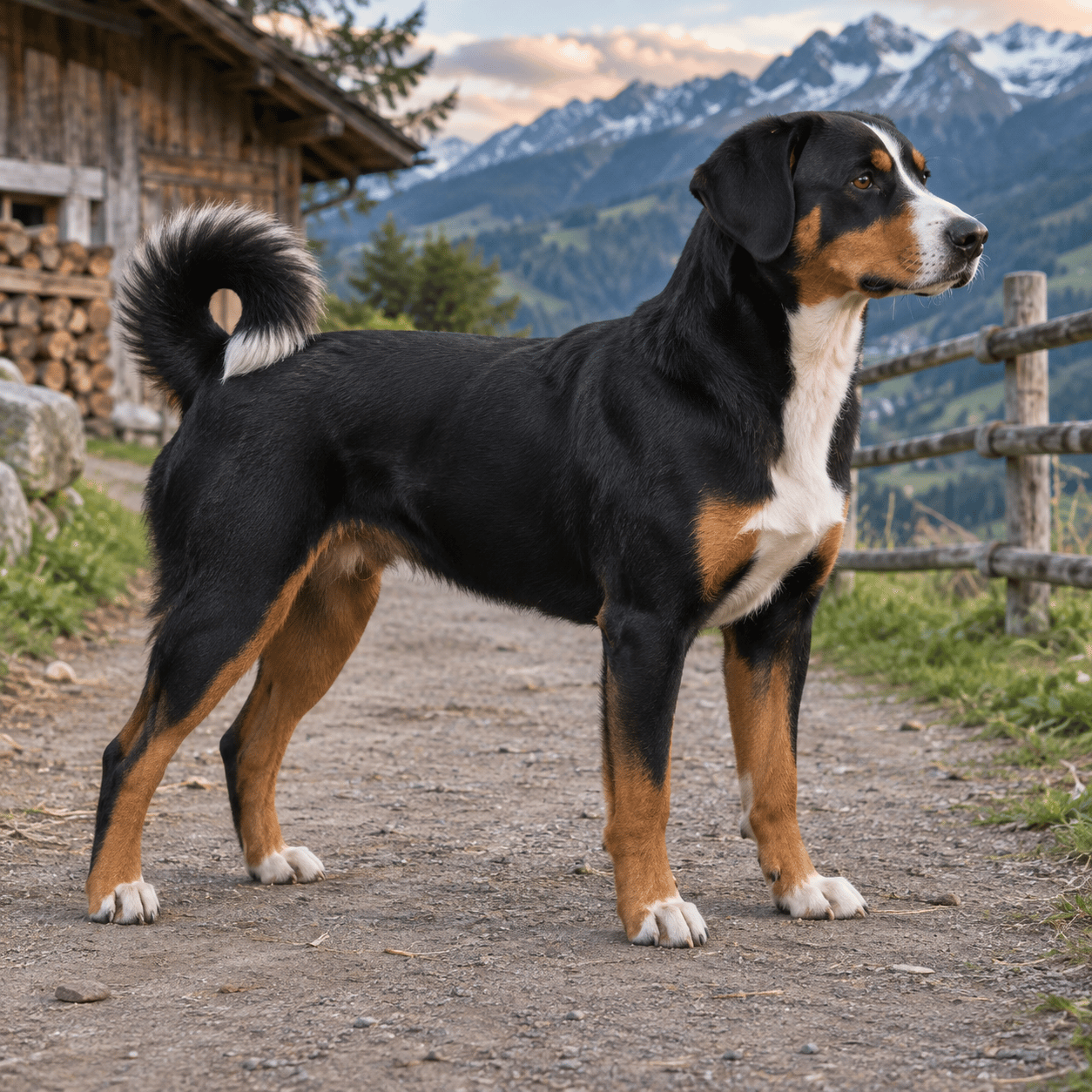
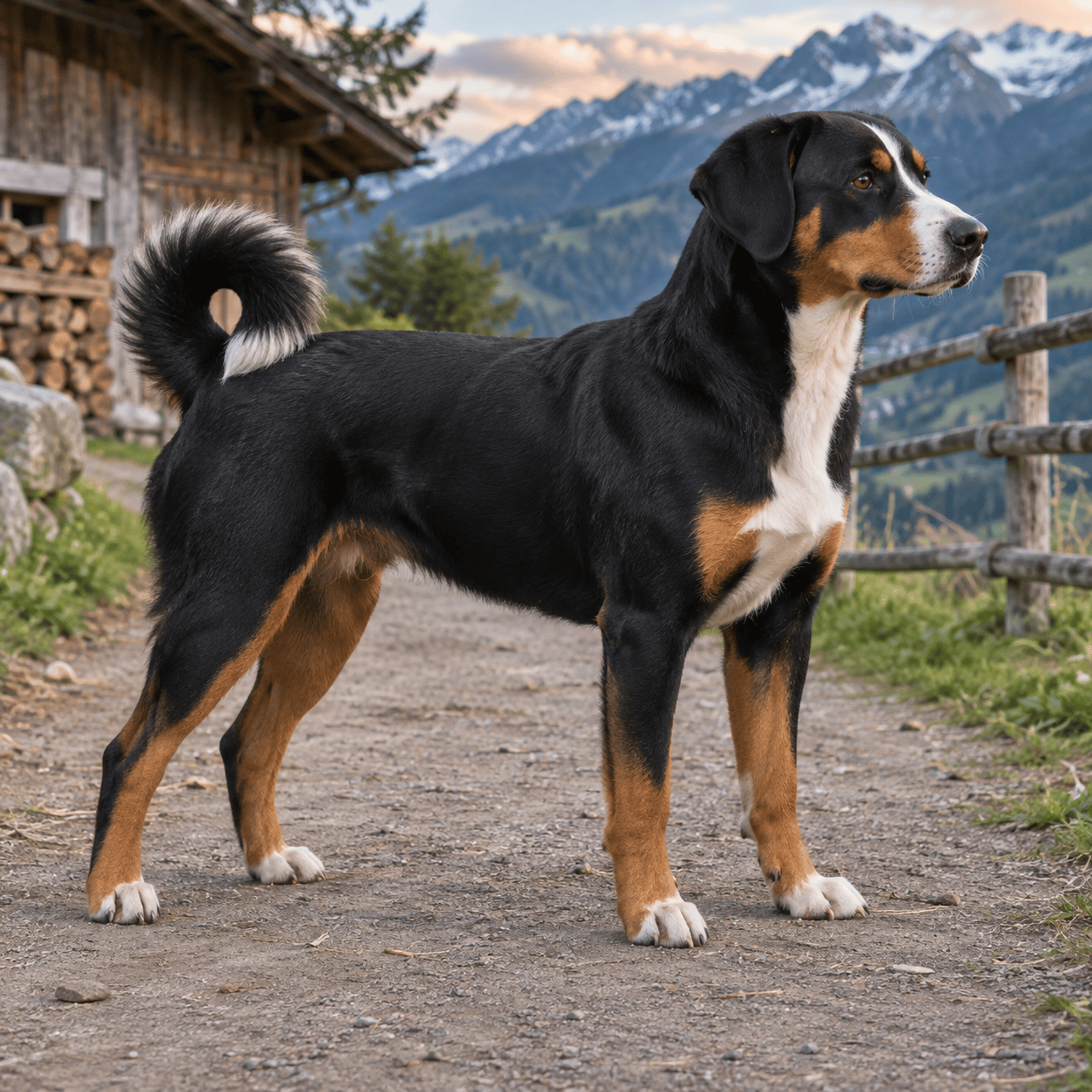
The Appenzeller Sennenhund is a Swiss cattle and farm dog that still retains the speed, alertness and vocal nature needed for its original work. It is one of four Swiss mountain dog breeds. Its compact size and quick movements make it agile, and its eagerness to work is evident even in everyday family life.
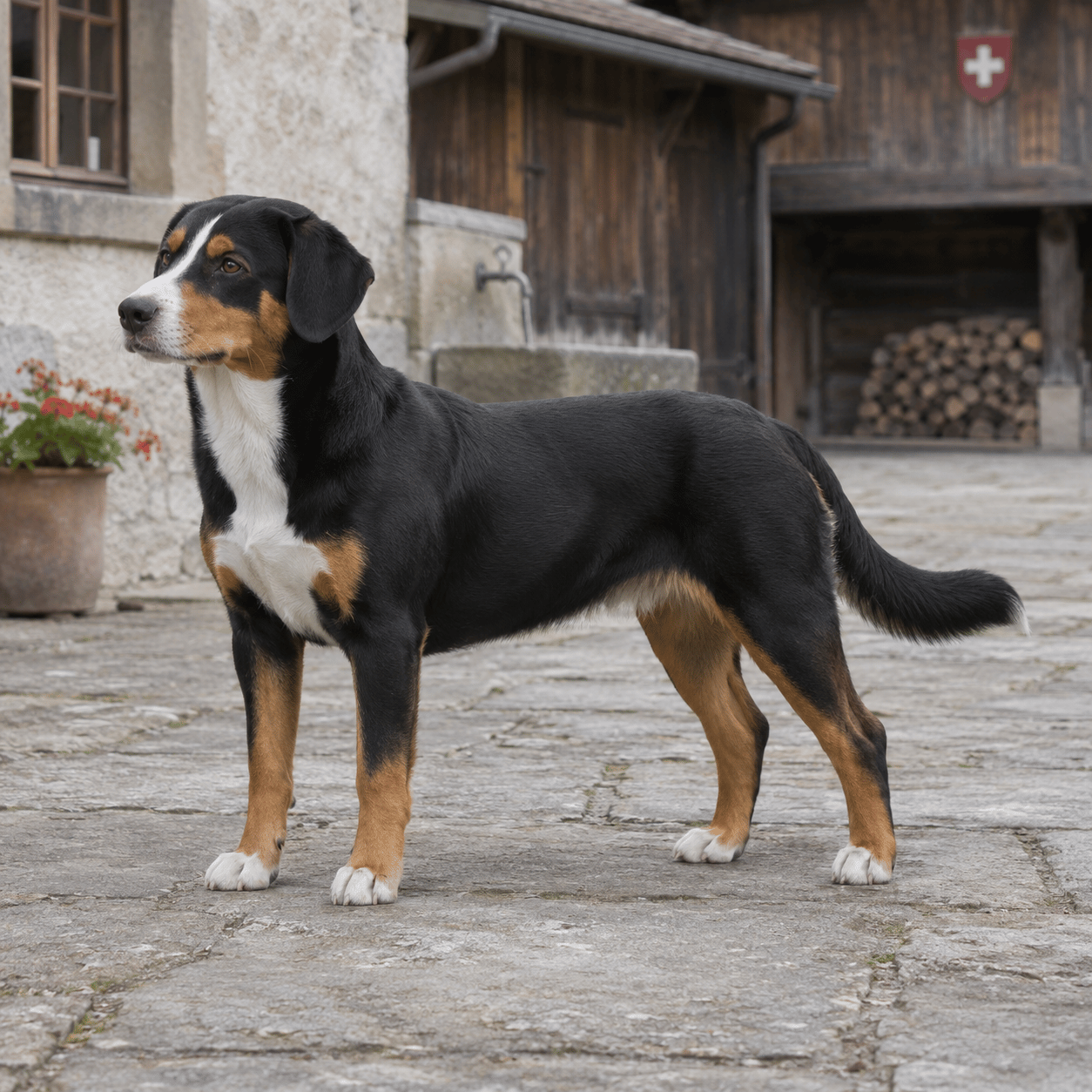
The breed has almost square proportions, well-defined muscles and an alert expression. Its tricolour coat has either a black or Havana brown base with rust-brown and white markings. The tail is set high and carried curled over the croup when the dog is moving. The short, close-fitting coat has a dense undercoat.
Brush the coat thoroughly, especially when the undercoat is shedding. Get your dog used to having its paws, nails and ears checked during quiet moments.
¶Temperament & Personality
The Appenzeller Sennenhund is typically lively and attentive. It forms close bonds with its people and may be reserved around strangers. Barking is a prominent part of how the breed lets you know what is happening. Let your puppy explore new situations from a safe distance, and teach it how to behave when visitors arrive.
¶Training & Exercise
Plan for both daily outdoor exercise and tasks that involve your dog working with you. Tracking and other scent work provide a clear job to do. Obedience or agility can suit a healthy adult dog when the exercises are introduced gradually. Make rest just as clear a part of the routine as activity, especially for a dog that is quick to respond to many things happening at once.
¶Health
The Swedish Kennel Club (SKK) lists patellar luxation, ectopic ureter and hip dysplasia. Ask the breeder about knee and hip assessment results, and whether urinary tract problems have been followed up in the dog’s family. The Swedish breeding strategy describes how the breed club is addressing these issues. Ask for documentation relating to the planned pairing and ask questions about older relatives.
¶History & Origins
The breed’s ancestors worked as herding and guard dogs in northeastern Switzerland, particularly around Appenzell. The Swiss breed club was founded in 1906, and the first breed standard was established in 1914. The modern breed’s speed, vigilance and willingness to work are rooted in its duties around cattle and farms.
¶Living with the Breed
Consider how your dog will be able to rest when there is traffic outside or visitors arrive frequently. A well-planned routine for answering the door can help shorten barking episodes. Meet adult dogs before buying a puppy, and ask about barking, willingness to work with people and the ability to relax. Give your dog a safe space of its own, and make sure adults supervise play with children.
¶Characteristics
¶Frequently Asked Questions
¶Comparisons with Other Breeds
Compare Appenzeller Sennenhund with other breeds and see the differences in temperament, activity level, and care to make a confident choice. Show All Comparisons