
¶Table of Contents
¶Quick Facts
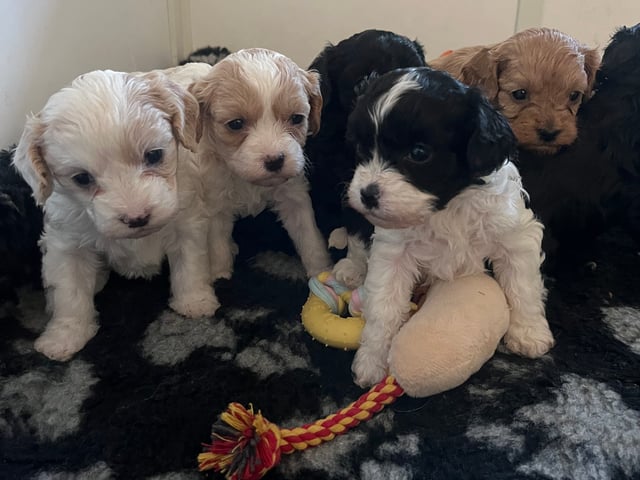
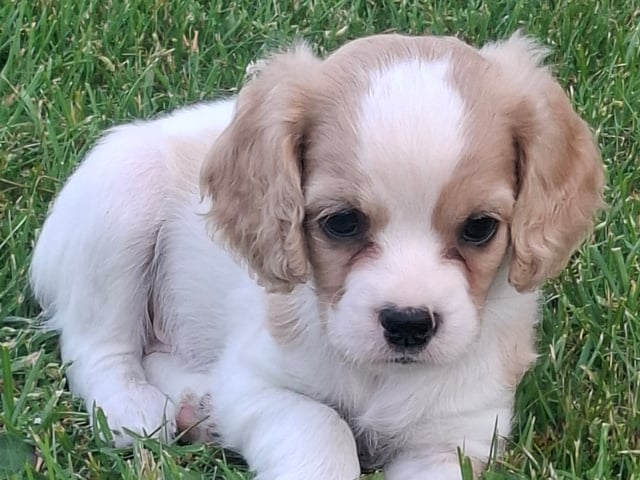
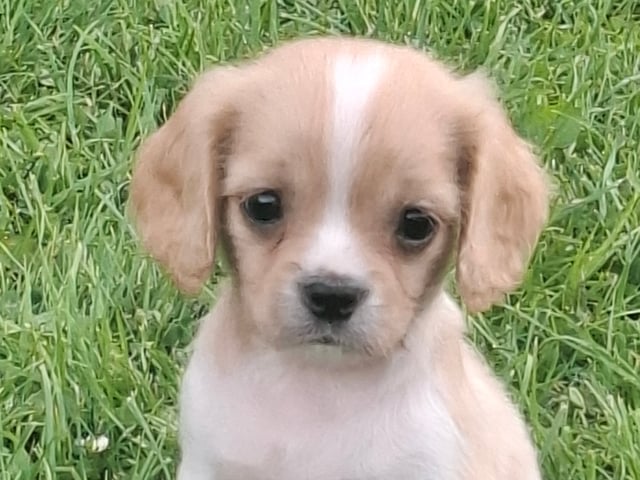
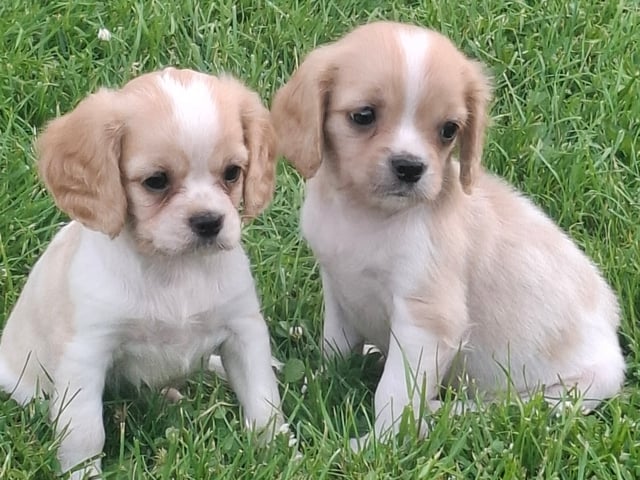
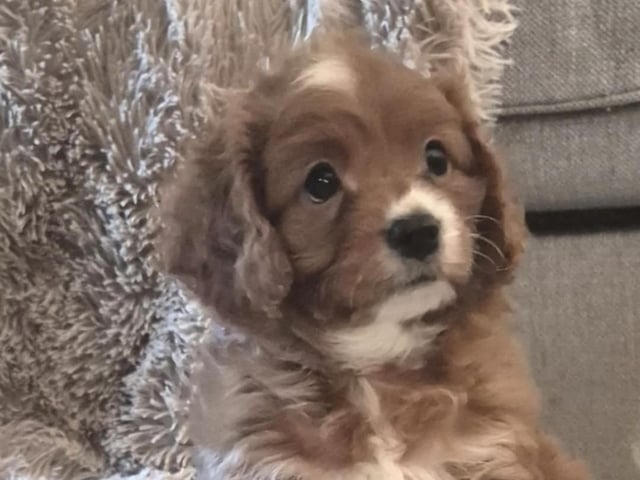
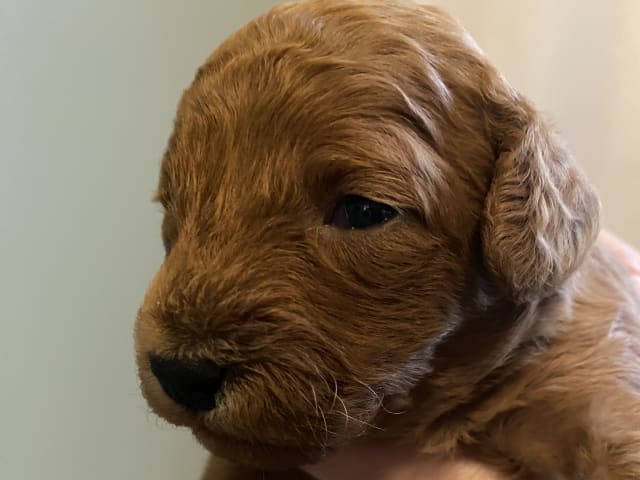
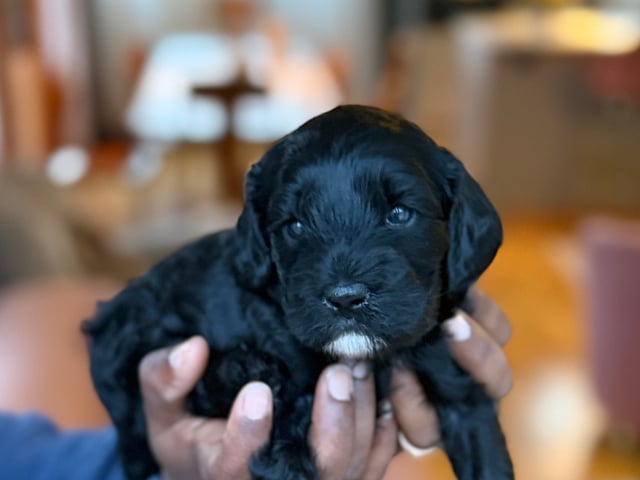
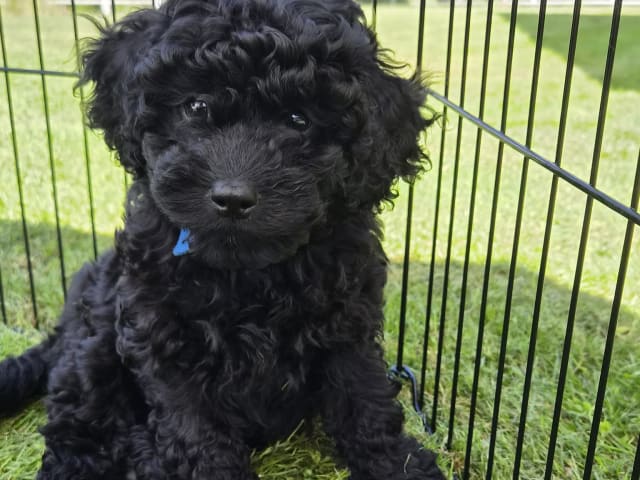
Cavapoo is a cross with the Cavalier King Charles Spaniel and Poodle as its foundation breeds, not a separate breed with a shared standard recognised by the Swedish Kennel Club or the FCI. The name is used for both first-generation crosses and later combinations, so two litters may produce noticeably different dogs.
- Size: There are no official Cavapoo measurements. Ask which Poodle variety is involved and compare the actual size of both parents.
- Coat: The coat may be silkier and wavier or denser and curlier. Shedding and the tendency to mat can vary even within the same litter.
- Temperament: Descriptions of the parent breeds show possible traits; they do not promise that every puppy will inherit “the best of both”.
- Health: A cross is not automatically healthier. Health screening needs to be assessed separately for the Cavalier and Poodle lines.
- Generation: Terms such as F1 and F1b describe ancestry. They do not guarantee a particular size, coat or personality.
The most useful question before buying is therefore not simply “is it a Cavapoo?” but “who are the parents, which Poodle variety is involved, and what verified results exist for these particular dogs?”

¶Appearance & Coat
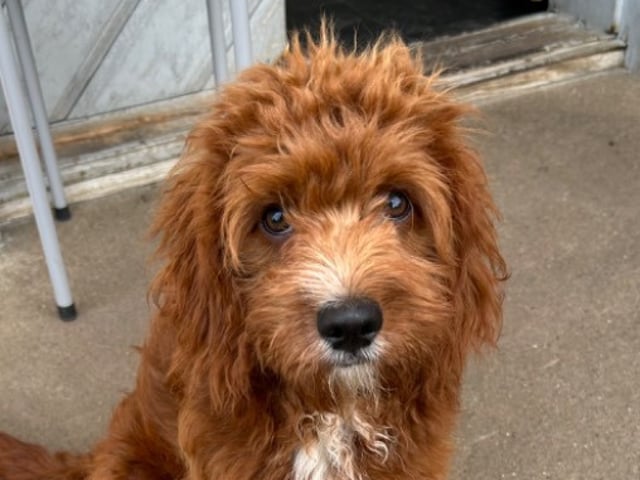
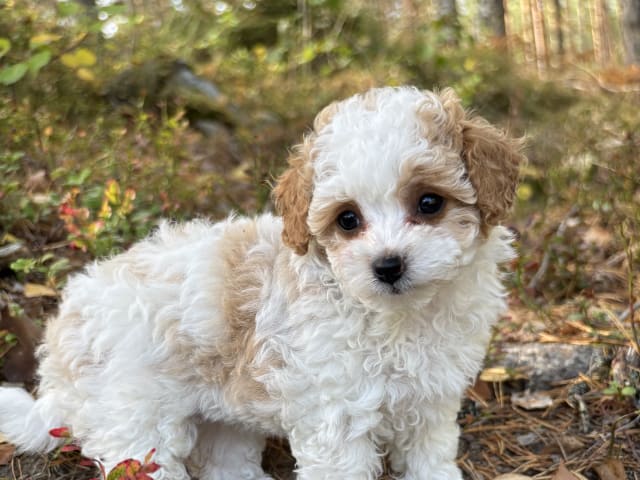
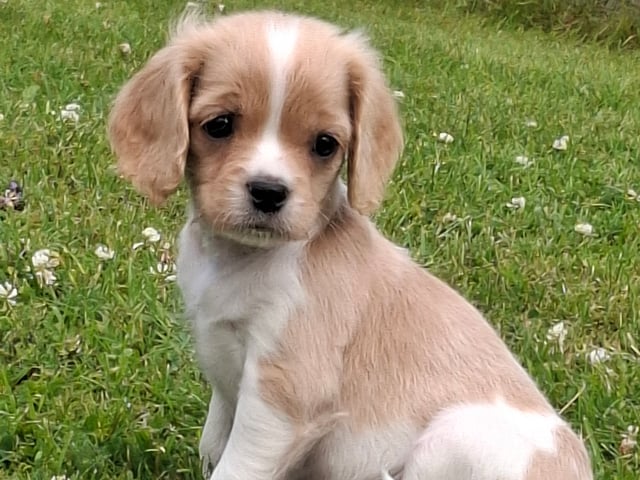
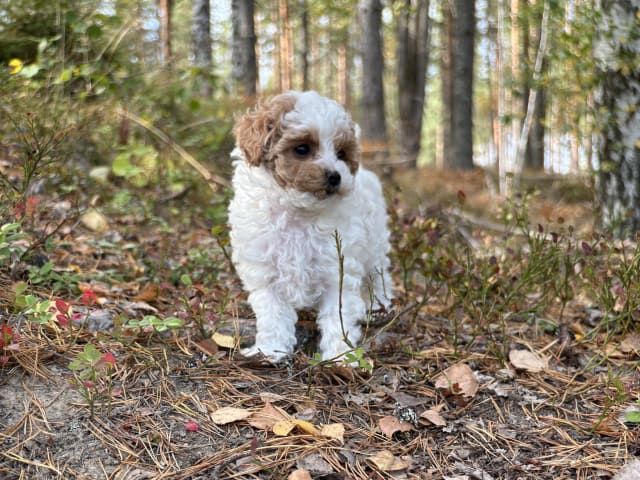
A Cavapoo’s adult size and appearance cannot be determined from the name of the cross. A Cavalier King Charles Spaniel is usually around 30–35 cm tall. The Poodle, however, comes in four standardised sizes: Toy, Miniature, Medium and Standard. The parent-breed measurements are background information, not a Cavapoo range. The best practical guide is the adult parents’ measurements, build and weight, together with the development of older offspring from the same parents.
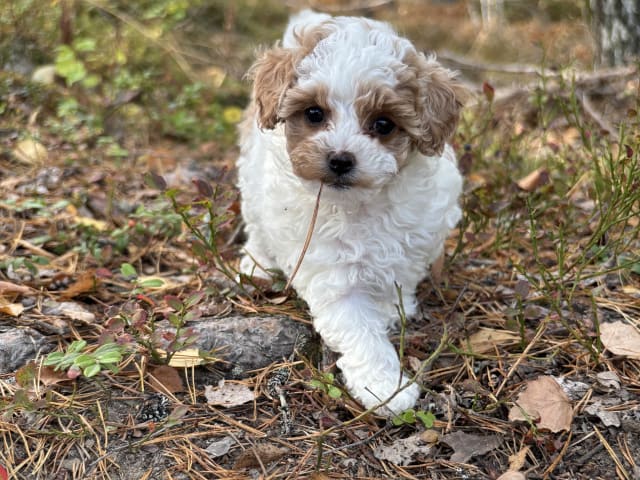
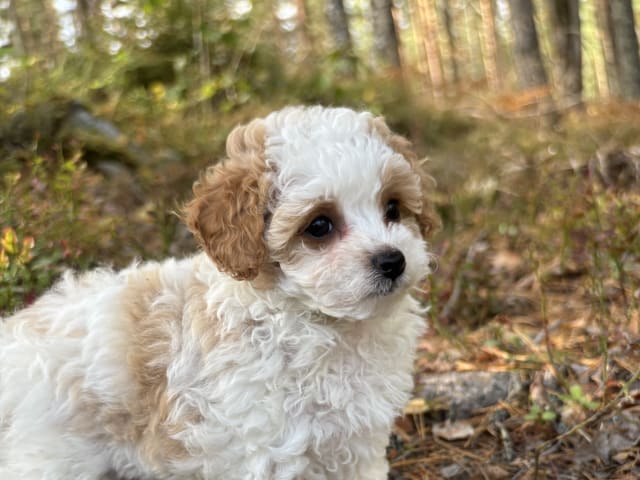
The coat can combine the Cavalier’s long, silky hair with the Poodle’s curlier, continuously growing coat in many ways. A dog may have a wavy coat that sheds to some degree, denser curls that retain loose hair, or something in between. Coat care should therefore follow the individual coat rather than a fixed schedule.
Check whether a comb can pass all the way down to the skin, particularly behind the ears, in the armpits and where a harness or collar sits. A more Poodle-like coat will need clipping, while a more Cavalier-like coat still needs thorough combing and checks around the ears and feet. Ask the breeder to show you how the adult dogs’ coats are maintained.
A Cavapoo is not allergy-free. Dog allergens are found mainly in skin and saliva, and the Swedish Kennel Club stresses that levels vary between individuals, even within the same litter. A dog that sheds little is therefore no guarantee that a person with allergies will tolerate it. Anyone with an allergy needs medical advice about their own situation and cannot rely on the name of the cross or the coat type as a guarantee.

¶Temperament & Personality
A Cavapoo can develop into a sociable, active and cooperative companion, but personality is less predictable than marketing often suggests. The Cavalier is described as friendly, cheerful and affectionate, while the Poodle should be alert, active and quick to learn. A crossbred puppy may resemble either ideal, combine the traits in other ways, or show characteristics that require more training than expected.
A British questionnaire study published in 2026 included 9,402 dogs and compared Cavapoos with their parent breeds in 24 behavioural analyses. Cavapoos differed in half of the comparisons and had higher levels of undesirable behaviour in 11, including areas involving fear, excitability and separation-related problems. Owner-reported group results do not determine how an individual dog will develop, but they show that an “easy-to-train family dog” is not an inborn guarantee.
Meet the puppy’s mother and observe whether she can be curious, recover after something unexpected and settle in an everyday environment. Ask for equally concrete information about the father and close relatives. Words such as “kind”, “cuddly” or “typical Cavapoo” reveal less than examples of how the dogs respond to unfamiliar people, handling, other dogs, noises and short separations.
Children and dogs always need a present adult, and the dog needs a resting place where it will not be disturbed. A small dog can be injured by being lifted or handled carelessly, while children cannot be expected to recognise a dog’s early signals. Living with dogs or cats depends on the individuals’ previous experience and the introduction; the cross itself does not guarantee compatibility.

¶Training & Exercise
A Cavapoo needs daily physical activity, mental stimulation and practice settling down, but a set number of walking minutes will not suit every dog. Age, build, health, terrain and recovery should guide the amount. An adult may enjoy walks, scent work and playful problem-solving, while a puppy needs shorter experiences, plenty of sleep and gradually increased physical demands.
Training should be reward-based, clear and adapted to the dog’s ability. Prioritise skills that make daily life safe: engagement, recall, walking calmly on a lead, settling at the door and around visitors, cooperative handling, and the ability to pause after activity. Short, successful repetitions are more valuable than continuing when the dog is tired, frightened or overexcited.
Being left alone should be trained as a separate skill. A young puppy cannot be left alone, and duration should only increase when the dog feels secure and can relax. Start with very short, uneventful distances inside the home and take a step back if the dog begins to guard the door, pace, bark persistently or struggle to settle. Plan daily life so that the puppy is not expected to cope with longer absences before the training is working.
If the dog repeatedly becomes very frightened, struggles to settle or panics when left, seek an early assessment from a vet and a suitably qualified behaviour professional. Harsher corrections do not resolve the emotion behind the behaviour.

¶Health
A Cavapoo should not be assumed to have better health simply because it is a cross. A large British study from 2024 found no statistical difference in most comparisons between three popular Poodle crosses and their parent breeds. Better evidence for a buying decision comes from identified breeding dogs, the right examinations for each line and information about older close relatives.
The heart is the first checkpoint in the Cavalier line. The Cavalier King Charles Spaniel has a health scheme targeting early heart murmurs associated with myxomatous mitral valve disease, MMVD. For purebred Cavalier offspring to be registered in Sweden, the parents need an official clear heart certificate; it may be no more than 12 months old at mating, and the earliest age for an official examination is three years. The rule does not apply to a Cavapoo litter, but it is a useful benchmark. If a purebred Cavalier is a direct parent, ask to see its identity, age at examination, date and official result. For later generations, the breeder should be able to identify the Cavaliers further back and show their results. Ask when older relatives first developed a murmur; a result from a young dog does not provide the same information as documented heart health at an older age.
The Cavalier line also warrants questions about Chiari-like malformation and syringomyelia, CM/SM. The condition occurs in the breed but may range from no obvious signs to pain and neurological symptoms; its prevalence in Sweden has not been firmly established. Ask about known signs, diagnoses and any MRI results in close relatives. The Swedish Cavalier breed club also recommends eye examination before breeding and patellar examination from one year of age. A DNA panel does not replace these examinations.
In the Poodle line, the size variety determines which results are most relevant. Toy, Miniature and Medium Poodles are covered by the Swedish Kennel Club’s health scheme for prcd-PRA, an inherited retinal disease. In registered Poodle breeding, the parent must be DNA-tested by an approved laboratory or documented as hereditarily clear before mating. The test only provides information about prcd-PRA, not every form of PRA or other eye disease. Patellar status is an important breed-club recommendation for Toy and Miniature Poodles. Hip results become relevant for Medium and Standard Poodles, with a formal hip dysplasia scheme for Standard Poodles. If the Poodle is further back in the pedigree, those dogs and their results should also be identifiable.
Ask to see the actual results, not merely to be told that the dogs are “health tested”. Check the dog’s name or registration number, type of examination, date, age and result, as well as the Poodle variety involved. Healthy parents can never guarantee a healthy puppy, but verifiable information provides a much better basis for a decision than a list of tests without identities and dates.

¶History & Origins
Cavapoos do not share a documented breed development comparable with that of a recognised breed. The name describes a modern cross founded on the Cavalier King Charles Spaniel and Poodle, but without a shared stud book there is no single standard, founder or reliable starting year covering every dog sold under the name.
The parent breeds do have well-documented histories. Small spaniels have been depicted in Europe for centuries, and the Cavalier King Charles Spaniel was recognised as a separate breed by the Kennel Club in Britain in 1945. The Poodle is an old European breed; larger dogs were historically used as water retrievers, while smaller varieties developed as companions and for other roles.
Terms such as F1 and F1b are therefore best read as descriptions of an individual litter’s ancestry, not as stages towards a shared Cavapoo standard. Ask the breeder to draw out the combination if it is not clear and check which foundation breeds and individual dogs actually sit behind the puppy.

¶Living with the Breed
A Cavapoo is best suited to someone who accepts variation and wants to assess the individual, not someone who needs guarantees about size, allergy, temperament or easy coat care. Daily life needs to allow for coat care, reward-based training, gradual training for time alone and activity that can be adjusted to the dog’s age and way of functioning.
Flat living can work if the dog can settle, has its needs met and is not left longer than it can cope with. A small body does not automatically mean low activity or a quiet indoor life. For a first-time owner, access to a reputable puppy class, grooming help and a plan for working days matter more than the label “suitable for beginners”.
Before deciding, ask for:
- the full identity of both parents and the exact Poodle variety;
- a clear explanation of the F1, F1b or other combination;
- official heart results and relevant family history in the Cavalier line;
- Poodle-line eye, patellar, prcd-PRA or hip results suited to the variety;
- information about CM/SM, eyes and knees in the Cavalier line;
- the opportunity to see the puppy with its mother and assess her everyday behaviour;
- a realistic account of the adult coat, its care and how previous offspring have developed.
Walk away if identities and results cannot be shown, if the breeder promises an allergy-free dog or a fixed temperament, or if the puppy and adult dogs show marked fear, lameness, breathing difficulty or irritated eyes. A good Cavapoo match rests on open information and a suitable routine for the individual dog, not on allowing the name of the cross to replace proper checks.
¶Characteristics
| Characteristic | Value |
|---|---|
| Breed Type | Crossbreed |
| Aggressiveness | 3/5 |
| Child Friendly | 3/5 |
| Energy | 3/5 |
| Hair Shedding | 3/5 |
| Health | 3/5 |
| Intelligence | 3/5 |
| Grooming Needs | 3/5 |
| Learning Ability | 3/5 |
| Barking Level | 3/5 |
| Height | 0 – 0 cm |
| Weight | 0 – 0 kg |
| Life Expectancy | 0 – 0 years |
¶Cavapoo price
Here you can see typical asking prices for Cavapoo in Sweden over the last 12 months.
The calculation is based on valid Get a Pet listings from the last 12 months, including active and expired listings. These are asking prices, not confirmed sale prices.
¶Frequently Asked Questions
What kind of temperament does a Cavapoo usually have?
Most are affectionate, people focused and quite gentle, often inheriting the Cavalier’s softness along with the Poodle’s alertness. They typically enjoy being close to their owners, cope well with polite children and can be friendly with strangers, but some lines can be more sensitive or shy without careful early socialisation.
Are Cavapoos good for people with allergies and do they shed?
Many have low to moderate shedding coats, especially when the Poodle influence is strong, but they are not guaranteed to be hypoallergenic. Some individuals shed more like a Cavalier, so allergy sufferers should meet the specific dog and expect regular grooming to manage dander and loose hair.
How much exercise does a Cavapoo need each day?
Most do well with around 45 to 60 minutes of physical exercise a day split into a couple of walks, plus short play sessions. They are usually lively and enjoy activity, but their small size and Cavalier heritage mean they should not be over-exercised, particularly as young puppies or in hot weather.
What health problems are Cavapoos prone to?
They may inherit issues seen in Cavaliers and Poodles, such as heart disease (especially mitral valve disease), ear infections, dental crowding and some joint or eye conditions. Reputable breeders screen the parent dogs for known hereditary problems, which helps reduce risk but cannot eliminate it completely.
How big do Cavapoos get and when are they fully grown?
Most adult dogs fall in the small range, often around 8 to 12 kilograms, with height influenced by whether the Poodle parent was toy or miniature. They typically reach most of their adult height by about 9 months and fill out in body condition up to around 12 to 15 months of age.
Do Cavapoos bark a lot or tend to be noisy?
They are usually moderate barkers, often vocal when excited, alerting to visitors or if left alone and anxious. With consistent training and enough mental stimulation, most can learn to keep barking under control, but very clingy individuals may be more prone to attention seeking noise.
How much grooming does a Cavapoo’s coat really need?
Their coats can range from wavy to quite curly and usually require brushing at least several times a week to prevent mats, plus professional grooming every 6 to 10 weeks. Without regular coat care, tangling around the ears, armpits and tail base is common and can quickly become uncomfortable for the dog.
Are Cavapoos easy to train, especially for first time owners?
Most are intelligent and eager to please, which lends itself well to reward based training and makes them manageable for committed beginners. Their sensitive nature means harsh methods can backfire, so they respond best to calm guidance, clear routines and plenty of short, positive training sessions.
Can a Cavapoo cope in an apartment or small home?
They usually adapt well to smaller living spaces as long as they receive daily walks, play and interaction with their owners. More active individuals or those with strong Poodle traits will need extra mental enrichment, such as food puzzles and training games, to prevent restlessness indoors.
Do Cavapoos get separation anxiety if left alone?
Many form very close bonds and can struggle if suddenly left for long periods, which may lead to barking or destructive behaviour. Early training that teaches them to relax alone, combined with a predictable routine and adequate exercise, can greatly reduce the risk of serious separation issues.
¶Comparisons with other breeds
Compare Cavapoo with other breeds and see the differences in temperament, activity level, and care to make a confident choice. Show all comparisons