
¶Table of Contents
¶Quick facts
The Turkish Angora is an elegant, lively cat breed originating in Turkey. Beneath its fine, silky coat is a supple, muscular body, and many of these cats like to be involved in whatever is happening at home. The breed suits someone who appreciates a curious cat with a mind of its own and can provide both companionship and outlets for its energy.
- Size: Medium-sized, with a long body and fine bone structure. Males are usually larger than females.
- Activity level: High. Daily play, climbing and shared activities need to be part of the routine.
- Grooming: The silky coat is relatively easy to care for. Combing it through about once a week is a practical starting point.
- Life expectancy: The source material does not provide a reliable breed average. TICA describes individuals that have lived beyond 20 years.
- Best suited to: An owner who wants an involved companion cat and can offer interaction, safe high places and a variety of activities.
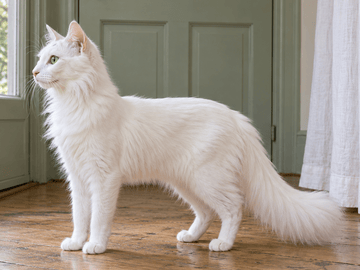
White coats are often associated with the Turkish Angora, but the breed comes in several colours and patterns. Choose a cat based on its health, temperament and suitability for your home, and ask for a pedigree and documented health information. A white, long-haired cat is not automatically a Turkish Angora; the breed name is tied to registered ancestry.
¶Appearance and coat
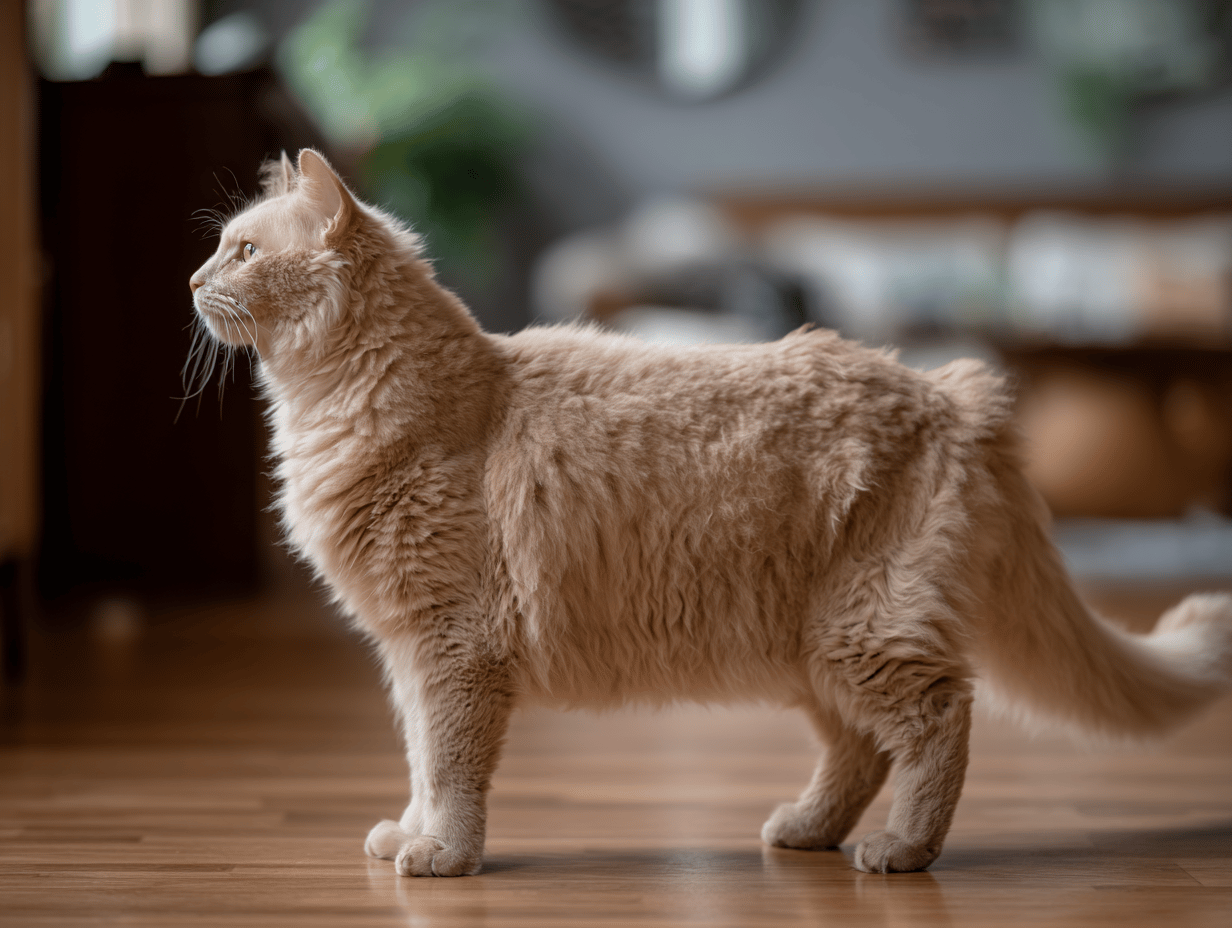
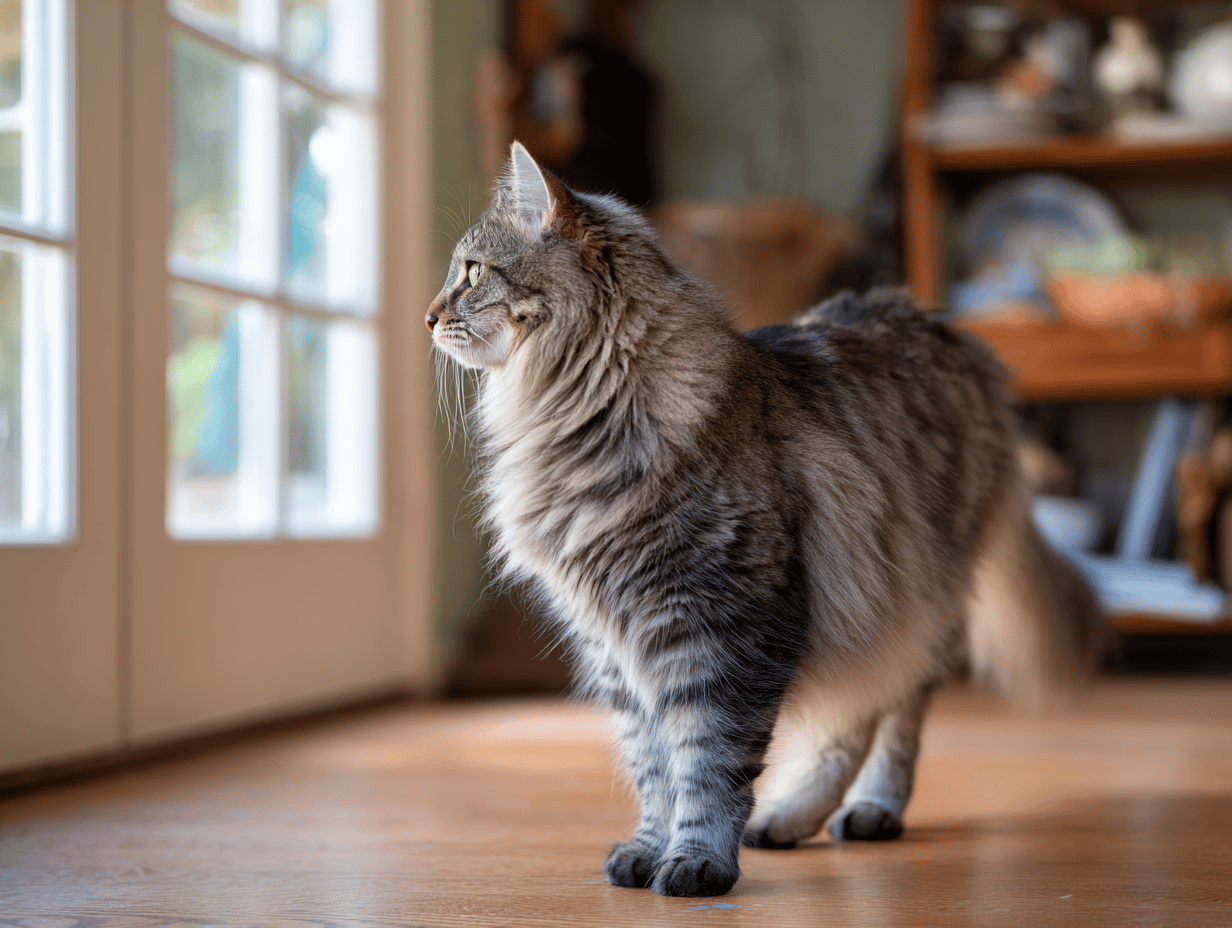
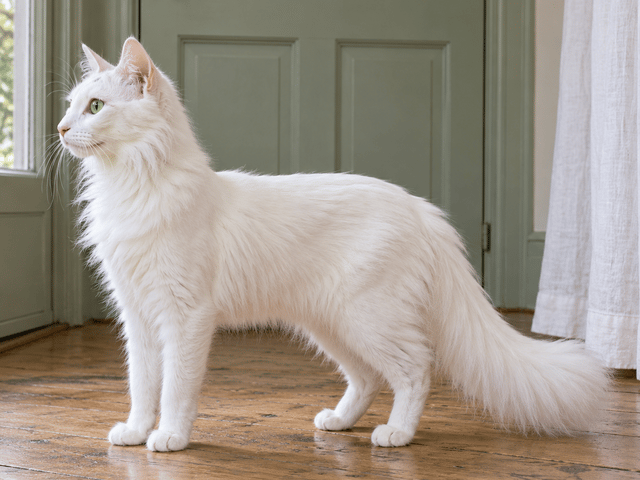
The Turkish Angora has a slender, elongated and well-balanced body, with muscle beneath its light coat. The hindquarters are slightly higher than the shoulders, the legs are long and the paws small. The long, tapering tail is generously plumed. The overall impression should be graceful and agile, with harmonious proportions rather than excessive size or weight.
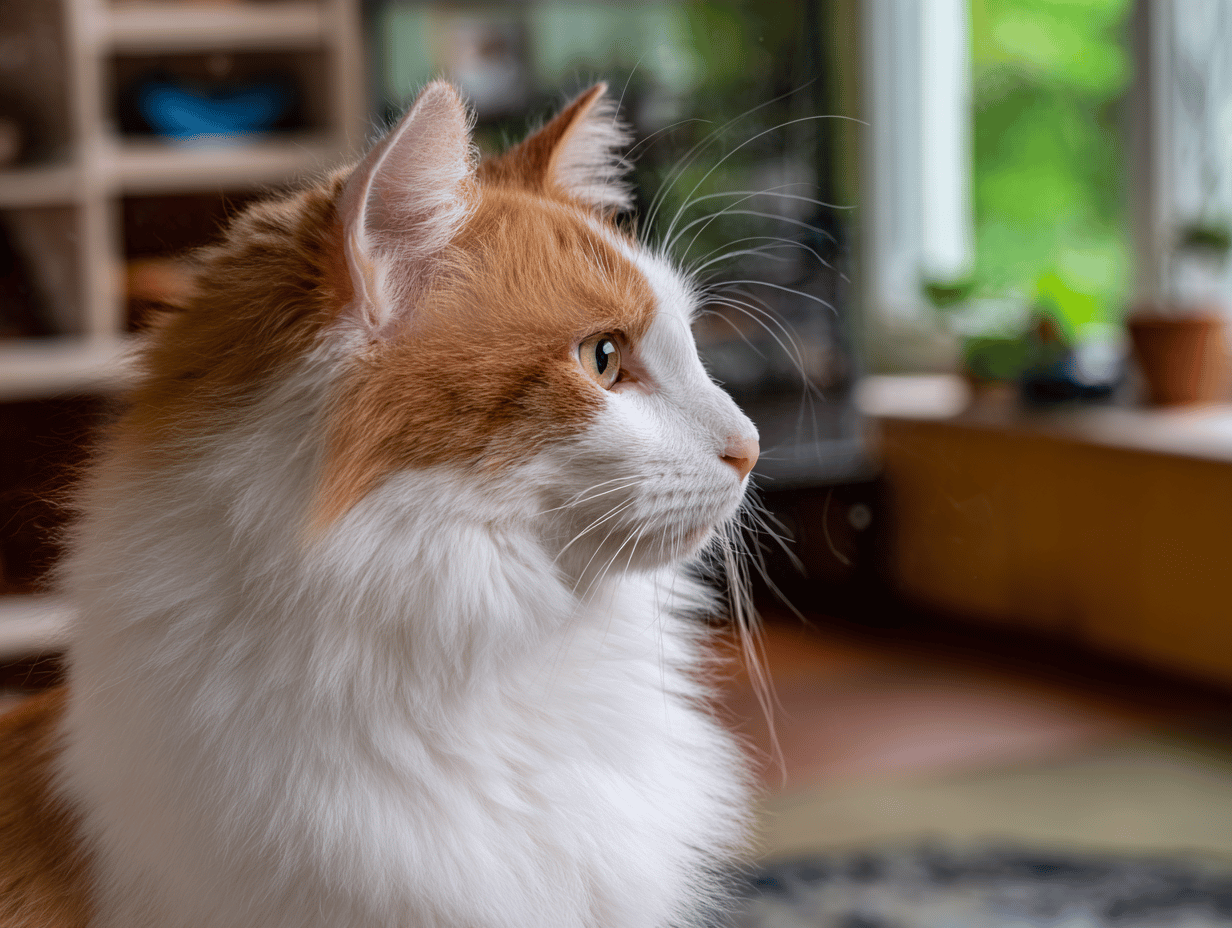
The head is small to medium-sized and wedge-shaped. The nose is medium in length, with no pronounced stop in profile. Large, upright ears sit high on the head, and the eyes are almond-shaped and slightly slanted. Consult the registering organisation’s breed standard for precise details of how breed type is assessed; a single photograph cannot show a cat’s entire conformation.
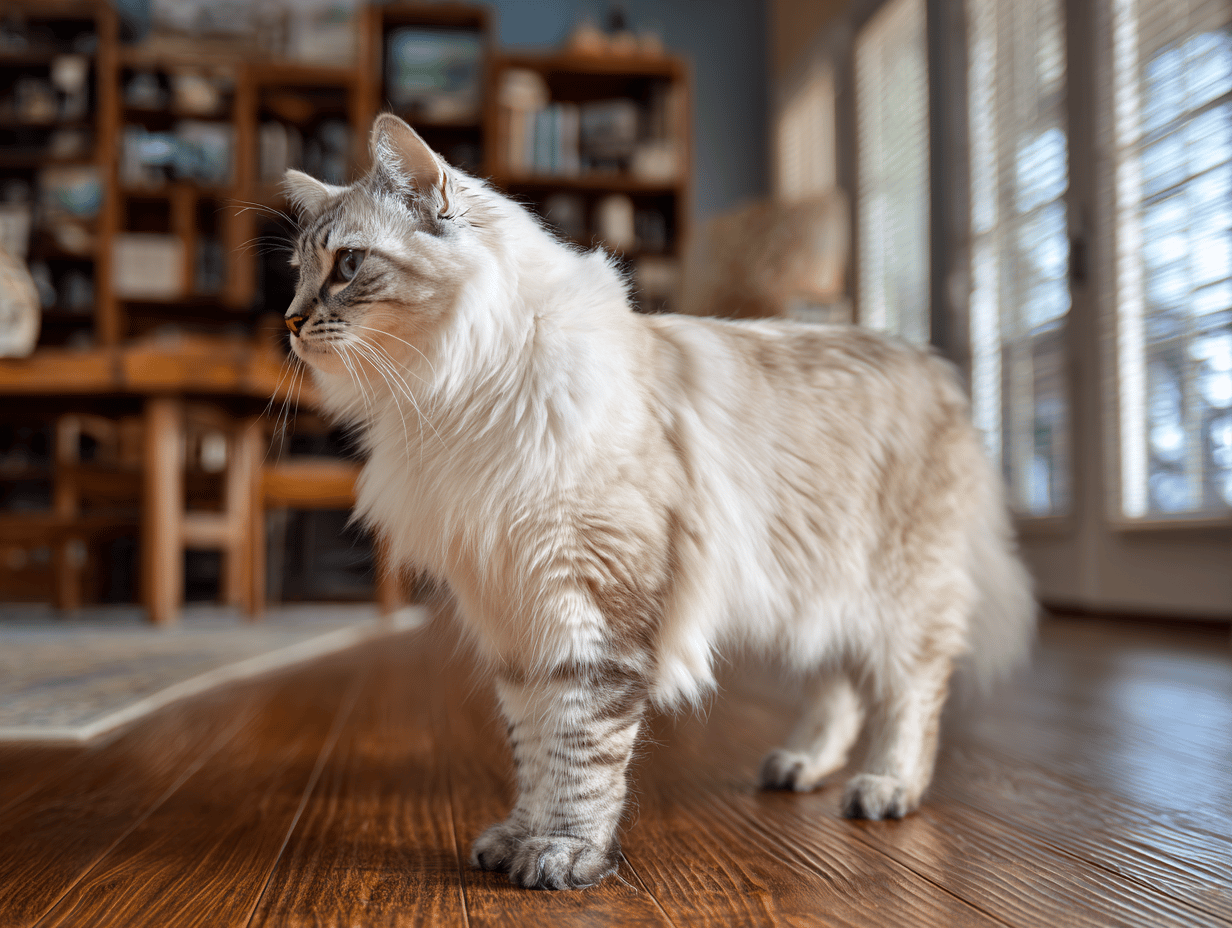
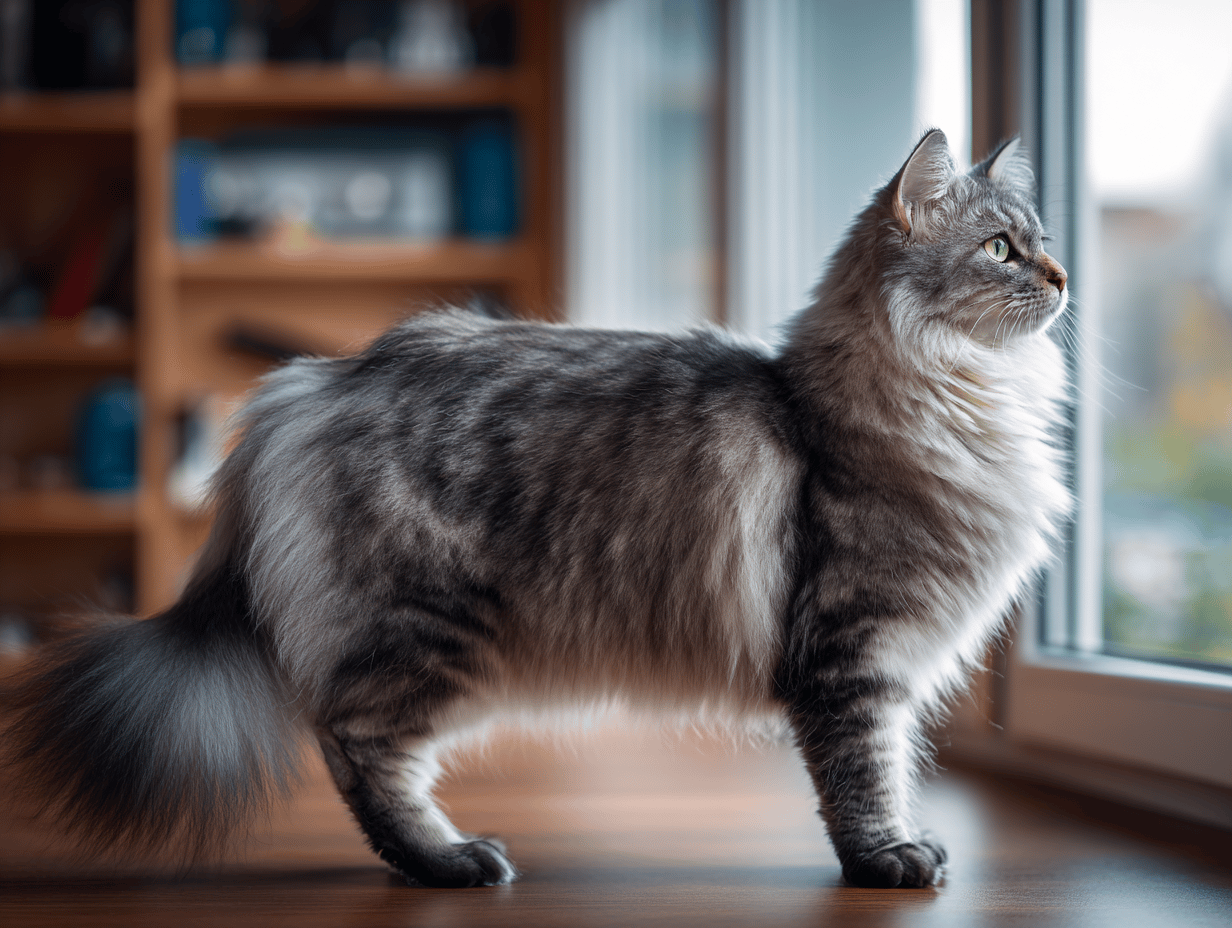
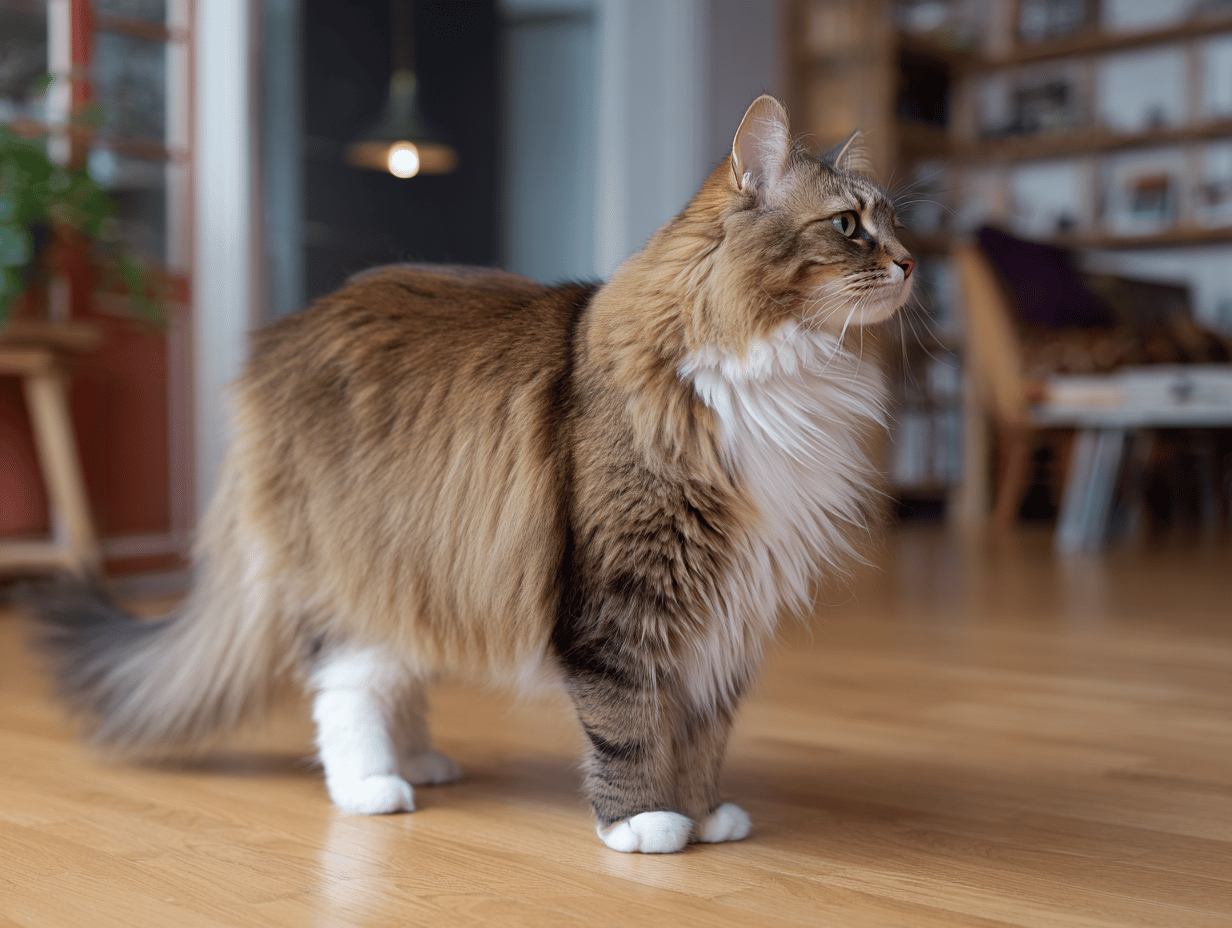
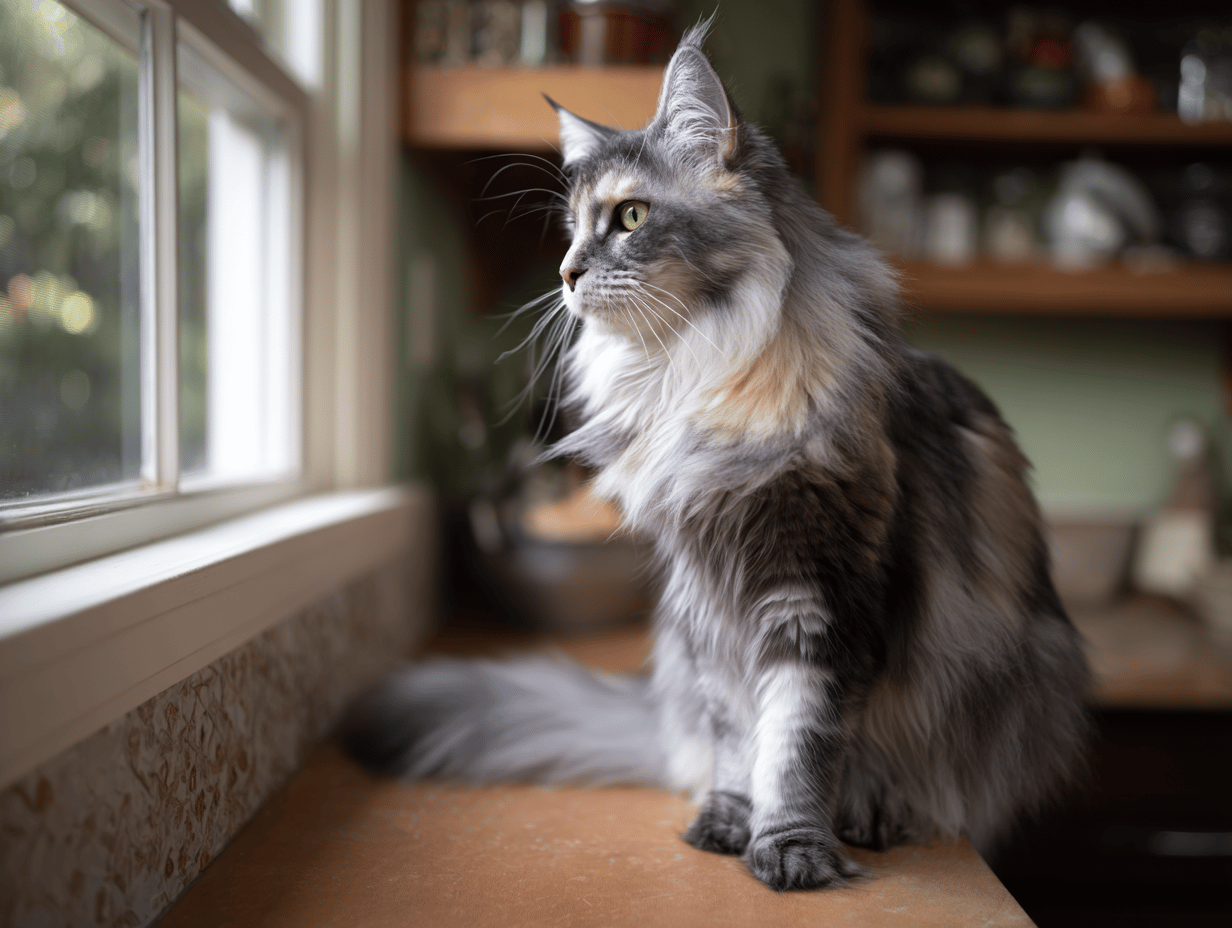
The coat is fine and silky, with longer hair on areas including the tail, ruff and hind legs. The amount of coat can vary with season and age. The breed should retain a light appearance, rather than having a dense, woolly mass of fur. Both white and coloured cats occur, while permitted colour combinations are determined by the relevant organisation’s standard.
Comb gently and pay attention to how the coat feels, particularly where longer hairs meet or rub together. Increase grooming when the cat is shedding or needs more help keeping itself clean. Start with short sessions that the cat is comfortable with. Recurring mats, skin irritation or a suddenly unkempt coat should be taken seriously, even in a breed whose coat is normally easy to maintain.
¶Temperament and personality
Many Turkish Angoras seek out company and want to investigate what their people are doing. They may follow you from room to room, join in play and take an interest in visitors. This is a general breed description, not a promise that every cat will be outgoing. Let each cat show you how it prefers to interact, and give it the freedom to choose how close it wants to be.
The breed’s agility and interest in high places often become apparent at home. A piece of furniture you think of as storage may look like a lookout spot to your cat. Provide safe alternatives where it can climb and survey the room. Practical planning around the home is part of cat ownership, especially with a cat that enjoys exploring new routes.
Playfulness needs to be balanced with opportunities to rest. Provide quiet, undisturbed places and respect the cat’s choice to end an interaction. Learn what engages it and what tires or stresses it. Sudden withdrawal or a noticeable change in habits should be investigated rather than dismissed as independence or stubbornness.
¶Training and exercise
Offer daily activity in several short sessions. Toys that can be stalked, chased and caught allow the cat to express elements of its natural hunting behaviour. Vary the speed and movement according to its response, and let it succeed in catching the toy. Playing together should be a shared activity that the cat can choose to join.
Safe climbing routes and sturdy scratching surfaces complement play. A simple food puzzle can provide another activity, as long as the cat understands the task and can get the food without becoming frustrated. Increase the difficulty gradually. Use toys rather than hands and feet, and put away strings and loose parts that could pose a risk when you are not supervising.
Also spend time on training that makes care and travel easier. Keep the carrier accessible as a safe place, and reward the cat when it chooses to go inside. Practise closing the door in small steps before you need to travel. The same calm approach works when introducing a comb, nail clippers and mouth examinations. Training should build confidence, not require the cat to be held still throughout the exercise.
¶Health
CFA describes the Turkish Angora as a breed with no specifically identified health concerns, but this does not rule out illness in individual cats. Ask the breeder about the health of the parents and older relatives, and request any available results. Information about longevity and previous diagnoses in the family is valuable alongside the kitten’s veterinary examination.
Congenital deafness is an important consideration in white cats, particularly when one or both eyes are blue. The risk is associated with white colouring and is not unique to the Turkish Angora. A cat may have hearing loss in one or both ears. Ask how its hearing has been assessed and whether an objective hearing test, BAER, has been carried out where relevant.
Eye colour and everyday responses alone cannot establish hearing status. A cat that is deaf in one ear may function in ways that make the problem difficult to detect at home. Ask your vet to explain what a test result means and what environment suits that individual. A hearing test result also says nothing about other organs or the cat’s overall future health.
Preventive care also includes oral health, suitable food and monitoring body condition. Gently introduce dental care and discuss vaccination with your vet based on the cat’s circumstances. Seek advice if its appetite, weight, grooming or ability to be active changes. Even a cat that is normally active may need help when something changes, and illness should not be explained away as typical breed behaviour.
¶History and origins
The Turkish Angora takes its name from Ankara, formerly known as Angora, in Turkey. Long-haired cats from the area were brought to Europe several hundred years ago. The documented history goes back a long way, but it is wise to distinguish surviving records from stories about cats belonging to particular historical figures or claims of precise relationships with all other long-haired breeds.
During the 20th century, preservation efforts in Ankara became important to the breed’s survival. Cats from there later helped establish breeding programmes outside Turkey, including in the United States. Today, the breed is kept both as a companion and as a show cat. It should not be confused with the Turkish Van, which is a separate breed with its own standard.
¶Living with the breed
The Turkish Angora suits a home where it can be part of everyday life and put its curiosity to use. Make sure there are safe high places and routes between favourite spots before the cat arrives. A sturdy cat tree or accessible shelf can provide both activity and a quiet lookout point. At the same time, plan where the cat can rest undisturbed.
Children can develop a close bond with the cat when adults help create safe interactions. Let the cat approach on its own, and teach children to let it walk away. Playing with a suitable toy can be an easier activity to share than picking the cat up and carrying it. Resting places need to remain off-limits to disturbance, even in a busy household.
Other animals can provide companionship, but a new pet should be chosen and introduced with both individuals in mind. Provide separate resources and let them get to know each other gradually. A description of the breed as sociable does not mean the cat must accept every other cat or dog. If there is fear or tension, adjust the pace and make sure the environment allows them to keep their distance.
A thoughtfully planned indoor life can offer plenty to explore without free roaming outdoors. Combine interaction and play with safe climbing spots and variety in the environment. Any outdoor access needs to be planned around safety and the cat’s experience. A protected environment is especially important for a cat with hearing loss, as it cannot rely on sound to detect dangers.
Plan for pet sitting and everyday care before buying. The cat needs food, water, clean litter trays and someone to monitor its well-being even when you are busy at work or travelling. Another pet does not replace human responsibility. Choose an arrangement that allows the cat’s routines, social needs and any care requirements to be met calmly.
Before buying, review the registration, health documentation and how the particular cat behaves in everyday life. Tell the breeder about your home and how much interaction and activity you can offer. When the individual cat’s needs suit the household, the breed’s combination of elegance, love of movement and close companionship has the best chance to shine.
¶Characteristics
¶Frequently Asked Questions
¶Comparisons with Other Breeds
Compare Turkish Angora with other breeds and see the differences in temperament, activity level, and care to make a confident choice. Show All Comparisons