
¶Table of Contents
¶Quick Facts
- Males 62–66 cm at the withers and females 57–61 cm according to the FCI standard.
- High. Needs daily exercise, opportunities to search and time to rest.
- Comb the feathering, particularly after working through rough ground.
- 11–15 years, an AKC breed estimate.
- An active owner who wants to work with a pointing dog.
¶Appearance & Coat
The Irish Red and White Setter is a pointing dog developed for field work in Ireland. It searches the ground for game birds and holds its position when it catches their scent. The breed combines a gentle manner with familiar people and determination in the field.
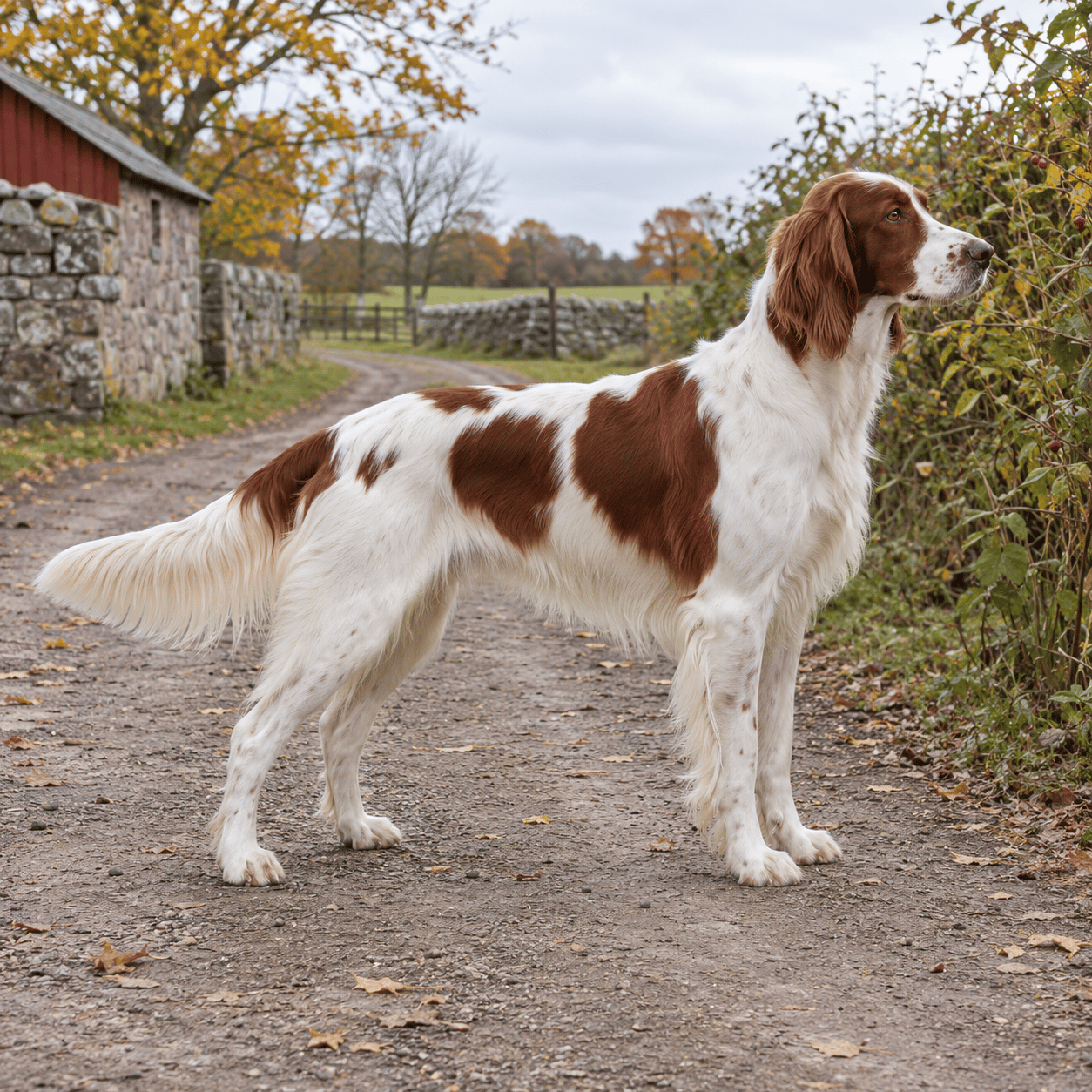
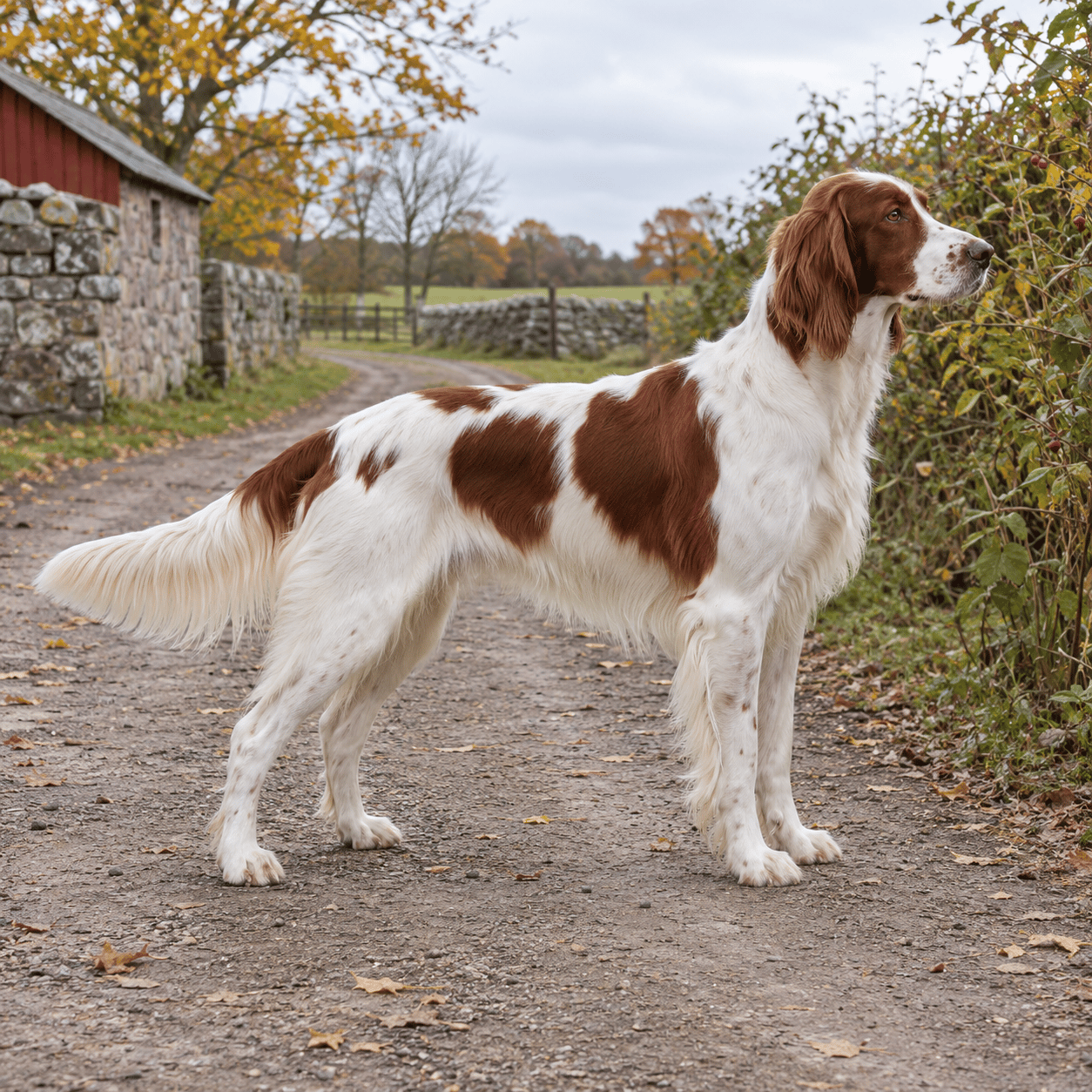
This is an athletic, balanced and muscular dog. The base colour is white with clearly defined solid red patches. Fine feathering grows on the ears, the backs of the legs and the tail. There may also be a noticeable ruff at the throat and chest, especially in males.
Comb the feathering gently and inspect the ears, armpits and paws after working in long grass. Remove tangles and debris. The Swedish Kennel Club describes the coat as requiring no show trimming.
¶Temperament & Personality
The breed is friendly, responsive and determined. Some dogs are reserved with strangers. Let a puppy explore new people and places at a comfortable pace. Take the hunting drive into account from the beginning and ask the breeder how it shows in the parents.
¶Training & Exercise
Build on the dog's interest in searching with gundog training or other activities that let it use its nose alongside its handler. A club with pointing dog experience can help owners introduce skills in stages. Give attention to steadiness and recall and use a long line where a scent could draw the dog out of reach. Adjust the work to age, fitness, terrain and weather.
¶Health
The Swedish Kennel Club mentions hip dysplasia, CLAD and PRA among concerns in the breed. CLAD affects white blood cell function. PRA is a group of inherited retinal disorders. Ask the breeder what each screening test covers, where the results are recorded and what the results mean for the planned mating. Check the current breeding guidance and registration rules in the country where the litter is registered.
¶History & Origins
The red and white dog represents an older Irish setter type. When solid red setters became widespread, the red and white dogs almost disappeared. Efforts to revive the breed began in the 1920s, and it had an Irish breed club of its own by 1944. Today the breed has its own FCI standard.
¶Living with the Breed
Make room for time outdoors, work together and quiet rest near the family. Practise calm routines early. An exuberant youngster can play roughly, so adults should supervise interactions with small children. Introduce other pets gradually and give them safe places to retreat. Ask about the dogs' working habits, their ability to settle, their noise level and how they behave around other animals.
¶Characteristics
¶Frequently Asked Questions
¶Comparisons with Other Breeds
Compare Irish Red and White Setter with other breeds and see the differences in temperament, activity level, and care to make a confident choice. Show All Comparisons