
¶Table of Contents
¶Quick Facts
- Males 72–76 cm and females 68–72 cm, according to the Swedish Kennel Club’s (SKK) ideal measurements.
- Daily exercise, activities with its handler, and mental stimulation.
- A thick double coat that needs regular, thorough combing and clipping.
- 10–12 years, according to the AKC, as a general guide.
- An experienced owner who can manage a large, watchful working dog.
¶Appearance & Coat
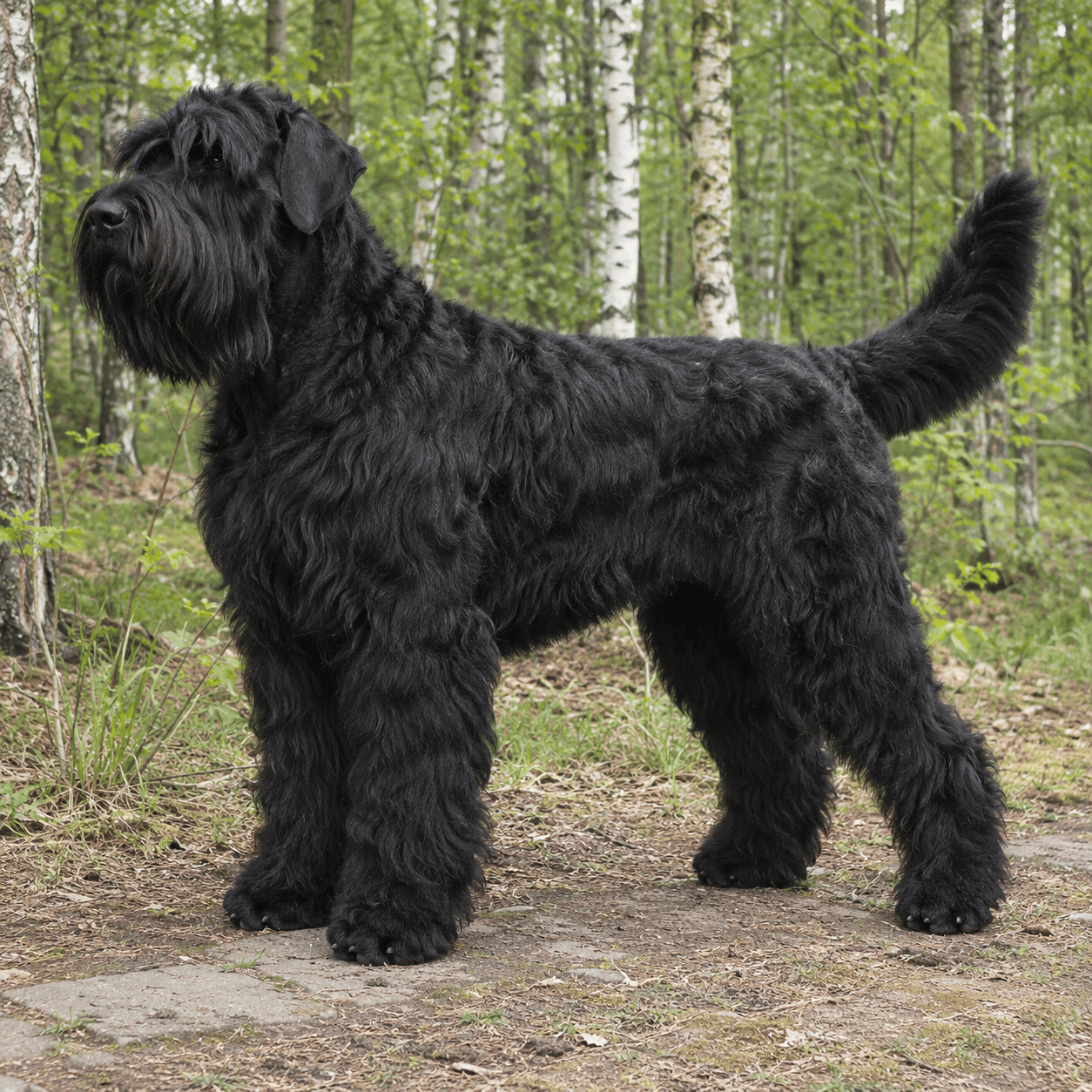
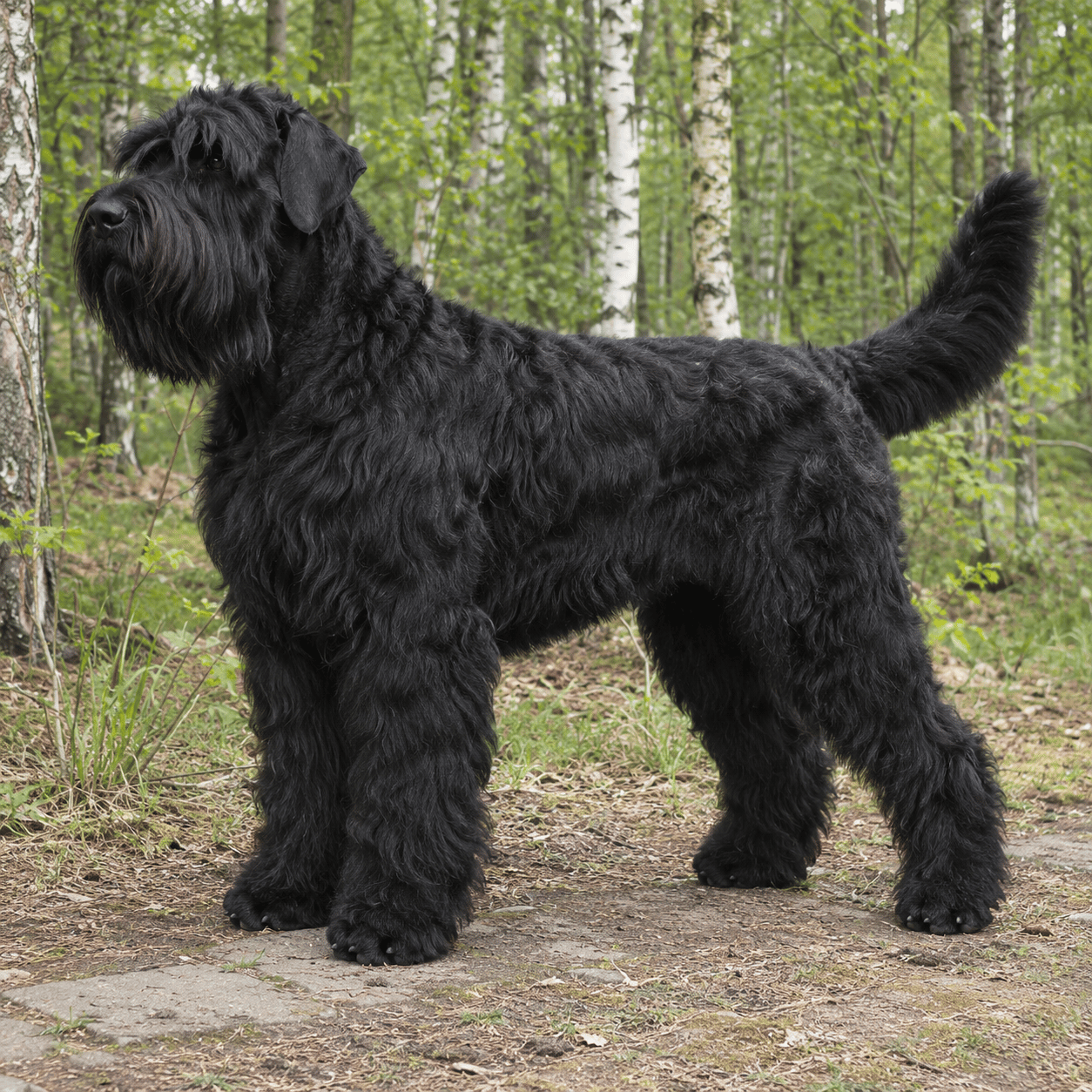
The Black Russian Terrier was developed as a working and guard dog. This is a large, heavy dog that should also be agile. Its size and watchful nature mean that everyday training and visits from guests need careful management.
The Black Russian Terrier has substantial bone and well-developed muscles. A coarse black coat with an undercoat and a full beard is typical. A few grey hairs may be present. Comb the coat systematically, paying particular attention to the areas around the ears, beard, and legs, and get your dog used to calm grooming sessions from an early age.
¶Temperament & Personality
The SKK describes the breed as self-assured and often devoted to those closest to it. It may be reserved around new people. Build confidence in settings where your dog can observe without having to react. Plan for calm, controlled introductions.
¶Training & Exercise
Tracking, obedience, and other activities that involve working with a handler can give this dog a meaningful job to do. Practise walking on a lead, going to a designated place, and waiting calmly. Adjust exercise and physical demands to suit the dog’s age, strength, and fitness.
¶Health
The SKK mentions hip and elbow dysplasia, JLPP, and HUU. Ask the breeder to explain which test results are available and how DNA status for the relevant variants is taken into account in the planned mating. The Swedish breed-specific breeding strategy provides more detail on follow-up.
¶History & Origins
The breed was developed in the Soviet Union after the Second World War to serve as a robust working dog. The Giant Schnauzer, Rottweiler, and Airedale Terrier were among the breeds used in its development. According to the SKK, the first dogs arrived in Sweden in 1973.
¶Living with the Breed
Have a plan for visitors, grooming, and transporting a large dog. Provide an undisturbed place to rest, and let adults manage situations involving crowds or children playing. Meet the breeder’s adult dogs before deciding whether the breed is a good fit for your home.
¶Characteristics
¶Frequently Asked Questions
¶Comparisons with Other Breeds
Compare Black Russian Terrier with other breeds and see the differences in temperament, activity level, and care to make a confident choice. Show All Comparisons