
¶Table of Contents
¶Quick facts
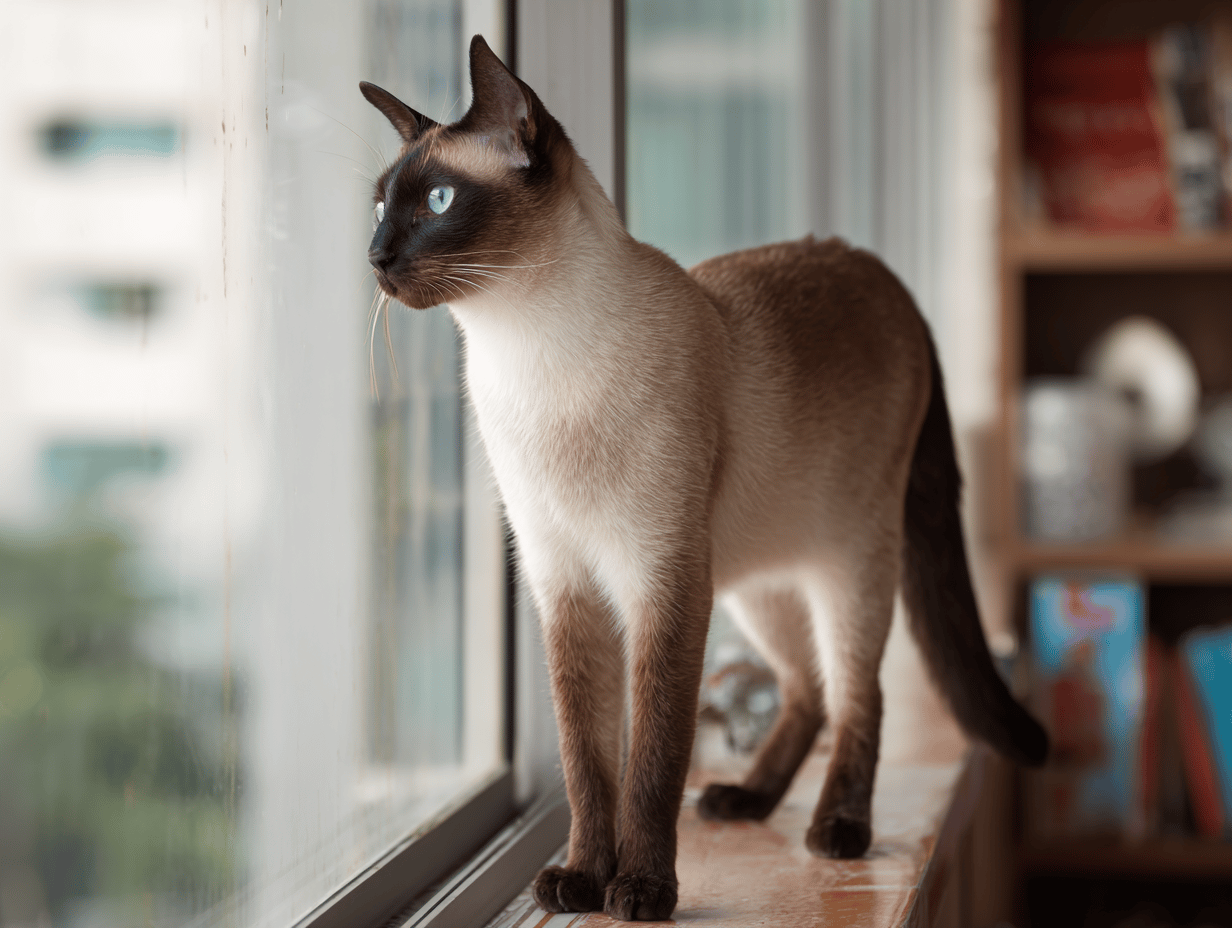
The Siamese is a social, expressive cat breed originating in what is now Thailand. Its slender body, blue eyes and distinctive pointed coat make it easy to recognise. Many Siamese cats seek frequent interaction and are highly vocal. It is therefore wise to choose this breed as much for its desire to live closely with people as for its appearance.
- Size: Medium-sized and elongated, with fine bone structure and well-defined muscles. Males are usually larger than females.
- Activity level: High. The breed enjoys daily play, exploration and interaction with its family.
- Grooming: Minimal. The very short coat can be cared for with gentle brushing or by stroking away loose hair.
- Life expectancy: TICA states 10 years or more and describes individuals that have lived beyond 20. This is not a precise breed average.
- Best suited to: Someone who wants an engaged, often talkative cat and has time for regular companionship.
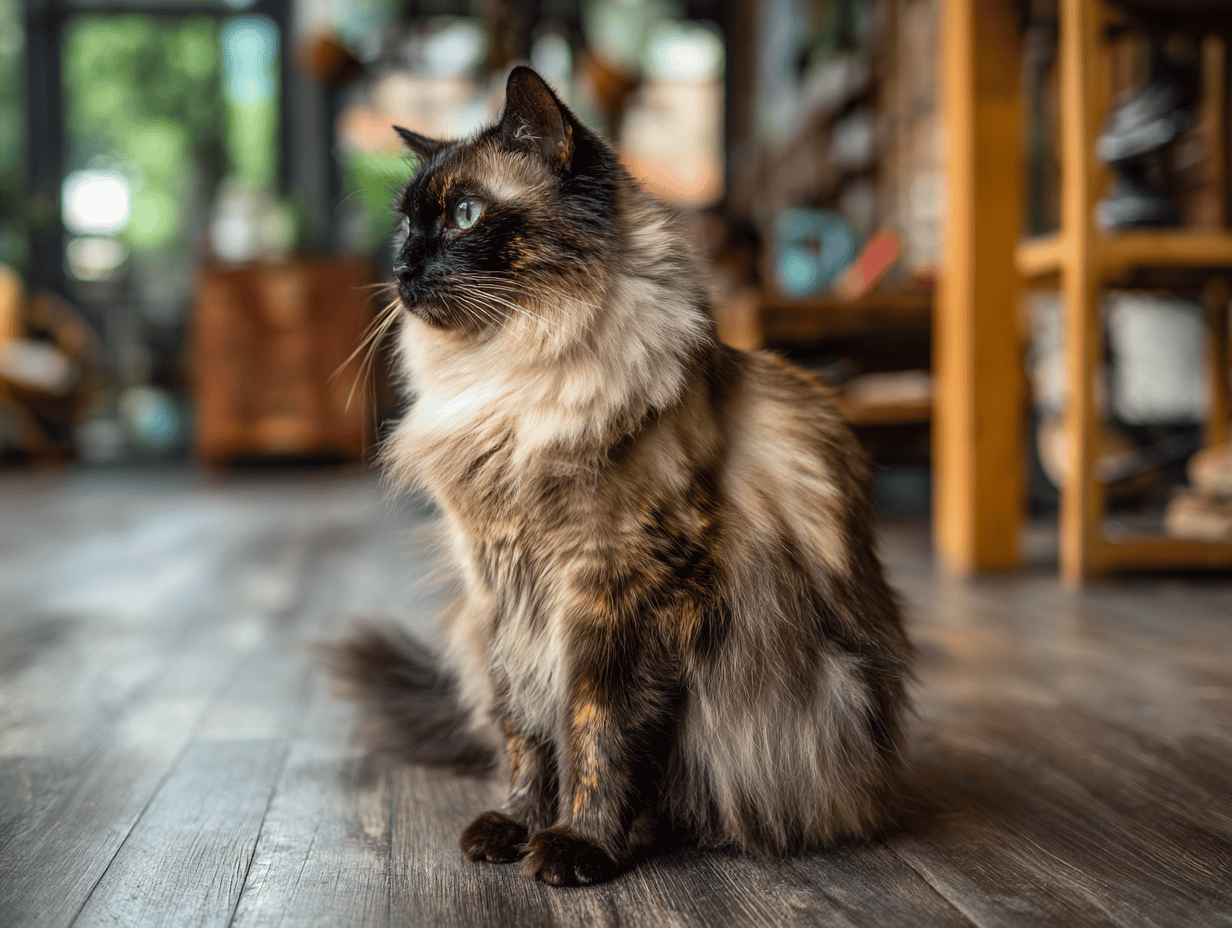
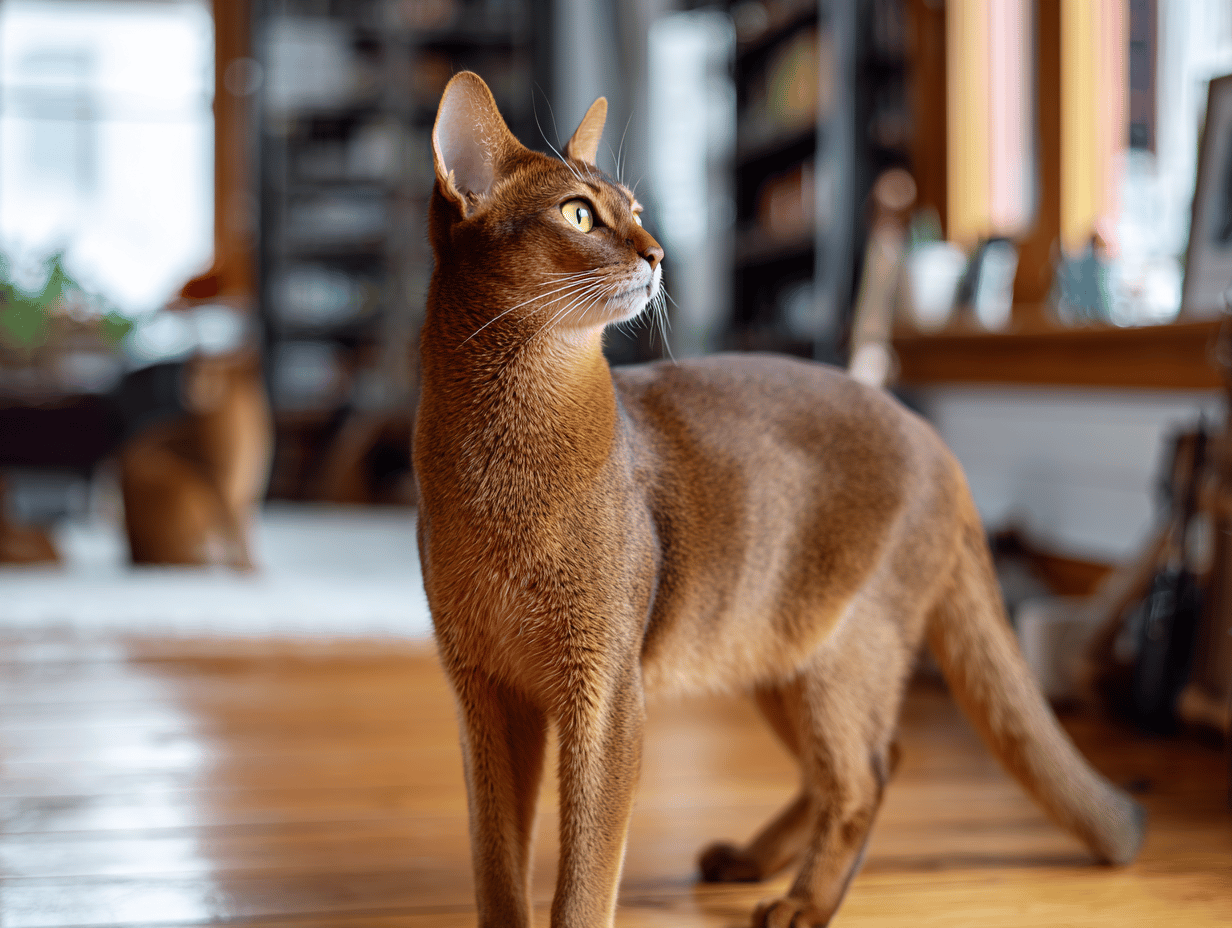
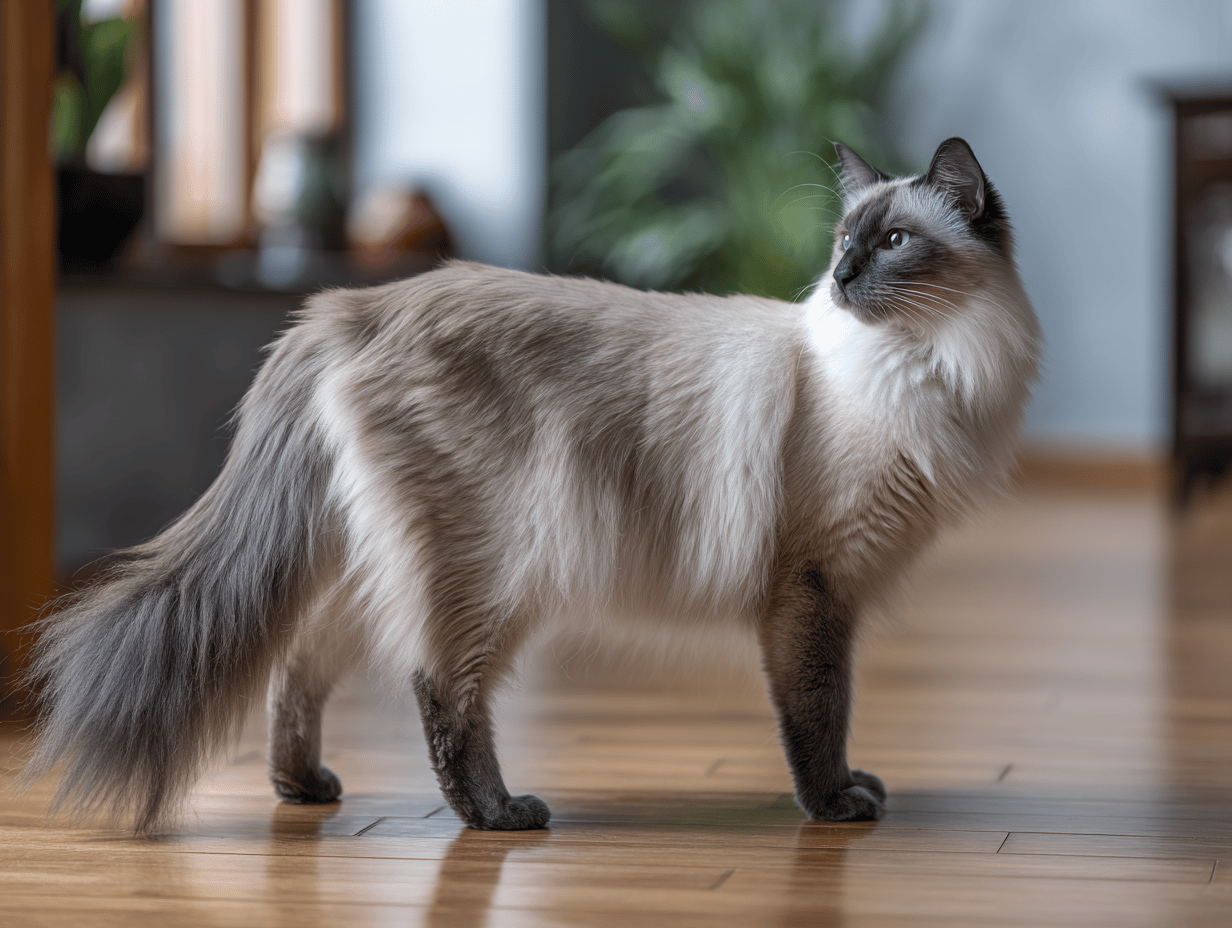
The Siamese is closely related to Balinese and Oriental cats, but these breed names describe different combinations of coat length and colour within a related group. Ask to see a pedigree and check which breed the cat is registered as. A pointed cat is not automatically a Siamese, and a breed name alone should not be used to explain an individual cat’s behaviour.
¶Appearance and coat
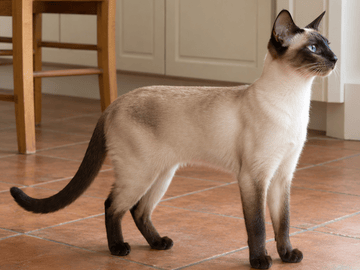
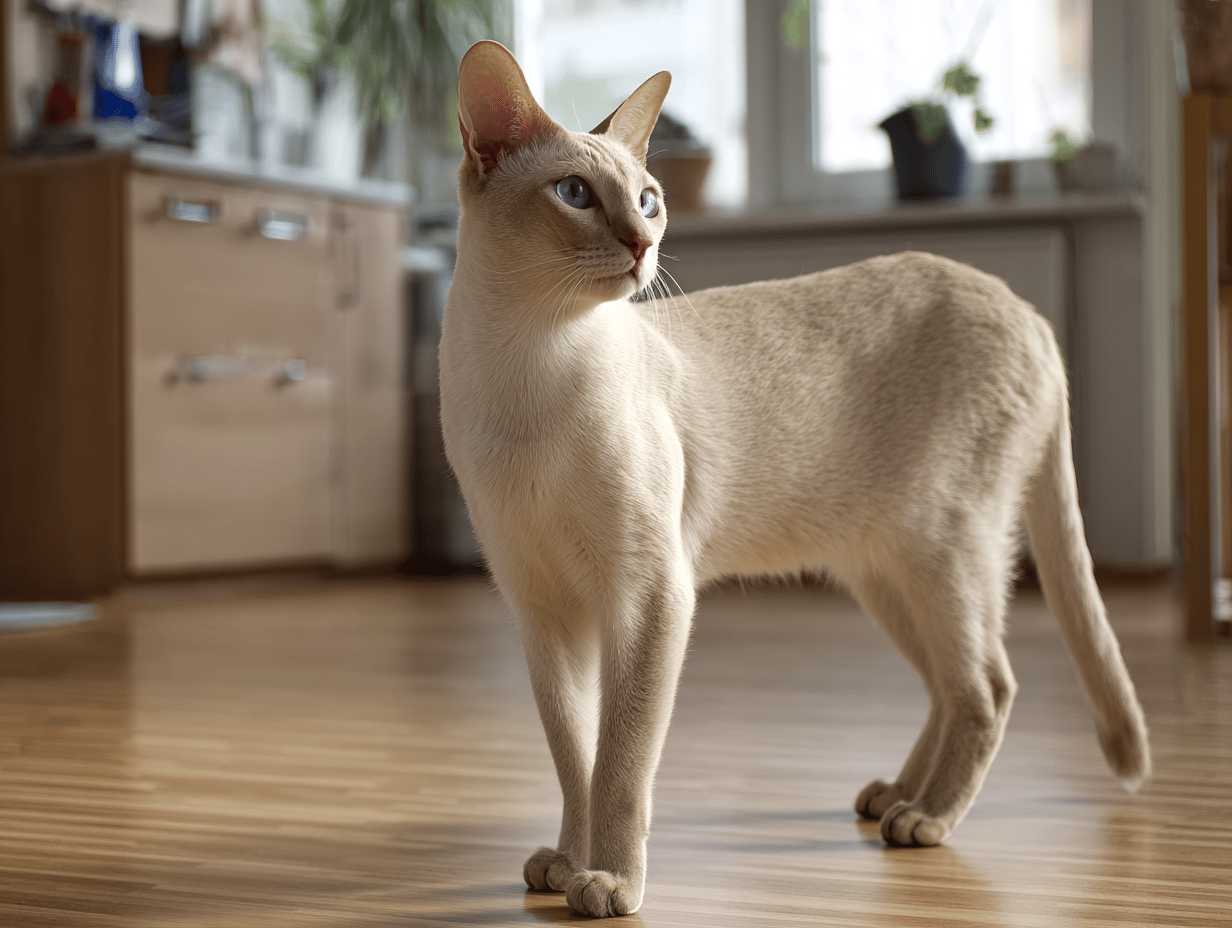
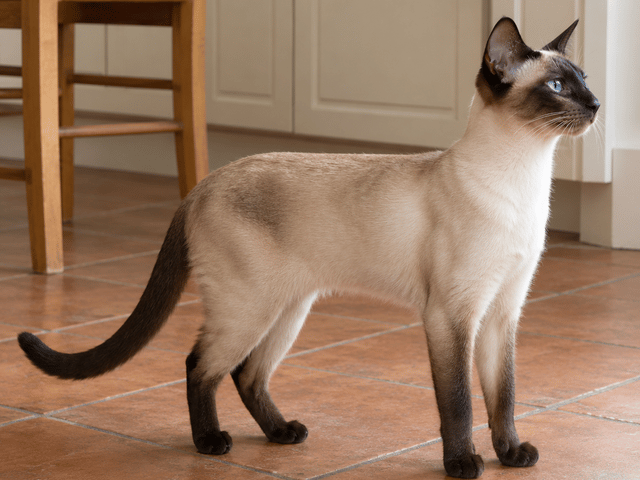
The Siamese should be agile, elongated and muscular. It has a long neck, slender legs, small oval paws and a very long, thin tail. Its body should be well balanced and strong despite its delicate appearance. Slender does not mean skinny; a healthy body condition and sound movement are part of overall health.
The head is wedge-shaped, with large ears that are broad at the base. The nose has a long, straight profile, and the almond-shaped eyes are deep blue. This type differs from the rounder cat often associated with older pictures of Siamese cats. Before buying, it is helpful to meet adult relatives and ask the breeder to explain the breed’s current standard.
The very short, fine coat lies close to the body. Its characteristic pattern features a lighter body with a darker face, ears, legs and tail. FIFe recognises several colours and pattern variations, while other organisations define the breed differently. Check the registration and standard that apply to the particular cat rather than relying on a single list of colours.
Grooming usually takes little time, but it provides a useful opportunity to feel over your cat’s body and notice changes. Gently stroke away loose hair or use a soft brush your cat accepts. Check the claws and mouth too. Redness, sores, tenderness or reluctance to be touched need to be assessed to identify the cause, even when the coat itself looks well cared for.
¶Temperament and personality
The Siamese is known for communicating with people through both body language and vocalisations. Many seek out their family, follow them around the home and want a response. Consider whether you would enjoy a cat that makes itself heard and takes part in daily life. However, a breed name cannot guarantee how much an individual cat will talk or seek closeness.
This sociability means companionship needs careful planning. TICA describes Siamese cats as often disliking long periods alone. A compatible animal companion can be part of their daily life, but another pet is not an automatic solution. The animals’ social needs and individual circumstances must be compatible, and human interaction remains important.
The Siamese also needs to be able to relax. Give your cat a choice between company and undisturbed rest, and keep daily life predictable. Notice how your cat uses the home: can it reach its food without being disturbed, does it have safe elevated spots, and can it retreat? A sociable temperament does not make these basic feline needs any less important.
¶Training and exercise
Daily play and small tasks suit an active Siamese well. Offer several short sessions in which your cat can take part voluntarily, adjusting the intensity to its age and health. Move toys like prey to stalk and catch. Watch for signs that your cat needs a break rather than trying to keep it active for a set length of time.
Add simple searching or food games and safe places to climb. Start with easy challenges so your cat understands how to succeed, then gradually increase the difficulty. Variety can be as simple as changing the toy or how it moves; it does not need to be complicated. Keep hands and feet out of hunting games, and check that toys are intact and safe.
Reward behaviours that make everyday life easier, such as coming to a particular spot or entering the carrier. Practise in small steps when your cat is calm and receptive. Keep paw and mouth handling predictable and brief too. If your cat becomes tense, adjust your approach so that training continues to build confidence rather than merely getting a task done.
¶Health
Before buying, documented information about the cat’s family is more important than a general assurance that the breed is healthy. Ask about illnesses and lifespans among close relatives, which checks have been carried out and whether anything needs follow-up. Review the veterinary examination report and ask what any findings mean in practice. Appearing healthy during one visit does not tell you everything about future health.
The inherited retinal disease PRA is a relevant issue for the Siamese. UC Davis lists a DNA test for PRA-rdAc for the breed. Ask to see exactly which variant was tested, the result and the cat’s identification. Such a test answers a specific genetic question and should not be read as a general certificate ruling out all forms of eye disease.
CFA also highlights amyloidosis, which can affect the liver, and recommends that buyers ask about cases in the family. This is a separate issue from PRA and cannot be dismissed on the basis of a normal eye test result. Ask the breeder to explain how they monitor health, and discuss uncertain information with a vet without assuming that every Siamese has the same risk.
Monitor body condition, appetite and everyday habits throughout your cat’s life. Feed a complete cat food suited to the individual, and seek help with portion sizes if its weight changes. Oral health and preventive veterinary care also need to be part of the routine. Seek advice if there are clear changes in drinking, eating, activity or social behaviour; a change should not be explained away simply because the breed is considered sensitive, talkative or demanding.
¶History and origins
The Siamese comes from the region formerly known as Siam, now Thailand. Cats of this type have a long documented history there and attracted attention in European cat circles during the latter part of the 19th century. Their striking coat contrasts and blue eyes contributed to this interest, and the breed soon gained an important place in organised cat breeding.
The breed was among those recognised by CFA when the organisation was founded in 1906. Breeding has developed within different associations, with differences in type and colour classifications. Today’s Siamese therefore needs to be understood in relation to the organisation with which the cat is registered. The Thai is a separate breed in associations that recognise it, not simply another name for every Siamese.
¶Living with the breed
A Siamese can become closely involved in family life when there is time for interaction and activity. Provide places where your cat can join you without having to compete for space. A lookout spot near you can offer companionship even while you work. At the same time, maintain undisturbed sleeping areas that your cat can choose for itself.
In a family with children, interactions need to suit both the cat and the children. Teach children to let the cat initiate contact and to stop when it moves away. They can play together using a suitable toy with an adult’s help. No breed description replaces an adult’s responsibility for safe handling and respect for the cat’s signals.
Introduce other cats gradually and give each cat its own resources. Even a sociable Siamese may feel that an unfamiliar cat is getting too close. Watch their reactions and allow introductions to take as long as needed. When living with a dog, the cat must also be able to avoid contact and reach food, water and the litter box without being followed or disturbed.
An indoor environment needs to offer more than a bed and a food bowl. Sturdy scratching equipment, elevated spots, hiding places and varied play make the home a space your cat can use fully. If you provide outdoor access, it needs to be carefully planned and safe. Let your individual cat’s experiences and reactions guide your choice of new activities, rather than assuming an active breed will automatically enjoy every change of environment.
Plan working days and trips so that care and companionship are covered. Someone needs to monitor your cat’s well-being, clean the litter boxes and ensure food and water are available even when you are away. Tell any cat sitter which routines your cat usually enjoys. Social needs are better met through a thoughtfully planned daily life than by expecting a cat to get used to everything.
Before choosing a cat, check its registration and health history, and meet adult relatives if possible. Discuss vocal behaviour, activity levels and social habits with the breeder. If you want an active companion and can meet its need for interaction, the Siamese’s distinctive personality can become a large part of the joy of having a cat.
¶Characteristics
¶Frequently Asked Questions
¶Comparisons with Other Breeds
Compare Siamese with other breeds and see the differences in temperament, activity level, and care to make a confident choice. Show All Comparisons