
¶Table of Contents
¶Quick facts
The German Rex is a medium-sized cat breed from Germany, best known for its short, soft, wavy coat. It has a muscular, well-balanced body and is described as lively, playful and strongly attached to its people. Its distinctive coat is part of the breed’s identity, but when choosing a cat, temperament, documented health and the practicalities of everyday life deserve equal consideration.
- Size: Medium-sized, with a muscular body, a straight topline and medium-length legs.
- Activity level: Lively and playful. Needs daily opportunities for exercise, exploration and social contact.
- Grooming: Gentle care for its short, velvety coat. Adapt the level of assistance and the tools you use to the individual cat.
- Life expectancy: The cat association sources do not provide enough information to give a reliable breed average. Individual health and care must also be considered.
- Best suited to: An owner who enjoys an involved companion and can provide play, affection and a secure home environment.
The German Rex is a distinct breed with the FIFe code GRX. It should not be confused with the Cornish Rex, Devon Rex or Selkirk Rex simply because they all have some form of curly or wavy coat. Check the cat’s pedigree and ask the breeder to explain both its registration and breeding background. A photograph of the coat is not enough to establish its breed.
¶Appearance and coat
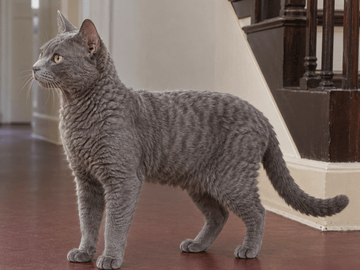
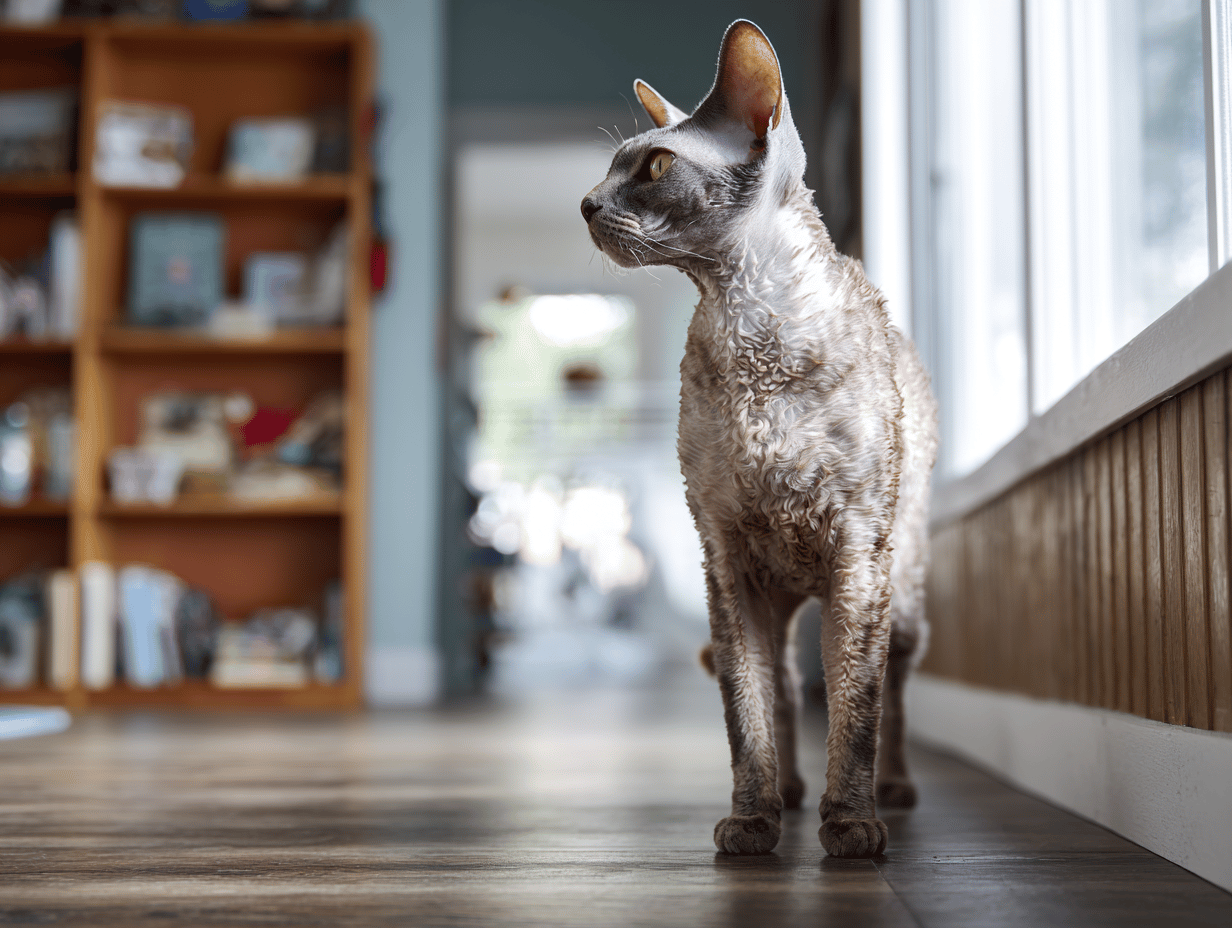
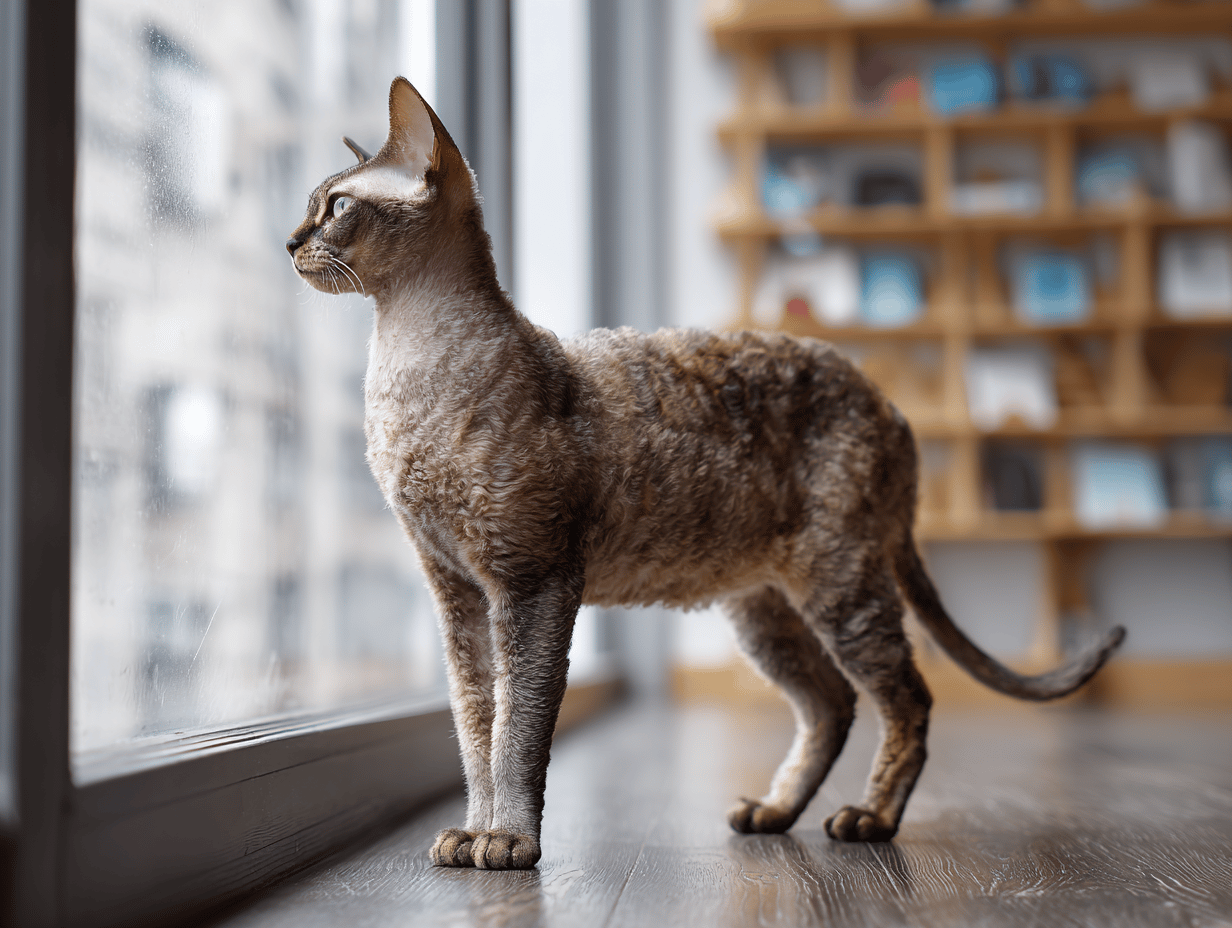
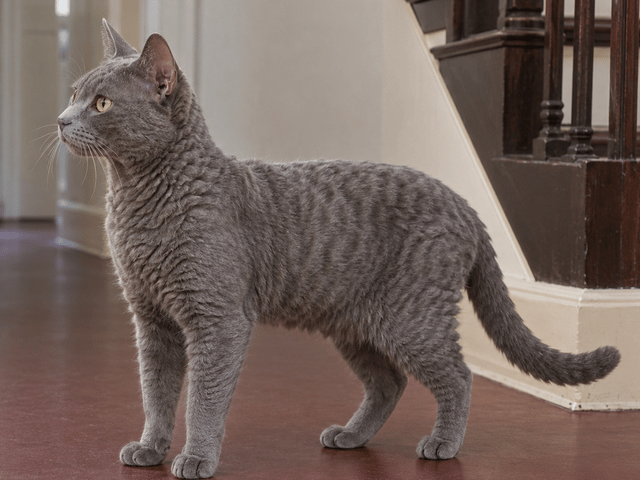
The German Rex has a strong, muscular body without being bulky or coarse. The chest is rounded, and the back is straight from the shoulders to the hindquarters. The legs are medium in length and relatively fine-boned, with rounded paws. The tail is medium in length, fairly thick at the base and tapering towards the tip. The overall build should be balanced and allow the cat to move freely.
The head is rounded, with good width between the ears and well-developed cheeks. The nose has a slight indentation at its base, and the chin is well defined. The ears are medium to large, broad at the base and slightly rounded at the tips. The eyes are wide open, and their colour should complement the coat. The whiskers are shorter than usual and crinkled.
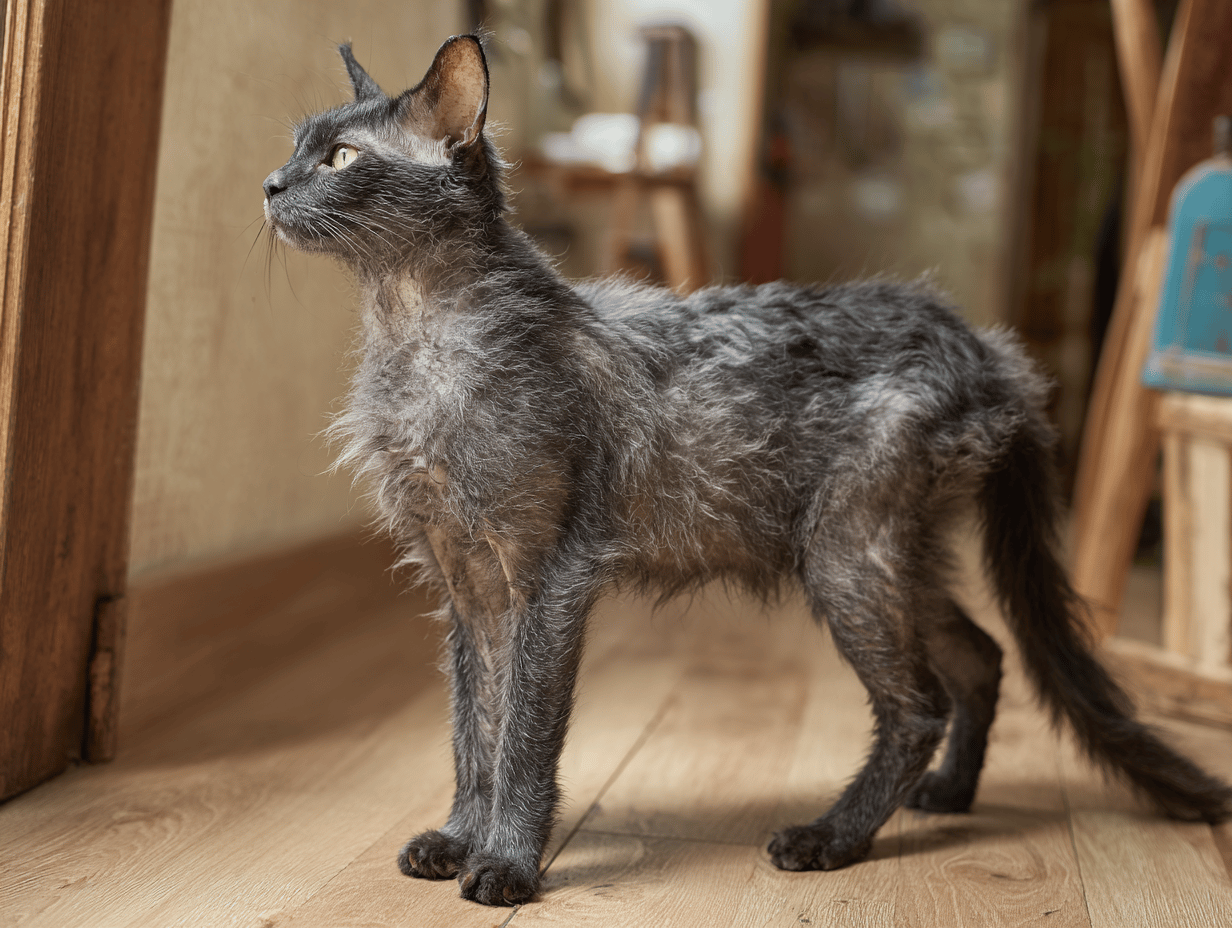
The coat is the breed’s most distinctive feature: short, soft, silky and wavy, without coarse guard hairs. Its density can vary, but the velvety texture should be evident. A range of colours and patterns is permitted. The overall appearance differs from that of a long-haired rex cat with large, loose curls, as well as from an ordinary straight coat.
Groom the coat gently and avoid doing more than necessary. Get the cat used to brief grooming sessions, and ask the breeder which tools work well. You should also be able to check the skin during grooming. Redness, sores, itching or a noticeable change in hair coverage should not be dismissed on the grounds that a rex coat can naturally look different.
¶Temperament and personality
FIFe describes the German Rex as friendly, playful and intelligent, with a strong attachment to its people. Many enjoy being involved in whatever is happening at home. That does not mean every cat wants to be picked up or enjoys the same amount of contact. Let the cat choose how to approach you, and give it the freedom to end an interaction.
A lively cat needs activities that suit its interests. These might include following a toy, investigating a box or watching the room from a safe elevated spot. Notice what engages your particular cat. A breed’s reputation for intelligence does not tell you how quickly each individual will learn, nor is it a reason to increase expectations before the cat feels secure.
A sense of security also depends on access to rest and personal space. Make sure the cat can reach food, water and litter trays without passing through situations it finds unsettling, and provide places where it can be left alone. If its social habits or activity level change noticeably, consider both its environment and its health. A change in behaviour should not be explained away as personality alone.
¶Training and exercise
Plan daily play that gives your cat opportunities to stalk, chase and catch. Adjust the length of sessions to its interest and offer breaks. Several short sessions may provide more variety than one long session. Let the cat take part willingly, and choose toys that keep hands and feet out of hunting games. Check toys for wear and put away anything that could pose a risk when left unsupervised.
Scratching surfaces, stable raised platforms and hiding places help the cat use its body in everyday life. Add simple food puzzles if your cat enjoys them, starting with something easy enough for it to understand how to get the food. Watch how it moves when jumping and climbing. New hesitation, tenderness or difficulty is a reason to investigate whether anything needs adjusting.
You can help your cat become comfortable with handling and travel through small, rewarded steps. Leave the carrier out with something familiar to rest on, and reward voluntary exploration. Then gradually build up to brief periods with the door closed. Take a similar approach to touching the paws and mouth. The aim is to build cooperation that helps the cat feel secure during routine care.
¶Health
Ask for specific information about health in the cat’s family line. Find out which conditions have occurred, how older relatives have fared and which examinations the parents have undergone. A general description of the breed is no substitute for this information. If you are shown a test result, you should be told what the test establishes and which cat it relates to.
Keep an eye on the skin and coat without assuming the cat will develop a particular disease. Natural waviness does not explain scratching, sores or signs of pain. Have a vet assess new symptoms, and ask for a care plan if the skin needs special attention. Care can then be based on the individual cat’s actual needs.
A short, wavy coat does not mean a cat is allergen-free. Cat allergens are found in saliva and on the skin and coat, among other places, and coat length offers no reliable solution for a household with allergies. Investigate allergy concerns separately before buying a cat. A breed name or a promise of low shedding should not replace medical advice for someone who reacts to cats.
Monitor weight, appetite, oral health and everyday habits. Feed a complete diet suited to the cat, and seek veterinary guidance when its needs change. Plan preventive care and gently introduce dental care. Seek advice if you notice clear changes in thirst, grooming, movement or social behaviour. An unusual or easy-care coat does not free any cat from ordinary health needs.
¶History and origin
An important foundation of today’s German Rex was Lämmchen, a black, curly-coated cat noticed by the physician Rose Scheuer-Karpin in a hospital garden in Berlin in 1951. She became the starting point for an organised breeding programme. The wavy coat was passed on as an inherited trait, distinguishing it from a temporary change in an ordinary cat’s coat.
FIFe recognised the German Rex in 1982. The breed has its own standard and a different overall appearance from other rex breeds. Earlier accounts of other curly-coated cats are part of its history, but precise relationships should not be assumed without documentation. When buying a cat, its pedigree and the breeder’s knowledge of its family line are the most useful practical starting points.
¶Living with the breed
A home for a German Rex should offer opportunities for companionship, play and peaceful rest. Provide several accessible spots where the cat can be nearby without feeling crowded, and at least one place where it can retreat. Make it easy to choose a comfortable sleeping spot. A secure environment is as much about the cat’s choices as it is about the layout of the home.
In a household with children, adults need to help ensure gentle interactions. Let the cat approach on its own, and teach children to stop interacting when it moves away. Its soft coat should not be an invitation to restrain or stroke it against its will. Playing together with a suitable toy can create a connection without the child needing to carry the cat.
Introductions to other animals should take each individual into account. Give a new cat its own space at first, and let it become familiar with scents before closer contact. Provide separate resources so both animals can feel secure. Around dogs, too, the cat should have escape routes and places where it can eat and rest undisturbed.
Indoor life needs to offer opportunities to climb, scratch and explore. Vary activities according to the cat’s interests, and make sure equipment is stable. Any time outdoors should be safe and suited to the weather and the individual cat. The appearance of a cat’s coat alone cannot determine the right lifestyle for it; pay attention to how that particular cat responds and feels.
Plan for care when you work long hours or travel. Someone needs to take care of food, water and litter trays and monitor the cat’s well-being. Tell the person looking after it which routines it enjoys and what would be unusual. A cat that can entertain itself for a while still needs regular human contact and attention.
Before buying, it is therefore wise to review the cat’s registration, family health history and everyday behaviour. Ask how its coat is usually cared for, and explain whether you have children or other animals at home. When you can provide security and room for play, the German Rex’s friendly companionship and distinctive velvety coat can become a much-loved part of family life.
¶Characteristics
¶Frequently Asked Questions
¶Comparisons with Other Breeds
Compare German Rex with other breeds and see the differences in temperament, activity level, and care to make a confident choice. Show All Comparisons