
¶Table of Contents
¶Quick Facts
- Males 50–55 cm, females 48–53 cm, according to the FCI.
- Daily exercise and planned tracking work.
- A short, dense, easy-care coat.
- 10–14 years, according to the AKC.
- An experienced owner who wants to work on tracking and locating wounded game.
¶Appearance & Coat
The Hanoverian Scenthound is a specialist in tracking wounded game. It is bred to work methodically at a steady, unhurried pace on a tracking lead. The breed’s abilities are best put to use when it has regular opportunities to follow a scent.
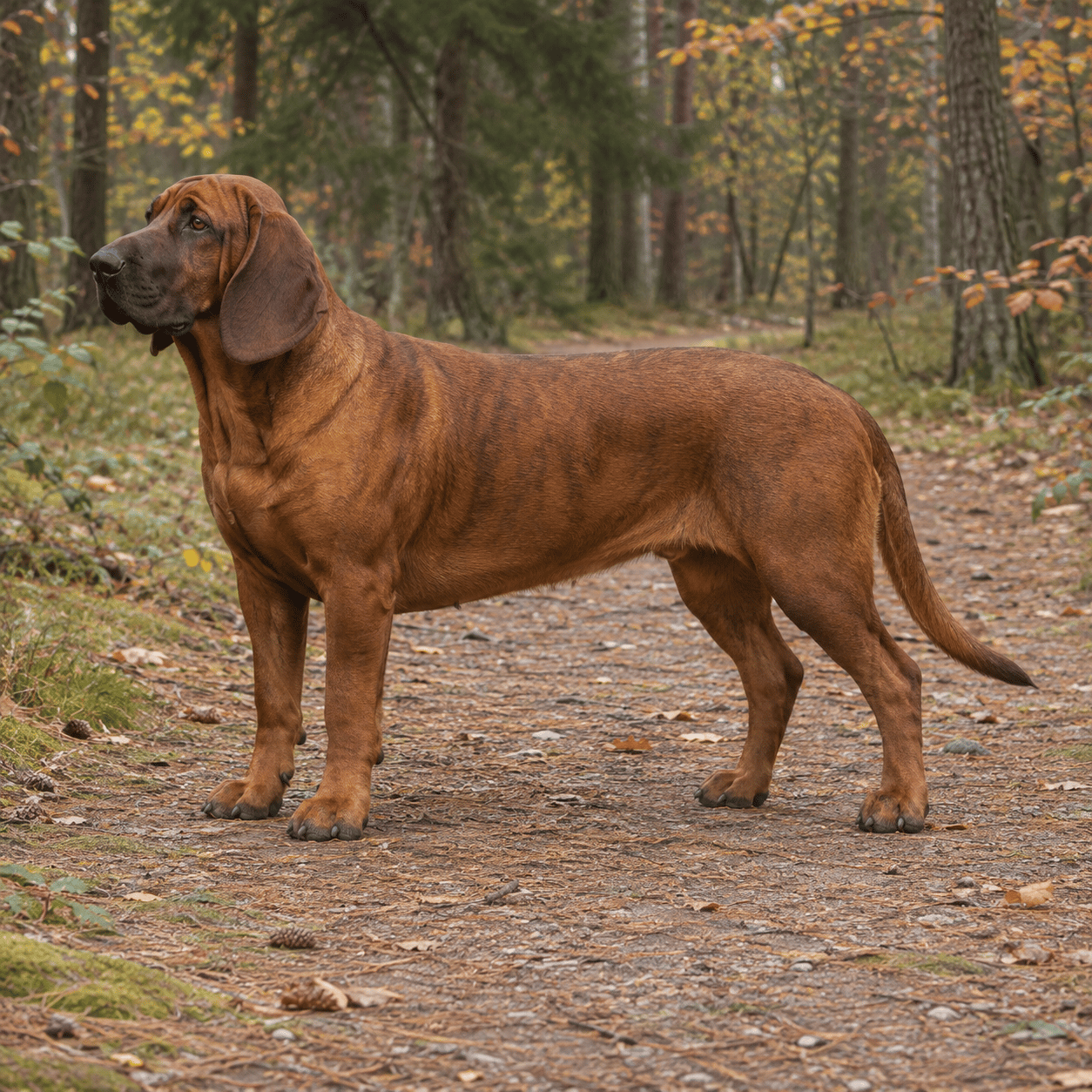
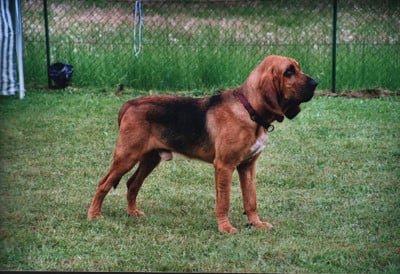
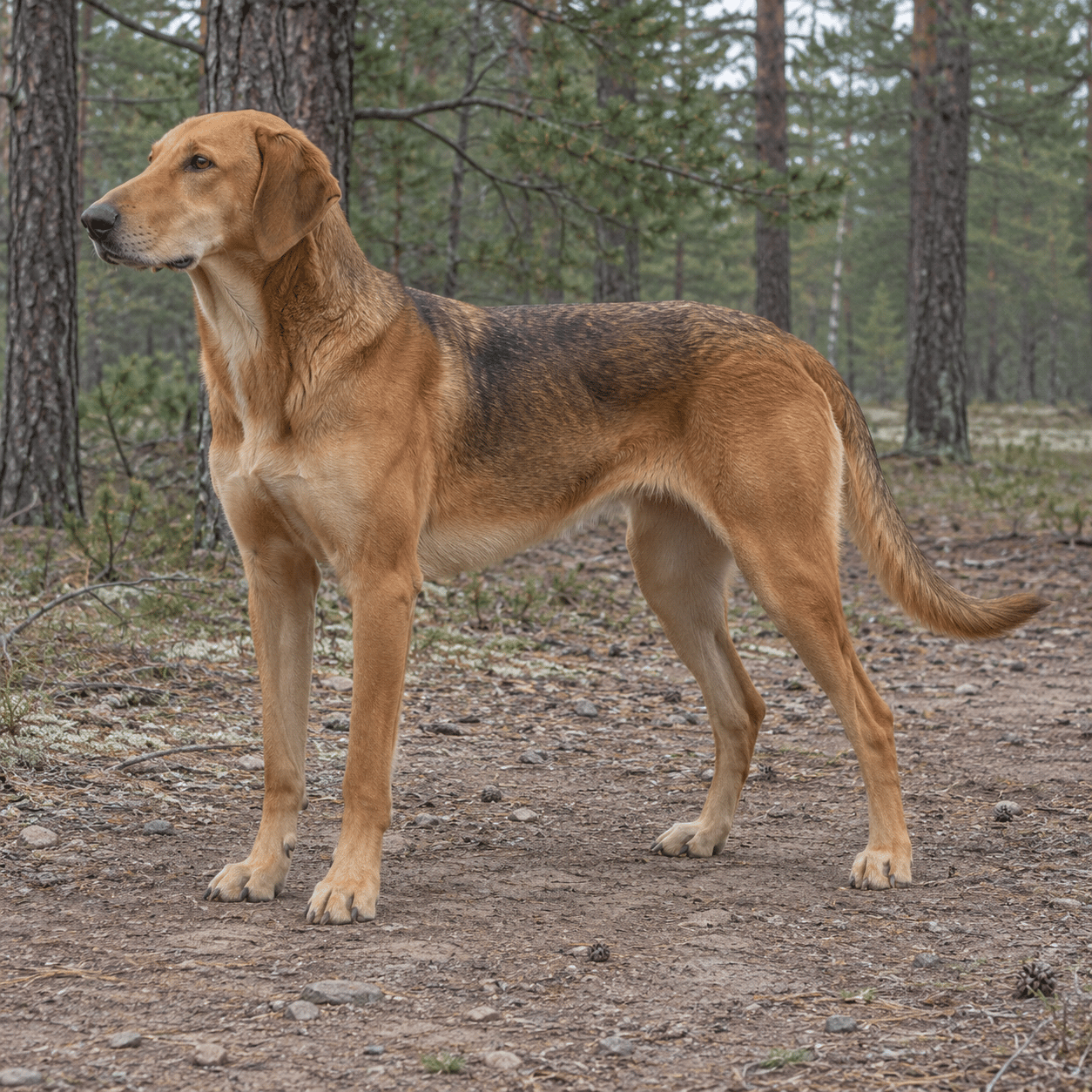
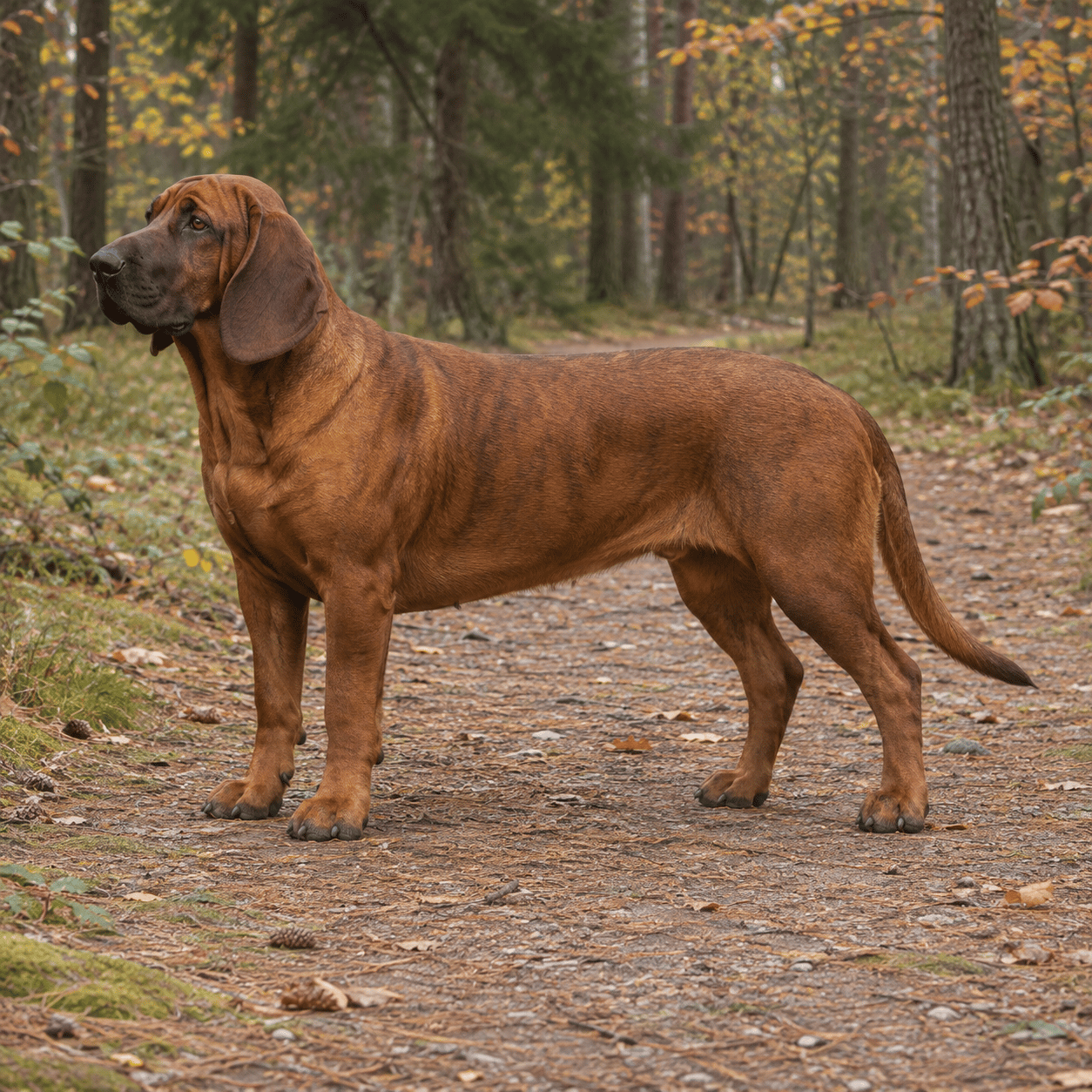
The powerful, well-proportioned body has a deep chest, rounded drop ears and a serious expression. The coat ranges from light to dark deer red and may have distinct brindle markings. Brush as needed and check the ears after working.
¶Temperament & Personality
According to the Swedish Kennel Club (SKK), the breed has a steady temperament and often forms a close bond with its handler. It can be selective about accepting strangers. When tracking, concentration and the ability to maintain a steady pace are essential.
¶Training & Exercise
Train with a knowledgeable tracking instructor, gradually increasing the age of the scent trail and introducing turns and different surfaces. Use a tracking lead and reward accuracy. Balance tracking with regular exercise and rest between demanding sessions.
¶Health
SKK notes hip and elbow dysplasia in the breed. Ask to see documented hip and elbow screening results for both parents, and ask how older relatives move and cope with working.
¶History & Origins
The breed descends from German hounds used to track game on a lead. It was later developed around Hanover into the specialist tracking dog we know today.
¶Living with the Breed
This breed thrives when tracking is a regular part of everyday life. Choose a dog based on the kind of work you can realistically offer it. Give your puppy calm, positive exposure to people and different environments.
¶Characteristics
¶Frequently Asked Questions
¶Comparisons with Other Breeds
Compare Hanoverian Scenthound with other breeds and see the differences in temperament, activity level, and care to make a confident choice. Show All Comparisons