
¶Table of Contents
¶Quick Facts
- Toy 23–30.5 cm, Miniature over 30.5–38 cm, Standard over 38–48 cm, according to the Swedish Kennel Club (SKK).
- Daily exercise and regular mental stimulation.
- A dense white double coat that needs more frequent brushing during shedding.
- 13–15 years, according to the AKC.
- An owner who enjoys an eager-to-learn, watchful spitz.
¶Appearance & Coat
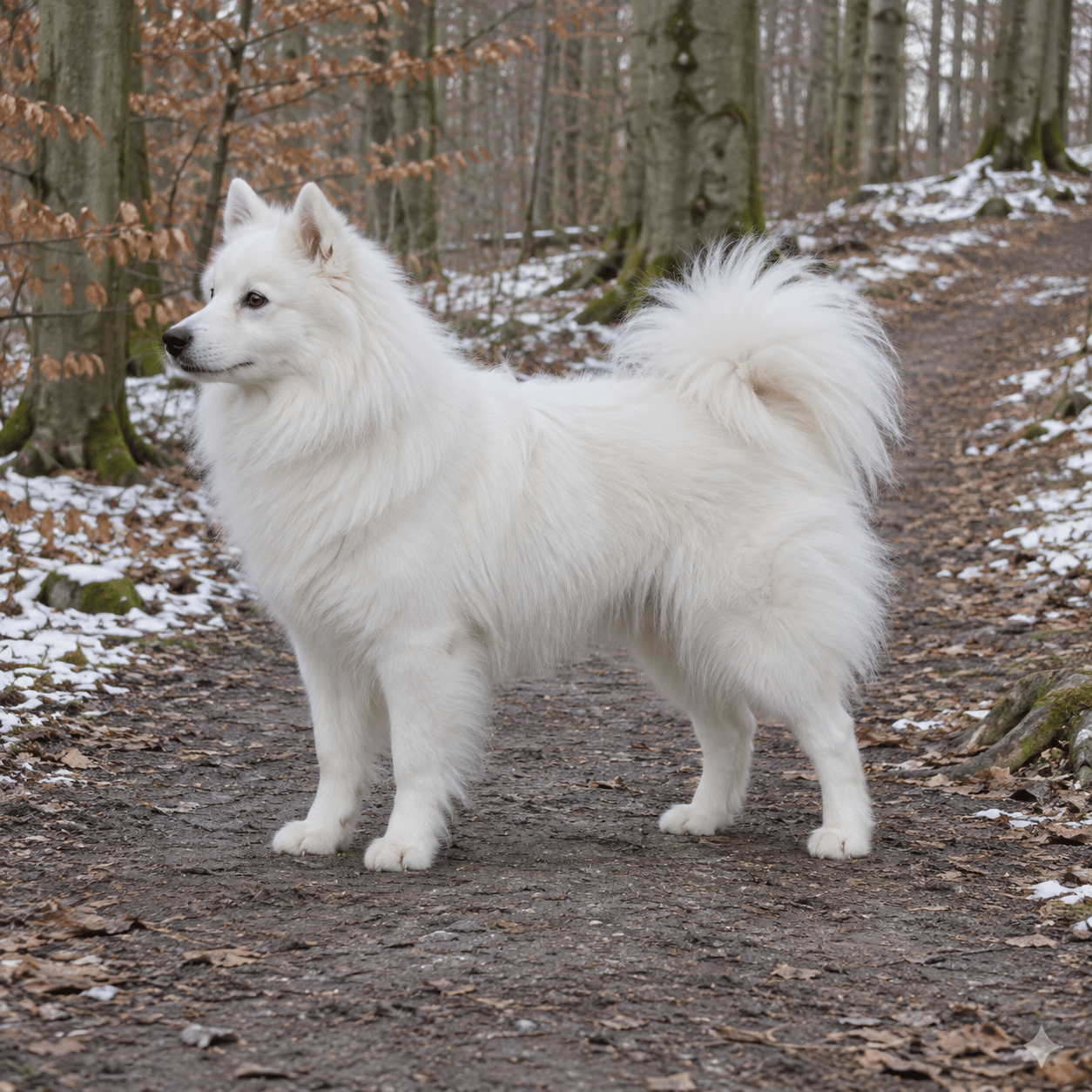
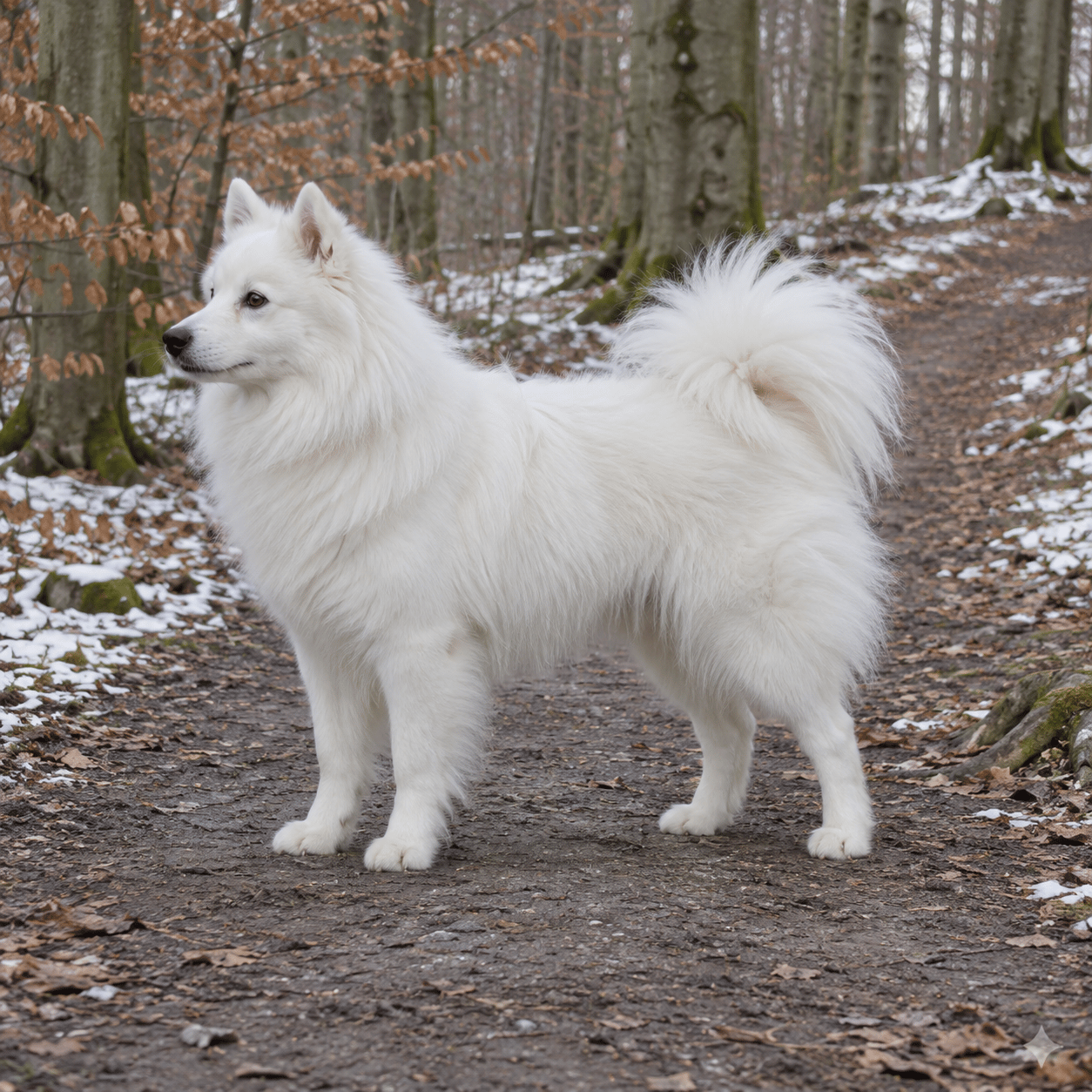
The American Eskimo Dog is a white spitz breed from the United States. The size varieties differ considerably, but all should share the same alert expression and agile, well-balanced build.
The breed has upright ears, dark eyes, and a heavily feathered tail. The shorter undercoat supports the longer outer coat. Brush thoroughly from the roots, especially around the neck and behind the ears.
¶Temperament & Personality
These dogs are often friendly and easy to engage. Some are reserved with strangers. Introduce puppies to different environments gradually, and reward them when they settle down again.
¶Training & Exercise
Combine walks with scent games, tricks, and short exercises that encourage your dog to stay attentive to you. Adjust the pace to suit their size and fitness, and give smaller dogs safe opportunities to move around without being crowded.
¶Health
The SKK emphasizes that the Swedish population is small. The American breed club recommends hip and eye examinations, along with DNA testing for prcd-PRA. Ask the breeder to show you the available results.
¶History & Origins
The breed was developed in the United States from European spitz ancestry. The AKC recognized it in 1995. Its name is part of the breed’s American history.
¶Living with the Breed
Choose a size that suits the home and daily routine you can offer. Teach your dog to settle when visitors arrive and when familiar sounds occur. Adults should supervise interactions between young children and the smallest variety.
¶Characteristics
¶Frequently Asked Questions
¶Comparisons with Other Breeds
Compare American Eskimo Dog with other breeds and see the differences in temperament, activity level, and care to make a confident choice. Show All Comparisons