
¶Table of Contents
¶Quick Facts
- Medium sized gundog with a glossy, medium length coat and famously soulful, dark eyes
- Bred as a working spaniel that combines real hunting ability with a calmer, more thoughtful nature
- Known for deep attachment to their people, often choosing one favourite person but loving the whole family
- Clever, sensitive, and occasionally stubborn, so they thrive with kind, consistent training and plenty of mental work
- Still a relatively rare breed in many countries, cherished by a small but passionate community of enthusiasts
¶Appearance & Coat
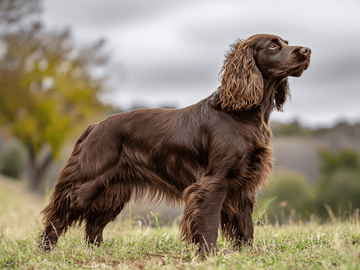
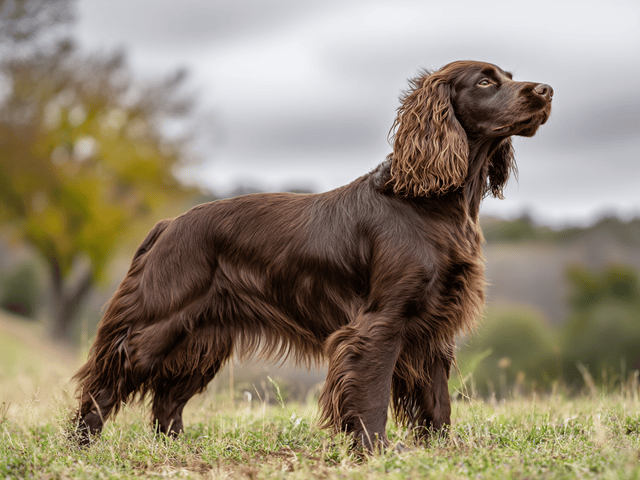
The Field Spaniel is a medium sized, well balanced gundog that looks slightly longer than it is tall, giving it an elegant outline without appearing exaggerated. Males are usually a little larger and more substantial than females, but overall this is a moderate, athletic breed designed to work in the field for long hours. Nothing about the Field Spaniel should look heavy, clumsy, or fragile. When you see a good specimen, you notice a smooth, unbroken line from head to tail and an easy, ground covering stride that suggests endurance rather than speed for short bursts.
The head is characteristic. It is slightly longer than you might expect from photographs, with a gently domed skull, well defined stop, and a refined but strong muzzle. The eyes are one of the breed’s great charms. They are almond shaped, dark hazel to dark brown, and set to give a soft, intelligent, almost wistful expression. The long, feathered ears hang close to the cheeks and are set low on the skull, contributing to a classic spaniel look that many people fall in love with at first sight.
The body is strong and level backed with a deep chest that reaches roughly to the elbows, allowing plenty of heart and lung room. The ribcage is long rather than barrel shaped, which helps stamina. Legs are straight and well boned without being coarse, and the feet are tight and well padded, which is important for a dog that may work over rough ground, in woodland, or through waterlogged fields. The tail, whether docked in working countries or naturally full elsewhere, is well feathered and carried merrily in motion, showing the dog’s spaniel enthusiasm.
The coat is one of the most beautiful features of the Field Spaniel. It is single layered or with only slight undercoat, flat or gently waving, and of medium length with plenty of feathering on the ears, chest, back of the legs, and underside of the tail. It should never be too profuse or fluffy, as this would trap burrs and water in the field. Texture matters more than length. A good Field Spaniel coat feels silky, lying close to the body, and has natural weather resistance that helps the dog stay comfortable in wet brush or light rain.
Accepted colors typically include:
- Black
- Liver
- Roan patterns in black or liver
- Tan markings in combination with black or liver
Solid colored dogs may have small white markings on the chest or throat, while parti colored dogs show roan or ticking. Whatever the color, the overall impression should be rich and glossy rather than dull.
From a practical standpoint, coat care is manageable but should not be neglected. A Field Spaniel will usually benefit from brushing several times a week, especially on the ears, feathering, and behind the legs where tangles tend to form. A slicker brush and a metal comb are often enough for regular maintenance. During muddy seasons, owners often keep a bucket or shower attachment near the door, because those feathered legs and ears love to collect dirt, burrs, and leaves. A quick rinse and towel dry after walks can save the rest of your house from paw prints and splashes.
Trimming is often used to tidy the outline. Many pet owners learn to lightly trim the feet, excess hair between pads, and the fringes around the ears and tail. Working and show owners may do more detailed grooming, but this is not a heavily sculpted breed. The goal is to keep the natural, functional outline while avoiding overgrown hair that could catch in brambles or form mats. Ears should be checked often, since long, hanging ears are more prone to wax buildup and moisture, particularly in dogs that swim. A simple weekly inspection and gentle cleaning when needed goes a long way toward prevention.
Bathing can be done every few weeks or months depending on the dog’s lifestyle. Many Field Spaniels that swim and get regular coat brushing can go quite a while between full baths, with only local cleaning of muddy areas. A mild, dog friendly shampoo preserves the natural oils in the coat that help repel dirt and water. With this combination of moderate grooming and careful attention to ears and feathering, the Field Spaniel keeps its handsome, practical appearance and remains comfortable in both home and field.
¶Temperament & Personality
Living with a Field Spaniel feels a bit like sharing your life with a thoughtful, slightly mischievous friend. This breed combines classic spaniel enthusiasm with a calmer, more reflective temperament than some of its livelier cousins. They are affectionate without being frantic, playful without constant bouncing, and highly attuned to the moods of their people. Many owners say their Field Spaniel seems almost human in the way it watches them and tries to join in family life.
With their family, Field Spaniels are typically devoted and gentle. They enjoy being close to their people, often choosing to lie at your feet, lean against your leg, or share the sofa rather than racing around the room. Some individuals form an especially close bond with one person, following that person from room to room and checking in often. However, they usually spread their affection widely and are more than happy to cuddle with any familiar family member who offers attention.
Around children, a well bred and well socialised Field Spaniel is usually tolerant, patient, and kind, particularly with school aged children who understand how to treat dogs respectfully. Their calm nature can make them a good companion for quieter households, yet they are still spaniels, so they are always ready for a game in the garden or a walk to the park. Early socialisation with children is important, as is teaching kids to avoid pulling ears or climbing on the dog. In return, the Field Spaniel often becomes a loving playmate and loyal guardian of family routines, from bedtime stories to weekend activities.
With strangers, Field Spaniels may be reserved at first, though not usually timid or sharp. They often stand back, observe, and slowly warm up once they feel confident. Some individuals will greet visitors happily with wagging tails and a toy in their mouth, while others take a more dignified, watchful approach. Good early social experiences help ensure that natural caution does not slide into shyness. Calm introductions to a variety of people, places, and situations during puppyhood are a wise investment.
When it comes to other dogs, Field Spaniels are generally sociable, especially if raised with friendly canine company. They tend to play nicely in dog parks or on group walks, appreciating fair, non threatening playmates. As a gundog, the Field Spaniel usually has a manageable prey drive, but they can still enjoy chasing birds or small creatures. Many live harmoniously with cats and other pets if introduced carefully and supervised during the early stages. As with any breed, individual personalities vary, so it is sensible to guide initial meetings and reward polite, calm behaviour.
There are some common challenges that prospective owners should be ready for. The Field Spaniel is a sensitive breed. Harsh corrections, shouting, or rough handling can make them anxious or withdrawn. They respond much better to gentle guidance and reward based methods. If ignored or left alone for very long periods, they may become bored or distressed, which can lead to barking, digging, or destructive chewing. This is not a dog that thrives on a life of isolation in the garden or in a kennel at the back of the house.
Another potential issue is their natural curiosity and nose driven nature. Field Spaniels love to follow scent trails. On a walk, they may become absorbed in smells and drift further away than you expect if recall is not well established. In some cases, this nose led independence can be mistaken for stubbornness. In reality, they are simply doing what they were bred to do. Channeling this trait into structured activities, such as scent games, tracking, or gundog training, helps them feel fulfilled and more responsive in daily life.
Overall, the typical Field Spaniel temperament is a blend of sensitivity, loyalty, and quiet determination. They are happiest with people who enjoy involving their dog in everyday life, respect their thoughtful nature, and can balance gentle affection with consistent rules. In the right home, a Field Spaniel becomes an affectionate, steady companion who shares your routines, listens closely to your voice, and offers sincere devotion for many years.
¶Training & Exercise
The Field Spaniel is an intelligent working gundog, so training and exercise are not optional extras. They are fundamental to the dog’s physical and mental well being. This is not a breed that enjoys being left to lounge day after day with only a short walk around the block. At the same time, Field Spaniels do not usually require extreme levels of physical exertion compared to some high drive working breeds. Instead, they thrive on a balance of regular activity and brain work.
When approaching training, it helps to remember two things about the Field Spaniel. First, they are smart and quick to notice patterns. Second, they are sensitive and can easily lose confidence if handled roughly. Positive reinforcement methods work best. Rewarding the dog with food, toys, praise, or access to interesting activities encourages them to offer the behaviours you want. Corrections can be used, but they should be fair, timely, and proportionate. Heavy handed techniques, especially those involving intimidation or pain, often backfire with this breed and may lead to avoidance, sulking, or even defensive behaviours.
Basic obedience should start as early as possible. A Field Spaniel puppy benefits enormously from learning simple cues such as:
- Name recognition and coming when called
- Sit, lie down, and stay
- Walking politely on a lead
- Leaving items when asked and waiting patiently for food or access to doors
Regular, short training sessions keep the dog engaged and avoid overwhelming their attention span. Many owners find that three to five minute sessions scattered through the day are more effective than one long lesson. The breed’s love of food and natural desire to cooperate with their person are strong advantages. You will often see a Field Spaniel watching your hands, tail gently waving, ready to work out what earns that next treat or kind word.
Field Spaniels excel in activities that use both their nose and their brain. Gundog training, even for owners who never plan to hunt, can be very satisfying. Teaching the dog to quarter a field, retrieve dummies, and respond to whistle signals draws on their natural heritage. Other popular activities include:
- Scent work and tracking games
- Agility, where their balance and coordination show nicely
- Rally obedience and competitive obedience for those who enjoy structured training
- Mantrailing or search style games in forests or parks
Daily exercise should match the dog’s age and health. An adult Field Spaniel often needs at least one to two hours of varied activity across the day. This does not have to be constant running. A longer walk with time off leash in safe areas, combined with shorter lead walks, garden play, and training games at home, usually suits them well. Puppies and young adolescents should not be over exercised on hard surfaces, since their joints are still developing, but they do need plenty of opportunities for controlled play and exploration.
Mental exercise is just as important as physical. A Field Spaniel that has worked through a puzzle feeder, practised obedience in the garden, and played a few scent games indoors may be more content than one that simply ran after a ball for an hour. Teaching tricks, rotating toys, hiding food around the house, or working through interactive training apps can all help keep their mind sharp and satisfied.
One specific training priority is recall. Because Field Spaniels are scent oriented and can become very focused on smells or wildlife, a solid recall is essential for safe off leash freedom. Start early in low distraction environments, make coming to you highly rewarding, and gradually introduce more challenging settings. Many owners also teach a whistle recall, which can cut through wind and distance better than the human voice.
Another common focus is impulse control. Helping your Field Spaniel learn to wait at doorways, relax on a designated bed, and take treats gently teaches manners that make daily life much smoother. These small, consistent lessons communicate expectations clearly and make the dog feel secure, which in turn reduces anxiety driven behaviours such as frantic jumping or barking.
With the right combination of patience, empathy, and structure, a Field Spaniel becomes a pleasure to train. Their quiet determination and eagerness to connect with their person often produce reliable, responsive companions who can handle a wide range of situations, from busy family life to demanding working or sport environments.
¶Health
The Field Spaniel is generally a robust, active dog, but like all purebred breeds it has some health concerns that potential owners should understand. Responsible breeding, careful selection of parents, and sensible day to day care can reduce risks, but cannot guarantee perfect health. Knowing what to watch for allows you to act early and also to choose a breeder who takes health seriously.
One of the more well known concerns in the breed is hip dysplasia. This is a developmental condition where the hip joint does not form perfectly, which can lead to pain, reduced mobility, and arthritis later in life. Reputable breeders use official hip scoring or evaluation schemes and carefully consider hip results when planning matings. As an owner, you can help by keeping your Field Spaniel at a lean, healthy weight and avoiding excessive jumping on hard surfaces, especially during growth.
Elbow dysplasia and patella issues occur less frequently but are worth mentioning. Regular check ups, especially in young, rapidly growing dogs, can catch early signs such as intermittent lameness, reluctance to jump, or a change in gait. An experienced veterinarian can advise on imaging or other diagnostics if needed.
Like other spaniels, Field Spaniels may occasionally show ear problems, particularly if their ears are very heavily feathered or they swim often. The long, hanging ear can trap moisture, creating a warm environment for yeast or bacteria. Clinical signs include head shaking, scratching, redness, or a bad smell from the ear. Weekly ear checks at home and gentle cleaning when advised by your vet can go a long way toward prevention. Some owners trim the inside of the ears lightly to allow better airflow, while still preserving the breed’s typical appearance.
Eye conditions are another area for attention. Responsible breeders often use eye screening programs to look for inherited ophthalmic issues. Owners should watch for cloudiness, redness, excessive tearing, or any change in vision or comfort. Prompt veterinary advice is always better than waiting, as some conditions respond well if treated early.
Autoimmune conditions and some types of cancer have been reported in the breed, as in many medium sized dogs. While not necessarily common, they remind us that good breeding practices and ongoing research into breed health are important. A close relationship with your vet, regular senior health checks after about seven years of age, and attention to subtle changes can make a big difference. Weight loss, altered appetite, changes in drinking or urination, or unexplained tiredness should be taken seriously.
Typical lifespan for a Field Spaniel is often around 12 to 14 years, with some individuals living longer when well cared for. Key factors that support a long, healthy life include:
- Balanced, high quality nutrition
- Regular, age appropriate exercise
- Weight control and body condition monitoring
- Dental care to prevent gum disease and related systemic problems
- Routine vaccinations and parasite control as advised by your vet
In many countries, recommended health tests for breeding Field Spaniels include hip scoring and eye examinations. Some clubs also encourage or require additional checks depending on regional concerns. When choosing a puppy, you can ask the breeder to show you the official health results for both parents and to explain what steps they take to reduce known risks.
Owners can add further protection by arranging pet insurance or saving for potential veterinary costs. Even healthy dogs may need surgery due to accidents, such as swallowing a foreign object or injuring a cruciate ligament. Early treatment is usually kinder and more effective, but it can also be expensive. Being financially prepared means you can make decisions based on what is best for the dog rather than cost alone.
Overall, the Field Spaniel can be a healthy and hardy companion, especially when bred and raised with care. Understanding the main areas of concern, selecting a conscientious breeder, and providing good everyday care are the foundations for many happy, active years together.
¶History & Origins
The Field Spaniel’s history reflects both fashion and function in the world of gundogs. Originally developed in Britain, the breed shares roots with other land spaniels that were used by hunters to find and flush game birds from heavy cover. In the nineteenth century, spaniels were often classified more by size and use than by the distinct breeds we know today. Dogs that worked on land, as opposed to water, were grouped together, and only gradually did specific types like the Cocker Spaniel, Springer Spaniel, and Field Spaniel take shape.
The Field Spaniel began as a medium sized spaniel, black or liver in color, valued for its ability to work steadily over challenging ground. Early breeders wanted a dog that was not as small as the Cocker nor as large as some of the early Springers. The ideal Field Spaniel was intended to be a versatile partner for the shooting man, capable of quartering the ground, flushing game, and retrieving shot birds, all while showing a calm and biddable nature.
However, show ring fashion in the late nineteenth and early twentieth centuries took the breed in a problematic direction. Some breeders focused heavily on appearance, producing very long, low bodied dogs that sacrificed working ability for exaggerated looks. These early show Field Spaniels sometimes had excessive length of body and weight, which made them less practical in the field. As interest in such an extreme type faded, the breed’s numbers declined sharply, nearly to the point of extinction.
Thankfully, a handful of dedicated enthusiasts recognised the value of the Field Spaniel as a working spaniel and began to rebuild the breed along more moderate, functional lines. They crossed back to working Cocker and Springer lines to restore energy, sound structure, and usefulness in the field, while preserving the distinctive Field Spaniel character and appearance. Over time, a more balanced, athletic dog emerged, closer to the original concept of a medium sized, all purpose land spaniel.
Today, the Field Spaniel remains relatively rare compared with more famous gundog breeds. In some countries, yearly registrations are low, and many people have never met the breed in person. Those who know the Field Spaniel, however, tend to be passionate about its qualities. The modern Field Spaniel is recognised as both a capable worker and a devoted companion. Some are still used for traditional shooting work, particularly in rough shooting where a steady, thorough dog is valued. Others participate in gundog tests, working trials, and field training days.
Beyond the shooting field, Field Spaniels have proven themselves in a variety of modern roles. They can be seen in obedience rings, tracking and scent work trials, agility competitions, and even as therapy or assistance dogs in some cases. Their gentle temperament and willingness to cooperate suit them well to roles that require sensitivity and patience.
In family homes, the history of a dog bred for persistence and cooperation influences daily life in subtle ways. The Field Spaniel’s instinct to stick close to its handler, to search systematically, and to respond to quiet cues all come from generations of careful breeding for field work. Their calmer nature, compared with some other spaniels, likely reflects the deliberate emphasis on steadiness as a working trait.
Although the breed is still considered uncommon, there is a growing appreciation among dog lovers for the Field Spaniel’s mixture of beauty, adaptability, and companionship. Breed clubs and societies in various countries work to protect its future by promoting responsible breeding, educating new owners, and encouraging participation in activities that highlight the dog’s natural talents. For people willing to seek them out, Field Spaniels offer a living link to traditional gundog history combined with a loving presence suitable for modern family life.
¶Living with the Breed
Sharing your home with a Field Spaniel is both a joy and a commitment. This is not a decorative dog to admire from a distance. It is a partner who expects to be actively involved in your daily routines. Before bringing one into your life, it helps to picture what an average week might look like and to decide whether that suits your lifestyle.
Field Spaniels typically do best in households where someone is around for a good part of the day. They can learn to cope with periods of alone time, especially if introduced carefully and provided with enrichment, but they are fundamentally people oriented dogs. A Field Spaniel left alone for long workdays, five days a week, with only minimal engagement outside those hours, is likely to become lonely and frustrated. Families with flexible schedules, people who work from home, or active retirees often find this breed a particularly good match.
Daily life with a Field Spaniel usually includes:
- At least one substantial walk, ideally with off leash time in a safe area
- Short training or enrichment sessions, such as practising cues, using puzzle toys, or playing scent games
- Quiet companionship in the home, with the dog resting near you while you work, relax, or spend time with family
Grooming and routine care are regular parts of the week. Brushing, ear checks, and simple trimming sessions can be woven into relaxed evenings. Many owners turn grooming into a positive bonding ritual. The dog learns to stand or lie calmly on a mat, receives treats and soothing words, and gradually enjoys the attention. This cooperative approach makes future vet visits and more detailed grooming much easier.
Financially, owning a Field Spaniel involves all the usual dog related costs. These include:
- Quality food suitable for a medium, active breed
- Routine veterinary care, vaccinations, parasite control, and annual health checks
- Pet insurance or a savings plan for unexpected medical expenses
- Grooming tools and occasional professional grooming if you prefer
- Training classes, activity club fees, or competition entries if you get involved in sports
In many regions, a realistic annual cost for a medium sized dog like a Field Spaniel, excluding major emergencies, can reach into the low to mid thousands in local currency. The first year is usually more expensive due to vaccinations, neutering or spaying where chosen, initial equipment, and puppy training classes.
Practical equipment for living comfortably with a Field Spaniel often includes:
- A well fitted harness and comfortable lead for daily walks
- A sturdy, washable bed or crate placed in a quiet corner where the dog can rest undisturbed
- Food and water bowls that are heavy enough not to tip easily
- A selection of durable toys, including chew toys, puzzle toys, and soft toys for carrying
- Towels or a washable mat near the door to handle muddy paws and wet coats
- Basic grooming tools such as a slicker brush, metal comb, nail clippers or grinder, and ear cleaning solution recommended by your vet
Housing conditions do not have to be luxurious, but space for movement and mental stimulation is important. A secure garden or yard is helpful, especially for safe off lead play and training, but not absolutely essential if you can provide frequent outdoor exercise elsewhere. In an apartment setting, a Field Spaniel can thrive as long as walks and activities are routine and reliable. Stair use should be moderated for young puppies to protect their growing joints.
New owners should be aware that adolescence can be a testing phase. As your charming puppy grows into a teenager, you might see a temporary dip in responsiveness or a surge in independence, sometimes combined with more interest in scents and the outside world. This phase is normal. Consistency, patience, continued gentle training, and plenty of appropriate outlets for energy will carry you through. Avoid the temptation to rely entirely on physical exercise to tire the dog. Balanced mental and physical work is usually more effective and healthier.
Field Spaniels are well suited to families who enjoy moderate outdoor activities such as hiking, country walks, trips to lakes or rivers, or visit to dog friendly parks. They often love water and may happily swim in safe conditions once introduced carefully. They also appreciate a stable home life with clear boundaries. Rules about furniture access, mealtimes, and alone time should be discussed within the household so that everyone is consistent. Mixed messages can confuse a sensitive dog and slow training progress.
Ultimately, living with a Field Spaniel means welcoming a thoughtful, affectionate, and often slightly comical companion into your everyday world. The reward for meeting their needs with love and structure is a dog who quietly integrates into family routines, shares in your hobbies, and offers deep, lasting loyalty. For people who enjoy building a close, cooperative relationship with their dog, the Field Spaniel can be an exceptionally satisfying breed to share a home with.
¶Characteristics
| Characteristic | Value |
|---|---|
| Breed Type | Purebred |
| Aggressiveness | 2/5 |
| Child Friendly | 4/5 |
| Energy | 4/5 |
| Hair Shedding | 3/5 |
| Health | 3/5 |
| Intelligence | 3/5 |
| Grooming Needs | 3/5 |
| Learning Ability | 3/5 |
| Barking Level | 2/5 |
| Height | 43 – 46 cm |
| Weight | 18 – 25 kg |
| Life Expectancy | 10 – 12 years |
¶Frequently Asked Questions
What is the typical temperament of a Field Spaniel around family and strangers?
They are usually gentle, affectionate, and deeply people oriented, often forming a close bond with one primary person. With strangers they can be reserved at first rather than overly outgoing, but they are rarely aggressive if well socialized. They tend to be sensitive to tone of voice and respond best to calm, consistent handling.
How much exercise does a Field Spaniel really need each day?
This is an active gundog that generally needs at least 60 to 90 minutes of daily physical activity, including brisk walks and off‑lead running in safe areas. They also benefit from mental work such as scent games, retrieving, and training sessions. Without enough outlet for their energy, they can become restless or resort to unwanted behaviors.
Are Field Spaniels good house dogs or are they only suited to working homes?
They can be excellent house dogs as long as their exercise and mental stimulation needs are met. Indoors they tend to be calm and companionable, preferring to stay close to their people. They are not ideal for very sedentary households or for homes where they will be left alone for long hours each day.
What grooming routine does the Field Spaniel’s coat require?
The medium‑length, silky coat needs brushing several times a week to prevent tangles, especially behind the ears, in feathering, and under the tail. Occasional trimming of feet, ears, and feathering keeps them tidy, and regular ear checks are important because of their low‑set, pendulous ears. They shed moderately throughout the year but not as heavily as some double‑coated breeds.
What health problems are most common in Field Spaniels?
The breed can be prone to ear infections, hip dysplasia, elbow dysplasia, and certain eye conditions such as cataracts and retinal issues. Some lines may also be at risk for autoimmune thyroid disease and epilepsy. Responsible breeders typically screen for joint and eye diseases and should be able to discuss health testing in detail.
How are Field Spaniels different from English Cocker Spaniels in size and personality?
They are generally a bit larger, longer in body, and more moderate in coat than many modern show Cockers. In temperament they are often described as steadier, more laid‑back, and less intensely excitable, though still playful and willing workers. Both breeds are affectionate, but Fields tend to be more reserved with strangers and slightly more sensitive.
Do Field Spaniels get along well with children and other pets?
Most are very good with respectful children and enjoy being part of family activities, thanks to their gentle, patient nature. They usually coexist well with other dogs and can live with cats if raised together, though their hunting background means small prey‑type pets may not be safe. As with any breed, supervision and early socialization are important.
Can a Field Spaniel live happily in an apartment or small home?
They can adapt to apartment living if they receive substantial daily exercise and regular off‑lead time in secure areas. Their moderate size and generally calm indoor behavior help, but they are not a low‑energy breed. Access to green space and a strong commitment to outdoor activity are essential in smaller living environments.
How trainable are Field Spaniels, and are they suitable for first‑time dog owners?
They are intelligent and willing to please, but their sensitive nature means they respond best to gentle, reward‑based training rather than harsh correction. Their combination of biddability and emotional sensitivity can be manageable for a thoughtful first‑time owner who is prepared to invest time in training and socialization. Inconsistent handling or very busy households that cannot offer guidance may struggle more.
What kind of work or dog sports do Field Spaniels typically excel at?
They retain strong hunting instincts and can perform well in gundog work, especially in flushing and retrieving. Their nose, athleticism, and eagerness to work also make them good candidates for scent work, tracking, rally, and obedience. Structured activities help keep them mentally satisfied and strengthen the bond with their handler.
¶Comparisons with other breeds
Compare Field Spaniel with other breeds and see the differences in temperament, activity level, and care to make a confident choice. Show all comparisons