
¶Table of Contents
¶Quick Facts
- Cheerful French scent hound originally bred to hunt rabbit and hare on foot
- Distinct rough, tousled coat with trademark shaggy eyebrows and moustache
- Big personality in a small, sturdy body, usually 34 to 38 cm at the shoulder
- Very social, people oriented, and often comical, but also headstrong and vocal
- Needs plenty of exercise, patient training, and secure fencing due to strong hunting instincts
¶Appearance & Coat
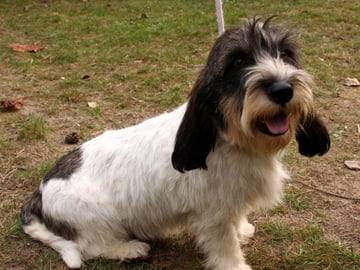
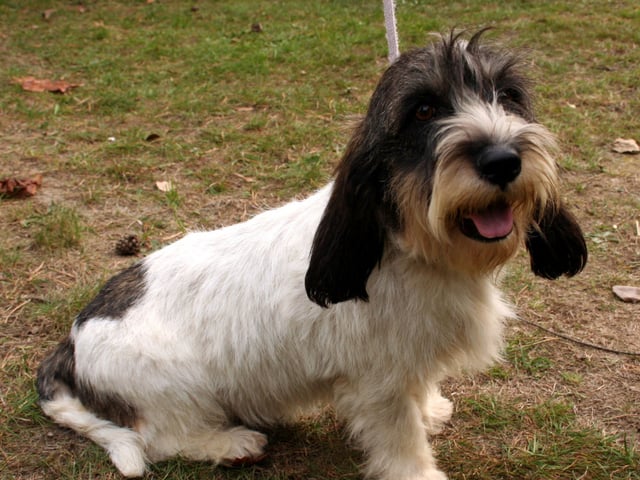
The Petit Basset Griffon Vendéen, often shortened to PBGV, is a small, rustic hound with a surprisingly solid build. Despite the word “Petit” in the name, this is not a toy dog, but a robust working breed. Adult height usually falls between 34 and 38 centimetres, with a slightly longer body than height, giving a rectangular outline. The overall impression should be of a compact, active dog that looks ready to work all day without tiring.
The head is one of the breed’s most recognizable features. PBGVs have a slightly domed skull, a strong muzzle, and a friendly expression that many owners describe as permanently amused. Their large, dark eyes are oval and set well apart, framed by a charming collection of long eyebrows and a distinct moustache and beard. The long, narrow ears are set low and hang gracefully, covered with fine, silky hair that falls in a slight inward curl.
The body is muscular and surprisingly powerful for the size. The back is straight and the loin is short and strong, helping the dog move easily through rough, uneven ground. The chest is deep rather than wide, with well sprung ribs that provide good lung capacity. Front legs are straight and sturdy, while the hindquarters are strong and well angulated, giving a smooth, efficient stride. The tail is carried high in a gentle curve when the dog is on the move, often wagging cheerfully like a little flag.
The coat of the Petit Basset Griffon Vendéen is one of its greatest charms. It is harsh and rough to the touch, never silky or woolly, and should feel protective against thorns and weather. The hair is of medium length, slightly longer on the body, with a dense undercoat that provides insulation. Around the face you see the typical furnishing, with whiskers, beard, and eyebrows that give a very expressive, “old wise clown” look.
Color is very varied in this breed. Common colors include:
- White and black
- White and orange
- White and sable
- Tricolour combinations, often white with black and tan markings
The pattern might be patched or mottled, and many PBGVs have a large white blaze on the head or white on the tail tip, which was historically useful for hunters tracking their dog through dense vegetation.
Coat care is important but not overly complicated if done regularly. The rough coat is not meant to be fluffy or sculpted. It should look natural and slightly tousled. A few practical tips for grooming a Petit Basset Griffon Vendéen:
- Brush the coat at least two to three times per week to prevent tangles, especially behind the ears, in the armpits, and around the hindquarters.
- Use a pin brush or a slicker brush, followed by a metal comb for the beard and furnishings.
- Regularly check the beard after meals, as food can easily become stuck and cause odor or skin irritation.
- The coat benefits from occasional hand stripping to remove dead hair, particularly on show dogs, but many companion dogs do fine with regular brushing and light trimming around the feet and sanitary areas.
- Bathe as needed, not too frequently, using a mild dog shampoo that does not soften the coat excessively.
Because this is a drop eared breed, careful ear care is vital. The long ears can trap moisture and dirt, especially if the dog spends a lot of time outdoors. Weekly ear checks and gentle cleaning as recommended by your vet will help prevent infections. With basic maintenance and a little time each week, the PBGV’s natural, rustic beauty can be kept in good shape without professional grooming every few weeks.
¶Temperament & Personality
The Petit Basset Griffon Vendéen has a personality that often surprises people who are not familiar with scent hounds. They are lively, bright, highly social, and often very entertaining. Many owners describe them as “happy clowns” that bring a lot of laughter into the home. At the same time, their hunting heritage shows in their independence, determination, and strong nose driven instincts.
At home, most PBGVs are affectionate and very attached to their people. They like to be involved in whatever is happening and usually dislike being left out of family activities. You can expect a PBGV to follow you from room to room, settle near your feet, and watch you with curious eyes. They are not typically one person dogs and tend to share their affection widely, which can be a lovely trait for families and sociable households.
With children, a well bred and well socialized Petit Basset Griffon Vendéen is usually playful, tolerant, and good natured. Their medium size and sturdy build mean they are less fragile than some small breeds, and they often enjoy games in the garden or joining children on walks. However, like any dog, they need to be supervised with younger kids and both sides must learn good manners. Children should be taught not to pull ears or beard, and to respect the dog’s space when it is resting.
PBGVs are typically friendly with strangers, often curious and willing to say hello, although some can be a little reserved at first. They are rarely aggressive by nature, but they certainly use their voice. This is a vocal breed that will bark to announce visitors, comment on activity outside the window, or express excitement. In the countryside this trait is less of a problem, but in apartments or close neighborhoods it can be challenging if not managed with training and adequate exercise.
With other dogs, the Petit Basset Griffon Vendéen is usually sociable and enjoys having canine friends. They were historically hunted in packs and many still like the company of their own kind. Early socialization is important to ensure good manners, especially around smaller or more sensitive breeds, because some PBGVs can be enthusiastic and a bit boisterous in play.
When it comes to smaller pets such as rabbits, guinea pigs, or outdoor cats, caution is essential. This is a true scent hound with a strong instinct to follow and chase small game. Some individuals may learn to live peacefully with cats they grow up with, but their natural drive can make them unreliable with unfamiliar small animals. Secure separation and careful introductions are a must if you have pocket pets in the home.
A key challenge with this breed is independence. The same determination that makes them excellent hunting dogs can appear as stubbornness in daily life. A PBGV will happily follow an interesting scent and sometimes seem to ignore calls or commands. They are not generally defiant to be difficult, but their nose is very powerful and often takes priority. Future owners should understand that this is not a robot like obedience dog, but a thinking, self directed partner who needs patience and consistent boundaries.
Despite these challenges, many people fall deeply in love with the Petit Basset Griffon Vendéen’s character. They are cheerful, adaptable, and full of personality. With the right balance of exercise, mental stimulation, structure, and affection, they become deeply rewarding companions that bring energy and joy to everyday life.
¶Training & Exercise
The Petit Basset Griffon Vendéen is a working scent hound at heart, and that background shapes both its exercise needs and its learning style. This is an active, energetic breed that thrives when it has a job to do or at least a daily routine that keeps body and mind well occupied. While their size might suggest a modest activity level, most PBGVs possess a surprising amount of stamina and will happily be out and about for hours.
Daily exercise should include at least one good, purposeful walk and additional shorter outings or play sessions. Many adult PBGVs are at their best with 1.5 to 2 hours of combined activity per day, divided into several sessions. This might include:
- Brisk walks in varied environments
- Off lead running in safe, securely fenced areas
- Scent based games such as hiding treats or toys in the garden
- Hiking, tracking, or canicross for particularly sporty individuals
Because of their strong hunting instincts, reliability off lead can be a challenge. A Petit Basset Griffon Vendéen that catches an interesting scent may follow it with impressive single mindedness and may not respond immediately to recall, especially when young or poorly trained. Long lines, fenced areas, and steady recall training are essential tools. Many owners choose to keep their dog on a long tracking line in open countryside to give freedom without risking a disappearing hound.
Training a PBGV requires a slightly different mindset than training a typical companion breed. They are intelligent, but also independent and easily bored by repetitive drills. Successful training tends to include:
- Short, fun sessions with plenty of variety
- High value rewards such as tiny food treats, sniffing breaks, or favorite toys
- Clear, consistent rules that are applied kindly but firmly
- Patience and a sense of humor, especially during the adolescent phase
Positive reinforcement methods work best. Harsh correction or heavy handed approaches usually backfire, making the dog switch off or become less willing to cooperate. Instead, aim to make the desired behavior more rewarding than ignoring you. For example, practice recall by calling the dog away from a low level distraction, then immediately allowing it to go back to sniffing as a reward, along with a treat. This uses the dog’s natural interests to your advantage.
Obedience is important, but so is channelling their natural talents. Many Petit Basset Griffon Vendéens enjoy:
- Nose work or scent detection sports
- Tracking and mantrailing
- Agility, where their quickness and enthusiasm can really shine
- Rally obedience and trick training for mental exercise
These activities give the dog a chance to use its brain and body in a satisfying way. A tired PBGV, in the healthy sense, is usually far more cooperative and calm indoors.
Crate training and teaching a reliable settle command are also very helpful. This energetic little hound needs to learn how to switch off and relax, especially in busy homes. Start this training early, pairing the crate or mat with calm praise, chew toys, and quiet time.
Overall, training a Petit Basset Griffon Vendéen is a long term project, not a quick course. They mature slowly and adolescence can be a time of “selective hearing.” Consistency over months and years, rather than days, is the key. For owners who enjoy the process and like a dog with its own ideas, the PBGV can be a delightful partner that offers both challenge and reward.
¶Health
The Petit Basset Griffon Vendéen is generally considered a relatively robust breed, especially when bred with health and function in mind. Still, like all purebred dogs, there are certain health conditions that appear more frequently and that responsible breeders aim to reduce through testing and careful selection.
One area of concern is the musculoskeletal system. Intervertebral disc disease is seen in some PBGVs, likely related to their slightly elongated backs and active lifestyle. Signs can include pain, reluctance to move or jump, and in severe cases weakness or paralysis in the hind legs. Maintaining a healthy body weight, avoiding excessive jumping from height, and providing appropriate exercise from a young age can all help reduce stress on the spine. If any sign of back pain appears, a prompt veterinary check is vital.
Hip dysplasia and elbow dysplasia may occur, although the breed is not among the worst affected. Reputable breeders often screen breeding dogs with hip and sometimes elbow x rays. Prospective owners can ask about hip scores or similar evaluations for the parents when choosing a puppy. Regular controlled exercise, sensible growth in puppyhood, and a balanced diet also contribute to healthy joint development.
Eye health is another important point in the Petit Basset Griffon Vendéen. Conditions such as primary open angle glaucoma and lens luxation have been reported in the wider Basset Griffon Vendéen family. Responsible breeders often have their dogs examined by veterinary ophthalmologists and may use genetic tests when available. Regular eye checks by your vet and at home observation for redness, cloudiness, excessive tearing, or signs of discomfort are recommended, especially in middle aged and older dogs.
Ear infections can be relatively common in drop eared, active breeds that spend a lot of time outdoors. The long, furry ears of the PBGV can trap moisture and dirt. This can create a warm environment where yeast or bacteria can thrive. Routine ear care, as advised by your vet, helps to prevent recurring problems. If you notice bad odor, redness, head shaking, or the dog scratching at its ears, a check up is needed.
Like many small to medium sized breeds, dental health should not be neglected. The PBGV’s fondness for food and treats can quickly lead to tartar and gum disease if teeth are not maintained. Regular tooth brushing, dental chews, and periodic professional cleanings when needed all help to support long term oral health.
Some lines may show a tendency toward obesity if exercise is insufficient or portions are too large. A PBGV carrying extra weight is at higher risk for joint, back, and heart issues. Measuring food, limiting table scraps, and using part of the daily ration as training rewards can keep the dog fit and trim.
Responsible breeders often follow health recommendations that can include:
- Hip scoring or equivalent joint evaluation
- Eye examination by a veterinary ophthalmologist
- Consideration of available genetic tests within the breed population
- General health screening and temperament assessment of breeding dogs
The typical lifespan of a Petit Basset Griffon Vendéen often ranges from 12 to 14 years, and many live even longer with good care. A balanced diet, appropriate exercise, regular veterinary check ups, parasite prevention, and attention to early signs of illness all contribute to a long, active life. Owners who work closely with their veterinarian and maintain an open dialogue with the breeder benefit from shared experience and tailored advice.
Overall, while the PBGV is not a fragile breed, prospective owners should be prepared for responsible health management. That means being informed, choosing puppies thoughtfully, budgeting for veterinary care, and investing time in preventative routines. In return, many years of enthusiastic companionship are a very realistic expectation.
¶History & Origins
The Petit Basset Griffon Vendéen comes from the rugged coastal region of Vendée in western France, an area known for its dense undergrowth, rocky terrain, and thorny shrubland. The conditions of this region shaped the breed’s development over centuries, creating a small, tough, and determined hound that could hunt on foot alongside human companions.
The PBGV belongs to the larger family of French Griffon Vendéen hounds, which includes several size varieties. “Griffon” refers to the rough coated, wiry haired type, and “Vendéen” points to the geographical origin. “Basset” indicates a low to the ground dog, designed to track game through thick cover without moving too fast, so that hunters could follow without horses. Historically, these hounds were used to hunt rabbit, hare, and sometimes other small game, working in packs and using their keen noses to trail scent for long distances.
Early on, the Petit and Grand Basset Griffon Vendéen were not always clearly separated. There was a period when hunting lines varied quite a lot in height and general type, depending on local needs and preferences. In time, French breeders became more focused on standardizing the different varieties. The “Petit” type was specifically bred as a shorter, lighter, and more agile hound, ideal for rabbit hunting on foot in tight, scrubby ground where a taller dog might struggle.
In the 20th century, breed clubs and kennel organizations began to formalize the standards for the Petit Basset Griffon Vendéen, both in France and abroad. Dedicated breeders worked to fix the breed’s particular combination of size, rough coat, outgoing personality, and strong hunting ability. They aimed for a dog that was compact yet hardy, lively yet controlled, and able to hunt for many hours without tiring.
As the breed spread to other European countries and then to the United Kingdom, Scandinavia, and beyond, people began to discover the PBGV not only as a hunting dog, but also as an engaging companion. Its comical expression, moderate size, and joyful temperament attracted attention in show rings and family homes. However, in many places the Petit Basset Griffon Vendéen has managed to retain real working ability, and it is still used for hunting in France and other parts of Europe.
Today, you can find PBGVs active in several roles. Many still participate in traditional hunting, especially in their homeland, where organized hunts for rabbit or hare remain part of the culture. In other countries, they often take part in dog sports such as agility, tracking, scent work, and obedience, where their energy and nose skills are put to good use. Of course, a large number now live as much loved family dogs, bringing a little piece of French country charm to homes around the world.
Throughout this history, certain key traits have stayed constant: a strong scenting ability, a robust and weather resistant coat, a lively and sociable nature, and a body built to move comfortably through rough ground. Understanding these roots helps modern owners appreciate why their PBGV behaves the way it does. The dog that pulls on the lead when it catches a scent, or that sings enthusiastically at exciting moments, is simply expressing instincts that have been refined over many generations.
¶Living with the Breed
Sharing your life with a Petit Basset Griffon Vendéen can be deeply satisfying, but it is not a casual decision. This is an active, intelligent, and strong willed breed that requires both time and thought. Before bringing one home, it is important to consider what daily life will really look like.
Firstly, exercise and mental stimulation are non negotiable. A PBGV that lacks enough physical activity will often invent its own entertainment, which may involve digging in the garden, excessive barking, or exploring beyond the boundaries of your property. Most families should plan for at least one longer walk every day, along with shorter outings, play, and some form of brain work, such as scent games or training sessions. If you enjoy spending time outdoors, walking in the woods, or exploring the countryside, a Petit Basset Griffon Vendéen can be an enthusiastic companion.
Secondly, this breed thrives on company. They are not well suited to being left alone for long hours every day. While they can learn to cope with moderate alone time if introduced gradually, a lifestyle where the dog is largely ignored or isolated will likely lead to frustration and behavior problems. Owners who work full time may need to arrange dog walkers, doggy daycare, or help from family to keep the dog’s social and exercise needs met.
Housing considerations matter as well. PBGVs can adapt to various living situations, from houses with large gardens to well managed apartments, provided their exercise requirements are fulfilled. However, secure fencing is extremely important. These little hounds are skilled at following scent trails and may try to find escape routes if something interesting passes nearby. Fences should be checked regularly for gaps, and gates must be kept closed. Invisible or electric fences are usually not ideal for scent hounds, as they may be willing to push through if the temptation is strong enough.
Financially, living with a Petit Basset Griffon Vendéen involves the typical costs associated with a medium sized dog. You should budget for:
- Quality dog food appropriate for the dog’s age and activity level
- Routine veterinary care, vaccinations, parasite control, and health checks
- Occasional unexpected vet bills for illness or injury
- Insurance, where available and appropriate for your situation
- Grooming tools such as brushes, combs, nail clippers, and occasional professional grooming if needed
- Equipment like a comfortable bed, secure harness, sturdy leash, crate, and safe toys
Annual costs vary widely by country and lifestyle, but it is realistic to expect that food, veterinary care, and basic supplies will represent a significant ongoing commitment over the dog’s 12 to 14 or more years of life.
In terms of home management, a few items are particularly helpful for PBGV owners:
- A well fitted harness and strong lead, especially in the early years, because many will pull when following scents
- A long training line for safe exploration before recall is fully reliable
- A crate or safe resting area that helps the dog learn to relax and gives it a secure place to sleep
- Interactive toys and food puzzles to occupy the dog on rainy days or quiet evenings
- A good quality brush and comb for regular grooming, along with gentle ear cleaner
New owners should be prepared for the breed’s vocal habits. While not every PBGV is noisy all the time, many have a strong voice and use it freely. Early training to reward quiet behavior, combined with sufficient exercise and mental work, can keep this under control, but complete silence is not realistic.
Finally, emotional commitment is as important as physical and financial readiness. The Petit Basset Griffon Vendéen is a sensitive, often humorous, and deeply engaging dog that forms strong bonds with its people. They do best with owners who appreciate their independent streak, enjoy training games, and can laugh at occasional mischief. If you are looking for a dog that will obey every command without question, this is probably not the right breed. If you want a lively partner who brings character, warmth, and a touch of chaos into your life, and you are willing to invest time into training and exercise, living with a Petit Basset Griffon Vendéen can be a wonderful and rewarding experience.
¶Characteristics
| Characteristic | Value |
|---|---|
| Breed Type | Purebred |
| Aggressiveness | 3/5 |
| Child Friendly | 4/5 |
| Energy | 3/5 |
| Hair Shedding | 3/5 |
| Health | 4/5 |
| Intelligence | 3/5 |
| Grooming Needs | 2/5 |
| Learning Ability | 3/5 |
| Barking Level | 4/5 |
| Height | 34 – 38 cm |
| Weight | 15 – 20 kg |
| Life Expectancy | 12 – 14 years |
¶Frequently Asked Questions
What kind of temperament does the Petit Basset Griffon Vendéen typically have?
This breed is generally cheerful, confident, and outgoing, with a strong independent streak from its hunting background. They are affectionate with their families but can be stubborn and easily distracted by scents, so consistency and patience are important in daily life and training.
Is a Petit Basset Griffon Vendéen a good choice for first-time dog owners?
They can be suitable for dedicated first-time owners who are prepared for a spirited, sometimes headstrong dog. Their friendly nature helps, but the combination of high energy, a strong nose, and independent thinking can be challenging without a real commitment to training and exercise.
How much exercise does a Petit Basset Griffon Vendéen need each day?
Despite their small size, they were bred as active scent hounds and usually need at least one to two hours of physical activity daily. This should include brisk walks and opportunities to sniff and explore, plus mental enrichment such as scent games or tracking-style activities.
Can a Petit Basset Griffon Vendéen live happily in an apartment?
Apartment living is possible if they receive ample daily exercise and mental stimulation, but their tendency to bark or bay can be an issue in close quarters. Access to safe outdoor areas and a consistent routine is important to prevent restlessness and vocal behavior.
How difficult is it to train a Petit Basset Griffon Vendéen?
They are intelligent and can learn quickly, but their independent hound nature means they do not always respond instantly to commands. Short, varied sessions with positive reinforcement, plus early socialization and recall work, are essential to keep them engaged and reliable.
What grooming does the Petit Basset Griffon Vendéen’s rough coat require?
Their harsh, wiry coat should be brushed several times a week to prevent tangles and remove debris, especially after outdoor adventures. Occasional hand-stripping or professional grooming helps maintain the correct texture, and regular ear checks are important since their dropped ears can trap moisture and dirt.
Are Petit Basset Griffon Vendéens good with children and other pets?
They are generally friendly, playful, and tolerant with children when properly socialized, although their enthusiasm can be a bit much for very young kids. Many get along well with other dogs, but their hunting instinct means small pets like rabbits or rodents may trigger chasing behavior.
What health problems are Petit Basset Griffon Vendéens prone to?
They are often a relatively robust breed, but can be predisposed to conditions like hip dysplasia, some eye diseases, and ear infections due to their ear shape. Responsible breeders screen for hereditary issues, and regular vet checks and weight control are important to support long-term health.
Why does my Petit Basset Griffon Vendéen follow scents and ignore recall?
Following a trail is deeply ingrained in this breed’s hunting history, so scent can easily override training if recall is not carefully reinforced. Consistent practice, high-value rewards, and the use of secure areas or long lines outdoors help manage this instinct safely.
Do Petit Basset Griffon Vendéens bark a lot and how can it be managed?
They are naturally vocal and may bark or bay to alert, out of excitement, or when bored. Early training to teach a “quiet” cue, along with adequate exercise and mental stimulation, is key to keeping their voice at a manageable level, especially in urban environments.
¶Comparisons with other breeds
Compare Petit Basset Griffon Vendéen with other breeds and see the differences in temperament, activity level, and care to make a confident choice. Show all comparisons