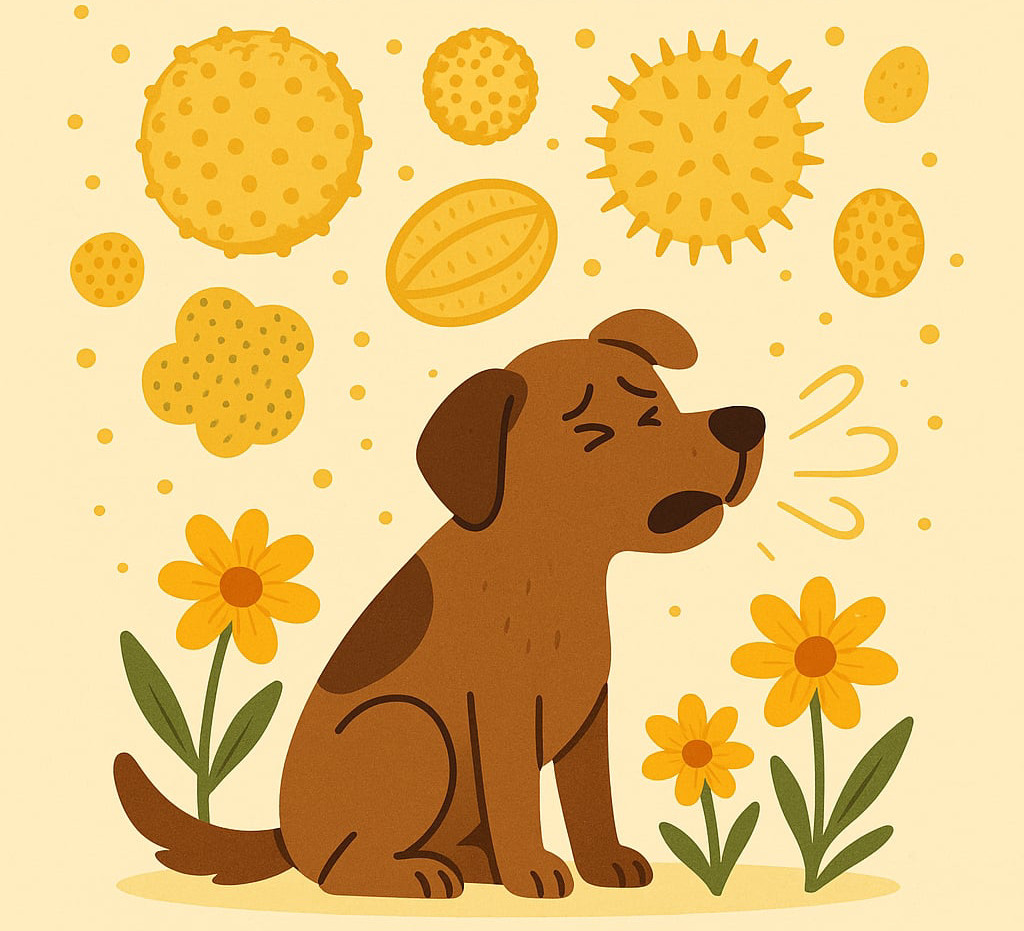

Spring and summer are wonderful seasons for dogs and their owners, but for some dogs these times of year bring major problems. Just like people, dogs can suffer from pollen allergies, which can cause itching, irritation, and other issues. Here we explain how to identify pollen allergy in your dog, what treatments are available, and how you can help your four‑legged friend feel better.
¶What causes pollen allergy in dogs?
Pollen allergy in dogs is caused by hypersensitivity to pollen from trees, grasses, and weeds. When an allergic dog inhales pollen or gets it on the skin, the immune system can overreact and trigger an inflammatory response. The most common types of allergenic pollen vary depending on where you live and the time of year.
¶Symptoms of pollen allergy in dogs
Dogs often show different symptoms from humans when it comes to pollen allergy. Instead of a runny nose and sneezing, it’s more common for them to develop skin problems and itching. Common symptoms include:
- Intense itching, especially around the face, ears, paws, belly, and armpits
- Red, irritated, or swollen eyes
- Frequent licking or chewing of the paws
- Repeated ear infections
- Red and irritated skin, sometimes with rashes or sores
- Coughing or sneezing (less common)
- Hair loss caused by excessive scratching and licking
These symptoms may worsen at certain times of the year, depending on which types of pollen the dog is allergic to.
¶Diagnosing pollen allergy in dogs
If you suspect your dog has a pollen allergy, it’s important to see a veterinarian for an accurate diagnosis. The vet can run tests to confirm the allergy, including:
- Blood test – Can measure the levels of allergy antibodies in the blood.
- Skin test – Small amounts of allergens are injected into the skin to see if a reaction occurs.
- Elimination method – By ruling out other allergies, such as food allergies, the vet can determine whether it’s an environmental allergy like pollen.
¶Treatment and relief for pollen allergy in dogs
There is no cure for pollen allergy, but it is possible to relieve the symptoms and help your dog feel better. Here are some effective methods:
¶1. Medical treatment
- Antihistamines – Can ease mild allergy symptoms but don’t always work as well in dogs as they do in humans.
- Cortisone (steroids) – Effective for severe allergies but should be used with caution due to side effects.
- Cytopoint injections – A biological treatment that blocks itching without affecting the immune system.
- Apoquel (oclacitinib) – A prescription drug that reduces itching and inflammation.
¶2. Home care and remedies
- Wash your dog’s paws and coat after walks to remove pollen.
- Bathe your dog regularly with a hypoallergenic shampoo to reduce skin irritation.
- Use air filters at home to reduce the amount of pollen in indoor air.
- Moisten your dog’s eyes and nose with sterile saline solution to ease irritation.
- Change bedding and wash blankets frequently to reduce pollen build‑up.
¶3. Allergy vaccines (hyposensitization)
If the dog has a severe pollen allergy, the vet may recommend allergy vaccination, also known as hyposensitization. This means the dog receives small, controlled doses of the allergen over time to build up tolerance. This treatment takes time but can provide long‑term relief.
¶How can you prevent allergic reactions?
You can’t completely prevent pollen allergies, but you can reduce your dog’s discomfort by:
- Going for walks on rainy days or early in the morning when pollen levels are lower.
- Avoiding grassy areas and forests during peak pollen season.
- Using protective clothing, such as a thin, full‑coverage suit.
- Making sure your dog has a balanced diet that supports a healthy immune system.
By paying attention to symptoms, seeking treatment early, and following preventive advice, you can help your dog get through pollen season as comfortably as possible.


