
Unfortunately, the answer to that question is no: there are no truly hypoallergenic dog breeds with low allergen levels. However, there are more allergy‑friendly dogs, and the amount of allergens in skin and saliva can vary between individual dogs, even between two pups from the same litter. That’s why it’s a good idea to meet the specific dog you’re thinking of buying several times to see whether your allergy is triggered.
Having a dog of their own is at the top of many children’s wish lists, but if you’re allergic it’s usually best not to keep a dog at home. Unlike pollen allergies, pet allergies are not seasonal, and being exposed every day, all year round, to something you don’t tolerate can, in the worst case, cause mild respiratory symptoms to develop into severe nasal congestion and asthma. Even though some allergic people find they tolerate certain breeds better than others, there are no completely allergy‑free dogs. There is also no evidence that the body can “get used to” living with furry pets.
Contrary to what many believe, it’s not the dog’s fur itself that causes reactions in people with allergies – it’s the proteins secreted in the dog’s urine, saliva, skin cells and sebaceous glands. But because these proteins stick to the hair, the coat also becomes allergenic.
¶More allergy‑friendly dogs
If a dog is described as allergy‑friendly, it simply means that the breed is “relatively unlikely to trigger an allergic reaction,” making these dogs the best option for living more or less symptom‑free with a dog.
While some of these “non‑allergic” dogs have heavy coats, their fur is single‑layered, which means they have no undercoat to shed. This results in fewer flakes attaching to furniture and circulating around your home.
The best way for people with allergies to check whether a dog will trigger symptoms is to spend some time with that specific dog.
¶Allergen levels in different dog breeds
Since the 1970s, researchers have known that all dog breeds carry the same main allergen, called Can f 1. More recent research, however, suggests that the levels of this allergen can vary – both between breeds and between individual dogs. A French research group that examined allergen levels in eight common breeds found that Labradors had the lowest average allergen production, while Poodles had the highest. On average, Poodles had allergen levels eight times higher than Labradors, but the variation within each breed was large. For example, the Labrador with the highest allergen level had values eight times higher than the Poodle with the lowest level in its breed. This makes it very difficult to say whether certain breeds are more allergenic than others. The study also found that allergen levels were somewhat higher in males than in females, and that dogs with eczema produced slightly more allergen. However, it made no difference whether the dog had long or short hair.
¶The best breeds if you have allergies
If you want a dog but seem to have an allergy attack whenever you’re near one, you’re not alone. Fifteen percent of people in Sweden are allergic to furry animals, especially dogs and cats, which makes many potential owners ask: which dogs are allergy‑friendly?
Although no dog is 100% hypoallergenic, it is possible to find lower‑allergen breeds that are better suited for allergy sufferers. These dogs typically have coats that don’t shed much and produce less dander. Allergens that cling to dog hair are what cause most dog allergies in humans. Strictly speaking there are no completely allergy‑free dogs, but some breeds do make it possible to enjoy a dog’s company even if you suffer from allergies.
There are also ways to prepare your home to keep allergens under control when you have a dog. Wash your pet’s bed frequently, keep up with grooming, and don’t let the dog sleep in your bed. It’s also wise to remove carpets and curtains that can trap dander. Pet‑hair vacuum cleaners can help remove allergens, and some models can even help remove loose hair and allergens directly from your dog.
You can read more about what causes dog allergies and how to reduce your risk here:
https://skaffahund.se/artiklar/hitta-ratt-hund/kan-jag-minska-allergisymtom-fran-min-hund.

¶The 25 best dog breeds for allergy sufferers
Below we’ve listed the breeds that many people consider to be the most allergy‑friendly. But that doesn’t mean they will be suitable for you. Which breed works for you is highly individual.
Always test by spending time with the breed and see if it works for you without symptoms. Ideally, try to meet the actual male or female dog that you’re considering. That will give you the best possible idea.
The breeds are briefly described below and in more detail under Dog Breeds: https://skaffahund.se/raser.
- Afghan Hound
- Airedale Terrier
- American Indian Dog
- American Hairless Terrier
- Basenji
- Bedlington Terrier
- Bichon Frisé
- Bichon Havanais (Havanese)
- Cairn Terrier
- Chinese Crested Dog
- Coton de Tuléar
- Irish Softcoated Wheaten Terrier
- Irish Water Spaniel
- Italian Greyhound
- Kerry Blue Terrier
- Lagotto Romagnolo
- Maltese
- Perro Sin Pelo del Perú (Peruvian Hairless Dog)
- Pomeranian
- Poodle
- Samoyed
- Shih Tzu
- Schnauzer
- Xoloitzcuintli / Mexican Hairless Dog
- Yorkshire Terrier
¶1. Afghan Hound
Afghan Hounds are known for being reserved and dignified. They are intelligent, although some people mistake them for being unintelligent because of their independent nature. This means their owners need a deeper understanding of their temperament than with most other breeds, which often have fewer opinions of their own.
Afghan Hounds should be carefully trained to listen and come when called – preferably from puppyhood.
They are extremely fast and built for speed. If an Afghan Hound happens to get loose, it can run far away before you can catch up. Historically, they have been used as hunting dogs for this reason.
Their long coat is one of the breed’s most distinctive and visually admired features. Afghan Hounds need regular exercise and grooming – including clipping – and ideally should be bathed and brushed twice a week, depending on where you take the dog.
Their unique movement, with the head held high rather than low when running, gives the breed a striking, graceful and aristocratic appearance that is highly appreciated at dog shows.
¶2. Airedale Terrier
The Airedale Terrier was originally used to hunt otters and water rats. Today it is mainly kept as an active and much‑loved show and companion dog. They are intelligent and loyal. Airedales need regular physical and mental stimulation to thrive.
Like other terriers, Airedales have a coat that sheds very little. Their harsh double coat should be combed once a week with a steel comb. Because this breed sheds far less than many others, it usually produces less dander that can trigger allergies. That makes it a good choice if you are allergic to other dog breeds.
Another plus is that Airedales don’t drool very much, which also makes them more allergy‑friendly.
¶3. American Indian Dog
This breed looks almost like a wolf, is very intelligent and therefore easy to train. It is quite rare in Sweden and is mostly found in the USA. There it is used as a rescue dog, therapy dog and companion dog, among other things.
The dog’s coat is considered hypoallergenic, which is good for people with fur allergies, and it sheds only once a year in spring. If you want a large dog that looks like a wolf, the American Indian Dog is the obvious choice.
¶4. American Hairless Terrier
The American Hairless Terrier is a lively, friendly and intelligent companion. With proper guidance, training and upbringing, they do well with children, cats and other dogs, but they can sometimes be a bit reserved with strangers.
They are well‑suited to city life because of their modest exercise needs, but like all active dogs they benefit from plenty of mental stimulation and physical activity. They also need regular baths and nail trims.
American Hairless Terriers are generally easy to train and live with, but they do need early socialisation. This means that during their first months and years they should be exposed to different people and environments to become well‑rounded family dogs.
As puppies they have fur, but it is sparse, short and downy and clearly different from, for example, a Rat Terrier coat. Shortly after birth they begin to lose their hair, and by the time the puppies are 6–8 weeks old they are completely hairless, with soft, smooth skin. Their pink skin is usually covered in freckles or small patches that increase and darken with age due to sun exposure.
¶5. Basenji
The Basenji comes from Africa and is believed to be one of the oldest dog breeds. It does not bark like a typical dog; instead it makes a sound best described as a yodel or the squeal of a tyre braking on asphalt.
Basenjis are natural hunters and are used as such in Africa, but in Sweden the breed is mainly kept as a companion dog.
It’s worth knowing that Basenjis can be stubborn and therefore a bit difficult to train. That said, they are a very lovable breed with many advantages.
Basenjis are pleasant dogs that do not shed and produce very little dander. Their coat is very short and easy to care for. Because the breed is very clean, it often grooms itself like a cat.
Because they are so clean, Basenjis do not have a typical “doggy smell”. They also drool very little. This makes them an excellent breed for allergy sufferers.
¶6. Bedlington Terrier
This friendly, lovable terrier is usually quiet and good with strangers, and is generally delighted when someone comes to visit. They typically get along well with children and are usually very patient. However, even though they may seem soft and quiet, they will not let themselves be bullied by other dogs and will stand their ground if they feel threatened.
Bedlington Terriers love to be active, but they don’t need intense exercise. Regular playtime and daily walks are enough to keep them happy. The breed is also very well suited to agility.
The Bedlington Terrier is known for its curly, woolly, lamb‑like coat. Like similar breeds, such as the Airedale, Bedlingtons have a more allergy‑friendly coat.
They shed quite rarely, and when they do, the amount of hair is small, which is positive since less hair means fewer potential allergens. Regular trimming and brushing keep the coat in good condition and help minimise allergies for people sensitive to fur.
¶7. Bichon Frisé
The Bichon Frisé is a naturally friendly, cheerful and playful dog that loves activity. The breed needs a moderate amount of exercise, learns easily and is eager to please. These are typical companion dogs and usually get along very well with children and other pets, making them a good choice for first‑time dog owners.
The breed’s most typical features are the three black “dots” on the face – the round dark eyes and the cute black nose – forming an equilateral triangle.
Bichons’ hair grows continuously and does not shed, so regular grooming is important to help prevent allergic reactions. The coat is white, very soft and is trimmed to emphasise the dog’s proportions. Many owners round the head to highlight the beautiful, expressive eyes and give the dog a family‑friendly appearance.
The Bichon Frisé is well‑suited if you are getting your first dog. You get an easy‑to‑handle small dog that can also participate in various dog sports. Because they do not shed, they are often a good choice for people with allergies.
¶8. Bichon Havanais (Havanese)
The Bichon Havanais is a charming little companion dog originating from Cuba. It is happy, affectionate and easy to train, loves to be involved in everything and can learn many fun tricks.
They often form strong bonds with their families and will protect them at all costs. It is important that they get plenty of social training from an early age so they learn to be around people and other animals.
The Havanese has a long, silky coat that requires regular grooming but does not shed. It does not have to be clipped or trimmed, although some owners choose to. The coat must be combed regularly, and the dog should be bathed every other week to keep the coat clean. The risk that they will trigger an allergic reaction is said to be significantly lower than with many other breeds.
Havanese dogs also tend to drool very little and produce only small amounts of dander.
All of this makes them one of several good breeds for allergy sufferers, as the risk of triggering allergies is relatively low.
¶9. Cairn Terrier
The Cairn Terrier comes from the Scottish Isle of Skye. It is a working terrier that is hardy and active and has been around since the 1500s. Its main tasks were to hunt rats, foxes, otters, badgers and other vermin. Cairn Terriers are short‑legged and longer than they are tall. They were originally called “short‑haired Skye Terriers.”
They shed very little, but only if their coats are maintained regularly. If you don’t have the time or skills to do this, they may not be the best choice if you are allergic. They also produce relatively little dander, which together can make them a good breed for allergy sufferers.
¶10. Chinese Crested Dog
The Chinese Crested is an alert, cheerful and playful dog that makes a good companion. They are small and do well in families with calm children, but they dislike being left alone for long periods. They originate from China, where they have existed for at least 600 years.
The average height of an adult male is 28–33 cm and 23–30 cm for a female. The Chinese Crested is a relatively light dog and should not weigh more than 5.4 kg when fully grown. Due to its size it generally needs no more than about 30 minutes of exercise a day, although it can handle more if you are an active person who enjoys being outdoors.
Cresteds shed very little or not at all, and their coats can come in many colours and combinations, giving owners plenty of variety.
There are two varieties of the breed: the Hairless (with a crest on the head and hair on legs and tail) and the Powderpuff, which has a double coat with long, soft hair. There are also two body types: a more slender, fine‑boned type and a heavier, more robust type. Both varieties should be bathed once a week: the hairless to keep the skin clean, and the coated to prevent tangling.
Both the hairless and coated versions are considered good allergy‑friendly dogs, although the hairless is often regarded as the better option since it has the least amount of hair that can carry allergens. The Powderpuff’s long, soft coat should be brushed once or twice a week. On the hairless variety, the feathering on tail, feet and head should be brushed, and the skin should be moisturised when dry.
It is also important to protect the skin from the sun so it doesn’t burn.
¶11. Coton de Tuléar
“Coton” is French for cotton, and “Tuléar” refers to the port city of Toliara in Madagascar, where the breed originates.
The Coton de Tuléar is a small but robust dog that is cheerful, eager, loyal and playful, with some guarding instinct. The breed is stable, easy to train and very sociable with people and other dogs. Their temperament is one of their key traits, expressed in their relaxed and comical behaviour.
They are intelligent and learn tricks and exercises quickly, which makes them suitable for agility and shows. They are also ideal as calm, social family dogs.
Coton de Tuléars usually need consistent and early training. They can be difficult to house‑train and may become quite noisy if not trained enough.
Their long, white coat is fairly long and feels like cotton. It requires more or less daily grooming to keep allergies in check. They are considered a relatively allergy‑friendly breed.
¶12. Irish Softcoated Wheaten Terrier
The Irish Softcoated Wheaten Terrier is a medium‑sized terrier from Ireland. Males are about 46 cm at the withers and weigh around 20 kg. It is a fairly tough, lively and independent breed that suits an active family with an owner who has authority and persistence.
The coat requires some work, as it should be combed and bathed regularly. If you care for the coat properly, the dog sheds very little. In fact, its coat is more like hair than fur, which may be one reason why people with dog allergies often react less to this breed.
They also tend to bark less than many other terriers and drool less than many other dogs, which further increases their allergy‑friendliness.
¶13. Irish Water Spaniel
The Irish Water Spaniel is recognised by its tightly curled coat and tapering “rat tail.” The breed is generally very easy to train, but it may require a loving, firm hand and plenty of training time. It is active and energetic and needs daily exercise – whether that’s bird hunting or playing with the children.
Alert and curious, this breed is a masterful swimmer and is often used as a flushing and retrieving dog. It is hard‑working and courageous in the field and playfully affectionate at home. This strong, intelligent breed is the clown of the spaniel family.
The coat is finely curled and fairly dense over the whole body, except for the nose and tail, which are smooth‑haired. Their water‑repellent double coat needs brushing and combing once a week, and the dog should be bathed once a month.
These dogs shed relatively little, which makes them a good choice for allergy sufferers.
¶14. Italian Greyhound
The Italian Greyhound does not actually originate from Italy but from Egypt. It is the smallest of the sighthound breeds, with a height of 32–38 cm and a maximum weight of 5 kg. It is incredibly fast for its size and is therefore often used in dog racing. In Sweden, however, it is a very popular companion and family dog, as it enjoys social environments and loves to cuddle and be close. The Italian Greyhound is also known for being very loyal and playful.
With its short, silky coat and fastidious cleanliness, this elegant sighthound falls into the category of allergy‑friendly dogs. The coat is very thin and sheds hardly at all. It also requires little grooming, although the dog can be sensitive to cold. They drool very little, which is another advantage for allergy‑prone owners. In winter you may need to dress the dog in a dog coat to keep it warm. Taken together, this makes the Italian Greyhound a good breed for allergy sufferers.
¶15. Kerry Blue Terrier
The Kerry Blue Terrier is energetic and fun, but can be stubborn at times and needs a confident owner. The breed likes to be part of an active family that can provide daily exercise. These dogs are also very smart and lively. They thrive on companionship and frequent social interaction.
The Kerry Blue has a long but relatively flat head. The chest is deep and the body is usually roughly as long as it is tall. Puppies are born black and, after about eighteen months, begin to turn a greyish blue.
The Kerry Blue’s coat is soft and curly and typically sheds roughly once every couple of weeks rather than several times a day. Their easy‑care coat has no undercoat and therefore doesn’t shed much. It needs regular brushing and trimming. Kerries should be bathed every 2–4 weeks and blow‑dried afterwards. Thanks to this low‑shedding coat, the Kerry Blue Terrier is a viable option for owners with allergies.
¶16. Lagotto Romagnolo
The Lagotto Romagnolo is a cheerful, medium‑sized companion dog with lots of energy that needs plenty of activity. It likes to play and generally gets along well with other dogs. It is active and easy to train, whether for walks, agility or search work. The breed is described as very devoted to its owner and friendly towards other dogs.
The breed’s popularity has increased sharply in recent years, and it is now one of the most popular breeds in Sweden.
If you like truffles or spending time in the forest, this is the perfect dog – it is currently the only breed fully specialised in truffle hunting. Given the value of truffles and the breed’s strong desire to search, a good Lagotto can be very profitable. It can also be used to search for other mushrooms.
The Lagotto’s thick, soft, curly coat has a coarse outer texture and is water‑repellent. It sheds very little – like other curly‑coated breeds – but requires a fair amount of care. It needs trimming and regular brushing to prevent heavy shedding. Clipping should be done about once a month, with a more thorough clip once a year. The hair in the ears is abundant and often curly. The dog should be trained from puppyhood to accept ear clipping and removal of hair from the ear canal. The breed also produces little dander. For all these reasons, the Lagotto is a good option if you are looking for an allergy‑friendly breed.
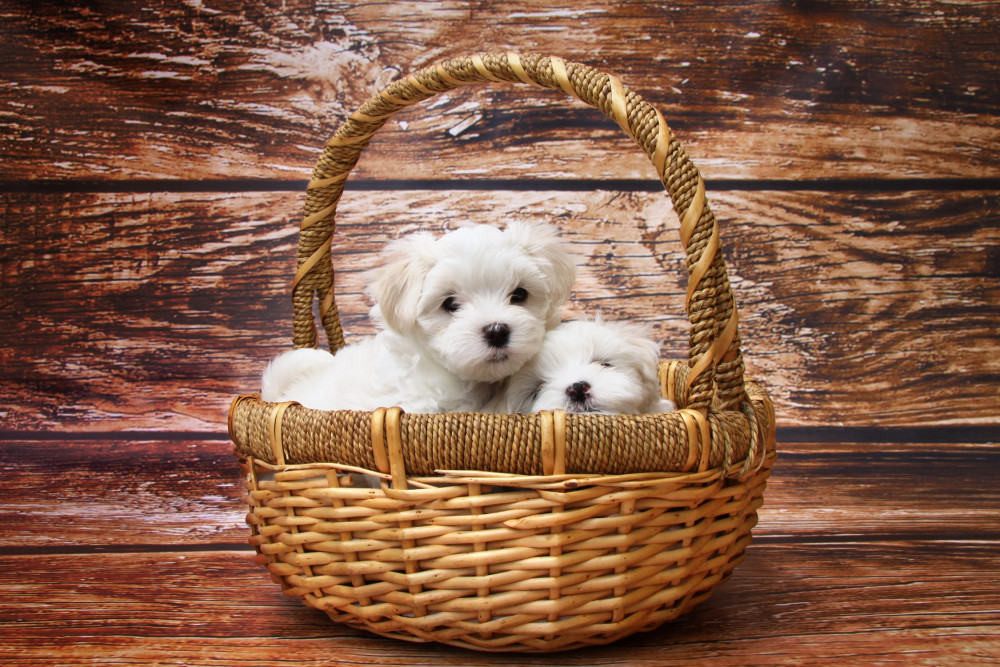
¶17. Maltese
The Maltese is a lively, alert dog that enjoys walks as much as cuddling in your lap. They are known for their floor‑length coats and are playful, charming and adaptable companions. Though small, the Maltese is known for being bold, playful and fearless. It is usually energetic and affectionate. Beneath the pure white coat is a compact body that moves with a smooth and easy gait. Overall, the impression is one of free‑flowing elegance and balance. The irresistible Maltese face – with its large dark eyes and black “button nose” – wins many hearts.
The Maltese’s long, silky white coat is striking and beautiful and is considered more or less hypoallergenic. It must be carefully brushed and combed down to the skin every day to keep it looking good and to prevent both shedding and tangles. The Maltese also produces very little dander, which is another reason it is popular among allergy sufferers.
Maltese dogs should also be bathed regularly and conditioned to keep their coat clean and fresh.
Check the ears weekly and remove excess hair or wax and any accumulated debris.
As Maltese dogs get older they are prone to dental disease, so their teeth should be brushed often – ideally whenever you brush the coat. They also have fast‑growing nails that should be trimmed regularly.
¶18. Perro Sin Pelo del Perú (Peruvian Hairless Dog)
The Perro Sin Pelo del Perú was known in South America even before the Incas. Its existence is clearly documented in ceramic art from various pre‑Incan civilisations. In these images, the hairless dog often replaces other important “symbol animals,” such as the puma, snake or falcon. From this evidence we can conclude that the breed existed during pre‑Incan archaeological periods, between about 300 BC and 1400 AD.
The breed is lithe and intelligent and radiates speed, strength and endurance. Perro Sin Pelo del Perú are loyal and readily protect their families. They are energetic and need a fair amount of exercise.
The breed comes in three sizes – small, medium and large – and in two varieties – hairless and coated, both of which can appear in the same litter. Both varieties can have many different skin and coat colours and pattern combinations. The hairless variety may be one of the best breeds available for allergy sufferers. Coat care is minimal.
¶19. Pomeranian
The Pomeranian, also called the Dwarf Spitz, comes from the German‑Polish region of Pomerania and descends from the German Spitz. They are the smallest of the spitz‑type breeds and have a mini‑fox‑like appearance with a lot of fur. Pomeranians are popular show dogs.
Pomeranians are active, cheerful little dogs that love to be the centre of attention. They are very intelligent and easy to teach tricks to – and they never seem to get enough of games. Today the Pomeranian is a very popular breed in Sweden and worldwide thanks to its friendly nature and strong desire to please its owners. They often form a particularly strong bond with one person in the household, but are still friendly with other family members and familiar people.
Pomeranians definitely deserve a place on the list of allergy‑friendly dogs.
Their coat is easy to care for and rarely mats. It should be brushed every other week, and weekly during shedding periods.
¶20. Poodle
The Poodle is an active companion dog that comes in four sizes: Standard, Miniature, Dwarf and Toy, all considered true companion breeds.
They are among the most intelligent dog breeds in the world and make exceptionally pleasant companions that fit into almost any lifestyle. They always want to be where the action is. Poodles are also well‑suited to agility thanks to their trainability and intelligence. Combined with their friendly personality, this makes them highly valued family members.
They have a unique coat that does not shed and produces less dander than most other dogs. If you bathe your Poodle every other week and keep the home clean, you remove more of the allergenic skin flakes. Poodles are generally a good breed for allergy sufferers.
¶21. Samoyed
The Samoyed is a larger, very hardy dog from Siberia with a wolf‑ or polar bear‑like appearance. They are cheerful and friendly and prefer colder climates. They make excellent sled dogs. This is an active and independent breed that needs plenty of physical and mental exercise. It is perfect for active families or anyone wanting a partner for working activities. Since the breed is considered stubborn and independent, owners need to understand what is required to train a Samoyed properly. If you succeed, you’ll have a loyal companion through thick and thin.
You might assume this is absolutely not a breed for allergy sufferers, but in fact the reality is different. Samoyeds do shed quite a lot, but they have such a thick coat that it can prevent dead skin cells from becoming airborne and triggering allergies. Their very dense coat also has a natural mite‑resistant quality, which helps some allergy sufferers. Moreover, their coat is easier to maintain than you might think. It is worth emphasising, however, that the hair they do shed can still carry dander into the air. Overall, Samoyeds are considered suitable for many dog lovers with allergies.
Another breed related to the Samoyed that is often considered slightly more allergy‑friendly is the Eurasier.
¶22. Shih Tzu
The Shih Tzu is a small, charming family dog that loves to cuddle with its people and gets along well with other dogs.
The Shih Tzu has a hair‑like coat and is known for its long flowing hair, which needs quite a bit of grooming to stay in good condition. Unlike many other breeds, the Shih Tzu sheds very little. Ideally, it should be bathed once a week and brushed regularly. By brushing the coat frequently, you can reduce the amount of dander. For that reason, this breed can work well if you are allergic to other dogs.
¶23. Schnauzer
The Schnauzer is an active, cheerful and playful dog that fits well into family life. It loves children and is known for its stable temperament and playfulness. It likes to be where things are happening but usually prefers to stay close to its owner. It also works well and efficiently in the stable. The breed comes in three sizes: Miniature Schnauzer, Standard Schnauzer and Giant Schnauzer, the latter being the largest.
Schnauzers drool and shed less than many other breeds, which makes them very suitable as allergy‑friendly dogs.
¶24. Xoloitzcuintli / Mexican Hairless Dog
The Xoloitzcuintli is a Mexican breed with a name as hard to pronounce as it is to spell. You can simply call it “Xolo” if you prefer. The breed is very alert and loyal, making it an excellent watchdog. Today it is used as a companion dog as well as in shows, agility and obedience. The dog is described as intelligent, lively and alert.
It has a short, smooth coat with minimal shedding. This almost hairless breed is well‑suited as an allergy‑friendly dog. Just remember to protect its skin with sunscreen in summer, and it will likely need a coat in winter.
¶25. Yorkshire Terrier
The Yorkshire Terrier, often called the “Yorkie,” is a lively, alert and fearless little dog that weighs up to 3.2 kg. It is a hard‑to‑beat companion dog and can also become very skilled at agility – though, as always, this requires many hours of training. If you’re looking for a small, social, lively and bold dog, this may be the breed for you.
Despite its long coat, it is also allergy‑friendly because it does not shed and doesn’t produce much dander. The Yorkie’s coat is more like hair than typical dog fur. The coat should be brushed through once a day. Thanks to this special coat, the Yorkshire Terrier is considered an allergy‑friendly breed.