
When you transport your dog, you must do so safely. Among other things, you must keep a close eye on your dog and make sure it sits safely in the car in case of sudden braking. There are also special rules for when and how you may travel with bitches and puppies, and for transport abroad. Remember that you may not transport dogs that are ill or injured.
When the family is going away, you often want to bring the dog along. But even before the trip you should consider whether your dog will cope well with being in the car during the journey, or whether it would be better off staying with friends or at a boarding kennel.
Remember that you may only transport your dog when it is suitable to do so. Dogs that are ill or injured must not be transported.
¶Transporting your dog safely in a car
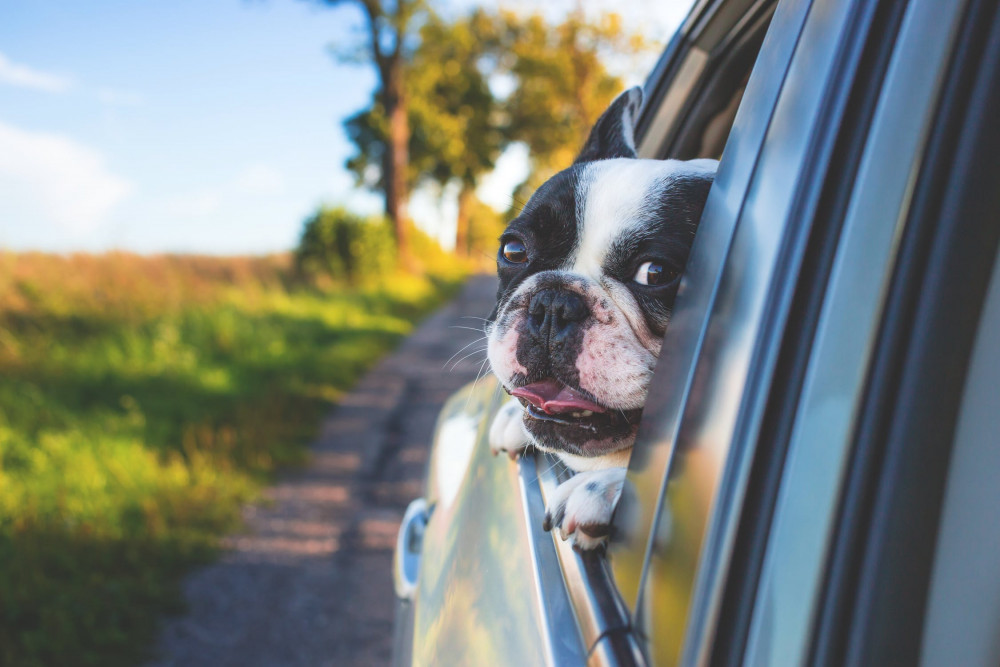
Keep the following in mind when you transport your dog safely in the car:
- You may transport your dog in the estate compartment of your car if you can keep good visual contact with it throughout the journey.
- The dog must not risk being injured or suffering during transport. You must therefore make sure the dog is secured in case of braking, for example by using a transport crate or a safety harness designed for dogs.
- If you transport the dog in a crate or similar, it must be designed and positioned so that the dog has shade and good ventilation.
- You must make sure that luggage or other objects cannot fall onto the dog and injure it.
¶Never leave a dog alone in a hot or cold car
You may never leave an animal unattended in a car if it is possible that the temperature inside the car will rise above +25°C or fall below -5°C.
Even if the car is in the shade and you leave a gap in the window, it can quickly become very hot inside.
It is not only the temperature that determines how quickly an animal in a car will suffer heatstroke and possibly die. Humidity also plays a role. The higher the humidity, the faster the animal overheats. Humidity rises very quickly when a dog pants.
¶Let your dog out and give it water at least every 6 hours
During transport you must let the dog out and give it water at least every 6 hours. It must be given food at intervals of no more than 24 hours.
¶Keep the dog in a stationary car for a maximum of 3 hours
A dog may be kept in a car for a maximum of 3 hours when the car is standing still. It may not be kept regularly in a vehicle or in a car while you are at work. You must arrange a better solution for the dog during that time.
Dogs may be kept temporarily in a car during transport and overnight stays in connection with travel, when staying in areas where pets are not allowed, or during other activities such as hunting, competitions, shows, and training.

¶Minimum space requirements
When a dog travels by car, it must be able to stand up and lie down comfortably. If you use a crate or similar for transport in the car, the following minimum measurements apply for each dog’s space:
- Length: the dog’s length times 1.10. Measure the dog from the tip of the nose to the seat bones when the dog is standing in a normal position.
- Width: the dog’s chest width times 2.5. The dog must be able to lie down and turn around without difficulty.
- Height: the dog’s height at the crown of the head when the dog is standing in a normal position.
If you transport more than one dog in a crate, the width for each dog must be increased by the chest width of the largest dog.
You may not tie a dog outside a stationary motor vehicle unless a special tethering device is installed on the vehicle. This must be designed so that the vehicle cannot leave the place without the device being removed first. Every year, dogs are tied to cars and are seriously injured when the owner drives off with the dog still attached to the car.
¶Bitches and puppies
Remember that a bitch in heat must be transported separately from male dogs.
- You may not transport a pregnant bitch if there are 2 weeks or less left until the expected whelping date and you are travelling more than 50 km.
- You may also not transport a bitch earlier than 1 week after whelping if you are travelling more than 50 km.
- A puppy must be at least 1 week old and the navel should be completely healed before it may be transported.
- A bitch with nursing puppies must be transported together with them, but kept separate from other animals.
¶Emergencies
If you urgently need to go to a veterinarian, you may transport a sick or injured dog even if you do not meet the normal requirements, but there must be no risk that the animal will suffer because of the transport. If you are unsure whether it is appropriate to transport the dog, you should contact a veterinarian.
¶Rules for certain transports in professional activities
If you transport dogs in a passenger car or light truck as part of regular and recurring professional activities, there are additional rules you must follow:
- When loading or unloading the dogs, you must use appropriate equipment.
- You must be able to care for the dogs during transport, or arrange for another suitable person to do so.
- The vehicle you use for transport must have a compartment specifically intended for dogs. This area must be separated from the passenger area by a grille or net.
- The compartment where the dogs are transported must be designed so they can stand up and lie down comfortably. If necessary, you must be able to install partitions to protect the dogs.
- The compartment must protect the dogs from sunlight. It must have mechanical ventilation with a fan that also works when the engine is switched off.
- Dogs must not be kept permanently in a vehicle.
- There must be good options for rescuing the dogs from the vehicle in the event of fire or other accidents, and evacuation must be possible via more than one escape route without difficulty or delay.
¶Signs on vehicles used professionally
You do not need to have signs on passenger cars when transporting your own dog.
However, motor vehicles and trailers used for transporting dogs in professional activities must have signs. The following applies to vehicles registered in Sweden:
- There must be signs both at the front and rear.
- It must be clear that there are live animals in the vehicle.
- The signs must be easy to read from a long distance.
- The text may be in Swedish or English.
The signs should be removable, foldable, capable of being switched off or covered when you are not transporting dogs.
Vehicles registered in an EU country, Norway, Liechtenstein or Iceland must follow the regulations in those countries and must clearly indicate that they are transporting live animals.