
¶Sisällysluettelo
¶Quick Facts
- The Catalan Sheepdog (Gos d’atura català) is a Spanish herding and guarding dog from the Catalan Pyrenees. It drove sheep and cattle, kept herds together and could make independent decisions while working.
- Males should measure 47–55 cm and females 45–53 cm. The FCI standard gives no weight; the Swedish Kennel Club's breed page offers approximately 19–22 kg as a practical guide.
- The body should be slightly longer than tall; the height-to-body-length ratio is about 8:9. The breed has hanging ears, a long or naturally short tail — and may also be born without a tail — as well as double bony dewclaws on the hind legs.
- The coat is long, straight or slightly wavy, with a harsh topcoat and abundant undercoat. It moults in an unusual two-stage pattern: first at the front and then at the rear.
- The breed ideal is a steady, active, intelligent, determined but friendly dog. It may be wary of strangers, but fear, aggression and uncontrolled sharpness are different matters.
- The breed needs an active daily life, training and rest, but no fixed number of exercise hours suits every dog. Guarding instinct, independent initiative and barking require thoughtful training.
¶Appearance & Coat
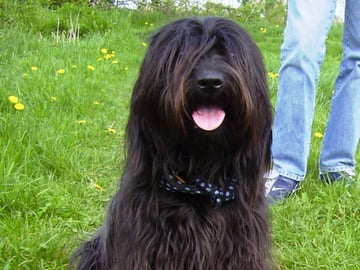
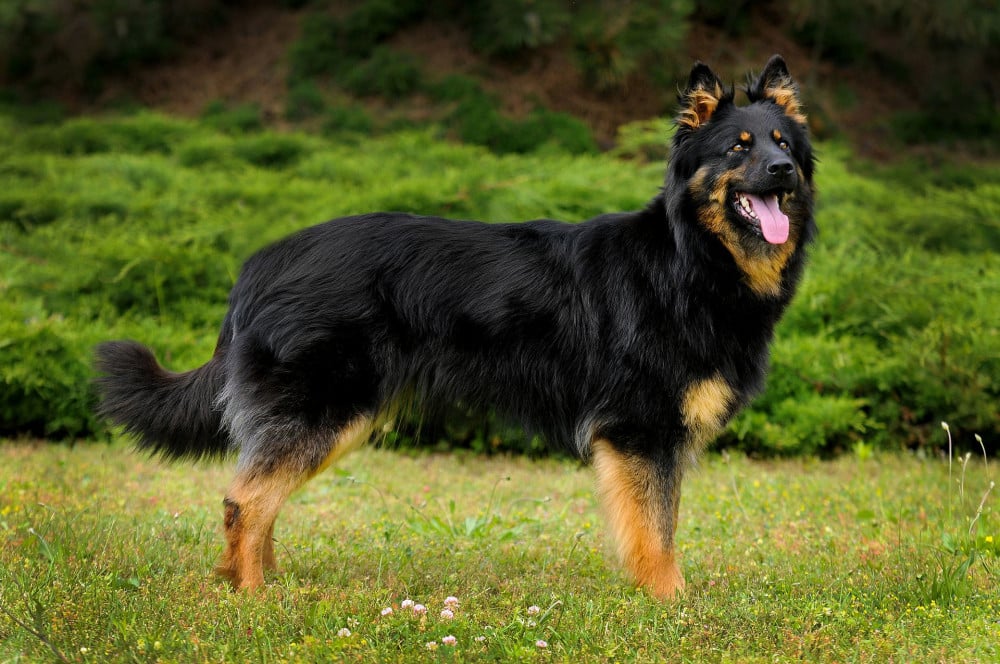
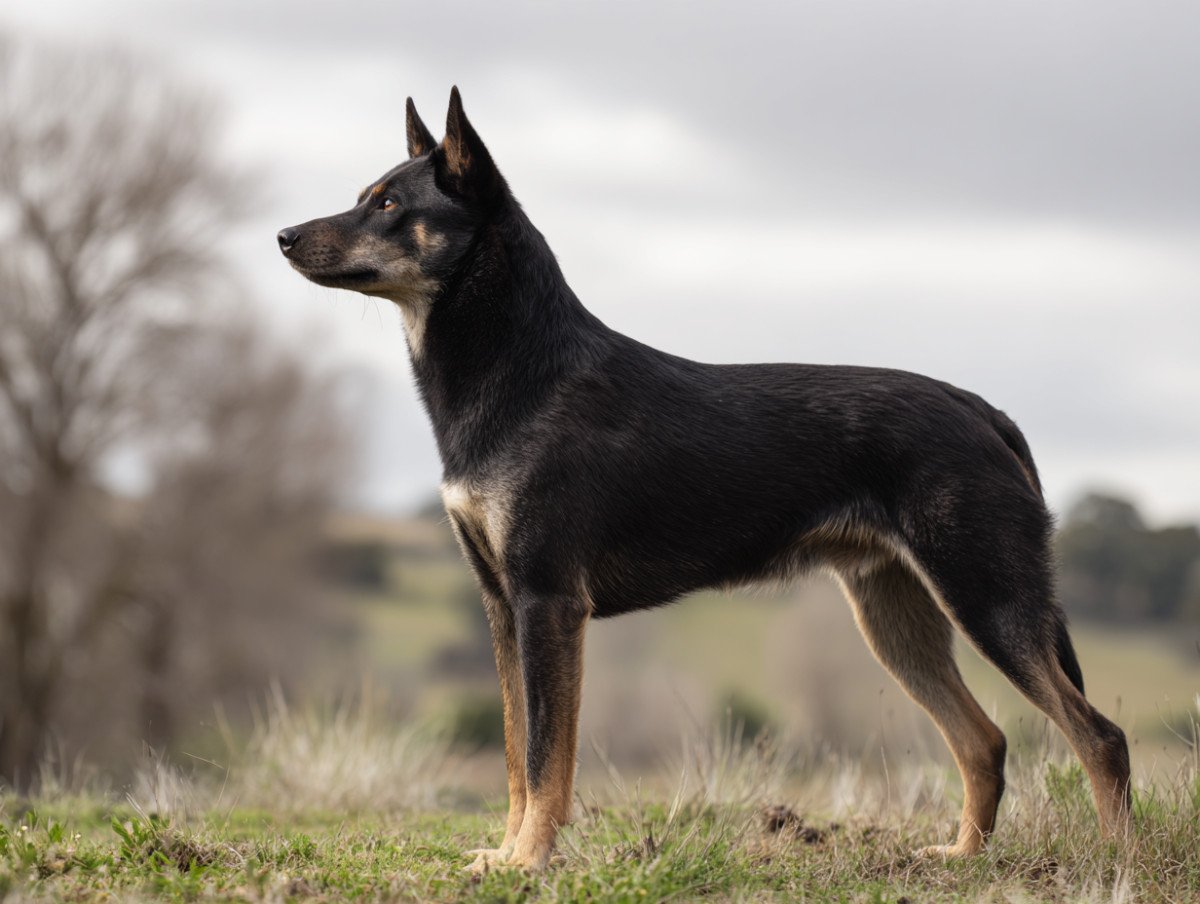
The Catalan Sheepdog is medium-sized, strong and agile. The ratio of height at the withers to body length should be about 8:9. The head is powerful without being coarse, the eyes are dark amber, and the high-set triangular ears hang down.
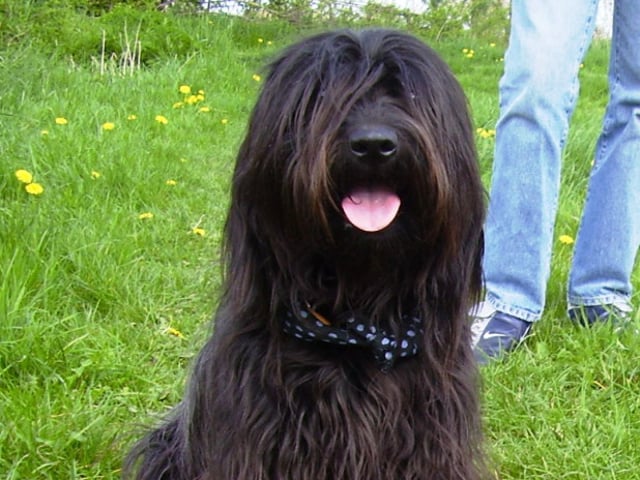
The face has a beard, moustache, topknot and bushy eyebrows, but the hair must not obscure the eyes. A heavy fringe that blocks the field of vision is therefore not a correct breed feature. Check that hair or dirt is not irritating the eyes.
The tail varies naturally to an unusual degree. It may be long enough to reach below the hock, shorter than 10 cm or absent from birth. At rest, a long tail hangs with a hook at the end; in motion, it is raised but must not curl over the back. The FCI standard contains an exception for docked working dogs, but both ear cropping and tail docking are prohibited in Sweden.
The hind legs should have low-set, double bony dewclaws that are joined to each other and linked to the first toe by a membrane. Include them when checking the paws and nails.
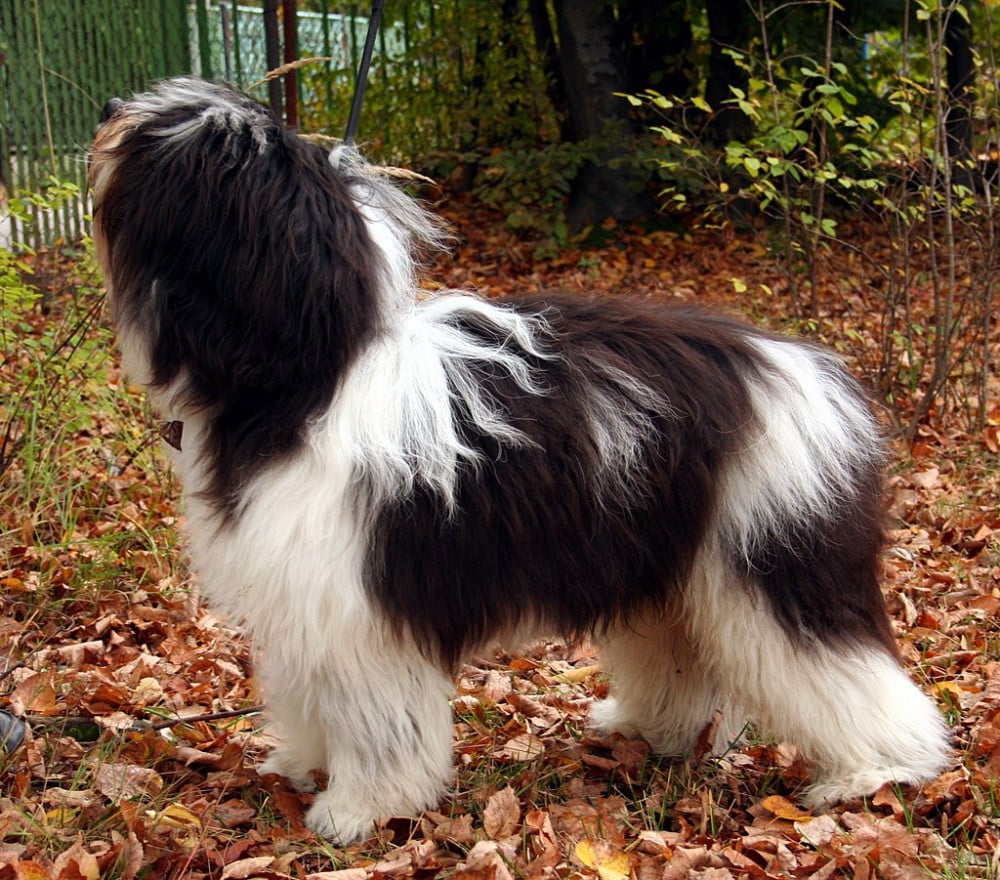
The coat should be long, straight or slightly wavy, with a harsh topcoat and abundant undercoat, particularly over the rear of the body. It should protect the dog without becoming so long or profuse that the body's outline disappears; the Swedish breeding strategy gives quality priority over quantity.
From a distance, the dog often appears almost one colour, but its colour is formed by mixed hairs in fawn, reddish brown, grey, black and white. The mixture may look fawn, sable, grey or sometimes black and tan. White or black patches are not permitted. A few white hairs on the chest or outer toes may be tolerated if the nails are not white.
The Swedish Kennel Club says that a thorough weekly comb is often sufficient for an adult and that the coat should not be clipped or trimmed. Let tangles and dirt guide the actual schedule: check from the skin, especially behind the ears, in the armpits and groin and beneath a harness or collar. Bathe when needed and introduce the puppy to calm handling.
The coat moults in a characteristic two-stage sequence. The dog first loses coat over the front of the body and may temporarily appear to have two different coat types; the rear then moults and the coat becomes even again. The amount of visible loose hair does not show whether a dog will suit someone with allergies — there are no allergy-free dog breeds.
¶Temperament & Personality
The Catalan Sheepdog should be steady, active, intelligent, determined and friendly. Its work required vigilance and independent initiative when a herd had to be moved and kept together. In a modern home, this may appear as a dog that notices changes quickly and likes to try its own solutions.
The standard describes the breed as wary of strangers. This does not mean that a dog should remain fearful, threaten visitors or be impossible to handle. Aggression and extreme shyness are disqualifying faults, and the Swedish breeding strategy expressly warns against making the breed even more wary.
Meet the dam and, if possible, several adult relatives. Watch how they meet an unfamiliar person, respond to surprises and settle again. Read any Swedish BPH or MH behaviour-assessment results as descriptions, not as passes or failures. The sample in the 2021 breeding strategy was too small to support firm promises about the whole breed or a particular puppy.
The herding and guarding background does not mean that every dog will nip children, gather the family or guard the home in the same way. Inheritance, upbringing, environment and training affect how these traits appear. Assess the parents and relatives instead of buying a romantic image of a loyal mountain dog.
¶Training & Exercise
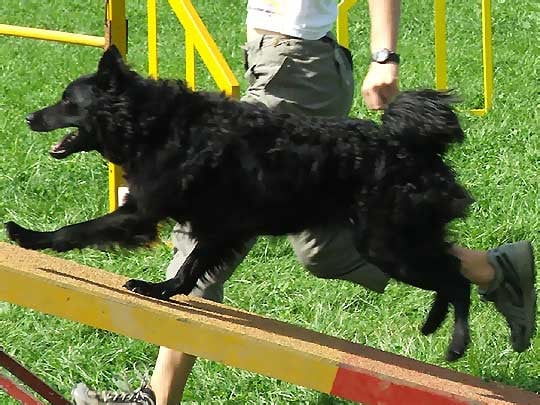
The Catalan Sheepdog needs physical activity, scent work, problem-solving, cooperation and recovery every day. Varied walks, tracking, search games, rally obedience, agility or herding may suit the breed. Adjust the amount to the dog's age, health and fitness, and to how well it settles afterwards.
Avoid fixed promises of one or two hours. The 2021 Swedish breeding strategy says that the breed should not be treated as a working-dog breed that needs several hours of training each day; it should be active but also able to relax. Recent generations have not been selected specifically for herding or working traits, so historical ability is no guarantee for every individual.
Prioritise the following everyday skills:
- recall built in safe surroundings and supported with a long line where necessary
- loose-lead walking and calm turns away from bicycles, runners and other movement
- a cue to leave a door, window or property boundary and reconnect with the handler
- calm visits during which the dog has a clear place and need not take responsibility for guests
- the ability to rest after activity and sleep undisturbed while the family moves around
- cooperative handling of the coat, paws, double dewclaws, ears, mouth and eyes
Reward-based training offers clear choices without unnecessary conflict. Food, play, sniffing, increased distance and access to an activity can all be used as rewards. Keep sessions short and clear, and pause before the dog becomes so aroused that barking or movement takes over.
Puppies should explore varied surfaces and move at their own pace. Avoid long runs, cycling and numerous repeated jumps while their bones and joints are developing. Build fitness gradually, and ask a vet to assess lameness, stiffness or reluctance to move.
¶Health
Hip dysplasia, HD, is the clearest documented health issue in Sweden, but the breed is small and the figures require caution. The Swedish Kennel Club says that there are too few dogs to assess the overall health of the breed with confidence. Nor is there strong enough breed-level evidence to promise a particular lifespan.
The Gos d’atura català has no breed-specific HD symbol in the Swedish Kennel Club's 2026 registration rules. Official parental HD status is therefore not a mandatory condition for registering a litter of the breed. The club's general rules still apply: a dog graded HD E must not be bred from, a dog graded HD D may only be paired with one graded A or B, and a dog with clinical signs of HD must not be bred from regardless of grade.
The Swedish breed club's puppy-referral rules go further than the kennel club's registration rules. Under those rules, Swedish breeding dogs must have known HD status and their grades must be disclosed. The 2021 breeding strategy recommends that D and E are not used, and that C is used only with caution and paired with an HD-clear dog.
The breeding strategy uses results recorded up to 2020. Of 156 screened dogs, 109 were graded A or B, 27 were C, 16 were D and four were E. This older, selected sample does not show how common HD is across the breed today. Ask for exact grades and dates, as well as results from siblings and previous offspring.
Fewer dogs had undergone elbow screening: 65, of which three had a result above zero. Ask about elbow dysplasia, ED, in the family, but do not present it as a Swedish breed requirement. The breed club's puppy-referral rules do not make eye examination or a DNA panel mandatory either. Ask for the source if someone claims that epilepsy or autoimmune disease is common in the breed.
The Swedish breeding population is small, and the breeding strategy emphasises genetic diversity and new lines. Test lists do not replace checks of relatedness, how often the same dog is used and the family's actual health. Ask what the mating contributes to genetic diversity and which adult relatives have been followed up.
¶History & Origins
The Catalan Sheepdog comes from the Catalan Pyrenees and spread to other livestock-rearing areas of Catalonia. It moved sheep and cattle between pastures, kept the herd together and could make independent decisions. Some dogs worked with the livestock while others guarded the farm.
The breed's older ancestry is not documented well enough to assert a particular mixture of Roman or other European dogs. The secure modern timeline begins in 1929, when a male called Tac and his mother Iris were shown in Barcelona and became the foundation for the first standard and recognition by the Spanish kennel club, the RSCE.
The FCI recognised the breed definitively in 1954. The original date of the current standard is 1982. The first dogs arrived in Sweden from Finland in 1997, and the first Swedish-born litter followed in 1999. Two Spanish females imported in 1999 produced litters in 2001 and, together with the Finnish female, helped establish the Swedish population.
¶Living with the Breed
A Catalan Sheepdog can live in a flat if its owner provides activity, recovery and training around sounds and visitors. Access to the outdoors matters more than floor area, but thin walls, neighbours, shared stairwells and views from windows are important. A garden does not replace walks and may increase barking if the dog is allowed to take charge of guarding.
Children and dogs need an adult present, especially during lively play. Teach children to leave the dog's food and resting place alone, and intervene before the dog tries to control movement or anyone becomes overexcited. Do not assume that the breed's background makes the dog a childminder or that every individual will nip and circle.
Living with dogs, cats and smaller animals must be assessed individually. Make introductions calmly, prevent chasing and give the cat dog-free areas and high places. Early familiarity may help, but it does not replace supervision or knowledge of how the dog's adult relatives behave.
Begin alone-time training with very short periods and increase them only when the dog can rest. If the dog cannot settle, the step is too difficult and the period needs to be shortened. A sociable, vigilant dog should not be expected to cope with long working days alone.
A first-time owner can succeed with support from the breeder and an instructor. Ask to see HD grades and dates, the family's ED and wider health history, BPH or MH results where available, how closely related the parents are, and how adult dogs respond to visitors, sounds, handling and rest. Choose on everyday behaviour, not just the shaggy coat.
¶Ominaisuudet
¶Usein kysytyt kysymykset
Millainen katalonianpaimenkoira on luonteeltaan perheenjäsenten ja vieraiden seurassa?
Tämän rodun koirat ovat yleensä uskollisia ja helliä ja kiintyvät vahvasti omaan perheeseensä, mutta vieraita kohtaan ne voivat olla pidättyväisiä tai varovaisia. Ne ovat tyypillisesti valppaita ja suojelevia olematta luonnostaan aggressiivisia. Varhain aloitettu, myönteisiin kokemuksiin perustuva sosiaalistaminen auttaa ehkäisemään liiallista arkuutta tai epäluuloisuutta. Lasten kanssa ne ovat yleensä lempeitä ja kärsivällisiä, kun tutustuminen hoidetaan asianmukaisesti ja yhdessäoloa valvotaan.
Kuinka paljon liikuntaa ja aivojumppaa katalonianpaimenkoira tarvitsee päivittäin?
Aktiivisena paimenkoirana se tarvitsee yleensä vähintään tunnista kahteen tuntia liikuntaa päivässä sekä säännöllisesti aivojumppaa. Pitkät kävelylenkit, vapaana juokseminen turvallisilla alueilla, paimennustyö, agility ja hajuleikit ovat kaikki sopivia tapoja purkaa energiaa. Ilman riittävää tekemistä se voi muuttua levottomaksi, haukkua paljon tai tuhota paikkoja. Se ei ole vähäenerginen seurakoira kotiin, jossa arki on hyvin passiivista.
Millaista hoitoa katalonianpaimenkoiran pitkä ja pörröinen turkki vaatii?
Kaksinkertainen turkki suojaa itse itseään, mutta vaatii säännöllistä hoitoa takkuuntumisen ehkäisemiseksi. Useimpien omistajien on harjattava koiran turkki huolellisesti vähintään kaksi tai kolme kertaa viikossa ja karvanlähtöaikoina useammin. Erityistä huomiota kannattaa kiinnittää kainaloihin, korvantaustoihin ja takaosaan, joihin muodostuu helposti takkuja. Jos koira työskentelee ulkona, turkki on tärkeää tarkistaa säännöllisesti takiaisten ja roskien varalta.
Pidetäänkö katalonianpaimenkoiraa terveenä rotuna, ja millaisia terveysongelmia omistajien tulisi pitää silmällä?
Rotua pidetään yleisesti melko terveenä ja pitkäikäisenä työkoirarotuna. Monien muiden keskikokoisten koirien tavoin se voi kuitenkin olla altis lonkkaniveldysplasialle, joillekin silmäsairauksille sekä satunnaisille allergioille tai tiheän turkin alla ilmeneville iho-ongelmille. Vastuulliset kasvattajat tutkivat jalostuskoirat nivel- ja silmäongelmien varalta. Koiran pitäminen hoikkana ja hyväkuntoisena sekä turkin säännöllinen hoito tukevat sen terveyttä pitkällä aikavälillä.
Voiko katalonianpaimenkoira elää onnellisena kerrostaloasunnossa tai pienessä kodissa?
Kerrostaloasuminen voi onnistua, jos koiran liikunnan ja virikkeiden tarpeista huolehditaan tunnollisesti joka päivä. Nämä koirat pärjäävät paremmin kodeissa, joissa ne pääsevät usein ulos ja saavat monipuolista tekemistä. Riittävän liikunnan jälkeen ne ovat yleensä sisällä varsin rauhallisia, mutta tylsistyminen voi johtaa häiritsevään haukkumiseen. Hyvä äänieristys ja rauhallisen, hiljaisen käytöksen harjoittelu ovat suositeltavia, kun naapurit asuvat lähellä.
Kuinka hyvin katalonianpaimenkoira tulee toimeen muiden koirien ja kodin muiden lemmikkien kanssa?
Kun tutustuminen hoidetaan harkiten ja sosiaalistaminen aloitetaan varhain, se tulee yleensä hyvin toimeen muiden koirien kanssa ja voi elää sopuisasti myös kissojen ja tuotantoeläinten kanssa. Jotkut yksilöt saattavat yrittää paimentaa pienempiä eläimiä kiertämällä niiden ympärillä tai tuuppimalla niitä kevyesti. Tätä käytöstä on hyvä ohjata asianmukaisesti. Voimakas vartiointivietti voi nousta esiin, kun kodin lähellä liikkuu vieraita koiria. Selkeät säännöt ja johdonmukainen koulutus auttavat ehkäisemään jännitteitä.
Onko katalonianpaimenkoira kotona äänekäs tai herkkähaukkuinen?
Se on luonnostaan valpas ja varoittaa herkästi haukkumalla kaikesta poikkeavasta, mikä juontaa juurensa sen taustaan laumanvartijana ja maatilan koirana. Pientaloalueella tämä voi tarkoittaa toistuvaa varoitushaukkua vieraiden tai äänien vuoksi. Jo pentuna aloitettu hiljenemisvihjeen opettaminen ja riittävä liikunta vähentävät liiallista haukkumista. Alueilla, joilla melu häiritsee helposti naapureita, haukkumisen hallintaan on tärkeää kiinnittää erityistä huomiota.
Kuinka hyvin katalonianpaimenkoira sopii ensimmäiseksi koiraksi?
Se voi olla antoisa kumppani sitoutuneelle ensikertalaiselle, joka on valmis älykkään ja vahvatahtoisen paimenkoiran omistajaksi. Rotu oppii nopeasti, mutta voi olla itsenäinen ja toisinaan itsepäinen, joten selkeät säännöt ja positiiviseen vahvistamiseen perustuva koulutus ovat välttämättömiä. Hyvin mutkatonta tai vähäenergistä lemmikkiä etsivälle rodun tarpeisiin vastaaminen voi tuntua haastavalta. Kokeneen kouluttajan tuki on erittäin suositeltavaa.
Millainen koulutus sopii parhaiten katalonianpaimenkoiran paimentaustaan?
Tämä rotu oppii parhaiten johdonmukaisilla, palkitsemiseen perustuvilla menetelmillä, jotka tarjoavat sille mielekästä tekemistä. Lyhyet ja vaihtelevat harjoitukset, joissa koira pääsee käyttämään ongelmanratkaisukykyään, ovat tehokkaampia kuin samojen asioiden toistaminen. Paimennus, toko, agility ja jäljestys sopivat kaikki sen luontaisiin taipumuksiin. Kovat ojennukset voivat heikentää luottamusta ja lisätä ahdistuneisuutta tai vastahakoisuutta.
Kuinka pitkä on katalaaninpaimenkoiran tyypillinen elinikä, ja miten omistajat voivat tukea koiransa pitkäikäisyyttä?
Keskimääräinen elinikä on yleensä noin 12–14 vuotta, mutta jotkut yksilöt elävät pidempään. Keskeistä on pitää koira normaalipainoisena, tukea nivelten kuntoa sopivalla liikunnalla ja käydä säännöllisesti eläinlääkärin tarkastuksissa. Myös turkinhoito ja hyvä suuhygienia edistävät koiran kokonaisvaltaista hyvinvointia. Parhaan lähtökohdan antaa sellaisen kasvattajan valitseminen, joka teettää koirilleen terveystutkimuksia.
¶Vertailu muihin rotuihin
Vertaa rotua Catalan Sheepdog (Gos d’atura català) muihin rotuihin ja katso erot luonteessa, aktiivisuudessa ja hoidossa ennen kuin teet valintasi. Näytä kaikki vertailut