
¶Sisällysluettelo
¶Quick Facts
The Australian Shepherd was developed in the United States as a herding and working dog and suits people who want to train and work with their dog every day. It is quick, responsive and versatile, but its working drive and guarding and herding instincts mean it is rarely suited to someone primarily looking for an undemanding companion.
- The breed belongs to FCI Group 1 and was developed to work sheep and cattle on farms and ranches.
- Desirable height at the withers is 51–58 cm for males and 46–53 cm for females. The breed standard gives no ideal weight.
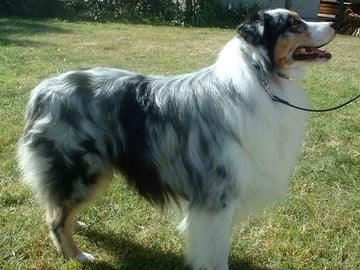
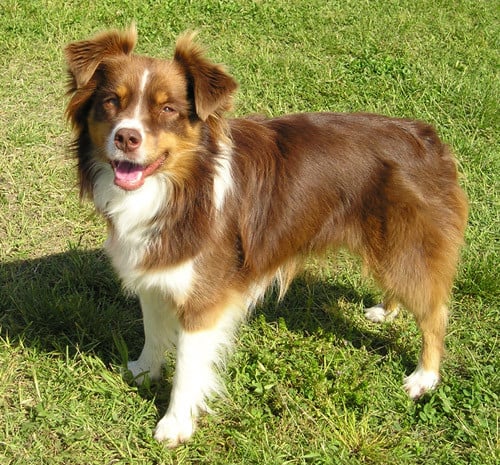
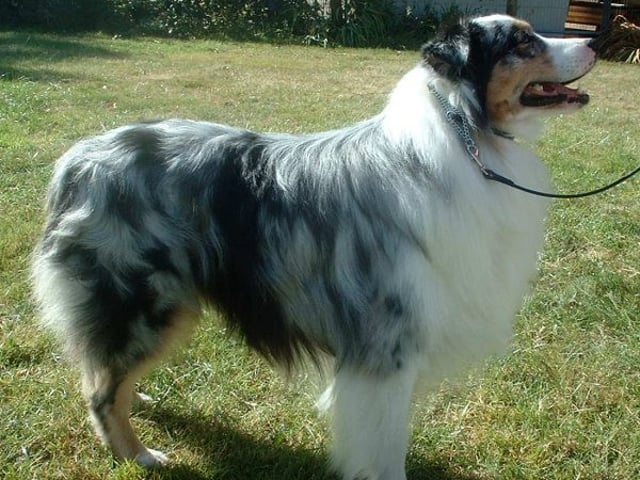
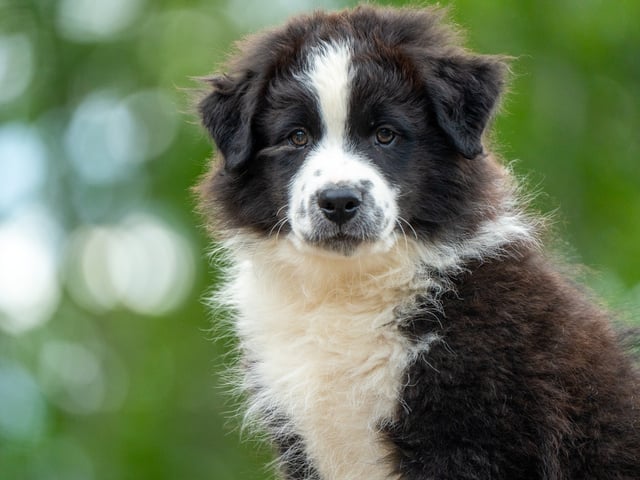
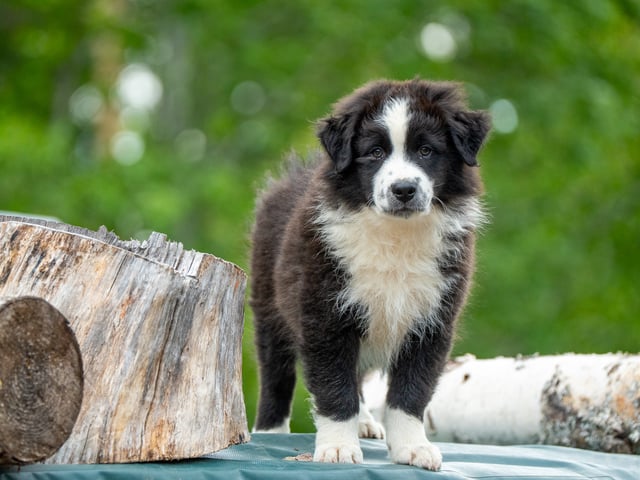
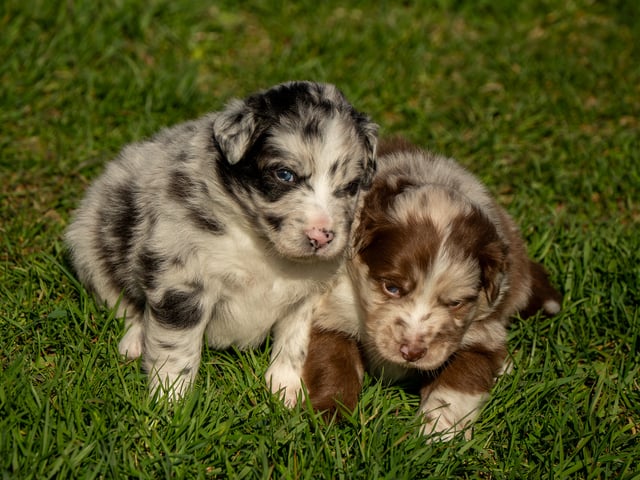
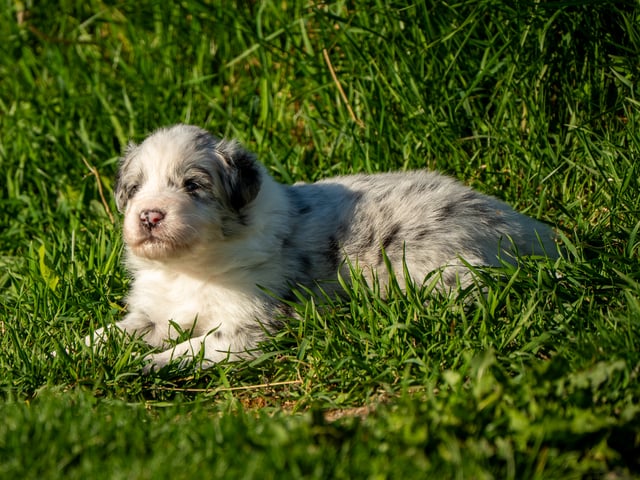
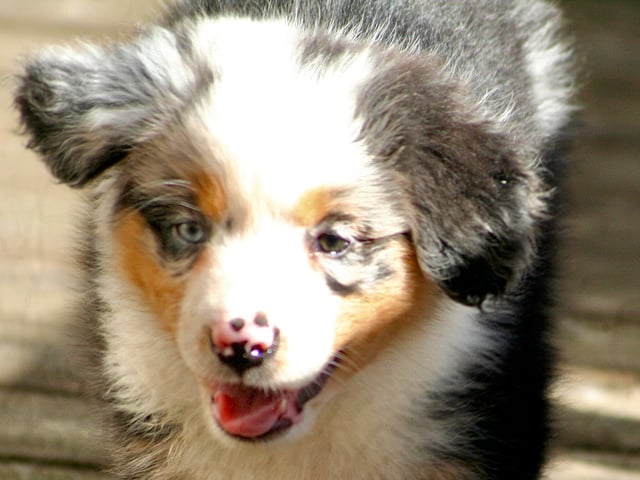
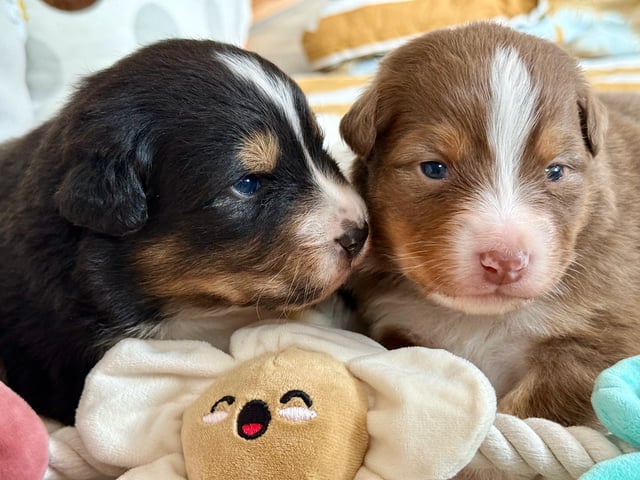
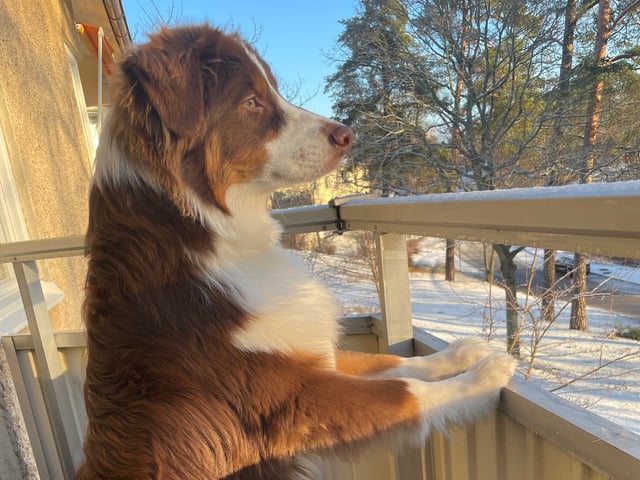
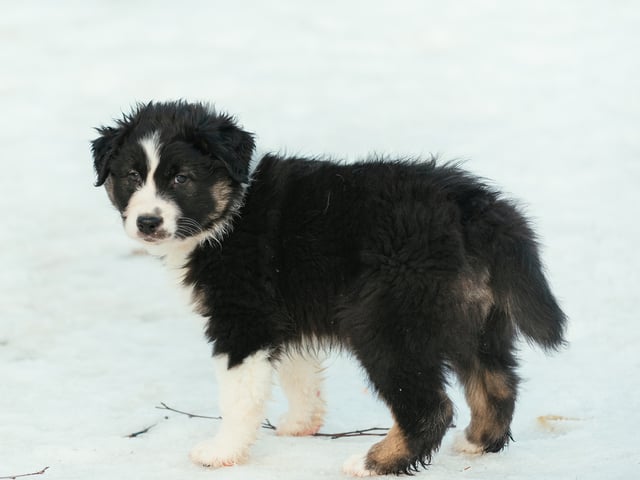
- The coat is medium-length, weather-resistant and has an undercoat. The base colours are blue merle, black, red merle and red, with or without white markings and tan points.
- The tail may be naturally long or short. Tail docking is prohibited in Sweden.
- An Australian Shepherd needs daily physical activity, problem-solving, co-operation and opportunities to settle.
- For Swedish breeding dogs, official hip dysplasia (HD) status and known mental status through an MH assessment are key checks. MH records reactions; it is not a pass-or-fail test.
¶Appearance & Coat
The Australian Shepherd is a medium-sized, well-balanced and mobile dog that should be slightly longer than tall. It should be muscular and solid without becoming heavy or clumsy, because its construction must allow quick changes of direction and sustained work. The standard specifies desirable height but no ideal weight. Assess an adult by its proportions, body condition, movement and function rather than relying on a weight range said to come from the standard.
The coat is straight to wavy, medium-length and weather-resistant. The amount of undercoat varies with factors including climate and season. A correct coat needs regular combing and closer checks during shedding, but not an identical weekly schedule for every dog. Feel through the coat to the skin and pay particular attention to areas where friction can easily cause tangles, such as behind the ears and in the feathering. Check the skin, paws and nails at the same time after work in woodland or rough ground.
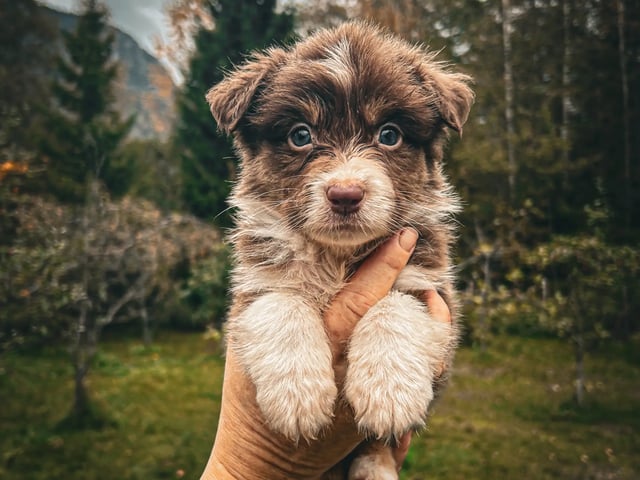
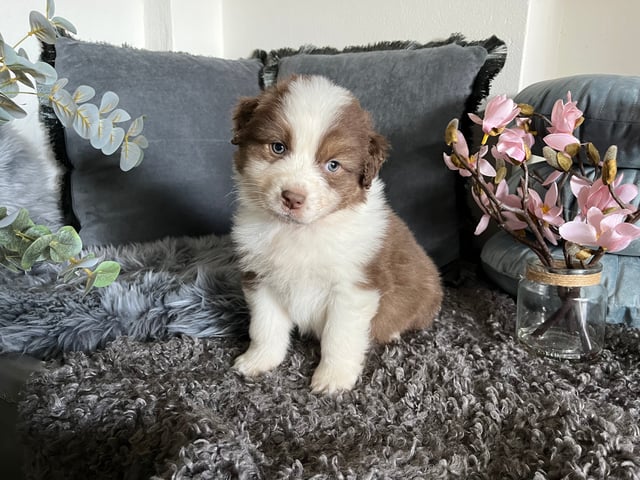
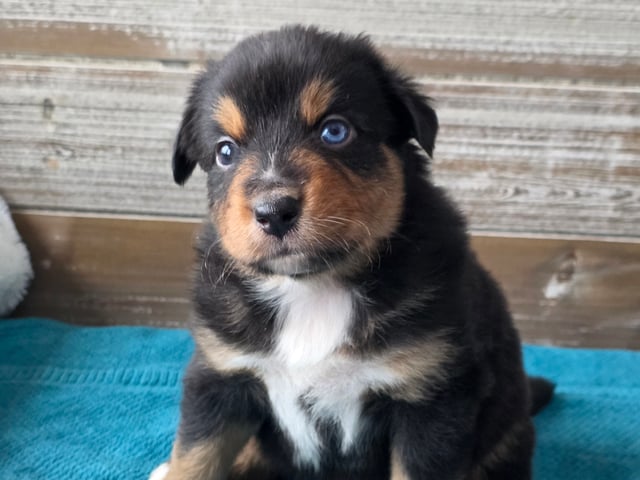
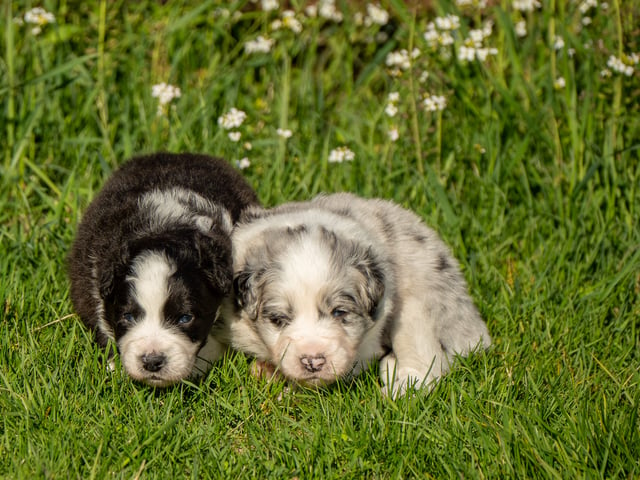
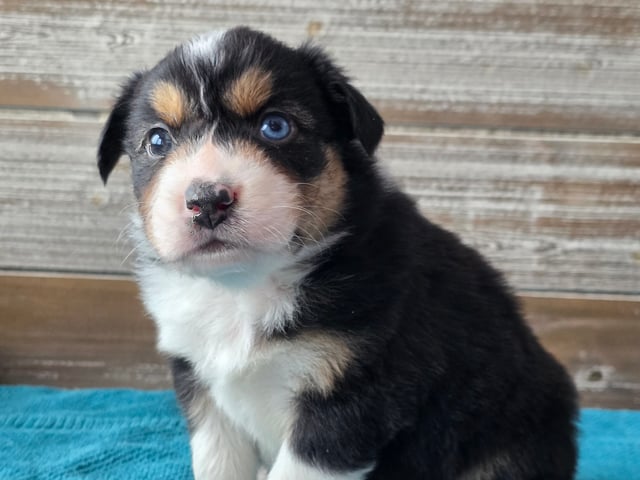
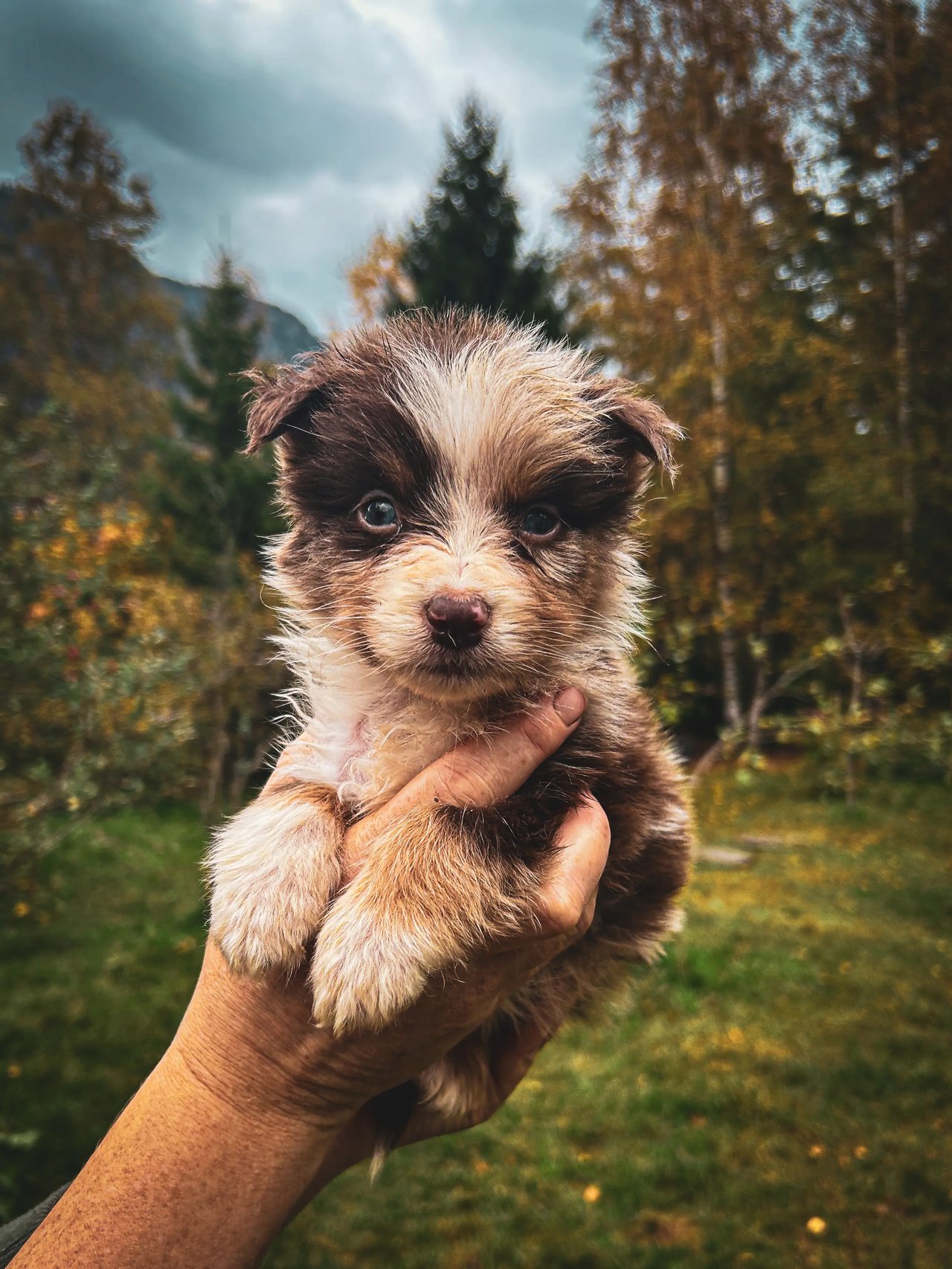
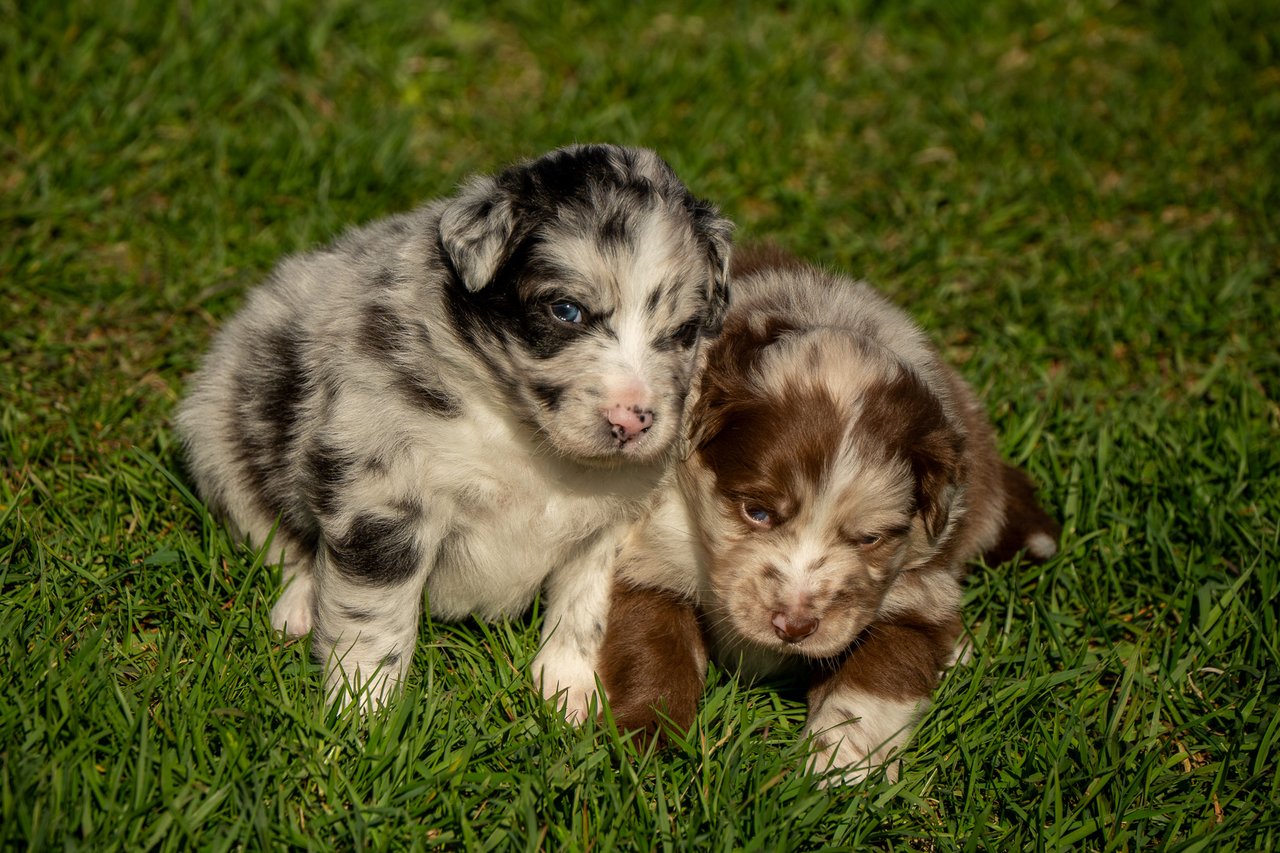
The four base colours are blue merle, black, red merle and red. All may occur with or without white markings and tan points. Eyes may be brown, blue or amber, including combinations, flecks and marbling. Different-coloured eyes are therefore permitted and, by themselves, say nothing about the dog's temperament.
The tail may be naturally long or naturally short. The latter is often called NBT, natural bobtail, and must not be confused with a docked tail. The Swedish Kennel Club registers the breed with a tail designation showing whether the dog has a full-length tail, a bobtail, a tail shorter than normal, no tail or a docked tail. For a puppy buyer, the registration entry is better evidence than guessing from a photograph.
¶Temperament & Personality
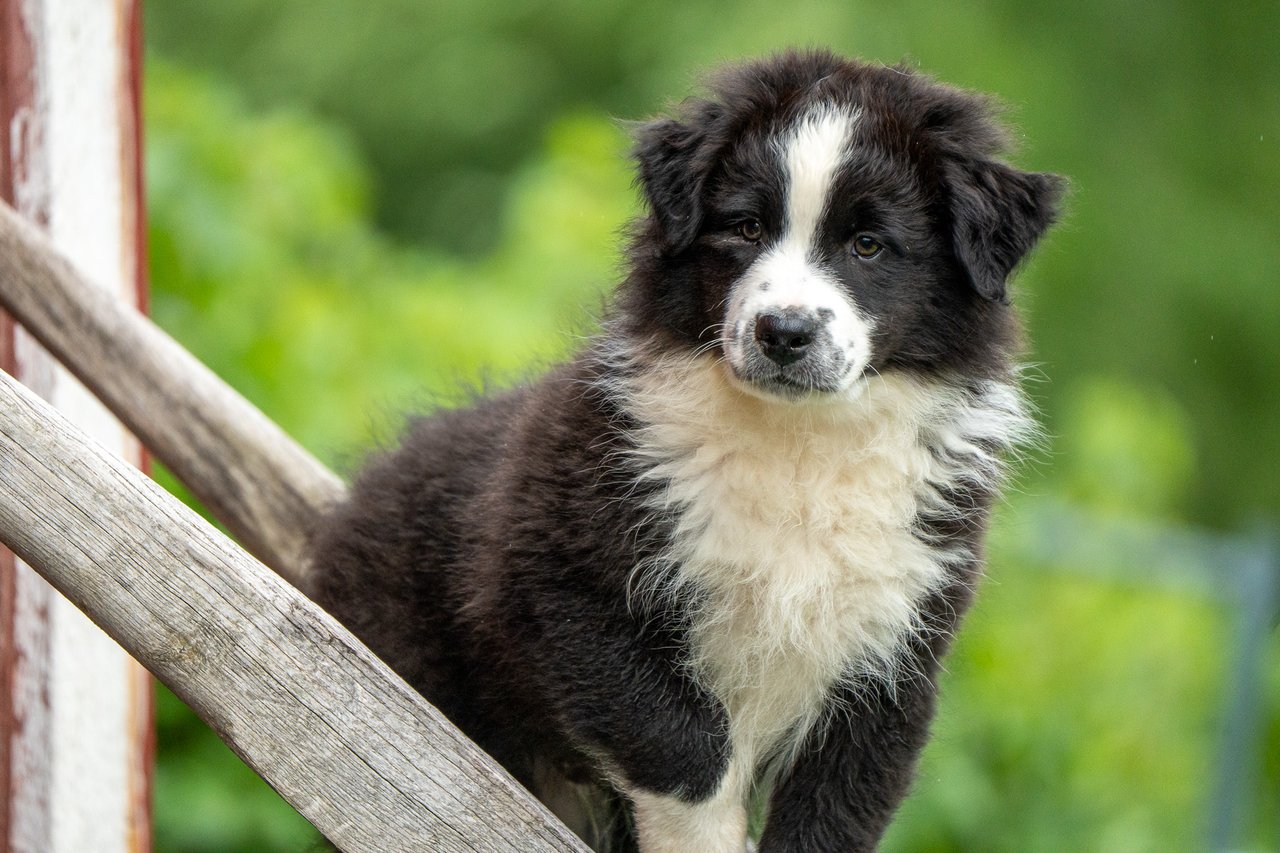
According to the breed standard, the Australian Shepherd should be an intelligent working dog with strong herding and guarding instincts, an even disposition and a good-natured manner. It may be reserved when first meeting strangers, but breed-typical neutrality is not the same as fear or aggression. The Swedish Australian Shepherd Club therefore emphasises that neutral is a clearer term than reserved.
There is considerable variation between individuals and families. Some dogs work very intensely in relation to people and their surroundings, while others are more balanced in everyday life; the strength of herding, guarding, sound reactions and social interest can also differ. Labels such as working line or show line are not enough to predict a puppy's temperament. Look instead at the parents, mature close relatives, the breeder's goals, working records and documented mental assessments.
As a herding dog, the breed uses its body and movement to control livestock. This can produce a strong interest in things that move. In daily life, a dog may want to follow, stop or control running children, bicycles, joggers or other animals. This is a possible breed trait, not something every Australian Shepherd does and not an excuse to let the behaviour continue. Distance, a lead or barrier, a trained alternative and rewards for checking in make the situation safer while the skill is being taught.
MH is particularly useful when comparing breeding dogs and relatives. The assessment records how a dog reacted to contact, handling, play, surprises, noise and gunshots, among other things. It cannot on its own predict how a puppy will develop, and it does not measure the whole of working ability. Read the full record and ask how the dog behaves and recovers in ordinary environments.
¶Training & Exercise
An Australian Shepherd needs both movement and tasks involving scent work, problem-solving and co-operation every day, but a fixed number of hours does not describe what an individual dog needs. A calm woodland walk, tracking or searching, everyday obedience, herding, working trials, agility and other well-planned training place different demands on the dog. Adapt volume and intensity to age, health, previous conditioning and recovery.
A manageable daily life requires more than making the dog physically tired. Prioritise the following from an early age:
- engagement and responsiveness even when something is moving nearby,
- recall, first practised in an easy setting and secured with a long line when needed,
- loose-lead walking, handling and the ability to wait,
- a clear transition between activity and calm,
- the ability to disengage from following or controlling children, vehicles and animals.
Training should be reward-based, progressive and adapted to the individual. The breed often learns quickly, which also means accidentally rewarded habits can become established quickly. Make the desired behaviour easy to choose, increase difficulty gradually and do not use fear, threats or physical punishment.
Puppies and young dogs need movement, environmental experience, rest and short learning sessions, not an adult dog's workload or an exercise schedule based on a fixed number of minutes. The aim is a dog that can work with commitment, remain responsive and then settle. If activity increases while the dog finds it harder to sleep, relax or cope with everyday stimuli, the plan needs reviewing rather than simply adding more speed.
¶Health
For a Swedish puppy buyer, the crucial distinction is between binding registration rules, breed-club recommendations and optional DNA tests. Under the current Swedish Kennel Club rules, official hip dysplasia status is required before mating and, for resident Swedish breeding dogs covered by the rules, known mental status through a complete MH assessment is also required. Known status does not automatically mean a good hip result or a desirable mental profile; check the actual result.
In its breed-specific breeding strategy, SASK generally recommends hip grades A or B and an eye examination for breeding dogs. The club also highlights the value of checking hip results in close relatives because the breed has no hip index. Elbow dysplasia (ED) screening is voluntary and is not a specific registration requirement for the breed. Ask the breeder to show what was actually examined, on which dog, on what date and with what result rather than accepting the phrase health tested.
DNA tests are available for CEA, HSF4 and MDR1, among others, but SASK does not prescribe one universal panel for every mating. Each test concerns a particular gene or risk variant. A clear HSF4 result, for example, does not rule out every form of cataract and does not replace a clinical eye examination. Relevant tests are selected according to documented risks in the family and the planned mating.
MDR1, also called ABCB1, can affect how certain medicines are distributed in the body and reach the brain. An individual dog's status cannot be determined from its appearance. If the dog has been tested, the result should be recorded in its veterinary notes; medicine selection and dosage always belong with the veterinarian.
Two merle dogs should not be mated. The combination can produce puppies with two copies of the merle variant and an increased risk of deafness and visual or eye abnormalities. The naturally short NBT tail has a different genetic basis. SASK recommends caution with matings in which both parents carry the NBT variant as well, but the two issues should not be confused.
¶History & Origins
Despite its name, the Australian Shepherd as it is known today was developed in the United States. The FCI standard links the name to Basque shepherds who came to the United States from Australia during the nineteenth century. The precise contribution of older herding dogs is less certain, so a detailed account of a fixed breed recipe should be treated as theory.
American sheep and cattle farmers continued selecting dogs for versatility, independent work, intelligence and herding ability. After the Second World War, awareness of the breed grew as Western riding, rodeos, horse shows, films and television reached a wider audience. The modern breed's American ranch background explains both the paradox in its name and why function remains central to its description.
¶Living with the Breed
The Australian Shepherd is best suited to a routine that includes planned activity, learning and recovery even during ordinary working weeks. A large garden does not replace shared tasks, and competition ambitions are unnecessary if the dog still has a meaningful and varied life. Anyone wanting a dog that mainly joins shorter walks should choose a less demanding type.
With children, an adult should always be present, the dog needs an undisturbed resting place and the household needs a plan for high-energy play. Interrupt and create distance before the dog begins to fixate on or control movement. Children should not be responsible for situations in which a quick, strong dog may react to its surroundings.
Living with dogs or cats depends on the individuals and the introduction, not the breed name. Find out about the parents' and the particular dog's history. Begin calmly with separate safe spaces, a barrier and a lead, give the cat an unobstructed escape route and progress only when both animals can remain relaxed. Small pets may require permanent physical separation.
The breed can live in a flat if it gets enough time outdoors, meaningful tasks and rest, and the owner can manage reactions to noise. In a building with poor sound insulation, owners need to prevent noises in shared areas from prompting the dog to guard and bark. Time alone should be trained gradually and judged by the individual dog's behaviour. The Swedish Board of Agriculture's advice to take a dog out at least every six hours during the day is an outing guideline, not a measure of how long an individual is comfortable being alone.
Before buying a puppy, ask for the parents' registration numbers, hip results, full MH records, dates and results of eye examinations, and relevant DNA results. Also check the tail designation and working achievements, and ask how mature close relatives behave around people, noise, movement, rest and recovery. Those details say more about what daily life with the dog is likely to be like than colour, eyes or whether the breeder calls the dogs working-line or show-line.
¶Ominaisuudet
¶Usein kysytyt kysymykset
Ovatko australianpaimenkoirat hyviä perhekoiria vai ovatko ne liian energisiä useimpiin koteihin?
Ne voivat olla erinomaisia perhekoiria, kun ne saavat riittävästi liikuntaa ja virikkeitä. Niiden energisyys ja paimennusvietti voivat kuitenkin olla liikaa hyvin vähän liikkuville perheille, etenkin jos perheessä on pieniä lapsia, joita koira saattaa jahdata tai näykkiä. Rotu sopii yleensä paremmin aktiivisille perheille, jotka nauttivat koiran kouluttamisesta, retkeilystä ja koiraurheilusta. Johdonmukaiset säännöt ja varhain aloitettu koulutus ovat tärkeitä kaikissa kodeissa.
Kuinka paljon liikuntaa australianpaimenkoira oikeasti tarvitsee päivittäin?
Useimmat aikuiset koirat tarvitsevat päivittäin vähintään 1–2 tuntia liikuntaa sekä säännöllistä aivotyötä, kuten koulutusta, hajuleikkejä tai paimennuksen kaltaista tekemistä. Lyhyt kävelylenkki ei riitä tälle rodulle. Jos koira ei pääse purkamaan energiaansa, sille kehittyy usein ongelmakäytöstä, kuten haukkumista, tavaroiden pureskelua tai pakonomaisia tapoja.
Lähteekö australianpaimenkoirista paljon karvaa, ja millaista turkinhoitoa ne tarvitsevat?
Niistä lähtee karvaa kohtalaisesti tai runsaasti, ja karvanlähtöaikoina karvaa voi irrota erittäin paljon. Harjaaminen useita kertoja viikossa auttaa poistamaan irtokarvaa ja ehkäisee takkuja etenkin korvien takana, jalkojen alaosissa ja takapäässä olevissa hapsuissa. Satunnainen pesu riittää, jos turkkia harjataan säännöllisesti. Karvaa siistitään yleensä vain tassuista ja intiimialueilta koko turkin leikkaamisen sijaan.
Sopivatko australianpaimenkoirat kerrostaloasuntoon vai tarvitsevatko ne oman pihan?
Ne voivat asua kerrostaloasunnossa, kunhan ne saavat päivittäin runsaasti liikuntaa ja ohjattua tekemistä kodin ulkopuolella. Piha on hyödyksi lyhyissä leikkihetkissä, mutta se ei korvaa kunnon liikuntaa tai aivojumppaa. Ilman näitä ne alkavat ahtaissa tiloissa herkemmin metelöidä, ahdistua tai tuhota paikkoja.
Mitkä ovat australianpaimenkoirien yleisimmät terveysongelmat?
Rodulla esiintyy alttiutta useille perinnöllisille sairauksille, kuten lonkka- ja kyynärniveldysplasialle, tietyille silmäsairauksille ja epilepsialle. Monissa sukulinjoissa esiintyy myös MDR1-geenimutaatiota, joka vaikuttaa tiettyjen lääkeaineiden käsittelyyn elimistössä. Vastuulliset kasvattajat tutkivat koiransa nivel- ja silmäsairauksien sekä perinnöllisten sairauksien varalta ja kertovat omien sukulinjojensa erityisistä riskeistä. Säännölliset eläinlääkärintarkastukset ja koiran pitäminen hoikkana auttavat vähentämään nivel- ja aineenvaihduntaongelmien haittoja.
Mikä on australianpaimenkoirien MDR1-geeni ja miksi se on tärkeä?
MDR1 on geenimutaatio, joka vaikuttaa siihen, miten joidenkin paimenkoirarotujen elimistö käsittelee tiettyjä lääkkeitä, kuten eräitä matolääkkeitä sekä ripulin tai syövän hoitoon käytettäviä lääkkeitä. Koirille, joilla on tämä mutaatio, tavallisetkin lääkeannokset voivat aiheuttaa vakavia tai jopa hengenvaarallisia reaktioita. Yksinkertaisella DNA-testillä voidaan selvittää, onko koiralla mutaatio. Omistajan on tärkeää kertoa testitulos eläinlääkärille, jotta lääkkeet ja annostukset voidaan valita turvallisesti.
Ovatko australianpaimenkoirat alttiita silmäongelmille, kuten harmaakaihille tai näön heikkenemiselle?
Niillä on tavallista suurempi riski sairastua useisiin silmäsairauksiin, kuten perinnölliseen harmaakaihiin, collien silmäanomaliaan (CEA) ja etenevään verkkokalvon surkastumaan (PRA). Kaikki koirat eivät sairastu, mutta nämä sairaudet voivat heikentää näköä tai johtaa sokeutumiseen. Jalostuskoirien silmät tulee tutkituttaa säännöllisesti silmäsairauksiin erikoistuneella eläinlääkärillä. Omistajan tulee ottaa viipymättä yhteyttä eläinlääkäriin, jos koiran silmissä näkyy samentumia, koira siristelee silmiään tai sen näössä ilmenee muutoksia.
Tulevatko australianpaimenkoirat hyvin toimeen muiden koirien ja lemmikkien kanssa?
Ne voivat olla seurallisia ja leikkisiä muiden koirien kanssa, etenkin jos ne on sosiaalistettu hyvin jo pentuina. Jotkut yksilöt saattavat paimentaa muita lemmikkejä esimerkiksi kiertämällä niiden ympärillä, jahtaamalla tai tuuppimalla niitä, mistä kaikki eläimet eivät pidä. On tärkeää tutustuttaa eläimet toisiinsa huolellisesti, valvoa niiden yhdessäoloa ja opettaa koiralle käskyjä, joilla liiallisen innokkaan paimentamisen saa keskeytettyä. Pienten eläinten kanssa on syytä olla varovainen ja huolehtia tilanteiden hallinnasta.
Kuinka voimakas australianpaimenkoirien paimennus- ja näykkimisvietti on, etenkin lasten seurassa?
Paimennusvietti on usein voimakas ja voi ilmetä jahtaamisena, kiertämisenä, kantapäiden näykkimisenä tai liikkumisen estämisenä omalla keholla. Kun lapset juoksevat, tällainen käytös voidaan tulkita virheellisesti aggressiivisuudeksi, tai se voi vahingossa johtaa kaatumisiin. Varhain aloitettu koulutus, jossa tämä energia ohjataan toivottuun käyttäytymiseen, sekä ohjattu leikki ja selkeät säännöt auttavat paljon. Myös lapsille on opetettava, miten liikkua rauhallisesti ja kohdella koiraa kunnioittavasti.
Mitä minun tulisi tietää australianpaimenkoirien merlevärityksestä ja jalostuksesta?
Merle on rodussa yleinen ja näyttävä turkin värikuvio, mutta kahden merlevärisen koiran parittaminen lisää huomattavasti riskiä, että pennut syntyvät kuuroina tai sokeina tai niillä on vakavia silmien kehityshäiriöitä. Vastuulliset kasvattajat välttävät kahden merlevärisen koiran yhdistämistä ja osaavat selittää jalostusvalintojensa geneettiset perusteet. Merleväristen koirien omistajien on myös hyvä tietää, että osa silmä- ja kuulo-ongelmista voi ilmetä vasta myöhemmin, ja tarkkailla niiden hienovaraisiakin merkkejä.
¶Vertailu muihin rotuihin
Vertaa rotua australianpaimenkoira muihin rotuihin ja katso erot luonteessa, aktiivisuudessa ja hoidossa ennen kuin teet valintasi. Näytä kaikki vertailut