
¶Sisällysluettelo
¶Quick Facts
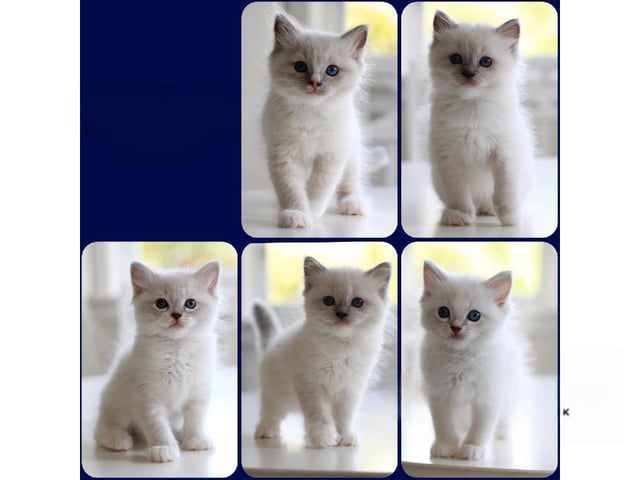
The Ragdoll is a large, slow-maturing and often sociable cat from the United States. The breed is commonly described as calm and curious, but its name does not guarantee that an individual will want to sit on laps or be carried. Personality, previous experiences and how the cat feels at the time always matter.
- Size: An adult Ragdoll often weighs around 4–9 kg. Sex, build and body condition make a substantial difference, so the number on the scale must be considered alongside body condition.
- Maturity: Ragdolls develop slowly and may need three to four years to reach full physical maturity.
- Coat: The medium-long to long, soft coat needs regular combing. A thorough check about once a week is a reasonable starting point, although a denser coat may need more attention.
- Activity: A calm manner does not mean that the cat can be inactive. It needs daily predatory play, places to scratch, elevated areas, hiding places and social contact on its own terms.
- Health: HCM is the most important breed-specific health issue to clarify before buying. The DNA test for the R820W variant and cardiac ultrasound provide different information and do not replace one another.
- Best suited to: A home that can offer companionship without forcing it, sturdy furnishings for a large cat, and a plan for coat care, play and weight monitoring.
¶Appearance & Coat
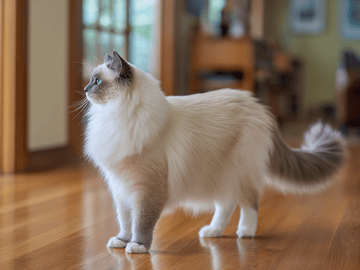
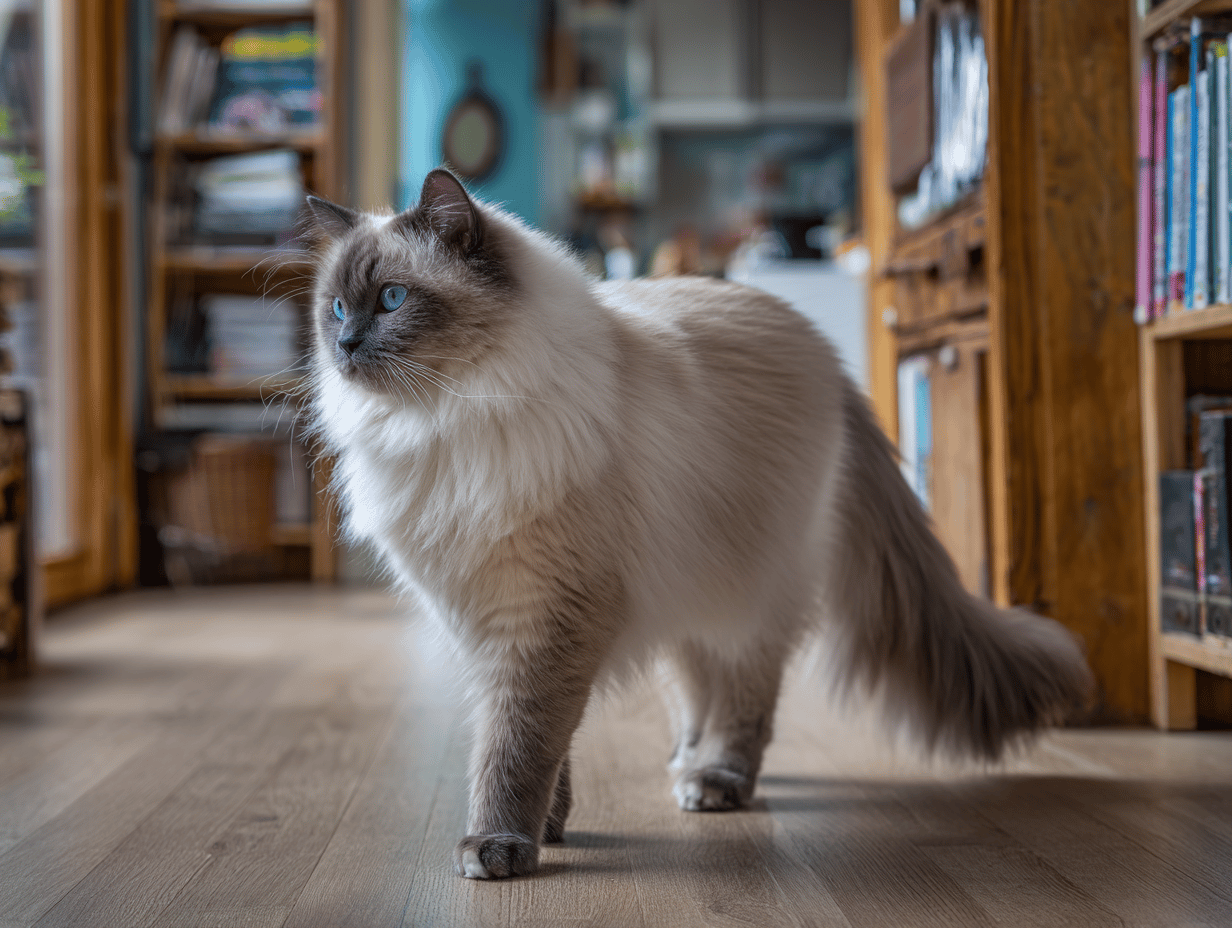
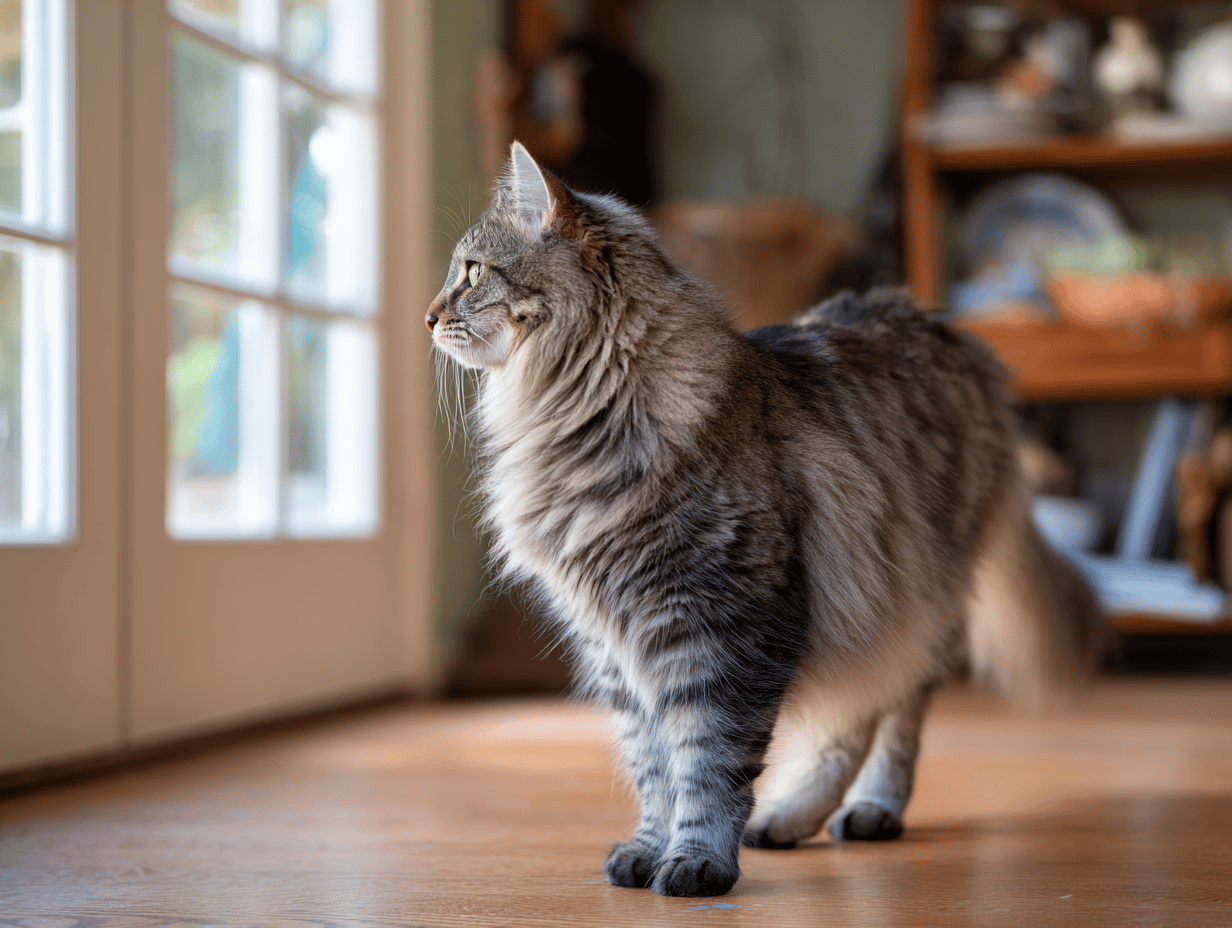
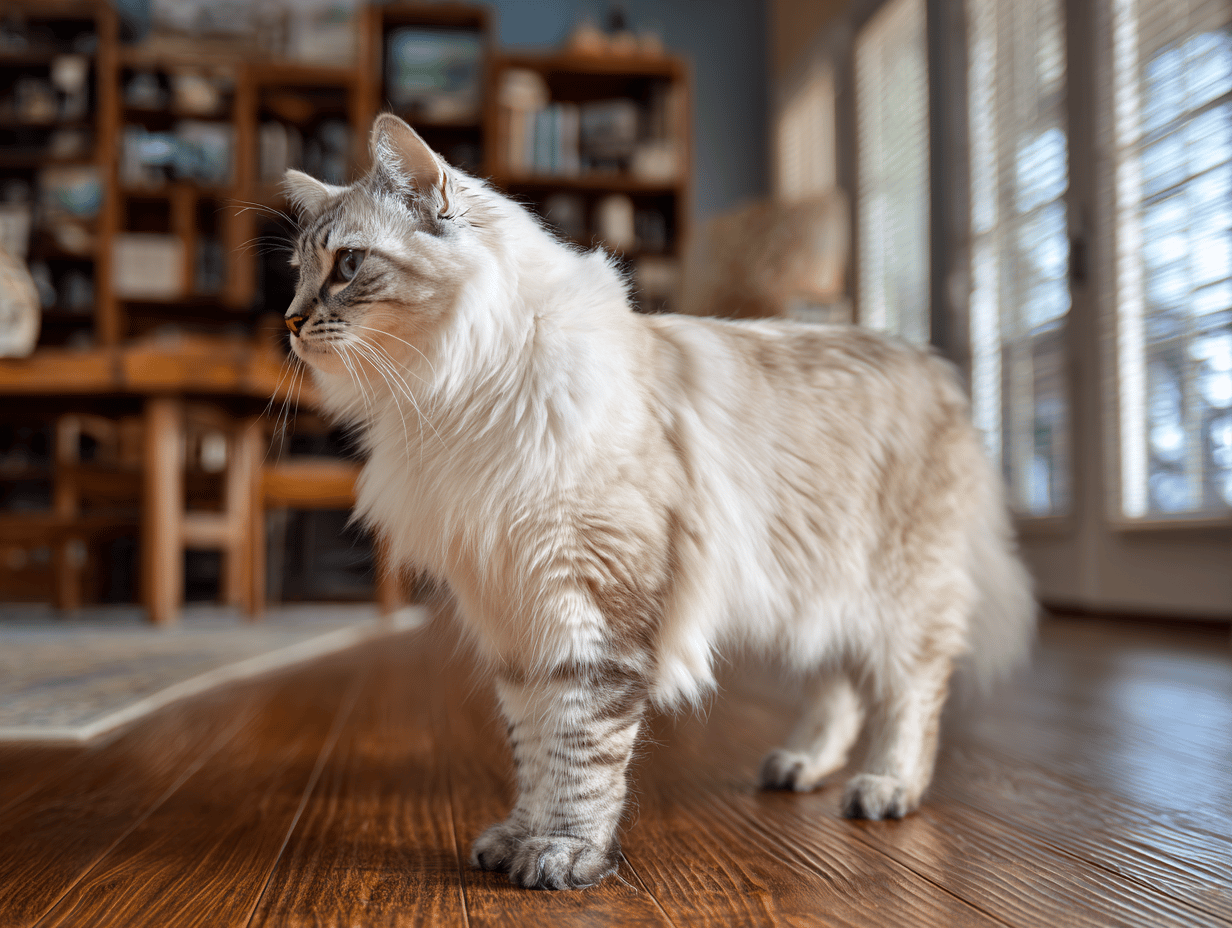
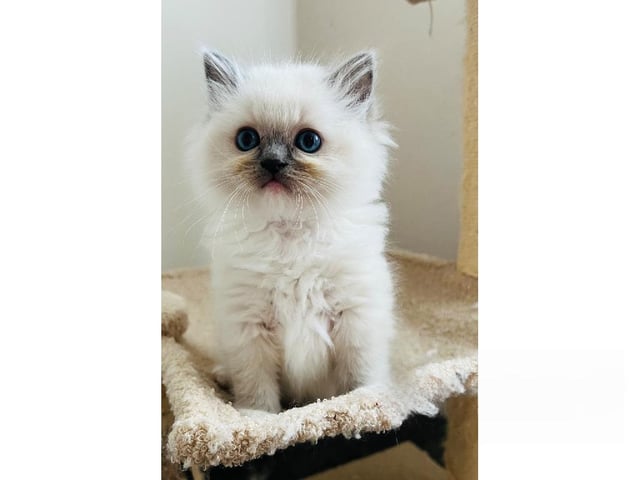
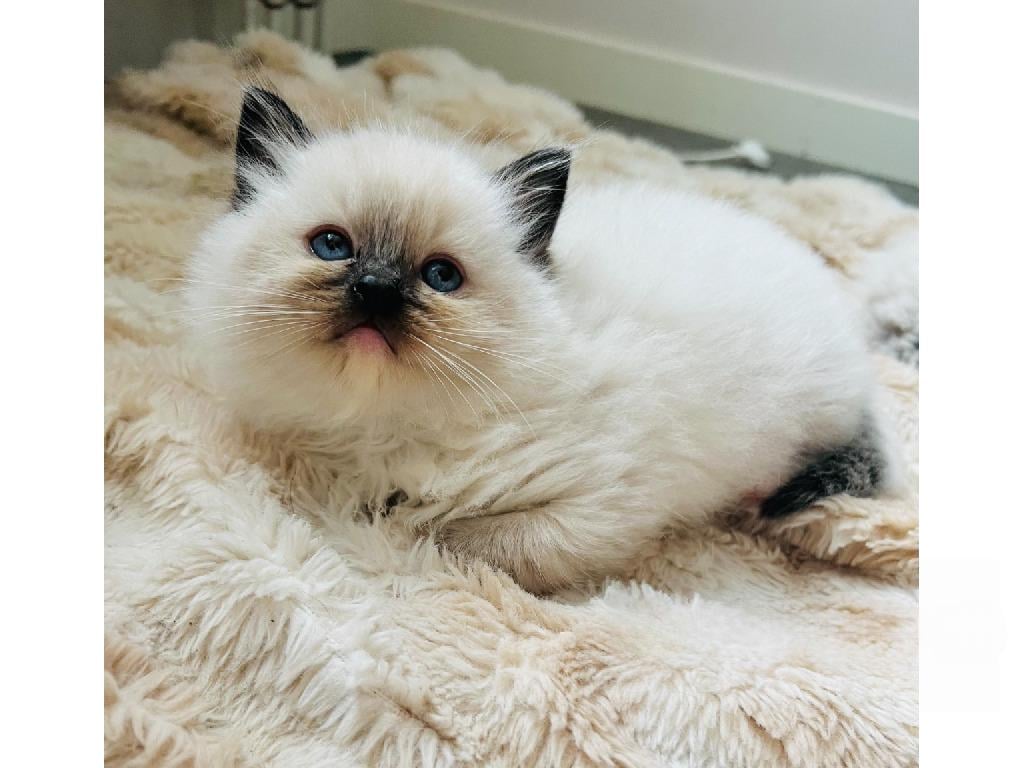
The Ragdoll is a large, powerful and muscular cat with a long body, blue eyes and a softer overall expression than its size might suggest. Females are often smaller than males, and young cats should not be judged as if they were fully developed. It is normal for the chest, head and musculature to continue developing for several years.
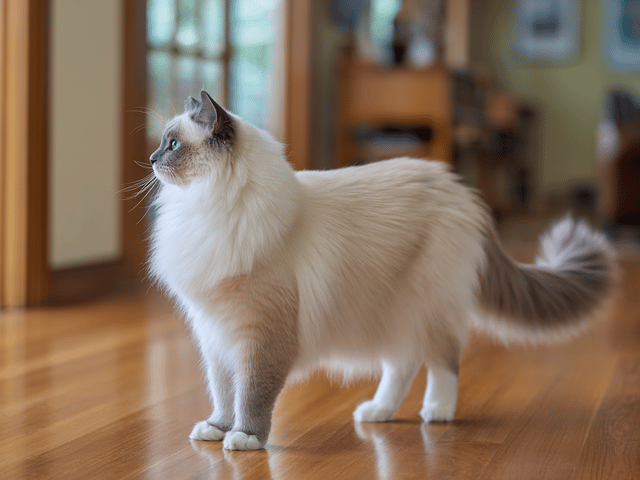
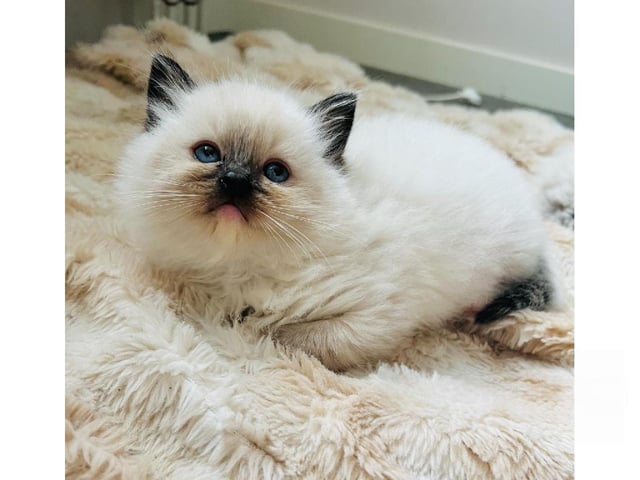
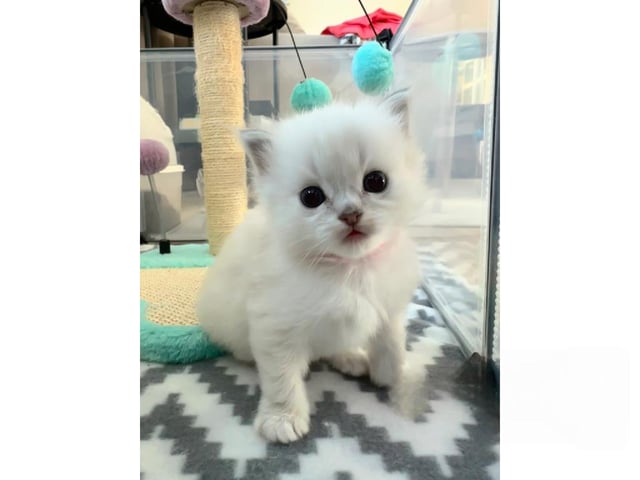
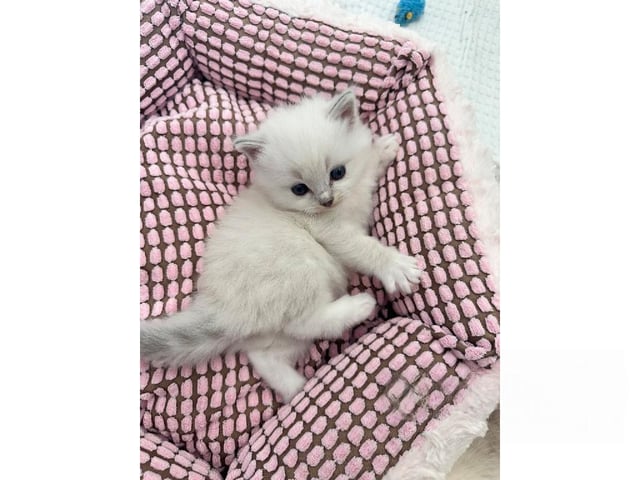
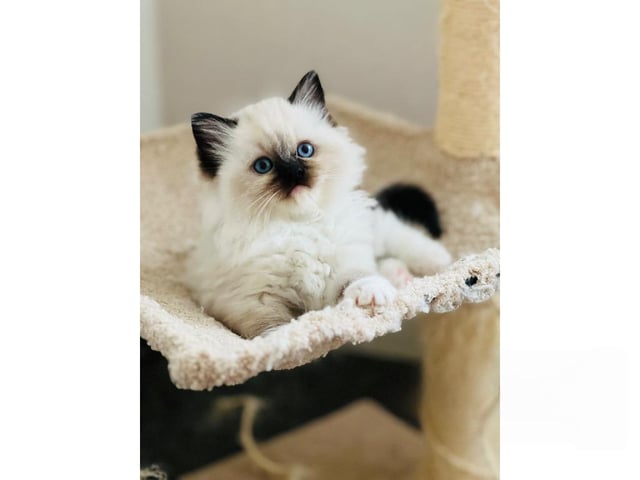
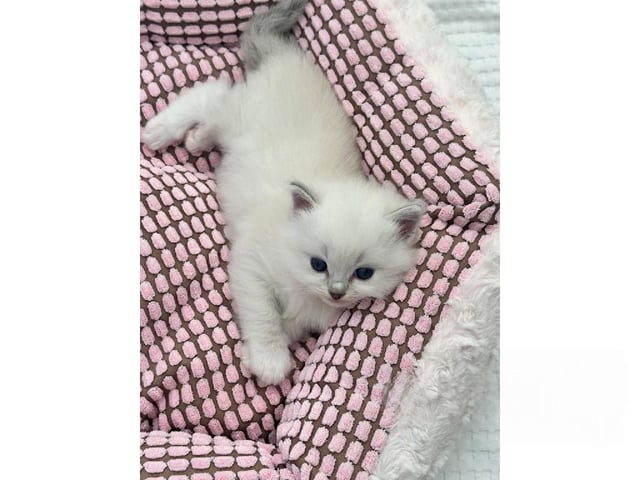
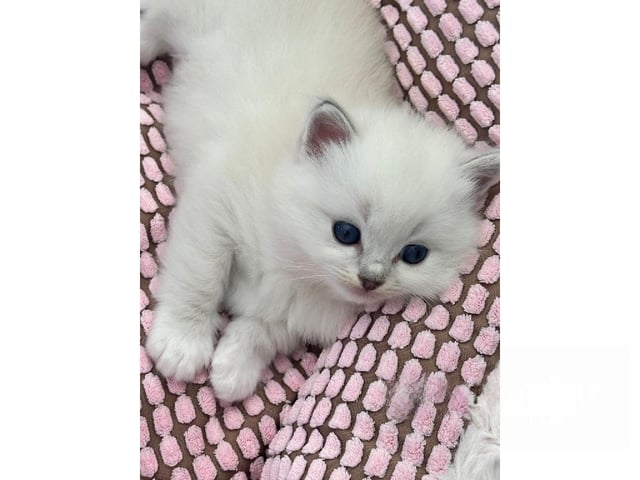
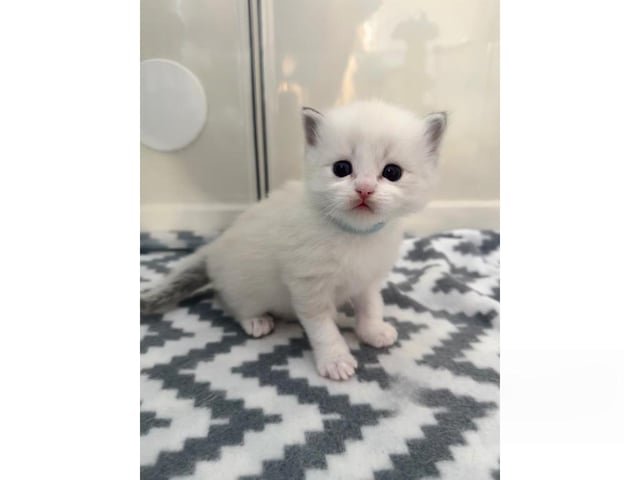
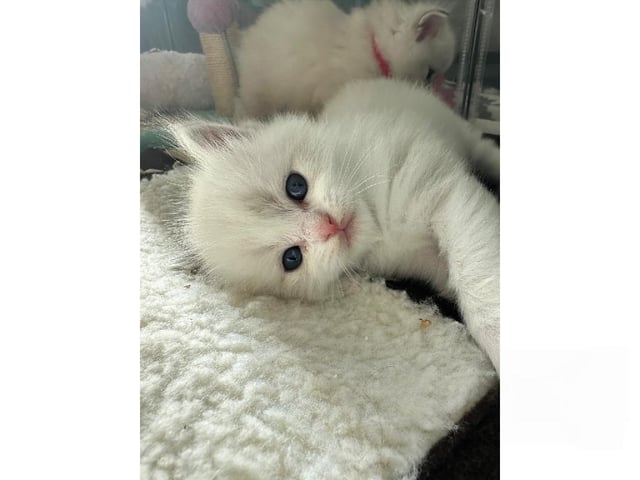
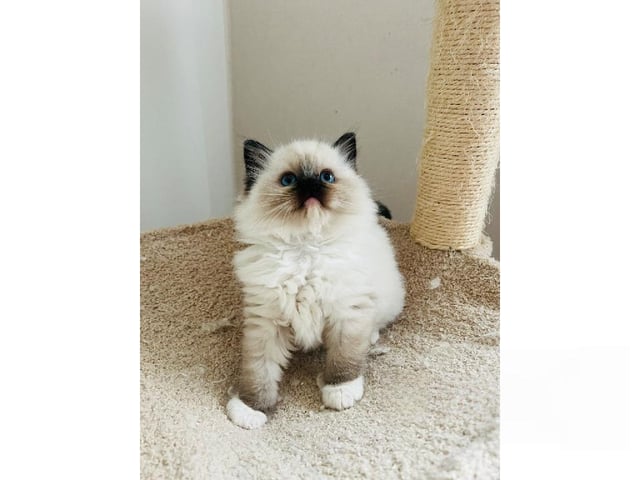
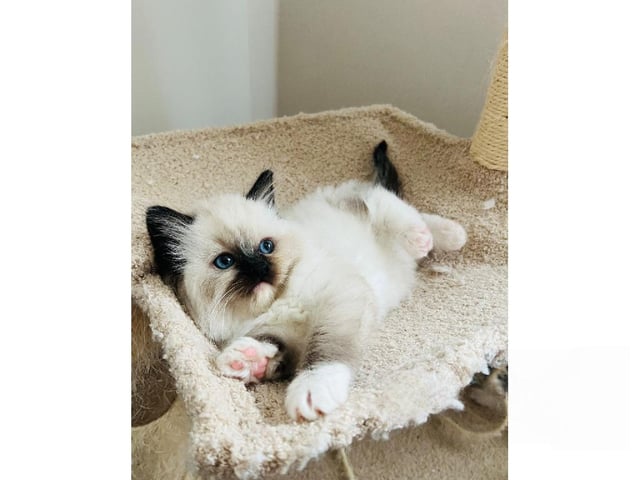
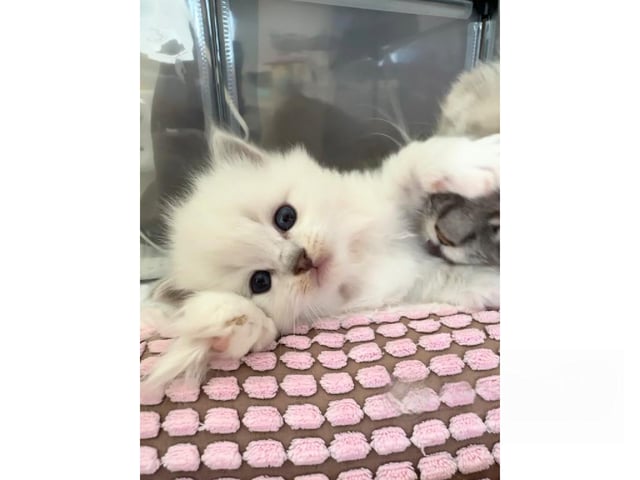
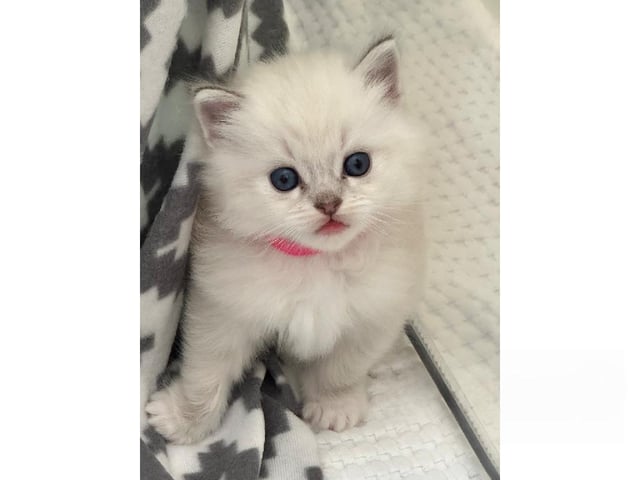
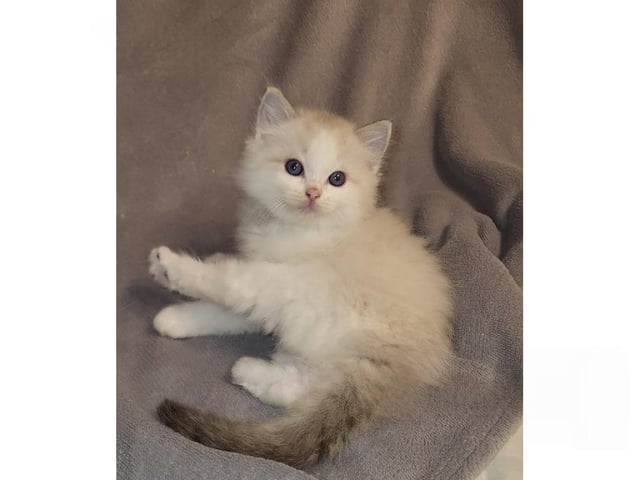
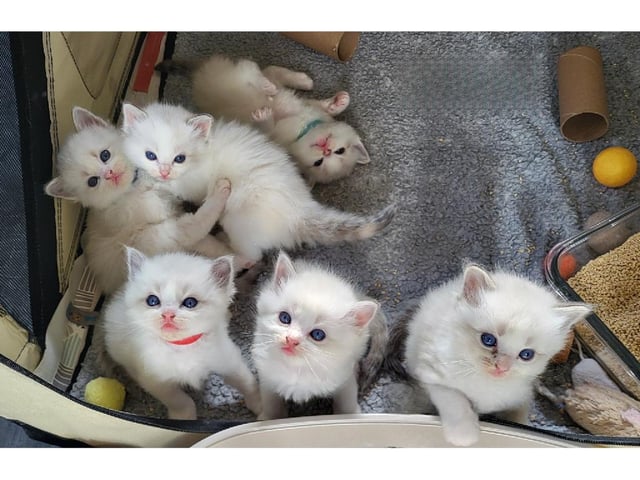
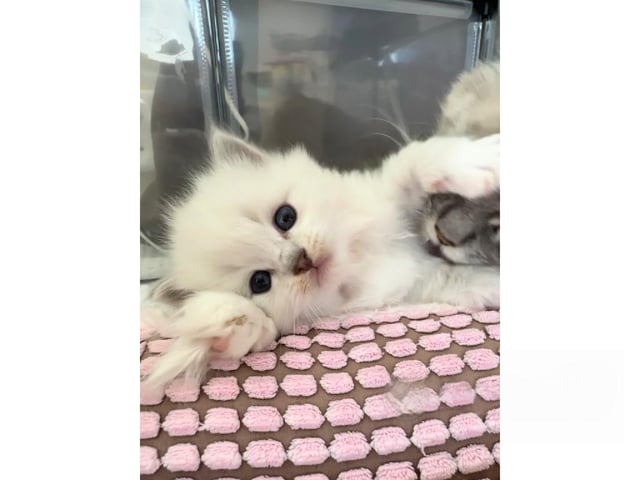
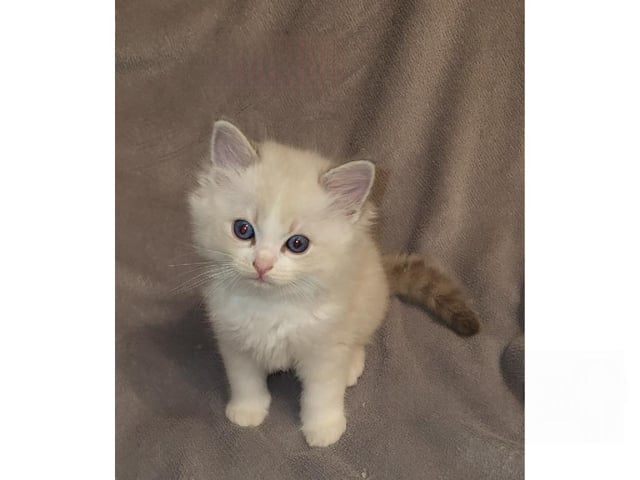
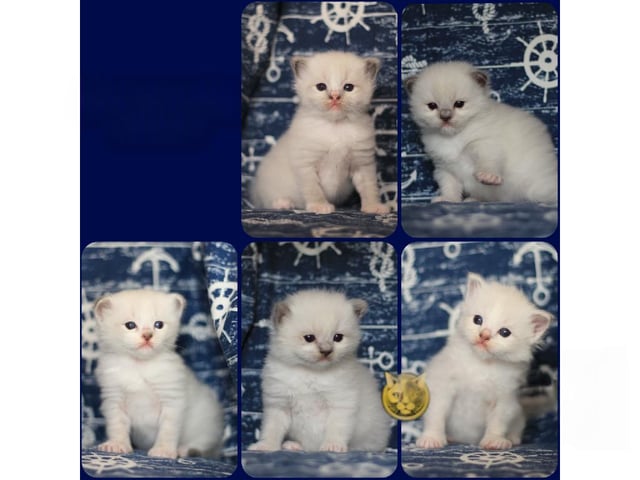
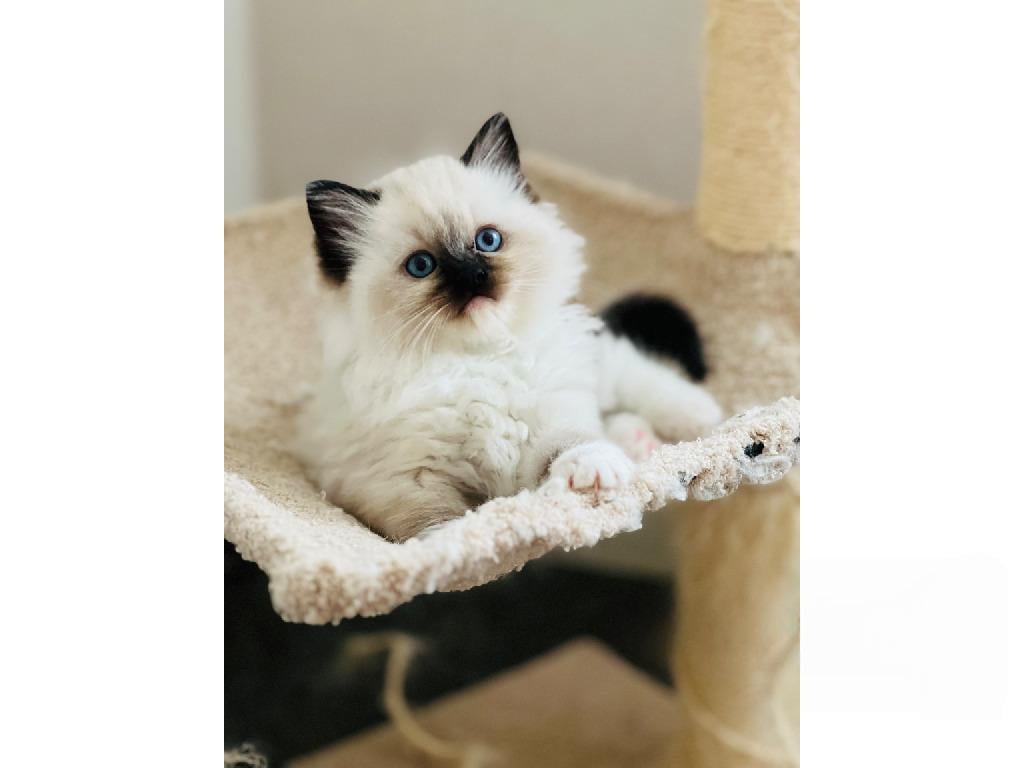
The breed is pointed, which means that the face, ears, legs and tail carry more colour than the warmer parts of the body. The pigment is temperature-sensitive, so kittens are born very pale and their colour develops later. The breed standard distinguishes three patterns:
- Colourpoint: darker points without white areas.
- Mitted: a pointed cat with white paws and a white chin; other white markings are defined by the standard.
- Bicolour: more white on the face and body, often with an inverted white V on the face.
The coat is medium-long to long, soft and silky. It can be easier to maintain than the coat of some other long-haired cats, but it is not maintenance-free. Comb through the entire coat regularly and increase the frequency if tangles start to form. Bathe the cat when its coat needs it, not according to a fixed schedule for the breed. Introduce the cat gradually to a comb, claw checks and other handling, and stop before it becomes distressed.
¶Temperament & Personality
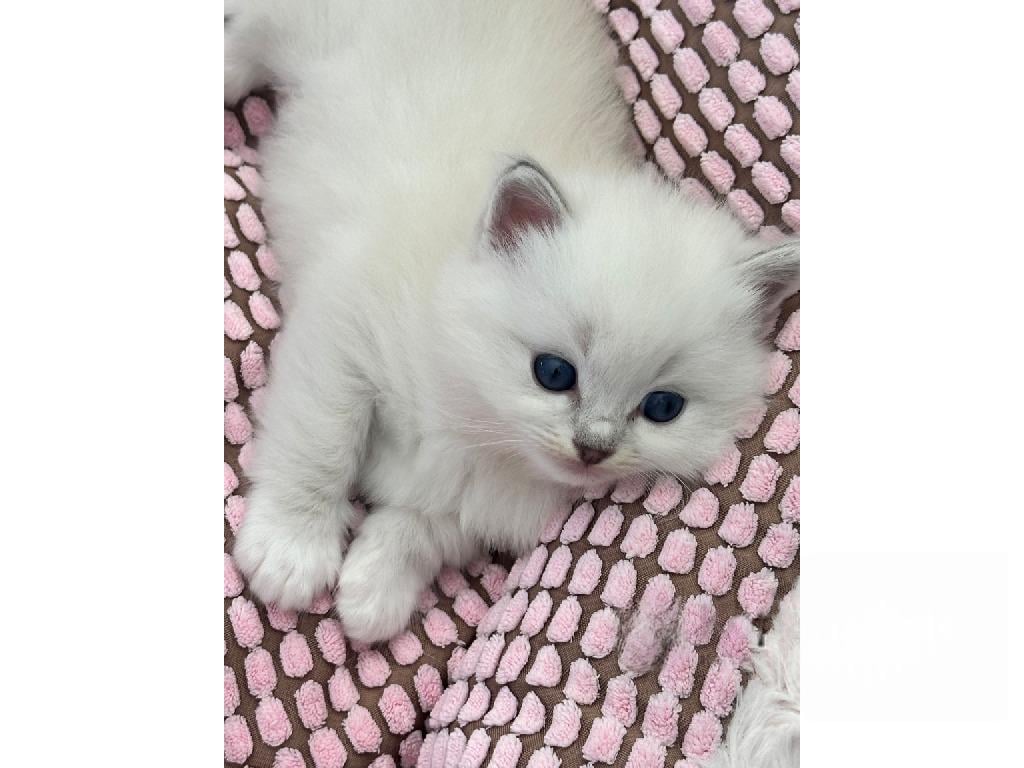
Ragdolls are often calm, quiet, curious and interested in staying close to their family. This is a useful description of the breed, but not a promise of a particular personality. A Ragdoll can be sociable without being a lap cat, and even a confident cat may want to decide when physical contact starts and ends.
The breed name comes from the tendency of some individuals to relax when lifted. It must not be taken to mean that every Ragdoll likes being carried, and the claim that the breed is insensitive to pain is false. Only lift a cat when it is comfortable with this, support both the front and hindquarters, and put it down when it wants to leave. For children, the most important rule is therefore not that the breed is “tolerant”, but that contact is calm, voluntary and supervised. A child must allow the cat to walk away and never treat it as a toy.
When meeting an adult cat or kitten, look at the actual individual. Does it seek contact after first being given space, recover after a new experience, and settle without hiding or becoming demanding? Such observations say more about daily life than labels such as “dog-like” or “perfect family cat”.
¶Training & Exercise
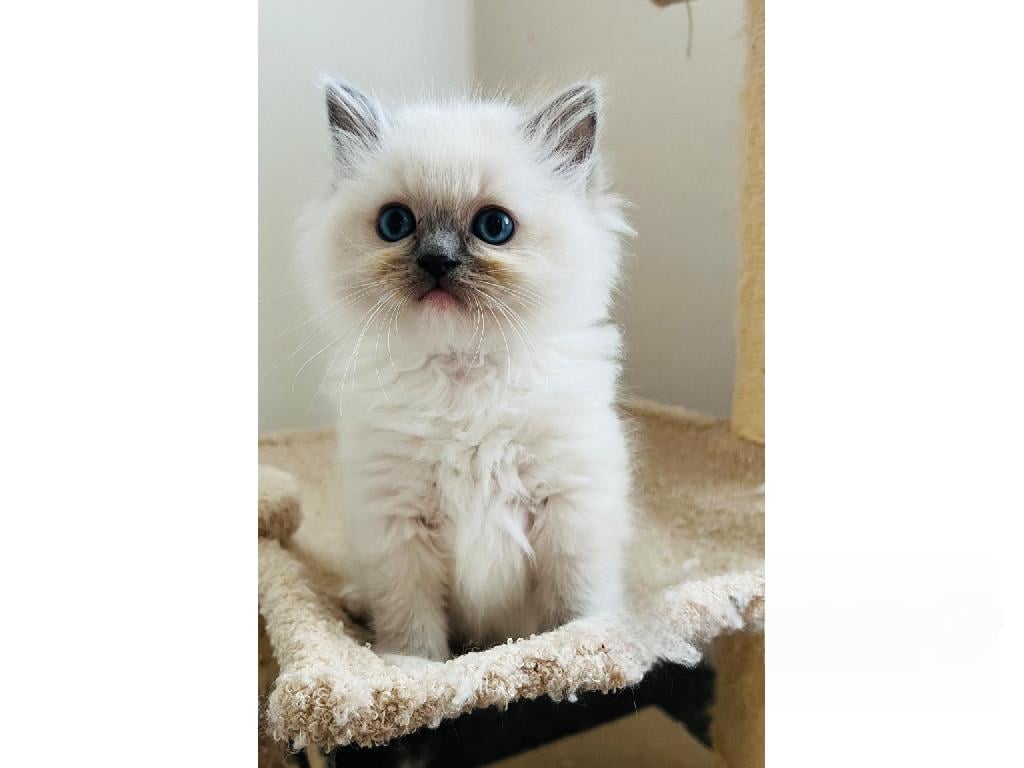
Ragdolls need regular movement and mental stimulation, even though the breed is rarely described as intense. The goal is not a universal number of minutes but for the cat to have daily opportunities to climb, scratch, search, stalk, chase and catch in ways suited to its age and health.
Provide stable scratching furniture and resting places that can support a large adult cat. Distribute resting places, water, food, litter trays and activities instead of gathering everything in one location. Short hunting-style play sessions with a toy kept away from hands, food-search games and simple problem-solving can be varied according to the cat's response. A kitten may want more frequent and vigorous play, whereas an older cat may need lower heights, better grip and gentler movements.
Reward-based training is practical for the carrier, claw trimming, weighing and veterinary visits. Begin with a small step the cat accepts, reward calm behaviour and increase the difficulty gradually. Forced handling can make the next occasion harder. If activity changes suddenly, or the cat avoids jumping and playing, pain or illness should be ruled out rather than explaining the change as part of the breed's calm temperament.
¶Health
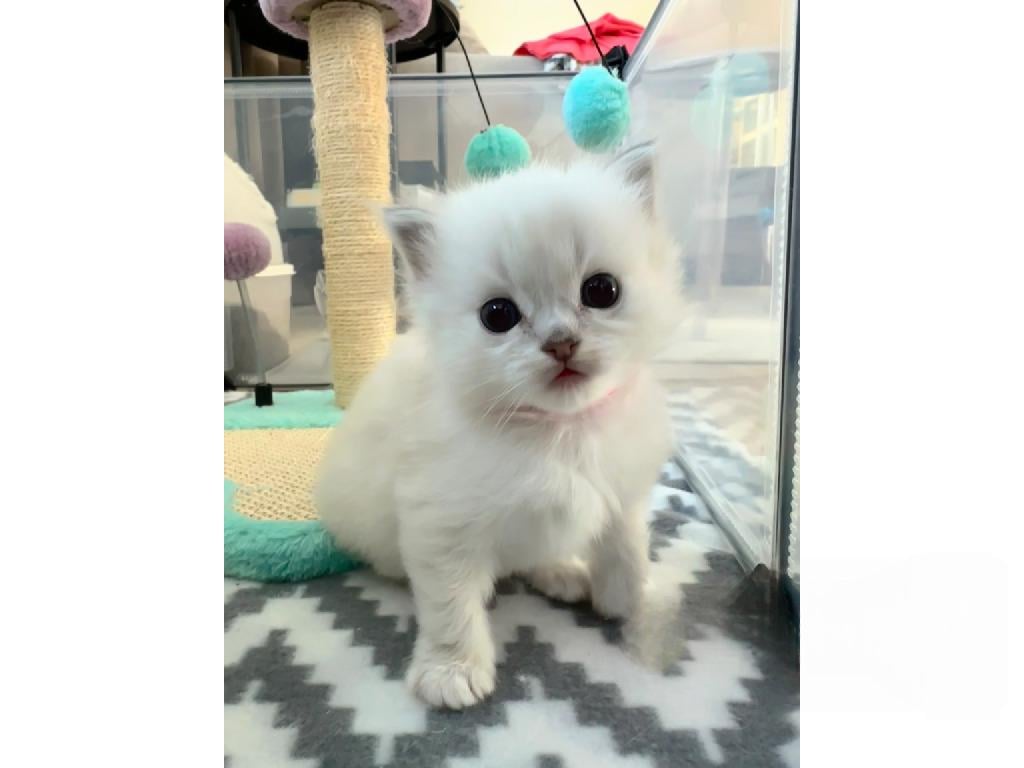
Ragdolls can live long lives, but neither a breed name nor a single genetic test is a health guarantee. A lifespan of around 12–17 years is a broad guide, and an individual cat's life is affected by factors including inherited traits, preventive care, environment, diet and accident risk.
HCM: separate DNA results from a heart examination
Hypertrophic cardiomyopathy, HCM, causes the heart muscle to thicken. Ragdolls have a documented variant, R820W in the MYBPC3 gene, that is associated with increased risk. A DNA test can show whether a cat carries that particular variant. A negative result, often written as N/N, does not rule out HCM from other causes.
Cardiac ultrasound answers a different question: what the heart actually looks like at the time of examination. Because changes can develop over time, both the cat's age and the examination date matter. Ask the breeder to show test and examination reports that identify the cat to which each result belongs. Ask which DNA tests and cardiac ultrasounds were performed, when they were performed and how the results are used in the breeding programme. A claim that a line is “HCM-free” should not replace documentation.
Kidneys and weight
The Swedish Ragdoll club does not identify a particular kidney disorder as characteristic of the breed, but it recommends renal ultrasound for breeding cats as part of its health programme. Do not confuse a renal ultrasound with a PKD1 DNA test, and do not assume that the availability of a test in a laboratory catalogue proves a general breed risk. Instead, ask which examination was performed, on which cat, what the result was and why that method was chosen.
Because the Ragdoll is large and its coat hides the body outline, kilograms alone are a poor measure of an appropriate weight. Monitor the ribs, waist, abdominal line and muscle mass together with a veterinarian's assessment. A gradual change in weight or loss of muscle is more informative than comparison with another Ragdoll.
¶History & Origins
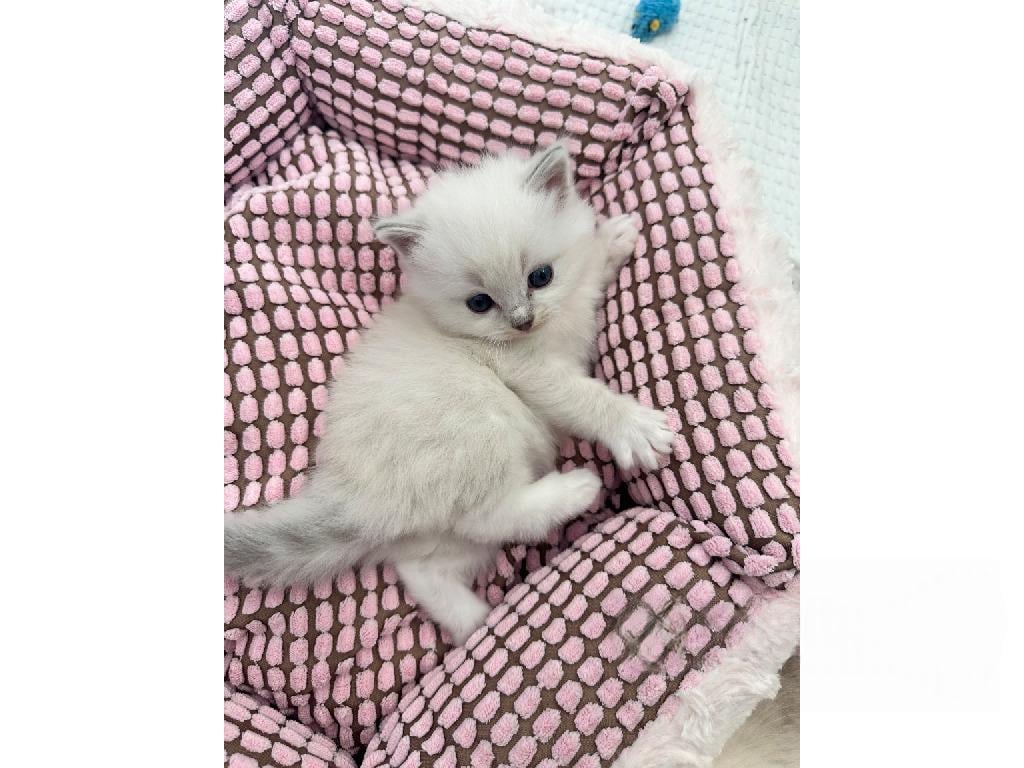
The Ragdoll was developed by Ann Baker in Riverside, California, during the 1960s, with the white cat Josephine as an important foundation cat. This is the reliable core of the breed's early history. Many more dramatic stories were repeated later, particularly that a road accident changed Josephine's genes or made her offspring unusually relaxed. There is no support for treating that story as a genetic explanation of the breed's temperament.
The breed was developed further by selecting cats for the desired appearance and temperament. FIFe granted the Ragdoll full recognition in 1991, and the first Ragdoll was registered with SVERAK in 1992. The modern breed standard describes a large, pointed cat with blue eyes in colourpoint, mitted or bicolour patterns. The history therefore explains the breed's name and development, but it must not be used to predict how every individual will respond to handling.
¶Living with the Breed
Ragdolls can do well in a flat or a house when the environment provides choice, movement and security. The fact that the breed is often kept indoors does not reduce its need to climb, hide, scratch and rehearse hunting through play. An indoor cat therefore needs vertical space, hiding places, scratching surfaces and multiple locations for rest, food, water and toileting. Secure windows and balconies. If the cat is to go outdoors, choose the arrangement according to traffic, predators, infection risk and the cat's experience; an enclosed outdoor area or harness can provide controlled access.
Many Ragdolls seek human company, but a safe amount of time alone cannot be calculated from breed alone. Swedish animal welfare guidance states that a cat must be checked at least twice a day, but this is a minimum level of supervision and not a promise that a sociable individual will cope well with long, repeated days alone. Observe how the cat eats, plays, rests and seeks contact. A second cat is not an automatic solution: the relationship must work, and each cat needs its own separated resources.
Introduce new animals slowly. Begin with separate safe areas and scent exchange, proceed to brief meetings through a barrier and let the cat set the pace. When introducing a dog, keep the dog under control and always give the cat a clear escape route upwards or to a dog-free room. Do not leave them unsupervised until their interactions are stable.
When buying in Sweden, check the cat's identity, pedigree, vaccination and veterinary inspection certificates, written contract and the health records cited by the breeder. A SVERAK-registered kitten is normally transferred no earlier than 14 weeks; transfer from 12 weeks requires veterinary approval under the federation's exception rule. The minimum age under Swedish law is 12 weeks when the transfer conditions are met, which is not the same as SVERAK's main rule. The cat must also be identified and registered by four months of age. Check the original documents and make sure that identification numbers, names and dates belong to the correct cat and parent animals.
¶Ominaisuudet
¶Usein kysytyt kysymykset
Ovatko ragdollit todella niin rentoja ja velttoja kuin sanotaan?
Monet rentoutuvat sylissä aivan veltoiksi ja suhtautuvat käsittelyyn poikkeuksellisen rennosti ja kärsivällisesti, mistä rodun nimikin juontuu. Kaikki yksilöt eivät kuitenkaan heittäydy täysin veltoiksi, ja pennut ovat usein aikuisia aktiivisempia ja vähemmän rauhallisia. Niiden rauhallinen luonne on perinnöllinen, mutta myös sosiaalistaminen ja ympäristö muovaavat sitä.
Tulevatko ragdollit hyvin toimeen lasten ja muiden lemmikkien kanssa?
Ne ovat yleensä lempeitä, kärsivällisiä ja ihmisläheisiä, minkä vuoksi ne sopivat usein hyvin perheisiin, joissa lapset osaavat kohdella eläimiä kunnioittavasti. Ne tulevat tavallisesti hyvin toimeen muiden ystävällisten kissojen ja jopa rauhallisten koirien kanssa, kunhan tutustuminen tapahtuu vähitellen. Luottavaisen luonteensa vuoksi ne tarvitsevat ihmisen huolehtimaan siitä, etteivät leikit ylly liian rajuiksi ja että yhdessäolo pysyy turvallisena.
Kuinka paljon ragdollin turkki oikeastaan tarvitsee hoitoa?
Puolipitkä turkki on silkkinen, eikä siinä ole tiheää aluskarvaa. Siksi se takkuuntuu vähemmän kuin monien pitkäkarvaisten rotujen turkki, mutta vaatii silti säännöllistä hoitoa. Useimmille riittää harjaus kaksi tai kolme kertaa viikossa, karvanlähtöaikoina päivittäin. Erityistä huomiota kannattaa kiinnittää korvien taustoihin, kainaloihin ja kauluriin, jotta takkuja ja karvapalloja ei pääse muodostumaan.
Ovatko ragdollit todella vain sisäkissoja, ja miksi niitä suositellaan pidettäväksi sisällä?
Useimmat kasvattajat ja eläinlääkärit suosittelevat pitämään ne sisäkissoina, sillä ne ovat luottavaisia eivätkä osaa varoa ulkomaailman vaaroja. Ne eivät välttämättä pakene vaaraa, vaan saattavat lähestyä vieraita ihmisiä, liikennettä tai aggressiivisia eläimiä. Sisäelämä, jossa on tarjolla kiipeilypuita, leikkihetkiä ja katseltavaa ikkunasta, sopii yleensä hyvin niiden rauhalliselle ja seuraa kaipaavalle luonteelle.
Millaisille terveysongelmille ragdollit ovat alttiita?
Rodulla on kohonnut riski sairastua hypertrofiseen kardiomyopatiaan eli sydänlihaksen paksuuntumiseen, johon liittyy tunnettuja geenimuunnoksia. Rodun kissat voivat olla alttiita myös virtsarakkokiville ja hammassairauksille. Lisäksi ylipaino voi rasittaa niiden niveliä, kuten monilla muillakin suurikokoisilla kissoilla. On tärkeää valita kasvattaja, joka seuloo kissoiltaan sydänsairauksia, ja käyttää kissa säännöllisesti eläinlääkärin tarkastuksessa.
Kuinka suuriksi ragdollit kasvavat, ja milloin niiden kasvu päättyy?
Rotu kuuluu suurimpiin kissarotuihin: monet urokset painavat noin 7–9 kiloa, ja naaraat ovat hieman kevyempiä. Kasvu on hidasta ja tasaista, ja kissat saavuttavat usein täyden kokonsa ja turkkinsa vasta 3–4 vuoden iässä. Painoa on seurattava tarkasti, jotta suuri koko ei tarkoita liiallista rasvan kertymistä.
Ovatko ragdollit hypoallergeenisia tai sopivatko ne paremmin allergikoille?
Ne eivät ole hypoallergeenisia, vaan tuottavat kissan allergiaoireita aiheuttavia proteiineja. Jotkut kokevat saavansa tämän rodun kissoista hieman vähemmän oireita, mikä johtuu usein säännöllisestä turkinhoidosta ja sisällä elämisestä, mutta tämä on hyvin yksilöllistä. Allergisen kannattaa viettää aikaa saman sukulinjan aikuisten kissojen kanssa ennen kissan hankintapäätöstä.
Tarvitsevatko ragdollit paljon liikuntaa vai ovatko ne liian laiskoja leikkimään?
Ne ovat yleensä rauhallisia ja leppoisia, mutta tarvitsevat silti päivittäin yhteistä leikkiä pysyäkseen hyvässä kunnossa ja saadakseen virikkeitä. Lyhyet, keskittyneet leikkihetket huiskaleluilla, noutoleikit ja kiipeilymahdollisuudet sopivat niille hyvin. Ilman liikuntaa ne voivat lihoa, ja tylsistyminen voi näkyä liiallisena naukumisena tai huomion hakemisena.
Kuinka äänekkäitä ragdollit ovat, ja millaista luonnetta niiltä voi odottaa?
Niillä on yleensä hiljainen ääni, eivätkä ne tavallisesti ole yhtä puheliaita kuin monet muut rodut, vaikka yksilöiden välillä on eroja. Useimmat ovat hellyydenkipeitä ja ihmisrakkaita ja seuraavat mielellään omistajaansa huoneesta toiseen. Ne viihtyvät usein sylissä tai aivan vieressä, mutta jotkut ovat mieluummin lähellä kuin sylissä.
Minkä ikäisinä ragdoll-pentujen turkin väri ja silmien sininen sävy kehittyvät lopulliseen voimakkuuteensa?
Kissanpennut syntyvät lähes valkoisina, ja niiden naamioväritys kehittyy vähitellen ensimmäisten kuukausien aikana. Värikuvio erottuu yleensä selvästi 3–4 kuukauden iässä, mutta sävy syvenee edelleen noin 2–3 vuoden ikään asti. Silmien sininen väri näkyy jo varhain, mutta sen syvyys ja kirkkaus voivat vielä kehittyä pennun kasvaessa.
¶Vertailu muihin rotuihin
Vertaa rotua Ragdoll muihin rotuihin ja katso erot luonteessa, aktiivisuudessa ja hoidossa ennen kuin teet valintasi. Näytä kaikki vertailut