


¶Sisällysluettelo
¶Quick Facts
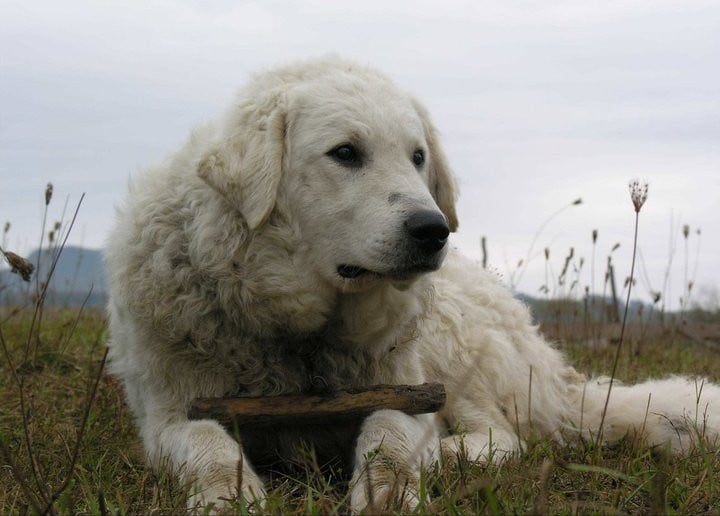
The Maremma Abruzzese Sheepdog is a large, white Italian pastoral breed whose main job is to guard flocks and property. It is therefore a livestock guardian, not a herding dog that gathers and moves sheep in response to a handler's signals. This distinction explains much of the breed's independence, alertness and tendency to make its own decisions.
- Origin and purpose: Italy; guardian of flocks and property in FCI Group 1.
- Size: males 65–73.5 cm and 40–52 kg; females 62–70 cm and 35–45 kg.
- Coat: long, abundant and fairly coarse white coat, with an undercoat that is particularly dense in winter.
- Temperament: affectionate with its owner and close family, but independent, observant and often reserved when strangers approach.
- Best suited to: an experienced dog owner who understands guarding behaviour, can begin socialisation early and has enough space to manage daily life safely.
This is rarely an easy choice for a first dog. Above all, its inherited guarding instinct requires planning. Meet several adult dogs and consider whether you can manage gates, visitors, neighbours and walks once the dog is fully grown.
¶Appearance & Coat
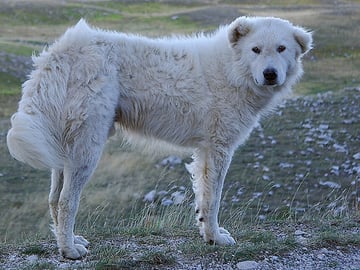
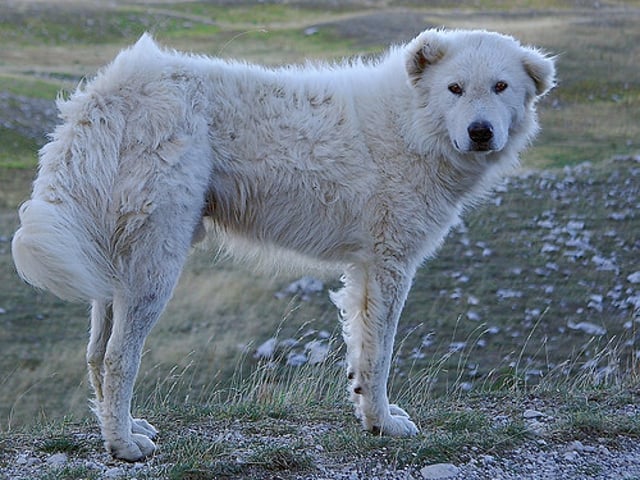
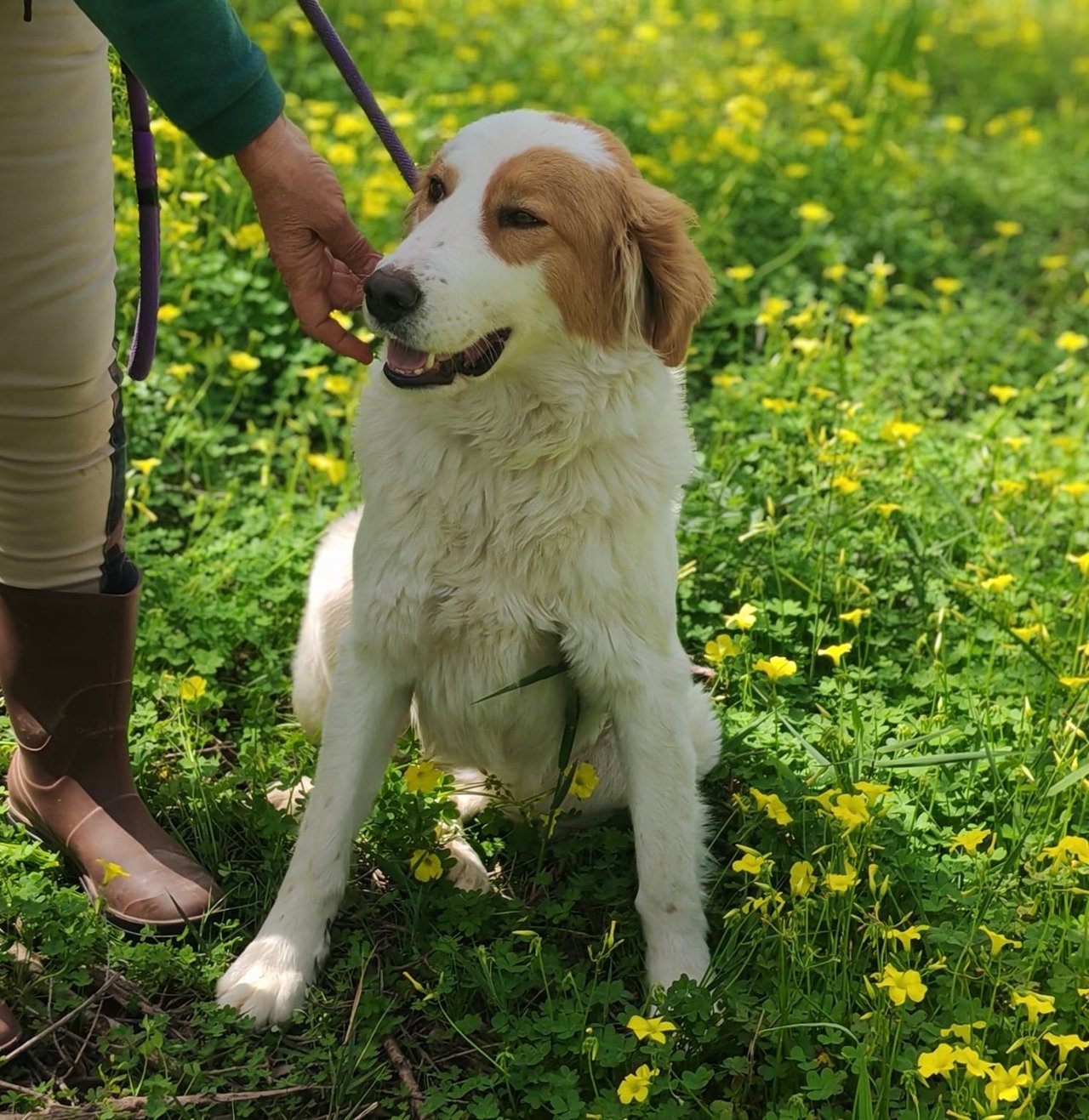
The Maremma Abruzzese Sheepdog should be large and powerfully built without losing balance or freedom of movement. The body is slightly longer than the height at the withers, the chest is capacious and the breed should move with a long stride and extended trot. The current breed standard gives a height of 65–73.5 cm for males and 62–70 cm for females. The corresponding weights are 40–52 and 35–45 kg.
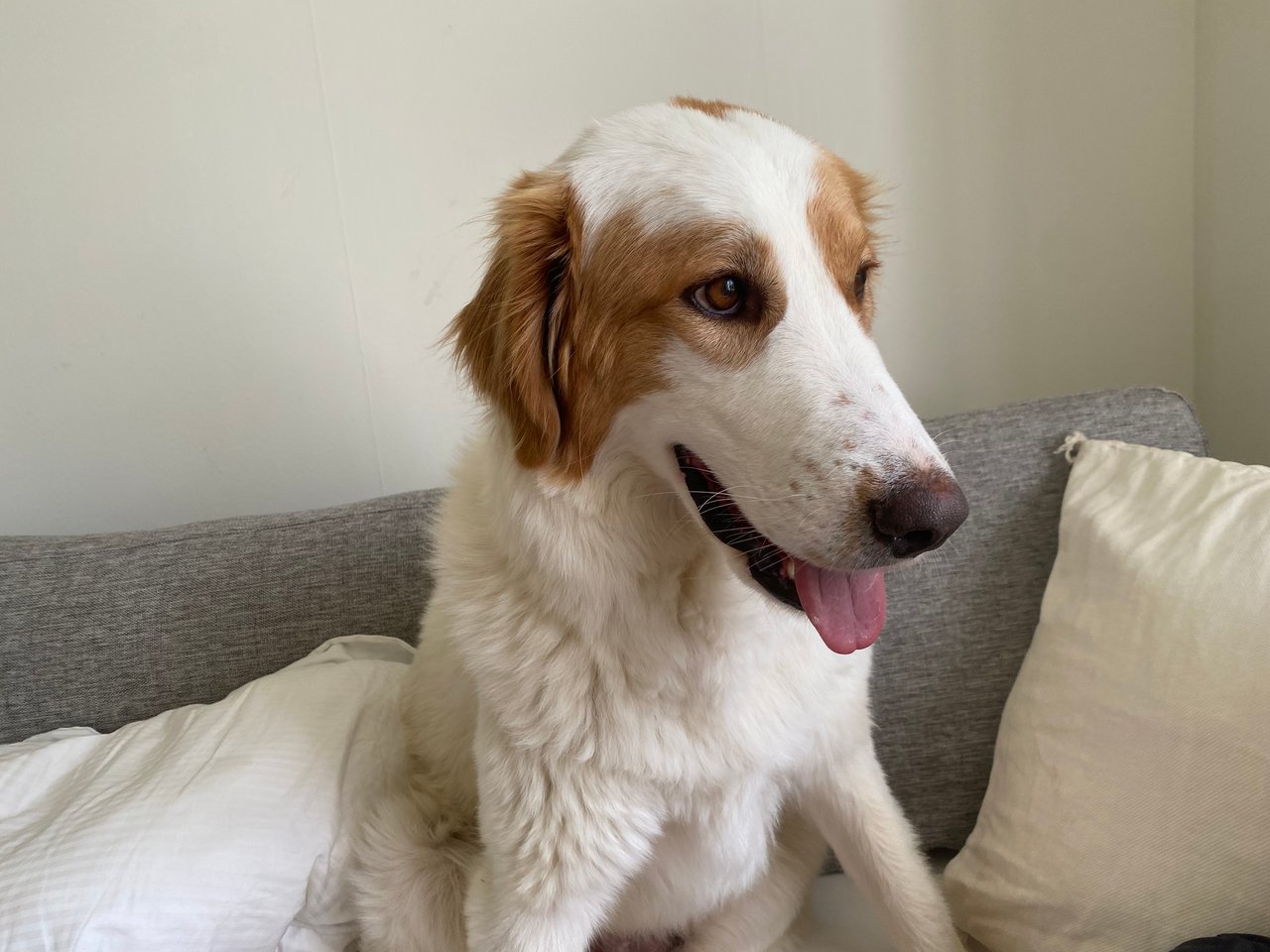
The head is large, broad and gently conical. The nose should be black with well-opened nostrils. The almond-shaped eyes range from ochre to chestnut brown and have an alert expression. The small, high-set V-shaped ears hang down but are mobile. The teeth should meet in a scissor bite.
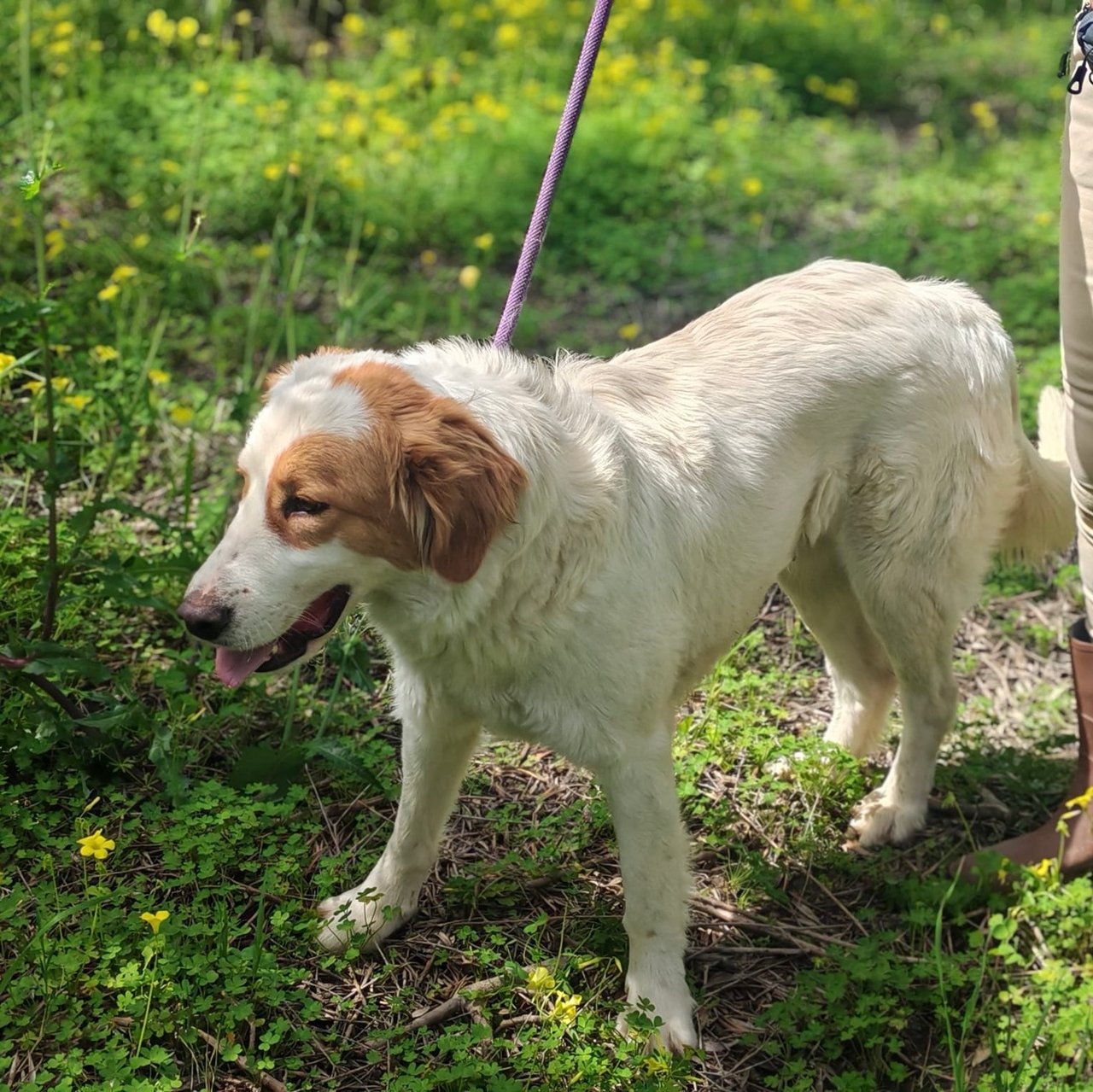
The white coat is an important part of the dog's protection from the weather. The outer coat is abundant, long, fairly coarse and lies close to the body; a slight wave is acceptable. Hair on the body can reach about eight centimetres, while the undercoat is at its fullest in winter. The basic colour must be solid white, although limited shading in ivory, pale orange or lemon is permitted. Clearly defined coloured patches are not part of the standard.
The Swedish Kennel Club advises that a thorough weekly brushing is normally sufficient. When the undercoat is shed, usually once or twice a year, more frequent brushing is often needed. Remove tangles before they tighten and pay particular attention behind the ears, around the ruff and around the legs.
The breed does not need to be bathed to a fixed timetable. Bathe the dog when it is dirty or when the skin and coat need it, using products intended for dogs. Gently accustom a puppy to brushing, nail trimming and checks of the paws, ears and skin. A fully grown dog of this size is much easier to care for when these tasks are already part of everyday life.
¶Temperament & Personality
The Maremma Abruzzese Sheepdog was bred to notice, assess and deter threats without constant direction from a person. At home, this may show in the dog choosing a vantage point, reacting to movement at the boundary and not automatically accepting someone who comes through the gate. Its independence is not simply disobedience; it is closely connected to the breed's original work.
With its own family, the breed can be close and affectionate. It is often aloof with strangers and may not wish to greet them or be touched. The aim is not for the dog to love everyone, but for it to remain calm around people whom its owner has admitted. Planned introductions, a designated resting place and the option of keeping the dog in another room are better than asking every visitor to find out what the dog will tolerate.
Guarding behaviour does not mean aggression is desirable. The breed standard disqualifies both aggressive and extremely shy dogs. A typical dog should be able to remain attentive and reserved without attacking unprovoked or staying agitated after an ordinary encounter. When visiting a breeder, watch how the dogs cope with guests and other everyday situations, not merely how imposing they look behind a fence.
Individuals and bloodlines vary. Thoughtful exposure to different environments should help the dog distinguish everyday life from events that warrant a response. It will not erase the guarding instinct or turn the dog into an outgoing companion breed.
¶Training & Exercise
Training works best when it is reward-based, clear and connected to real situations. A Maremma Abruzzese Sheepdog can learn a great deal, but repetitive exercises with no obvious purpose may lose its interest. Start early and build the behaviours that make a large, independent guardian safe to live with.
Give particular priority to:
- waiting while doors and gates are opened;
- walking on a lead and turning away from people, dogs and other animals when asked;
- an everyday recall and a separate, particularly well-rehearsed recall cue, without assuming either will work when the distraction is overwhelming;
- going to a designated resting place when somebody arrives;
- calmly accepting coat care, paw handling and veterinary examinations;
- a cue to interrupt barking and the ability to settle after alerting.
Socialisation should be controlled and repeated. Introduce the puppy to people, surfaces, sounds, vehicles and environments at a distance where it remains comfortable. Brief, successful encounters are better than forcing the dog through a crowd. Use rewards and avoid pain, intimidation and contests of will.
The breed needs daily activity and something meaningful to do, but no set number of minutes or long walks suits every dog. An adult can have a satisfying routine with varied walks, opportunities to use its nose, calm training and safe movement on its own land. Adjust duration and exertion to age, fitness, weather and health. For a growing large-breed puppy, controlled and varied activity is more sensible than fixed distances or strenuous exercise.
A garden is not a substitute for walks and time with its owner, and any freedom must be secure. Swedish law requires the level of supervision needed to prevent injury or substantial nuisance. There is no fence height that suits every dog. Adapt gates and fencing to the site and to the individual dog's jumping, climbing and digging behaviour. Use a lead or a genuinely secure area whenever recall is uncertain.

¶Health
Too few Swedish dogs have been documented to show reliably how common different diseases are in the Maremma Abruzzese Sheepdog. It is therefore not possible to give a long list of typical breed conditions or an exact life expectancy. The Swedish Kennel Club mentions hip dysplasia, or HD, but stresses that the breed's overall health is difficult to assess.
An official HD programme applies to breeding in Sweden. Both sire and dam must have an official hip status before mating if their offspring are to be registered. The breed is listed for known status, not under the stricter breed requirement for both parents to have an A or B grade. The general Swedish Kennel Club rules nevertheless prohibit the use of grade E in breeding, while a grade D dog may only be mated to a dog graded A or B. For this breed, 18 months is the minimum age for an official radiographic assessment.
An older Swedish breed strategy encouraged both hip and elbow radiographs, but too few dogs had been examined to estimate the prevalence of either HD or ED. The 2026 registration rules contain no separate requirement for an official ED status in this breed. A breeder may still have elbow results that provide useful information about the wider family. Ask to see registered results and enquire about siblings and other close relatives instead of accepting a phrase such as “healthy lines”.
Monitor the dog's body condition, movement and stamina. Seek veterinary advice for lameness, pain, reluctance to rise or a clear change in behaviour. During growth, feeding, development and physical strain should be reviewed with the breeder and a vet. Do not assume that a breed with a long working history is automatically healthy.
¶History & Origins
The Maremma Abruzzese Sheepdog developed as a flock guardian in Italy. The official standard links it to pastoral dogs still used in Abruzzo and to dogs formerly found in the Maremma areas of Tuscany and Lazio. As flocks moved between regions, the local dog types mixed naturally, particularly from the 1860s onwards.
Their work was to protect livestock and property, often with considerable responsibility of their own. This helps explain why the modern dog still assesses its surroundings, watches boundaries and may respond without first looking to a handler for direction.
Maremmano and Abruzzese were long described as separate regional types. A unified Italian breed standard took effect on 1 January 1958. The name has subsequently appeared in different word orders across languages and organisations. In December 2025, the formal Italian name was changed to Cane da Pastore Abruzzese Maremmano. This was a change of name within the same breed, not the creation of a new breed.
The breed is still used in its traditional role, but also lives as a farm and family dog. Its size, independence and readiness to guard remain present whatever its role.
¶Living with the Breed
The Maremma Abruzzese Sheepdog is best suited to a home with space, clear boundaries and calm routines. The Swedish Kennel Club primarily recommends an experienced owner and a rural setting. Housing alone does not determine welfare, but a poorly soundproofed flat with busy shared areas and frequent unexpected visitors makes guarding and barking harder to manage. Consider the entrance, neighbours, walking routes, the ability to separate the dog when needed and access to a secure outdoor area.
Barking is part of the breed's way of raising the alarm. You can teach the dog to stop and come to you, reduce triggers for unnecessary barking and choose its sleeping place with the surroundings in mind. It is unwise, however, to choose the breed in the hope of removing all desire to guard. Speak to close neighbours before difficulties arise and change the routine if the dog repeatedly stands outside barking at ordinary local activity.
The breed can live with children, but it is not automatically a nanny or a protector entitled to intervene. An adult should always be present with young children, and the dog needs a resting place where it will not be disturbed. Plan carefully for noisy play, running and visiting children: a guarding dog may interpret shouting or rough play differently from the people involved. Use a gate or separate room whenever you cannot actively supervise.
A background as a livestock guardian does not guarantee that every individual will accept dogs, cats, poultry or sheep. Make introductions gradually, keep the dog on a lead at first and give a cat or smaller animal a safe area of its own. Previous experience and the individual dog's behaviour matter more than a claim of low prey drive. Do not leave the animals together unsupervised until that particular combination has been stable for a long time.
Time alone must be introduced gradually once the dog feels secure at home. Begin with very short absences and adjust the pace to its response; a large property is no substitute for social contact. Change the plan and seek help if necessary when the dog cannot settle, barks continuously or tries to escape.
The abundant coat does not make the breed allergy-free. No dog breed is free of allergens, and allergen levels and people's reactions vary. Anyone with an allergy should investigate their own circumstances and meet the individual dog rather than relying on coat colour or type.
Before buying, you should be able to answer yes to the following questions:
- Do I have experience with a large, independent guardian, or access to a knowledgeable trainer?
- Can I provide secure gates, safe walks and a separate space for visitors without isolating the dog from family life?
- Do I accept that training can improve barking and guarding behaviour but cannot erase the breed's purpose?
- Have I seen both parents' official HD results and received factual information about the health and temperament of close relatives?
- Have I met adult dogs from the breeder's bloodlines and seen how they settle after ordinary disturbances?
- Can I provide coat care, exercise, companionship and veterinary care for a dog that may weigh more than 50 kg?
If you can still answer yes with a fully grown dog in mind, a Maremma Abruzzese Sheepdog can become a loyal and steady partner. The key is not to make the breed less inclined to guard, but to give its traits clear and safe boundaries in the life you will actually share.
¶Ominaisuudet
¶Usein kysytyt kysymykset
Millainen maremmano-abruzzesen luonne on perheenjäsenten ja vieraiden seurassa?
Tämä luonteeltaan vakava ja itsenäinen vahtikoira kiintyy vahvasti omaan perheeseensä mutta suhtautuu vieraisiin pidättyvästi. Se on hellä ja lempeä tuttuja ihmisiä kohtaan, mutta hyvin valpas ja toisinaan varautunut vierailijoiden seurassa. Varhain aloitettu, huolellinen sosiaalistaminen on tärkeää, jotta sen suojeluvietti pysyy hallinnassa ja käyttäytyminen ennakoitavana.
Sopiiko maremmano-abruzzese perhekoiraksi vai soveltuuko se vain maatilan työkoiraksi?
Rotu on kehitetty karjaa vartioivaksi työkoiraksi, ja se viihtyy parhaiten, kun sillä on selkeä tehtävä ja tilaa vartioitavaksi. Se voi elää perhekoirana maaseudulla, kunhan sen vartiointivietti, itsenäisyys ja tarve viettää aikaa ulkona otetaan huomioon. Se ei yleensä sovi tavanomaiseen taajamaelämään eikä ensimmäiseksi koiraksi.
Kuinka paljon tilaa ja millaisen elinympäristön maremmano-abruzzese tarvitsee?
Tämä kookas, reviiritietoinen koira viihtyy tilavassa ympäristössä, kuten maatiloilla, pientiloilla tai suurilla, turvallisesti aidatuilla maaseutukiinteistöillä. Se viettää mielellään paljon aikaa ulkona lähes säällä kuin säällä ja pitää reviirinsä rajojen partioinnista. Pienessä talossa, kerrostaloasunnossa tai aitaamattomalla pihalla pitäminen johtaa yleensä turhautumiseen, häiritsevään haukkumiseen ja käytösongelmiin.
Kuinka voimakas maremmano-abruzzesen suojeluvietti on, ja voiko sitä hallita kotioloissa?
Rotu on voimakkaasti suojelunhaluinen, ja se on jalostettu arvioimaan uhkia itsenäisesti, usein ilman ihmisen ohjausta. Kotioloissa tämä voi näkyä kiivaana haukkumisena kaiken vieraan lähestyessä sekä epäluuloisuutena uusia ihmisiä tai koiria kohtaan. Rauhallinen ohjaus, johdonmukaiset säännöt, hallitut tutustumistilanteet ja kunnollinen aitaus ovat välttämättömiä, jotta koiran vartiointivietti pysyy tilanteeseen sopivana ja turvallisena.
Kuinka paljon liikuntaa ja virikkeitä maremmano-abruzzese yleensä tarvitsee?
Tämä koira on pikemminkin rauhalliseen, koko päivän kestävään työskentelyyn sopiva puurtaja kuin jatkuvaa vauhdikasta leikkiä kaipaava sprintteri. Sille tekevät hyvää pitkät, tasavauhtiset kävelylenkit, vapaa liikkuminen turvallisella alueella ja ajatustyötä vaativat tehtävät, kuten alueen rajojen kiertäminen tai selkeästi määritellyt tehtävät pihapiirissä. Ilman riittävästi mielekästä tekemistä ja liikuntaa se voi muuttua levottomaksi, haukkua paljon tai tuhota paikkoja.
Kuinka paljon hoitoa maremmano-abruzzesenp paimenkoiran paksu valkoinen turkki vaatii?
Kaksinkertainen turkki on tiheä ja suojaa koiraa hyvin. Siitä lähtee runsaasti karvaa etenkin kerran tai kahdesti vuodessa. Suurimman osan vuodesta harjaus kerran viikossa yleensä riittää, mutta karvanlähtöaikoina turkkia kannattaa harjata useita kertoja viikossa irronneen aluskarvan poistamiseksi ja takkuuntumisen ehkäisemiseksi. Ulkona karjan parissa elävien koirien turkki ja iho on tärkeää tarkistaa säännöllisesti takiaisten, loisten ja iho-ongelmien varalta.
Ovatko maremmano-abruzzeset yleensä terveitä, ja mille terveysongelmille ne ovat alttiita?
Rotua pidetään yleisesti melko terveenä työkoirarotuna, mutta monien muiden suurten koirien tavoin sillä voi esiintyä lonkka- ja kyynärniveldysplasiaa. Myös mahalaukun laajentumaa ja kiertymää, joitakin silmäsairauksia sekä tuki- ja liikuntaelimistön ongelmia voi esiintyä. Vastuullisten kasvattajien tulisi tutkituttaa jalostuskoirat, ja omistajien tulisi pitää koiransa hoikkina ja hyvässä fyysisessä kunnossa nivel- ja ruoansulatusongelmien riskin vähentämiseksi.
Voiko maremmano-abruzzese elää yhdessä muiden koirien ja pieneläinten kanssa?
Kun ne totutetaan asianmukaisesti kodin muihin koiriin ja tuotantoeläimiin, kuten lampaisiin, vuohiin ja siipikarjaan, ja ne kasvavat näiden kanssa, yhteiselo sujuu yleensä hyvin. Ne kiintyvät vahvasti eläimiin, jotka ne kokevat osaksi laumaansa, mutta eivät välttämättä siedä reviirilleen tulevia vieraita koiria. Huolellinen valvonta ja asteittainen tutustuttaminen ovat tärkeitä etenkin sellaisten pienten lemmikkien kanssa, jotka eivät kuulu niiden vahdittavaan laumaan.
Kuinka vaikeaa maremmano-abruzzesen kouluttaminen on sen itsenäisen luonteen vuoksi?
Tämä rotu on älykäs, mutta se on jalostettu ajattelemaan itsenäisesti eikä noudattamaan yksityiskohtaisia käskyjä. Parhaiten sille sopii rauhallinen, johdonmukainen ja reilu koulutus, jossa kunnioitetaan sen itsenäisyyttä ja asetetaan selkeät rajat toistuvien tottelevaisuusharjoitusten sijaan. Kovat menetelmät tai jatkuva painostus voivat heikentää luottamusta ja tekevät koirasta yleensä entistä itsepäisemmän tai etäisemmän.
Sopiiko maremmano-abruzzese ensimmäiseksi koiraksi?
Tätä rotua ei yleensä suositella kokemattomille koiranomistajille sen koon, vartiointivietin, itsenäisyyden ja asianmukaisen hallinnan tarpeen vuoksi. Se tarvitsee omistajan, jolla on riittävästi varmuutta asettaa selkeät rajat, luoda johdonmukaiset rutiinit ja ymmärtää vartioivan työkoiran käyttäytymistä. Ensimmäistä koiraansa hankkivien perheiden on usein vaikea hallita rodun voimakasta luonnetta, haukkumista ja reviirikäyttäytymistä.
¶Vertailu muihin rotuihin
Vertaa rotua maremmano-abruzzese muihin rotuihin ja katso erot luonteessa, aktiivisuudessa ja hoidossa ennen kuin teet valintasi. Näytä kaikki vertailut