
¶Sisällysluettelo
¶Quick Facts
The Australian Cobberdog is a modern Australian dog population being developed within the private Master Dog Breeders & Associates (MDBA) registry. The MDBA describes it as a breed in development. In Sweden, it is not entered as a distinct breed in the Swedish Kennel Club (SKK) stud book. An MDBA pedigree is therefore not the same as an SKK registration number.
- The MDBA divides the dogs into three height classes: miniature, medium and standard.
- Adult size can vary considerably. The MDBA itself warns that even an experienced breeder may struggle to predict how large a puppy will become.
- The MDBA standard aims for a sociable, cooperative dog with a soft single coat that sheds little, but temperament, coat and shedding must be assessed in the individual dog.
- Breeding towards therapy and assistance work does not mean that every dog is suited to those roles.
- The coat needs regular, thorough care. Low shedding does not mean low maintenance.
- No Australian Cobberdog can be guaranteed to be suitable for someone with a dog allergy.
- Puppy buyers need to check both the registry to which the dog belongs and the parents’ original health reports.
¶Appearance & Coat
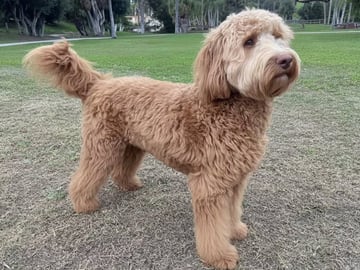
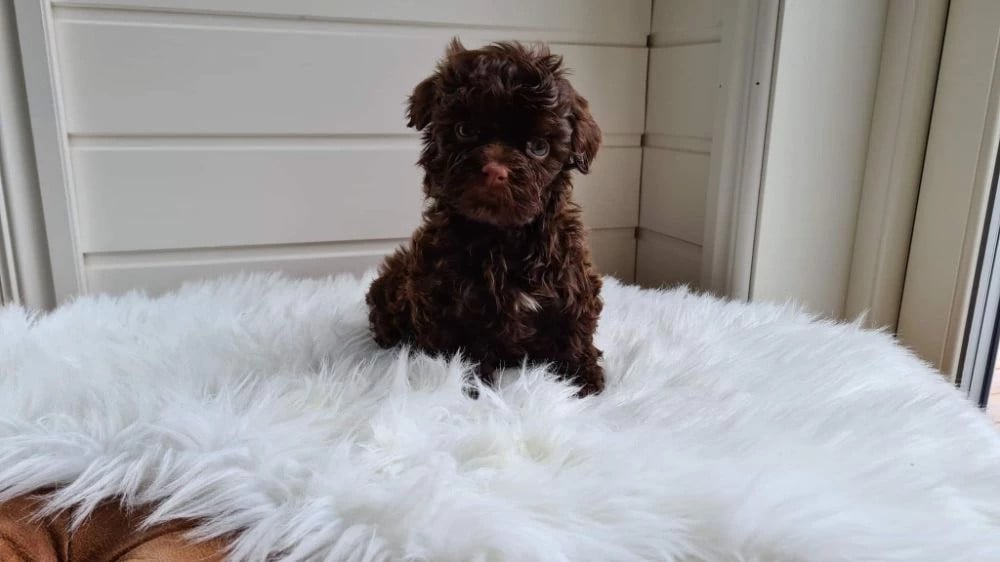
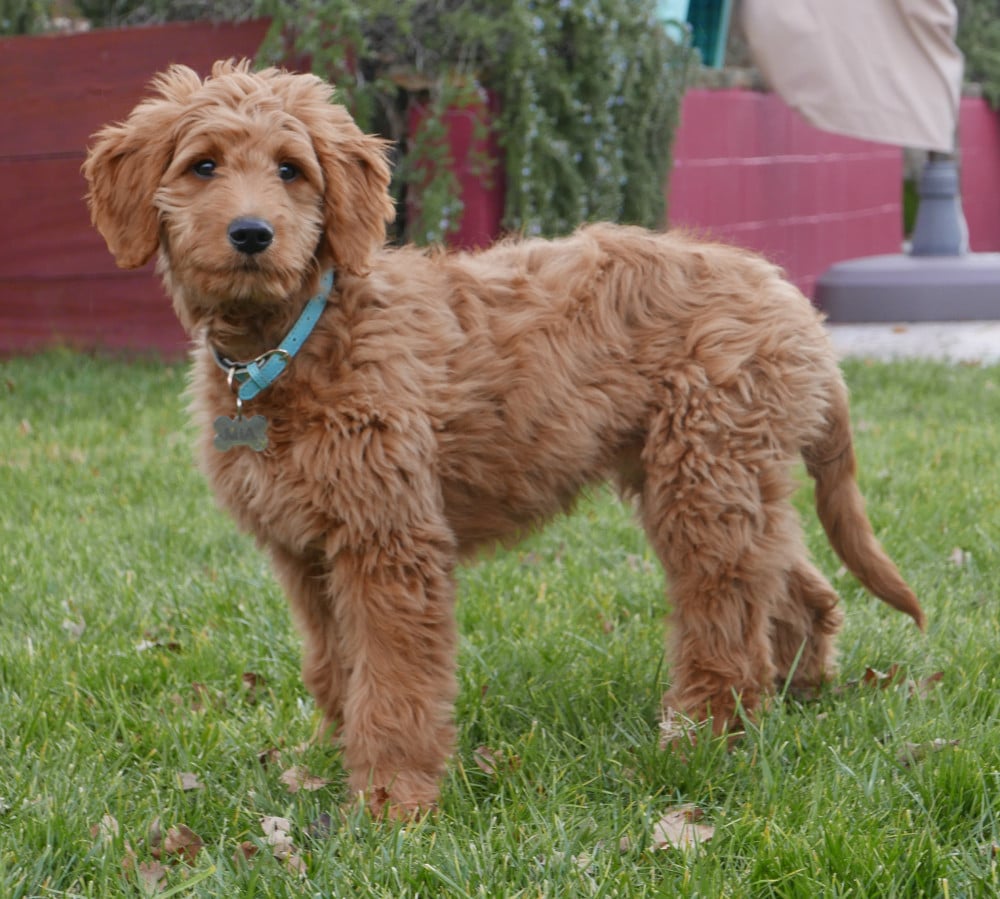
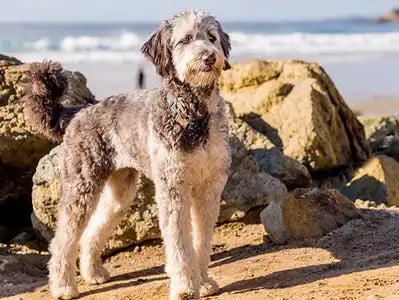
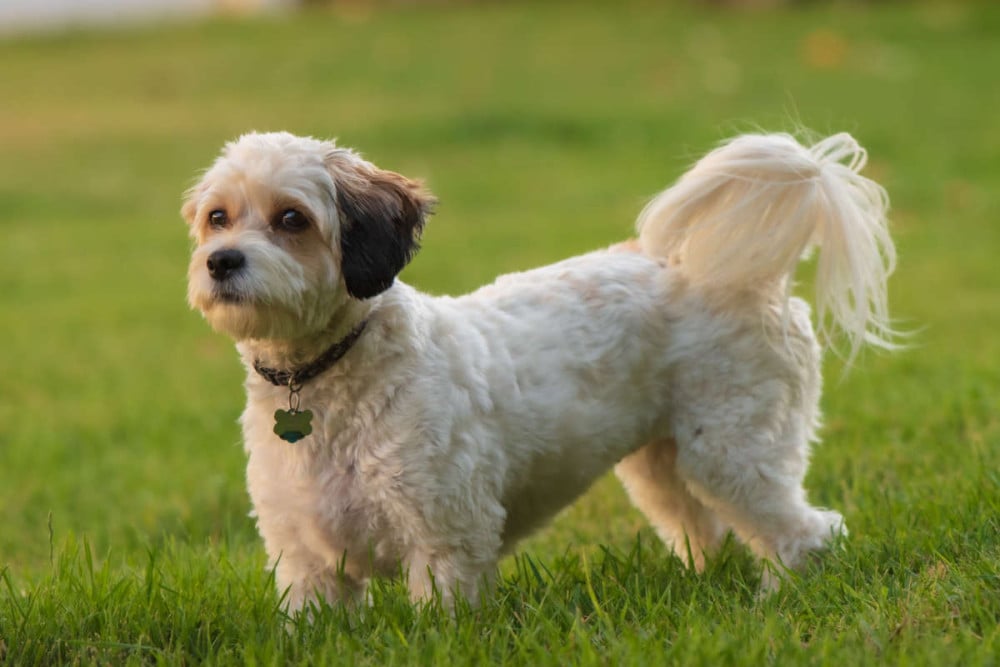
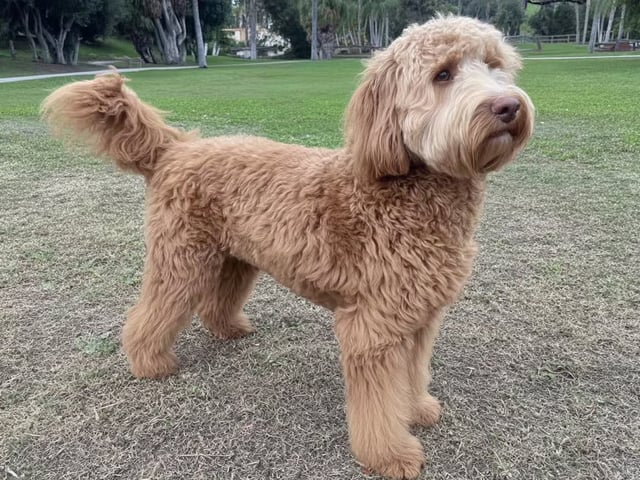
According to the MDBA, the Australian Cobberdog should look balanced and athletic, but size and coat type are not yet entirely predictable. Assess the puppy’s parents and adult relatives rather than relying on a size label.
The current MDBA standard sets out three height classes at the withers:
- Miniature: over 33 centimetres and up to 42 centimetres
- Medium: over 42 centimetres and up to 51 centimetres
- Standard: over 51 centimetres and up to 61 centimetres
The standard has no equivalent weight table. Build, sex, body condition and adult height all affect weight, so treat narrow weight promises with caution. Ask for the measurements and weights of the parents and adult dogs from previous litters. This offers no guarantee, but it provides better evidence.
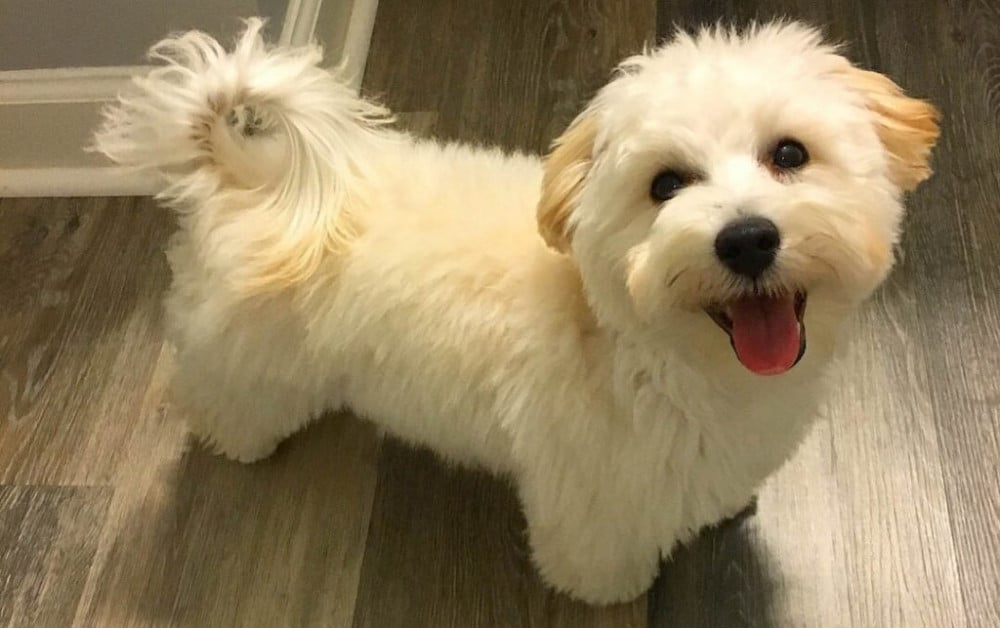
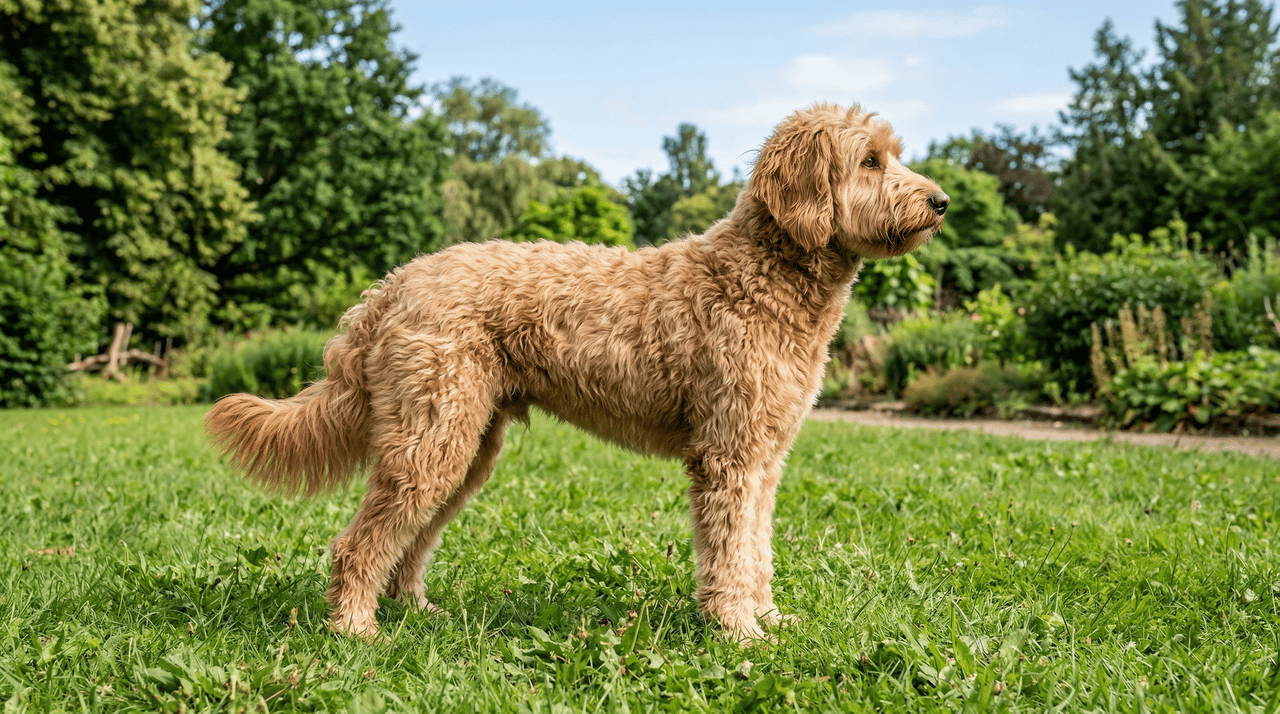
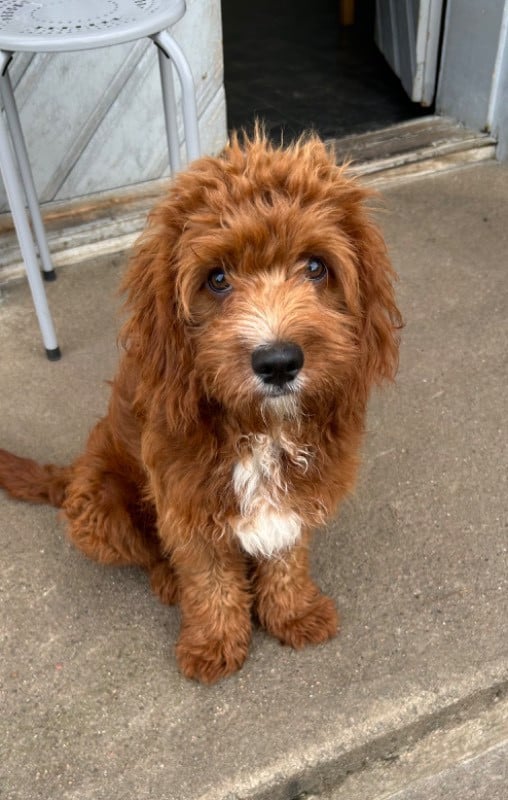
The MDBA’s current ideal is a soft, smooth-textured single coat without an undercoat. It may be wavy or straight, with a visibly wavy coat and facial furnishings preferred. A dense, harsh wool coat, a distinctly curly coat and a flat coat without furnishings are described as highly undesirable in the current standard. Older descriptions that present a wool coat as an equivalent variety therefore no longer match the MDBA standard. All colours are accepted under the standard, while pigmentation should be solid.
The amount of grooming required depends on coat length, texture and lifestyle. Comb right down to the skin and pay particular attention behind the ears, in the armpits, beneath the harness and around the legs and tail. A smooth-looking surface may hide mats close to the skin. Mats can hurt, so work in short, regular sessions. Introduce a puppy gradually to a comb, paw handling, bathing, drying and clipping. Ask a professional groomer for help if you cannot keep the coat combed through without causing stress.
The MDBA aims for very low or no shedding, but this is a breeding goal rather than a promise for every dog. Feel the coats of close adult relatives and ask how often they are combed and clipped, and how much they actually shed. This tells you more about daily care than labels such as “fleece” or “allergy-friendly coat”.
¶Temperament & Personality
The MDBA aims for a cheerful, sociable and cooperative dog that seeks close contact with people. This describes the desired direction of the breeding programme, not a temperament that comes automatically with the name Australian Cobberdog. Genetics, early experience, upbringing and training all influence an individual dog.
There is not enough evidence to support claims that these dogs are always empathetic, calm with children or free of prey drive. The same applies to therapy and assistance work. A working dog must be able to recover from unexpected events, accept handling, maintain focus and settle despite distractions. Suitability requires individual assessment and training.
When visiting a litter, look beyond whether the puppies are keen to greet you. Meet the mother and, if possible, other adult relatives. Observe their responses to unfamiliar people, sounds, surfaces, waiting and gentle handling. Recovery and the ability to seek support matter more than a dog never showing fear. Ask how the breeder follows up on temperament in earlier litters.
The Swedish Behaviour and Personality Assessment for Dogs, BPH, provides more comparable information than words such as “kind” or “easy to train”. Dogs not registered in the SKK stud book, including crossbreeds, may take part with an SKK competition licence. The result describes behaviour and is not a pass or fail, but results from parents and relatives can show the range within the family.
¶Training & Exercise
The Australian Cobberdog is best suited to someone who wants to combine everyday training, walks and mental tasks, but no evidence-based number of minutes suits every dog. Needs change with age, health, fitness, size and personality. A good routine alternates movement, scent work, learning, play and undisturbed rest.
Reward-based training in clear, small steps gives the dog a fair chance to understand what is expected. Start early with attention, loose-lead skills, recall, calm behaviour at doors, passing people and dogs, and accepting grooming. Short sessions can be woven into walks and daily life rather than concentrating all enrichment in one long block. Scent games, searching for objects, tricks, controlled retrieving and, later, dog sports can provide variety if the dog enjoys them.
Use the dog’s response to plan its exercise. It should be able to settle afterwards, move without stiffness and be willing to join in next time. Persistent stress, difficulty resting or reluctance to move are reasons to reduce the demands and, if necessary, consult a vet or qualified trainer. More speed and exertion do not always solve difficulty settling.
Exercise for puppies should increase gradually and be tailored to the individual. The often-repeated five-minute rule—five minutes of exercise for every month of age—has no scientific basis and is not an appropriate fixed schedule for most puppies. Offer short opportunities to explore, play, train and rest, then build up longer or more demanding activities as maturity and fitness develop. Ask a vet for advice if the puppy shows pain, lameness or unusual fatigue.
¶Health
There is not enough independent evidence to produce a reliable list of common diseases in the Australian Cobberdog. Do not transfer a long list from possible ancestral breeds and call it a documented breed risk. Instead, check the breeding programme’s requirements and the actual results for the parents concerned.
The current MDBA registration requirements are clear but limited in scope. Breeding dogs born after 1 July 2024 must have a pre-breeding health examination every year. Before a litter from parents born after that date is registered, the parents must have hip and elbow assessments and the reports must be submitted to the MDBA. A breed DNA panel must be completed before a breeding dog is used. Rules can change, so always check the current version for the planned litter.
The MDBA states that hip, elbow and DNA results are not printed on the pedigree. The pedigree therefore does not prove that the results are favourable. Ask to see the original reports and check:
- the dog’s registered name and identity
- the examination date and the dog’s age at the time
- the laboratory or assessing organisation
- the complete result, not merely the word “tested”
- how the two dogs’ DNA results have been considered together for the planned mating
Different Cobberdog registries may impose different requirements. Do not combine tests from the MDBA programme with rules or recommendations from another organisation. A breeder may have good reasons to carry out additional examinations, but should be able to explain their relevance and show results even when they are less favourable.
Dog allergens are found mainly in skin and saliva, and research has not found lower allergen levels in homes with so-called hypoallergenic breeds. A low-shedding coat may reduce loose hair, but it does not make a dog free from allergens. Anyone with an allergy or asthma should seek medical advice and not rely on the breed name or a guarantee.
¶History & Origins
The Australian Cobberdog originated in Australia and is being developed within the MDBA programme. According to the MDBA, founder Beverley Rutland-Manners submitted documentation in 2011 to register the population as a breed in development. The programme maintains its own stud book and updates its own standard.
The MDBA describes a diverse background in which different lines and outcrosses have been tried. This does not substantiate the precise, lengthy lists of “foundation breeds” found online. Assess an individual dog’s ancestry through its documented pedigree and the registry that issued it.
The MDBA still describes the Australian Cobberdog as a breed in development progressing towards full recognition within the MDBA. The organisation administers that system itself. This does not mean the dog is entered as a breed in the SKK stud book or recognised by the FCI. The distinction affects where health and temperament results are held and which registration and competition rules apply.
¶Living with the Breed
An Australian Cobberdog can live in a house or a flat if it receives suitable activity, rest, grooming and training. The daily routine matters more than the type of home. In a flat with poor sound insulation, start early on calm responses to noises in the stairwell and movement outside the door. Every home also needs convenient toileting opportunities and a place where the dog can sleep undisturbed.
Do not expect the dog to remain alone for a full working day. A young puppy cannot be left alone, and adult dogs vary in their tolerance even after training. Begin with very brief, low-stress separations and increase them only while the dog remains relaxed. Arrange a dog sitter, day care or another solution in advance if daily life involves longer absences.
The same safety principles apply around children as with any other dog: an adult should actively supervise young children, and the dog needs a protected resting place. A friendly breed ideal does not replace supervision. Teach children to leave the dog alone when it is eating, sleeping or trying to move away.
Living with other dogs, cats or small animals may work well, but the breed name cannot promise it. Make introductions gradually, give a cat a dog-free escape route and prevent chasing from the first meeting. Assess the individual dog’s arousal, chasing behaviour and ability to disengage, and do not leave the animals unsupervised until their interaction is stable.
The breed can suit a first-time owner, but it is not automatically easy. It combines substantial grooming with uncertain adult size and variable temperament. Meet adult relatives, inspect complete health results, verify the registration and plan realistically for training, companionship and time alone. Choose an individual dog and a breeding programme—not merely the appealing claims made for the breed.
¶Ominaisuudet
¶Usein kysytyt kysymykset
Mikä on australiancobberdog ja miten se eroaa labradoodlesta?
Se on labradoodleista ja muista roduista tavoitteellisesti kehitetty koira, jonka jalostuksessa on keskitytty terapia- ja avustajakoiran tehtäviin. Toisin kuin monilla lähinnä designlemmikeiksi kasvatetuilla labradoodleilla, sillä on kehittymässä oleva rotumääritelmä ja ennustettavammat turkkityypit. Jalostuksessa painotetaan erityisesti tasapainoista luonnetta ja vähäistä karvanlähtöä.
Ovatko australiancobberdogit todella hypoallergeenisia, eikä niistä lähde karvaa?
Niistä lähtee yleensä vain vähän karvaa, ja lievästi allergiset sietävät niitä usein paremmin, mutta mikään koira ei ole täysin allergiaystävällinen. Irronneet karvat ja hilse jäävät turkkiin, mikä vähentää karvojen leviämistä kotiin. Turkki vaatii kuitenkin säännöllistä hoitoa ja harjausta, jotta se ei takkuunnu.
Millainen on australiancobberdogin tyypillinen luonne?
Ne ovat yleensä lempeitä, ihmisläheisiä ja hyvin vaistonvaraisia, minkä vuoksi niitä valitaan usein terapia- tai avustajakoiriksi. Useimmat suhtautuvat vieraisiin seurallisesti, kiintyvät vahvasti perheeseensä ja aistivat herkästi äänensävyjä ja ihmisten tunteita.
Kuinka paljon liikuntaa australiancobberdog tarvitsee päivittäin?
Useimmat tarvitsevat päivittäin vähintään 60–90 minuuttia liikuntaa sekä virikkeitä mielelle. Ne ovat aktiivisia ja älykkäitä, joten kävelylenkkien, leikin ja koulutuspelien yhdistelmä sopii niille paremmin kuin pelkkä vapaa oleskelu pihalla.
Millaista turkinhoitoa australiancobberdog tarvitsee?
Niiden fleece- tai villatyyppinen turkki tarvitsee perusteellisen harjauksen useita kertoja viikossa takkuuntumisen ehkäisemiseksi sekä säännöllisen trimmauksen 6–8 viikon välein. Korvat on tarkastettava ja puhdistettava säännöllisesti, sillä tiheäkarvaisiin korvakäytäviin voi kertyä kosteutta ja likaa.
Sopivatko australiancobberdogit perhekoiriksi koteihin, joissa on lapsia ja muita lemmikkejä?
Ne ovat yleensä hyvin perhekeskeisiä, kärsivällisiä ja suvaitsevaisia, joten ne voivat sopia perheisiin, joissa lapset osaavat kohdella koiraa kunnioittavasti. Useimmat tulevat hyvin toimeen muiden koirien ja lemmikkien kanssa, kun ne on sosiaalistettu asianmukaisesti. Seurallisen luonteensa vuoksi niiden voi kuitenkin olla vaikea sopeutua kotiin, jossa ne joutuvat olemaan yksin pitkien työpäivien ajan.
Mille terveysongelmille australiancobberdogit ovat alttiita?
Yleisiä terveyshuolia ovat lonkka- ja kyynärniveldysplasia, tietyt silmäsairaudet, kuten PRA, sekä jotkin noutaja- ja villakoiralinjoissa esiintyvät perinnölliset sairaudet. Vastuulliset kasvattajat seulovat näitä sairauksia, mutta omistajan on silti tärkeää seurata koiran nivelten terveyttä, painoa ja silmien kuntoa koko sen elämän ajan.
Haukkuvatko australiancobberdogit paljon vai ovatko ne melko hiljaisia?
Ne eivät yleensä hauku häiritsevästi, mutta ne ovat valppaita ja saattavat ilmoittaa tulijoista haukkumalla tai äännellä, jos niillä ei ole riittävästi virikkeitä. Hyvä sosiaalistaminen ja päivittäinen aivojumppa auttavat ehkäisemään tylsistymisestä johtuvaa haukkumista tällä herkällä ja ihmisläheisellä rodulla.
Minkä kokoisia australiancobberdogit ovat ja miten koko vaikuttaa niiden hoitoon?
Niitä kasvatetaan yleensä kolmessa kokoluokassa: pieninä, keskikokoisina ja suurina. Koot vaihtelevat pienistä seurakoirista suurempiin ja vankkarakenteisempiin perhekoiriin. Suuremmat koirat tarvitsevat enemmän tilaa, enemmän tukea nivelten hyvinvointiin ja hieman enemmän liikuntaa. Pienempien kanssa arki voi olla helpompaa kaupunkiasunnossa, mutta ne tarvitsevat yhtä lailla virikkeitä.
Sopivatko australiancobberdogit ensikertalaisille koiranomistajille?
Ne voivat sopia sitoutuneelle ensikertalaiselle, sillä ne ovat oppivaisia, miellyttämishaluisia ja yleensä sosiaalisia. Ne tarvitsevat kuitenkin säännöllistä turkinhoitoa, kiintyvät vahvasti omiin ihmisiinsä ja ovat hyvin herkkiä. Siksi ne sopivat parhaiten omistajille, jotka ovat valmiita panostamaan koulutukseen, säännöllisiin rutiineihin ja turkinhoitoon.
¶Vertailu muihin rotuihin
Vertaa rotua Australian Cobberdog muihin rotuihin ja katso erot luonteessa, aktiivisuudessa ja hoidossa ennen kuin teet valintasi. Näytä kaikki vertailut