
¶Sisällysluettelo
¶Quick Facts
- The Thai is the modern recreation of the traditional Siamese, with a softer, more moderate look but the same striking color points.
- Highly people oriented, Thai cats love to “chat” with their families using a melodic, expressive voice instead of a piercing yowl.
- Medium build and athletic, they are agile jumpers who enjoy heights, climbing trees, and supervising from the top of furniture.
- The Thai’s short, close-lying coat is low maintenance and sheds less than many longhaired breeds, which suits busy households.
- Intelligent and emotionally sensitive, they thrive on daily interaction and can become lonely if left without company for long periods.
¶Appearance & Coat
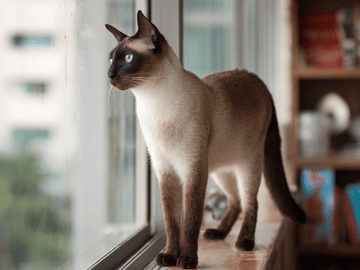
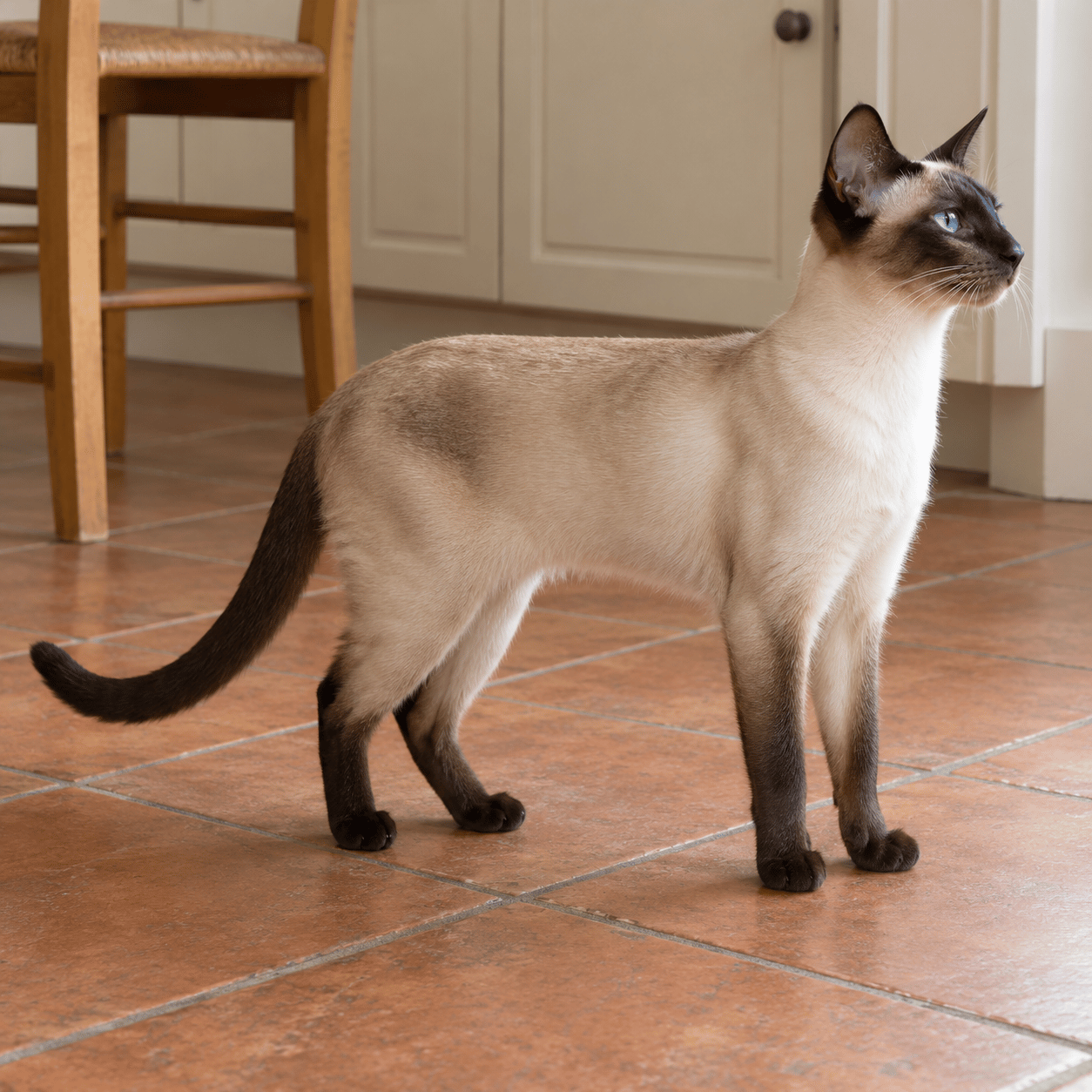
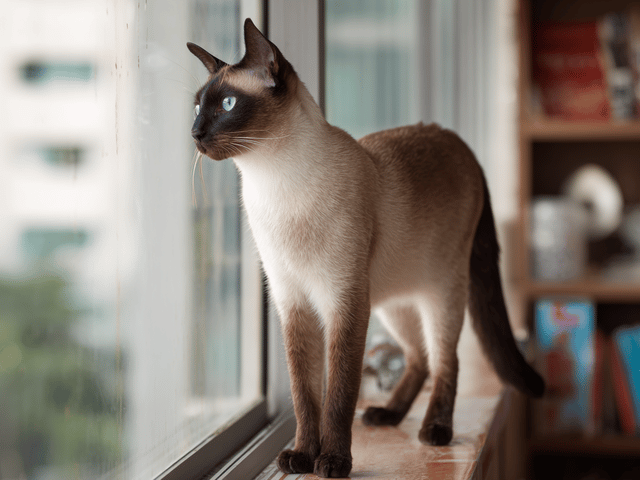
The Thai cat is often described as the “classic” or “old-style” Siamese in appearance. While modern, show-style Siamese cats have a very elongated body and extremely wedge-shaped head, the Thai has a more balanced and moderate look. The body is medium in size, neither cobby nor tubular, with a firm, muscular feel when you pick them up. You can feel the strength under their smooth coat, but they should never seem bulky or heavy like some larger breeds. Males are usually a little larger and broader in the head than females, although both sexes maintain a graceful outline.
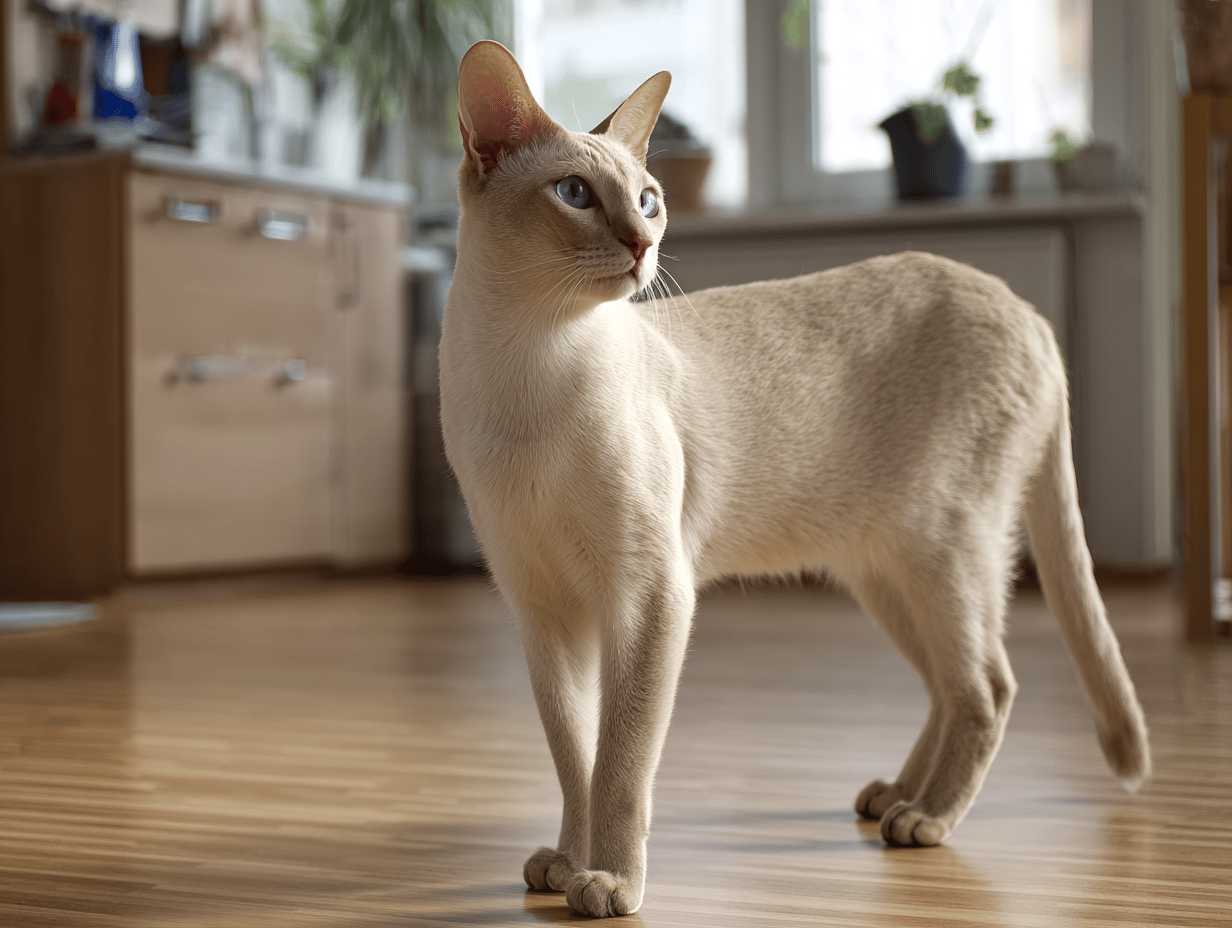
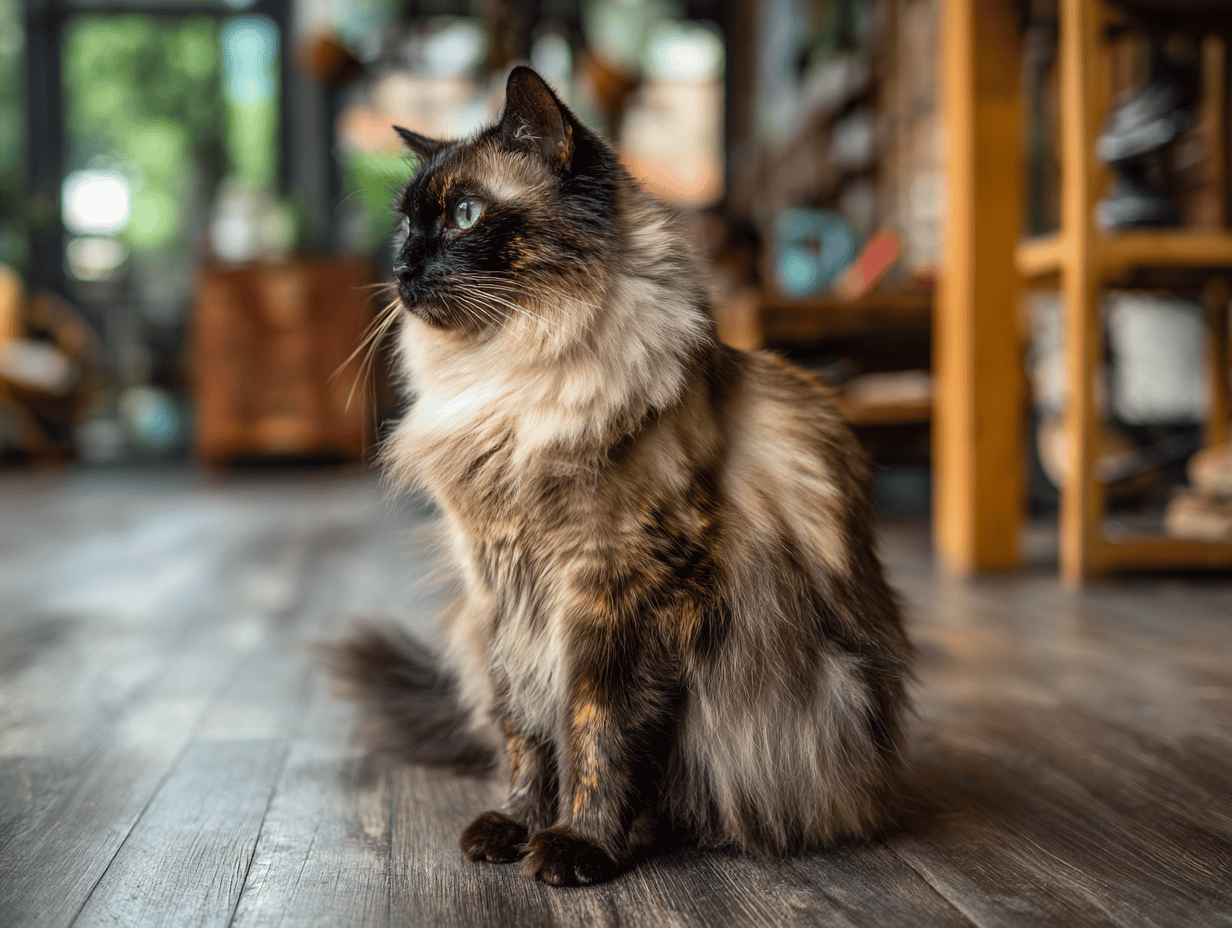
The head of a Thai is one of its most distinctive features. It has a gently rounded, slightly modified wedge shape with soft contours, not sharp angles. The forehead is slightly rounded and blends smoothly into a straight nose. The muzzle is well defined but not extreme, giving the face a pleasant, open expression. Ears are medium to moderately large, broad at the base and set to continue the line of the head rather than sticking out. They frame the face in a way that draws attention to the eyes, which are a deep, clear blue. Eye shape is typically oval to slightly rounded, with a very alert and intelligent gaze.
The body is supported by slender but strong legs. The hind legs are often slightly higher than the front, which contributes to an elegant stance and a light, springy walk. Paws are small and oval, balancing the body nicely. The tail is medium in length, tapering toward the tip without knots or kinks. It should complement the body in proportion, not too whippy or too thick.
Coat and color are key to the Thai’s charm. The coat is short, fine, and lies close to the body, with very little undercoat. It feels sleek and silky rather than plush. Like their Siamese relatives, Thai cats are pointed, which means the ears, face mask, legs, and tail carry a darker color that contrasts with a lighter body. Recognized point colors typically include seal, chocolate, blue, and lilac, and in many associations also variants like red, cream, and tortie, along with lynx (tabby) points. The body color is usually lighter and can darken somewhat with age and temperature. Cooler environments often bring out stronger contrast in the points.
Grooming the Thai is pleasantly simple. Their short coat rarely mats or tangles, so a weekly brushing with a soft rubber grooming brush or a gentle bristle brush is usually enough. During seasonal shedding, you might brush two or three times a week to catch loose hairs and keep the coat shiny. A slightly damp microfiber cloth wiped over the coat after brushing can help remove dander and give extra gloss. Because the coat lies close to the skin, it is important not to over-bathe. Most Thai cats do well with occasional baths only if truly necessary, for example if they get into something sticky. More important is regular ear checking, as their open ears can occasionally accumulate wax. A cat-safe ear cleaner and cotton pad can help, but anything more than light cleaning should be done by a vet.
Routine nail trimming, dental care, and maintaining a healthy weight will do more for their appearance than any elaborate grooming routine. With proper nutrition and simple, consistent coat care, a Thai cat retains a sleek, well-kept look with surprisingly little daily effort from their owner.
¶Temperament & Personality
Thai cats are often described as “people cats” in the truest sense. They form deep attachments to their families and want to be part of every activity, whether you are cooking, working at a laptop, or reading on the sofa. Many owners say their Thai follows them from room to room like a small, elegant shadow. If you are looking for a quiet, distant cat that sleeps in another room and appears only at mealtimes, this is probably not the right breed. The Thai prefers close contact and genuine interaction.
Vocalization is one of the breed’s trademarks. Like the Siamese, they enjoy “talking,” but many Thai owners find the voice somewhat softer and more melodic than the very sharp tone associated with some modern Siamese lines. They will often comment on what you are doing, greet you at the door, and hold “conversations” when they want something. This can be very charming to people who enjoy a communicative pet, but may be challenging for those who prefer a very quiet home. Fortunately, a content Thai that receives plenty of attention is usually less insistent than one that feels ignored.
With families, Thai cats are affectionate, playful, and often very tolerant when handled respectfully. They usually enjoy gentle children who understand how to interact with animals. A Thai will often join in games such as chasing a feather wand or retrieving small toys. Many learn routines quickly and will wait at the same spot each evening for playtime. For homes with children, it is wise to teach youngsters to let the cat walk away when it has had enough and to avoid grabbing or squeezing. A Thai that is overwhelmed can become vocal and stressed, though aggression is not typical if they are well socialized.
Around other cats and animals, the Thai usually adapts well, especially if introductions are done gradually. They enjoy having a playful feline companion with similar energy. Many Thais also live peacefully with cat-friendly dogs, and some will even seek them out as nap partners. A structured introduction, with scent swapping and short supervised meetings, helps prevent misunderstandings. Because Thais can be quite sensitive emotionally, they may feel upset by household tension, shouting, or rough handling, so a calm and respectful atmosphere suits them best.
Common challenges with the breed usually stem from their social nature and intelligence. A Thai cat left alone for long working days in an empty apartment can become bored and anxious. This may show as excessive vocalizing, overgrooming, or destructive play, such as knocking items off shelves just to create “something to do.” They may also become clingy if their need for companionship is not met. Owners who travel frequently or are rarely at home might want to consider either a different breed or providing a second cat and reliable pet sitter who actually interacts with them.
In daily life, expect your Thai to be present, opinionated, and emotionally tuned in. They often sense your mood and may curl up on your lap when you are tired, or bring toys when they think it is time to play. For the right person or family, this creates a uniquely close relationship that feels almost like living with a small, furry roommate rather than a distant pet.
¶Training & Exercise
Thai cats are naturally active and clever, which makes them both fun and rewarding to train. Their athletic build and curiosity mean that they do not typically spend the whole day asleep. Instead, they cycle through exploratory patrols, window watching, and play sessions, with short naps in between. If this energy is directed into constructive outlets, you will have a happy, well balanced cat. If it is not, you may find your Thai using curtains as climbing frames or kitchen counters as an obstacle course.
To meet their exercise needs, plan on several interactive play sessions each day, especially if your Thai is kept indoors. Ten to fifteen minutes of focused play, a few times daily, is more effective than leaving toys scattered around. Popular choices include:
- Wand toys and feather teasers to mimic flying prey.
- Lightweight balls that can be batted and chased along corridors.
- Soft “mice” toys that can be carried in the mouth and tossed around.
Many Thais enjoy vertical space because it allows them to observe their “territory.” A sturdy cat tree with multiple platforms, or shelves placed at varying heights, gives them a safe place to climb and jump. Placing a perch near a window can keep them entertained for hours as they watch birds, people, and street activity. For outdoor access, a secure catio or enclosed garden area can provide extra stimulation without exposing them to traffic or other dangers.
Training a Thai is usually easier than with many other breeds, thanks to their intelligence and desire to interact. They respond well to positive reinforcement and will quickly learn that certain behaviors earn praise, treats, or playtime. Simple behaviors to start with include:
- Coming when called.
- Sitting or standing up on cue.
- Target training, where the cat touches a stick or your hand with its nose.
Using a clicker can help provide clear feedback. Mark the exact moment your Thai performs the desired action with a click or a short verbal marker such as “yes,” followed by a small treat. Short, frequent sessions of just a few minutes work best, since cats can lose interest if training feels repetitive or too long.
Some Thai cats can also be harness trained for safe outdoor walks. Introduce the harness slowly indoors, allowing the cat to sniff and wear it for brief periods with lots of rewards. Once they move comfortably in the harness, you can attach a lightweight leash and practice walking around inside before attempting a quiet, secure outdoor area. Not every Thai will enjoy walking outside, but many appreciate the chance to explore new scents and environments with their owner by their side.
Mental stimulation is as important as physical exercise. Food puzzle toys, treat balls, or hiding small treats around the house can encourage natural hunting behavior and problem solving. Rotating toys rather than leaving everything out at once keeps them interesting. Some owners even teach their Thai to “help” with tricks like fetching particular toys by name or jumping onto a specific chair when asked.
A lack of adequate exercise and mental challenge can lead to behavioral issues, such as noisy demands for attention, nocturnal zoomies, or scratching furniture. Providing scratching posts, clear routines around playtime, and rewarding calm behavior can prevent many of these problems. The key is to remember that a Thai is not a purely decorative pet. They are an active participant in family life and thrive when their intelligence and energy are respected and channeled in a fun, positive way.
¶Health
Thai cats are generally healthy, medium-lived cats with a lifespan that commonly ranges from 12 to 16 years, and some individuals reaching even older ages with attentive care. Like all breeds, however, they have certain health considerations that responsible owners and breeders should keep in mind. The Thai shares ancestry with the Siamese, so some of the same genetic tendencies can appear, although many modern breeding programs focus strongly on health and moderation.
One of the conditions sometimes associated with Siamese and related breeds is progressive retinal atrophy, often shortened to PRA. This is a genetic disease that leads to degeneration of the retina and eventual vision loss. Reputable breeders should use breeding cats that have been DNA tested clear for known PRA mutations, which greatly reduces the risk of affected kittens. Prospective owners can ask breeders directly about PRA testing and to see written health results for the parent cats.
Heart health is another area of interest. Hypertrophic cardiomyopathy, or HCM, is the most common heart disease in cats generally, and Thai cats are not completely exempt. This condition involves thickening of the heart muscle, which can affect heart function. Responsible breeders may screen their breeding cats regularly with cardiac ultrasound performed by a veterinary cardiologist. While screening cannot guarantee a problem will never occur, it helps reduce the risk in the breed population.
Dental health is particularly important for Thai cats, as many oriental-type breeds are prone to tartar buildup, gingivitis, and sometimes tooth resorption. Regular tooth brushing with a cat-safe toothpaste can significantly reduce these issues. Starting dental care when the cat is still young and pairing it with treats and praise makes it easier. Annual or biannual veterinary checkups should include a look at the teeth and gums, and professional cleaning may occasionally be required.
Other potential concerns can include:
- Respiratory infections in kittens if early vaccinations and hygiene are not prioritized.
- Sensitivity to anesthesia in rare cases, as seen across many breeds, which is why a thorough pre-anesthetic check is vital.
- Stress-related issues such as overgrooming or digestion upset in cats that are very sensitive to changes in environment or routine.
Routine veterinary care remains the cornerstone of Thai cat health. This includes:
- Core vaccinations as advised by your vet, with booster schedules based on lifestyle and local disease risk.
- Regular parasite prevention for fleas, ticks, and worms, especially if the cat has outdoor access or lives with other pets.
- Annual health checks, with more frequent visits for older cats to monitor kidney function, thyroid levels, and weight trends.
Weight management is also important, even though most Thai cats have a natural tendency to stay fairly sleek. Measuring food portions, using a high quality diet appropriate for their age and activity level, and avoiding too many treats help prevent obesity. An overweight Thai loses some of its athletic grace and may face higher risks of diabetes, joint issues, and other health problems.
When choosing a breeder, health testing and a transparent approach to breeding decisions are more important than show titles alone. A good breeder will happily discuss health issues found in the breed, explain which tests they perform, and provide written contracts and health guarantees where possible. For Thai cats from shelters or rescues, an initial veterinary exam, blood work when appropriate, and gradual introduction to a stable, low-stress home routine can go a long way toward long-term health.
With sensible breeding practices, preventative care, and attention to emotional wellbeing, a Thai cat can be a robust, lively companion for many years.
¶History & Origins
The story of the Thai cat begins in the same place as that of the Siamese: the ancient kingdom of Siam, now known as Thailand. Shorthaired, pointed cats were kept in temples and royal households, and early writings and illustrations from the region describe elegant cats with pale bodies and dark extremities. These cats were valued companions and were sometimes believed to bring good fortune or to guard sacred texts.
In the late nineteenth century, Siamese cats were brought to Europe as diplomatic gifts and curiosities. They quickly gained attention for their unusual pointed coloring and striking blue eyes. Early photographs and descriptions from this period show cats that look much more like what we now call the Thai: moderate in type, with gently rounded heads and sturdy, graceful bodies. Over time, however, different breeding preferences emerged in various cat fancier communities.
Throughout much of the twentieth century, breeders in some regions began selecting for a more extreme, elongated body and a very fine, wedge-shaped head in their Siamese cats. This created the modern show Siamese type that is common in many exhibitions today. At the same time, other breeders and cat lovers preferred the traditional appearance that had first enchanted people. These fanciers quietly maintained lines of cats that preserved the more natural look of the original imports.
As the difference between the extreme type and the traditional type became more pronounced, there was increasing interest in recognizing the classic form as a separate breed. This allowed breeders and judges to evaluate them according to their own standard, rather than comparing them directly with modern Siamese. Various cat associations in Europe and internationally eventually recognized the Thai as a distinct breed, acknowledging it as the representation of the original, old-style Siamese.
In these standards, emphasis is placed on a moderate, harmonious body type and on preserving the characteristic pointed pattern, vivid blue eyes, and sociable, talkative nature. The name “Thai” pays direct tribute to the breed’s country of origin and helps avoid confusion with the modern Siamese type in shows and pedigrees. In some registries, you may still encounter terms like “Old-Style Siamese” in conversation, but “Thai” is generally the official breed name.
Today, the Thai is primarily a companion cat, known and loved for its close bond with humans and lively personality. In the show ring, they are judged for their balance, expression, and coat contrast, but for most owners, the real appeal lies in having a cat that combines the exotic looks of a pointed breed with a softer, more natural outline. Breeders continue to work on preserving genetic diversity and maintaining the health and temperament that define the breed.
Although not as widely known as some larger, more commercial breeds, the Thai has a dedicated following around the world. Enthusiasts value its strong link to history, seeing the Thai as a living reminder of the cats first described in old Thai manuscripts and brought to Europe more than a century ago. In modern homes, they serve the same role they likely did in temple courtyards: charming, intelligent companions who are deeply involved in daily life.
¶Living with the Breed
Living with a Thai cat is a very interactive experience. You are not just providing food and a place to sleep. You are accepting a small, inquisitive roommate who expects to be involved in your routines. For new owners, it is important to understand the level of companionship and engagement this breed requires before bringing one home.
First, consider time and attention. Thais do best in households where someone is present for a good part of the day. This could mean people who work from home, families with staggered schedules, or homes with more than one cat. A Thai that spends many hours alone every day may become bored and vocal, or develop stress behaviors. If you have a full-time job outside the home and still feel drawn to the breed, think about adopting two compatible cats or planning daily, high quality interaction when you are home.
Environmental setup plays a big role in a Thai’s happiness. At minimum, you should provide:
- A tall, sturdy cat tree or several climbing opportunities at different heights.
- Multiple scratching surfaces, both vertical posts and horizontal scratchers, to protect your furniture and allow natural claw care.
- Cozy resting spots in different areas of the home, including one or two elevated positions where the cat can observe safely.
Food and water stations should be placed in quiet, safe locations. Some Thai cats enjoy puzzle feeders that make them work a little for their food, which taps into their intelligence and hunting instincts. Fresh water should be available at all times, and many cats appreciate a water fountain, which encourages good hydration.
Financially, Thai cats usually have similar ongoing costs to other medium sized, pedigree cats. Annual expenses often include:
- Quality cat food, ideally a mix of wet and dry or a carefully balanced diet recommended by your vet.
- Routine veterinary care such as vaccinations, health checks, parasite prevention, and dental cleaning as needed.
- Replacement of worn toys, scratching posts, and bedding.
- Pet insurance, which many owners choose to help cover unexpected illnesses or accidents.
The exact amount will vary by country and local prices, but it is sensible to budget not only for normal monthly expenses, but also to keep a savings buffer or insurance policy for veterinary emergencies.
Because Thai cats are very people focused, they often integrate well into busy family homes as long as there is respect for their needs. They usually like being where the action is, whether that is the kitchen, living room, or child’s bedroom. You may find your Thai trying to sit on your keyboard during video meetings or “helping” by batting at your pen while you write. Providing acceptable alternatives, like a warm bed near your desk or a seat by a window, can keep them close without interrupting everything you do.
For households with other pets, it is wise to plan a slow, calm introduction. Thais can make excellent companions for other friendly cats and often enjoy having a playmate. With dogs, ensure the dog is cat tolerant and never allowed to chase or corner the cat. Supervised meetings, safe escape routes for the cat, and baby gates or high furniture can help create a peaceful multi-species home.
Travel is another practical area to consider. Many Thai cats adapt reasonably well to car journeys if they are introduced gradually to a secure carrier and short drives early in life. However, like most cats, they thrive on routine and consistency. If you travel frequently, arranging a trusted sitter who will spend real time with the cat in your home may be less stressful than repeated boarding, especially for such an emotionally sensitive breed.
Daily life with a Thai includes small rituals: morning greetings, shared play sessions, evening cuddles. They often prefer to sleep near their humans, sometimes at the foot of the bed or curled next to your pillow. In return for your time and care, you gain a companion that offers constant engagement, affection, and a lively presence. For people who enjoy a close, communicative relationship with their cat and are willing to invest energy into play, training, and interaction, the Thai can be an exceptionally rewarding breed to share a home with.
¶Ominaisuudet
¶Usein kysytyt kysymykset
Miten thaikissa eroaa nykytyyppisestä siamilaiskissasta?
Thaikissa on pohjimmiltaan siamilaiskissan perinteinen muoto. Sen vartalo ja pää ovat sopusuhtaisemmat ja pyöreämmät kuin nykyisten näyttelylinjaisten siamilaiskissojen hyvin hoikka ja kulmikas olemus. Thaikissalla on yleensä hieman lyhyemmät kasvot, täyteläisemmät posket ja vankempi ruumiinrakenne, mutta sillä on samat naamioväritys ja kirkkaansiniset silmät. Luonne on usein samankaltainen, mutta monien omistajien mielestä thaikissat ovat hieman vähemmän kiihkeitä ja rennompia.
Millainen luonne thaikissalla yleensä on?
Thaikissat ovat yleensä sosiaalisia, ihmisläheisiä ja melko puheliaita, mutta niiden ääni on usein pehmeämpi eikä yhtä läpitunkeva kuin monilla nykytyyppisillä siamilaisilla. Ne nauttivat omistajiensa perässä kulkemisesta, arjen puuhiin osallistumisesta ja yhteisistä leikeistä. Monet ovat hellyydenkipeitä sylikissoja, jotka kiintyvät vahvasti yhteen tai kahteen ihmiseen.
Ovatko thaikissat todella yhtä äänekkäitä kuin siamilaiset kissat?
Ne ovat yleensä puheliaita ja nauttivat ”keskusteluista” omien ihmistensä kanssa, mutta useimpien ääni on pehmeämpi kuin siamilaisille tyypillinen kova mouruaminen. Voit odottaa säännöllistä sirkutusta, kurinaa ja naukumista etenkin ruoka-aikoihin tai silloin, kun ne kaipaavat huomiota. Yksilöllisiä eroja kuitenkin on: jotkut kissat ovat hyvinkin puheliaita, kun taas toiset ovat hiljaisempia.
Tulevatko thaikissat hyvin toimeen lasten ja muiden lemmikkien kanssa?
Useimmat thaikissat tulevat hyvin toimeen lasten kanssa, jotka osaavat kohdella niitä kunnioittavasti. Ne voivat olla hyviä perhekissoja, sillä ne nauttivat yhdessäolosta ja leikkimisestä. Ne hyväksyvät yleensä muut ystävälliset kissat ja viihtyvät usein kissakaverin seurassa. Monet myös sopeutuvat elämään rauhallisten, hyvin koulutettujen koirien kanssa. Varhainen, rauhallinen tutustuttaminen ja yhdessäolon valvonta ovat tärkeitä, sillä thaikissat eivät pidä kovakouraisesta käsittelystä.
Mille terveysongelmille thaikissat ovat alttiita?
Siamilaisen lähisukulaisena rodulla voi olla alttius hammasongelmiin, joihinkin sydänsairauksiin ja tietyissä sukulinjoissa silmäsairauksiin, kuten verkkokalvon etenevään surkastumaan. Vastuulliset kasvattajat tutkivat kissat näiden riskien varalta eivätkä käytä sairastuneita kissoja jalostukseen. Säännölliset eläinlääkärintarkastukset, hampaiden hoito sekä näön ja hengityksen muutosten seuranta ovat suositeltavia.
Kuinka aktiivisia thaikissat ovat ja kuinka paljon ne tarvitsevat leikkiaikaa?
Ne ovat kohtalaisen aktiivisia tai hyvin aktiivisia ja nauttivat kiipeilystä, ympäristön tutkimisesta ja yhteisistä leikeistä omistajiensa kanssa. Päivittäiset leikkihetket huiskuleluilla, aktivointileluilla tai noutoleikkien parissa auttavat pitämään ne hyvässä kunnossa ja tarjoavat virikkeitä. Jos ne eivät saa riittävästi tekemistä, ne saattavat tylsistyä ja alkaa vaatia huomiota.
Millaista turkinhoitoa thaikissa tarvitsee?
Lyhyt, ihonmyötäinen turkki on helppohoitoinen, ja yleensä kevyt harjaus kerran tai kahdesti viikossa riittää poistamaan irtokarvat. Karvaa lähtee vähän tai kohtalaisesti, karvanlähtöaikoina hieman enemmän. Säännöllinen kynsien leikkaus, korvien tarkistus ja hampaiden hoito ovat tällä rodulla turkinhoitoa tärkeämpiä.
Pidetäänkö thaikissaa hypoallergeenisena?
Mikään kissa ei ole täysin allergiavapaa, ja myös thaikissat tuottavat allergiaa aiheuttavia proteiineja. Niiden lyhyestä turkista saattaa levitä vähemmän karvaa kuin pitkäkarvaisten rotujen turkista, mutta herkät ihmiset voivat silti saada oireita. Paras tapa arvioida omaa reaktiotasi on viettää aikaa juuri sen kissan kanssa, jonka aiot ottaa.
Voiko thaikissa elää onnellisena kerrostaloasunnossa?
Ne voivat viihtyä erinomaisesti kerrostaloasunnossa, kunhan ne saavat riittävästi seuraa, leikkiä ja kiipeilymahdollisuuksia, kuten kiipeilypuita ja hyllyjä. Ne sopeutuvat hyvin sisäelämään ja viihtyvät usein täysin sisäkissoina. Ne eivät kuitenkaan pidä pitkistä ajoista yksin, joten ne sopivat koteihin, joissa joku on usein kotona tai joissa on toinen niille sopiva lemmikki.
Mistä tiedän, onko naamiokissa thaikissa eikä vain sekarotuinen?
Aidolla thaikissalla on rodulle ominainen yleisilme: sopusuhtainen, hieman pyöristynyt pää, keskikokoinen ruumiinrakenne ja suuret, kirkkaansiniset silmät. Se ei edusta modernin siamilaisen äärimmäisiä piirteitä eikä ole rakenteeltaan tanakka kuten jotkin maatiaiskissat. Hyvämaineisen kissarekisterin myöntämä sukutaulu on ainoa luotettava todiste puhdasrotuisuudesta. Ilman sitä samannäköistä kissaa voi kuvailla siamilaistyyppiseksi tai thaityyppiseksi sekarotuiseksi kissaksi.
¶Vertailu muihin rotuihin
Vertaa rotua Thai muihin rotuihin ja katso erot luonteessa, aktiivisuudessa ja hoidossa ennen kuin teet valintasi. Näytä kaikki vertailut