
¶Sisällysluettelo
¶Quick Facts
- Hybrid cat breed created by crossing a domestic cat with the African serval, giving the Savannah its wild spotted look.
- Tall, long-legged, and athletic, often appearing larger than its actual weight.
- Highly intelligent and trainable, many Savannahs enjoy walking on a harness, playing fetch, and learning tricks.
- Very active and inquisitive, this breed needs vertical space, puzzle toys, and daily interactive play to stay happy.
- Forms deep bonds with its people and can be very affectionate, but usually prefers an active, engaged home over a quiet lap‑only lifestyle.
¶Appearance & Coat
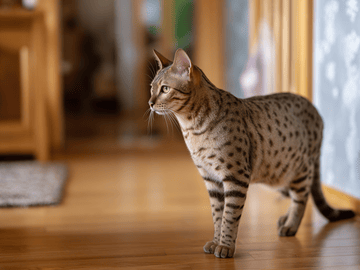
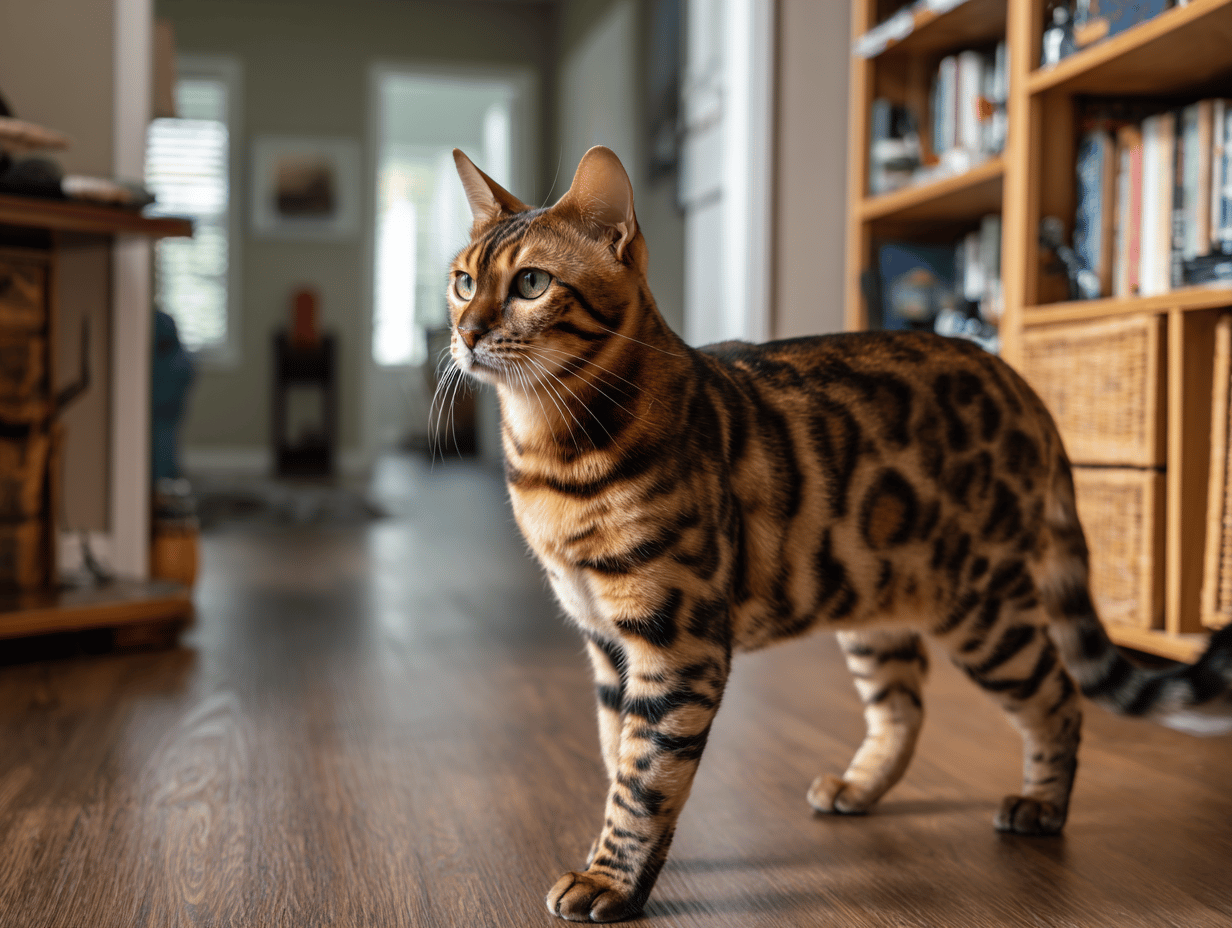
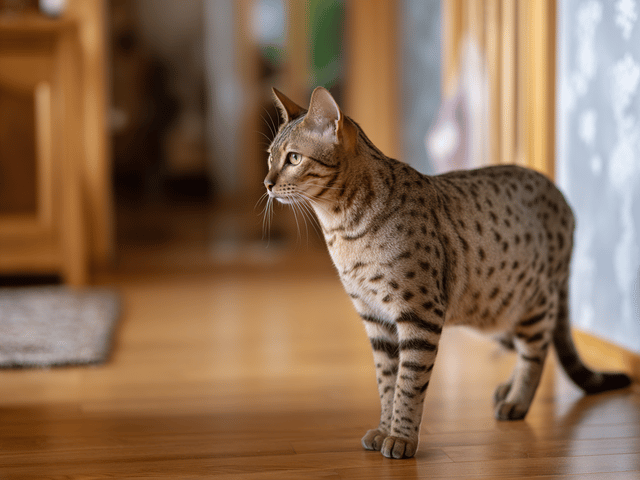
The Savannah cat is one of the most striking breeds in the cat world. At first glance, many people think they are looking at a small wild cat, thanks to the Savannah’s long legs, lean body, and distinctive spotted coat. The body is tall and graceful, with a long neck and a relatively small, wedge-shaped head. Even when a Savannah is not particularly heavy, it often looks impressive because of its height and athletic build. This gives the illusion of a larger cat without necessarily having the weight of some big domestic breeds.
One of the most characteristic features is the ears. Savannah cats have large, wide ears that sit high on the head. Ideally, the ears are tall, with a broad base and rounded tips. Many Savannahs have what is called an ocelli pattern on the backs of their ears, which look like pale thumbprints outlined in dark fur. In nature, this kind of pattern is thought to confuse predators or communicate with other cats, and it adds to the wild charm of the Savannah.
The eyes are usually medium to large, set slightly at an angle, giving a keen and alert expression. Eye colors vary and can range from green and gold to brownish hues. There is often a dark “tear stain” line running from the inner corner of the eye down the sides of the nose, similar to what you might see in a cheetah. This markings pattern emphasizes the exotic shape of the face.
The coat of a Savannah is short to medium in length and feels sleek to the touch. It should lie close to the body and may feel slightly coarse over the spine while remaining smooth overall. The pattern is one of the most important aspects of the breed’s appearance. The classic Savannah coat is spotted, with solid dark spots scattered across a lighter background. These spots may be round, oval, or slightly elongated, but they should be distinct and not blurred. Common coat colors and patterns include:
- Brown spotted tabby, ranging from warm golden tones to cooler browns
- Silver spotted tabby, with a pale silver background and dark spots
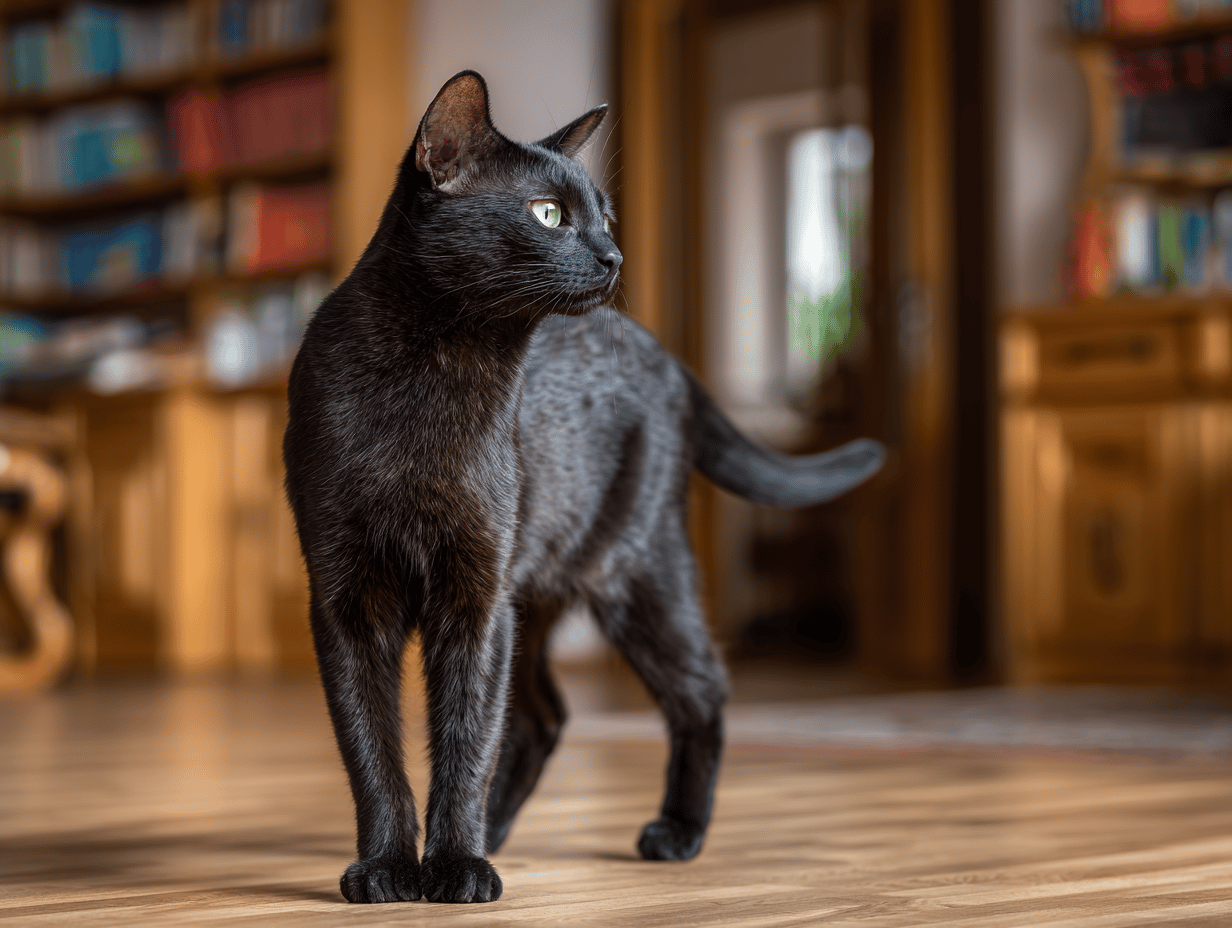
- Black, which can give a “ghost” spotting effect in certain light
- Black smoke, where a lighter undercoat creates a soft shaded appearance
Grooming needs for a Savannah are generally quite manageable. Their short coat does not tangle easily and does not require extensive maintenance. A simple weekly brushing is usually enough to remove loose hair, redistributing skin oils and keeping the coat glossy. Many Savannahs enjoy the attention that comes with grooming, so you can turn brushing into a bonding ritual. During seasonal shedding periods, a rubber grooming mitt or soft brush can help keep stray hairs under control.
Regular nail trimming, ear checks, and tooth brushing should be part of the care routine. Because the Savannah is very active and agile, it is wise to check paws and claws frequently for any damage from climbing or rough play. Although this breed does not have special bathing needs, some Savannahs actually enjoy water and may tolerate an occasional bath better than many other cats. If your cat is one of these water lovers, you can use bath time as another opportunity to keep the coat clean and healthy.
¶Temperament & Personality
The Savannah cat is not a typical laid-back, sofa-loving pet. Instead, it is more like a highly intelligent, curious, and athletic companion who wants to be involved in everything you do. Many owners compare living with a Savannah to sharing a home with a clever toddler who never quite grows out of the exploration phase. This is a cat that thrives on stimulation and interaction, both physical and mental.
Savannahs usually form strong bonds with their people. They often choose a favorite person in the household but will interact with the whole family. You may find your Savannah following you from room to room, supervising chores, or “helping” with work by walking across your keyboard. They like to be where the action is. At the same time, individual personalities vary. Some Savannahs are very affectionate and enjoy cuddles, while others prefer to sit nearby, interact through play, and express their affection in more energetic ways.
Around children, the Savannah can be a wonderful companion if the children are taught how to treat the cat respectfully. Their playful, adventurous nature often matches well with active kids. They might join games of fetch, chase a feather toy or happily run after rolling balls. However, this breed is not ideal for very young children who may grab or handle the cat roughly. A Savannah prefers confident, calm interaction and may walk away if it feels overwhelmed. As with any breed, supervised introductions and clear boundaries are important.
When it comes to other pets, the Savannah’s reactions can vary depending on socialization. Many Savannahs coexist well with other cats and even cat-friendly dogs, especially if they are introduced slowly and positively. Their high energy level means they often seek a companion who can keep up with their games. In multi-pet homes, make sure quieter animals have spaces to retreat to if they do not appreciate constant play invitations. Small pets such as birds, rodents, and fish should always be kept in secure enclosures. The Savannah has a strong prey drive, and it is unfair and unsafe to rely on training alone when small animals are involved.
Vocalization is another point prospective owners should consider. Savannahs can be quite talkative. In addition to standard meows, some make chirps, trills, or even sounds reminiscent of their serval ancestors. They may “chat” with you, respond when you speak, and call out if they want attention or cannot find you. For people who enjoy interactive communication with their pets, this is a charming trait. For those who prefer a very quiet cat, it might take some adjustment.
Common behavioral challenges with Savannah cats usually relate to their intelligence and energy. A bored Savannah may climb curtains, open cupboards, chew on inappropriate objects, or attempt creative escapes. They are skilled jumpers and can often reach shelves, door tops, and other high places you did not expect a cat to access. To prevent frustration on both sides, it is vital to provide plenty of legal outlets for their curiosity and physical ability, such as tall cat trees, puzzle feeders, and scheduled play sessions.
Despite their wild appearance, Savannah cats are fundamentally domestic in their day-to-day behavior when properly socialized. They can be loving, funny, and deeply attached to their households. However, they are best suited to people who enjoy an active, interactive relationship with a pet, rather than those looking for a low-energy lap cat that spends most of the day napping.
¶Training & Exercise
Savannah cats are often described as “dog like” in their trainability and willingness to participate in activities. This is a breed that enjoys learning and thrives when given challenges. Because they are so bright and curious, training is not just possible, it is highly recommended. Without structured ways to use their brains, Savannahs can invent their own forms of entertainment that may not always align with your household rules.
Exercise and mental stimulation should be daily priorities. A Savannah benefits from several play sessions spread throughout the day, rather than one long burst of activity. Many enjoy games that mimic hunting, such as chasing a feather toy, launching after a laser pointer, or pouncing on a moving lure. Rotating toys and introducing new ones regularly helps keep interest levels high. Climbing is especially important. Tall cat trees, sturdy shelves, and safe access to high spots let the Savannah move in three dimensions, not only across the floor.
Harness and leash training is particularly successful with Savannahs. Start when the cat is young if possible, but adults can also learn. Introduce the harness slowly, using treats and praise. Let the cat wear it indoors for short periods, gradually increasing the time. Once comfortable, attach the leash and practice gentle guidance in a quiet area. Many Savannahs take to walking outdoors, exploring gardens or quiet paths. This can be a wonderful way to provide both exercise and enrichment while keeping the cat safe from traffic and other risks.
Savannah cats respond best to positive reinforcement training methods. They are food motivated, and many will also work for play or praise. Clicker training can be very effective. You can teach basic cues such as “come,” “sit,” or “off,” which helps manage their enthusiasm when guests arrive or when they get too interested in counters and tables. Some Savannahs learn more advanced tricks such as high fives, spins, or even running an agility-style course with tunnels and small jumps.
Because they are so agile, it is wise to cat-proof your home with their abilities in mind. They can often open doors, cupboards, or windows if latches are not secure. Incorporate this intelligence into your training. For example, use puzzle feeders that require them to move pieces, roll objects, or open small compartments to earn food. These mimic natural problem solving and keep boredom away. If your Savannah tends to wake you early for breakfast, a timed feeder can be part of the training strategy, helping the cat learn that food comes from the machine, not from waking up the humans.
Interactive play that involves you is particularly valuable. A Savannah that has had two or three structured play sessions of 10 to 15 minutes each is usually calmer and more relaxed the rest of the day. Without this outlet, you might see attention seeking behaviors such as knocking items off shelves, persistent meowing, or chasing feet as you walk by. Think of daily play and training as mental and physical “workouts” that keep your cat balanced.
If you travel or work long hours, consider how your Savannah’s needs will be met. Another active cat companion, a variety of safe toys, window views, and scheduled engagement when you are home can help. Some owners set up indoor cat wheels that allow the Savannah to run when it wishes. While not every cat will use one, many Savannahs enjoy the opportunity to burn off energy in this way.
Overall, training and exercise for a Savannah cat is not an optional extra. It is a central part of responsible ownership. The reward for committing to this effort is a deeply engaged, entertaining companion who actively participates in your life.
¶Health
Savannah cats are generally robust and athletic, with many individuals enjoying long, healthy lives when properly cared for. However, as with any breed, there are health considerations that prospective owners should be aware of, especially given the hybrid origin of the Savannah. Responsible breeding and regular veterinary care play a major role in maintaining good health.
One of the key aspects to consider is the heart. Some lines of Savannah cats may be at risk for hypertrophic cardiomyopathy, often abbreviated as HCM. This is a condition where the heart muscle becomes abnormally thick, which can interfere with normal function. Reputable breeders usually screen their breeding cats with cardiac ultrasounds to reduce the risk of passing on heart problems. As an owner, it is wise to schedule regular veterinary checkups and to mention any signs of exercise intolerance, rapid breathing at rest, or fainting episodes to your vet immediately, even though these symptoms are not common.
Like many active breeds, Savannahs can be accident prone simply because of their high energy and love of climbing. Sprains, minor injuries, or broken nails may occur if they misjudge a jump or get a claw caught while exploring. Keeping their environment safe and providing stable climbing structures helps reduce these risks. Regular nail trimming and monitoring for any limping or change in movement patterns can catch issues early.
There can also be some differences in how Savannahs respond to certain anesthetics and medications, particularly in higher generation cats that are more closely related to servals. This is one reason it is helpful to find a veterinarian who is familiar with the breed or with hybrid cats in general. Always discuss your cat’s background with your vet before any procedure. Even though most Savannahs tolerate routine veterinary care just like other domestic cats, extra caution is never a bad idea.
Routine health care such as vaccinations, parasite control, dental care, and weight management is just as important for Savannahs as it is for any other cat. Despite their slim appearance, they can gain weight if overfed or under-exercised. Regular weighing and portion control help keep them lean and fit. Dental disease is common in cats in general, so brushing your Savannah’s teeth, using dental treats, or arranging professional cleanings when needed will contribute to long-term health.
Some Savannah cats may have sensitive digestion, especially during growth or when changing diets. Introducing new foods gradually and choosing high quality, meat-focused diets is usually beneficial. Fresh water should be available at all times. Many Savannahs enjoy playing with water, so a sturdy fountain can both encourage drinking and provide entertainment.
Reproductive health is another consideration. Pet Savannahs are usually neutered or spayed, which helps reduce certain health risks and prevents unwanted litters. Intact males can spray and roam, while intact females may vocalize loudly when in heat. Neutering at an appropriate age, as recommended by your vet, supports both health and harmony in the home.
The typical lifespan of a Savannah cat often ranges into the mid to late teens, especially in later generations that are further removed from the original serval cross. A healthy Savannah, kept indoors or in secure outdoor enclosures, fed a balanced diet, and given regular veterinary care, has every chance of a long and active life.
When choosing a kitten or adult Savannah, ask breeders about:
- Heart screening for HCM in their lines
- General health testing and vaccination records
- Any known issues in close relatives of the cat
A transparent breeder who is willing to discuss health honestly is a positive sign. Combined with informed, proactive care at home, this approach helps ensure that your Savannah is not just beautiful and entertaining, but also healthy for many years.
¶History & Origins
The history of the Savannah cat begins relatively recently in the world of pedigreed cats. The first known Savannah kitten was born in the 1980s in the United States, the result of a cross between a male African serval and a domestic female cat. The African serval is a medium sized wild cat that lives in savannas and wetlands in Africa and is known for its long legs, large ears, and spotted coat. The kitten from this first pairing showed a unique combination of wild looks and domestic behavior, which immediately captured the imagination of cat enthusiasts.
As word spread about this unusual hybrid, a small group of dedicated breeders became interested in developing a stable, healthy, and recognizable breed. They aimed to preserve the exotic appearance of the serval, such as the tall ears, spotted pattern, and long-legged grace, while breeding for reliable domestic temperament and manageable size. Through careful breeding programs that included various domestic breeds, such as spotted shorthaired cats and some oriental type cats, a more consistent look and temperament began to emerge.
Over time, different generations of Savannahs were defined. The first generation after a serval parent is called F1. Later generations, such as F2, F3, and so on, have less direct serval ancestry, which usually leads to more predictable size, fertility, and behavior. Many cat associations recognize Savannahs of certain generations for exhibition and registration. As the breed developed, standards were written to describe the ideal Savannah in terms of body structure, coat pattern, and temperament.
Major cat registries began to acknowledge the Savannah as a distinct breed in the early 2000s, which helped encourage more structured and responsible breeding. Since then, the Savannah has become increasingly popular across the world, especially among people who are drawn to its wild look but want a domestic pet. Despite this popularity, the breed is still relatively rare compared with long-established breeds like the Persian or the Siamese. Ethical breeders usually place a strong emphasis on education, ensuring that potential owners understand the needs and character of the Savannah.
Today, the Savannah is kept almost entirely as a companion animal. In some homes, they may also take on informal roles as enthusiastic hunters of household insects or rodents, but their main “job” is to be a highly interactive family member. Their striking appearance has even led to occasional media and advertising roles, where their exotic look is showcased.
There are also legal and regulatory aspects connected with the Savannah’s hybrid nature. Some countries or regions have restrictions on ownership, especially for early generation cats that are closer to the serval. This is not because they are unsafe in a typical home, but because hybrid animals can fall under special wildlife or exotic pet regulations. Prospective owners should always check local laws and regulations before acquiring a Savannah, particularly if they are considering an early generation cat.
The story of the Savannah is really the story of people’s fascination with the beauty of wild cats and the desire to create a domestic companion that carries some of that beauty into a home setting. Over a few decades, through careful breeding and increasing recognition, the Savannah has moved from a rare experimental hybrid to an established breed with a growing community of passionate fans around the world.
¶Living with the Breed
Sharing your life with a Savannah cat is both rewarding and demanding. This is not a low-maintenance pet that will be content with a quick bowl of food and a pat on the head. Instead, the Savannah thrives in a home where people are prepared to engage, train, and adapt their environment. Before bringing one home, it is important to honestly assess your lifestyle and expectations.
In day to day life, a Savannah will likely be involved in almost everything you do. Expect a companion who wants to investigate shopping bags, sit on the edge of the bath, and inspect every new item in the house. Many Savannahs love water, so they may play in sinks, watch showers, or even try to join you when you run a bath. High places will be part of their territory. If you do not provide cat trees and shelves, they may choose the top of cupboards or doors instead.
Creating a Savannah friendly home often involves planning vertical spaces, secure window perches, and safe hiding spots. Think about your breakable items and consider placing them behind glass or in areas the cat cannot access. Secure screens on windows and balconies are essential, because Savannahs are determined explorers and skilled jumpers. In some homes, building or buying a secure outdoor “catio” can be an excellent solution, providing fresh air and outdoor experiences while keeping the cat safe.
The level of commitment required in terms of time is relatively high, especially in the first months while you establish routines. Daily interactive play, training sessions, grooming, and simple companionship all take time. Savannahs are social and do not do well if left totally alone for long stretches, day after day. If your schedule keeps you out of the house most of the time, you may want to consider adopting a more independent breed or providing your Savannah with a compatible feline friend and plenty of enrichment.
Financially, living with a Savannah can also involve higher costs than an average cat. The purchase price from a reputable breeder is often significant, reflecting careful breeding, health testing, and socialization. Ongoing expenses include:
- High quality food, often more than you might expect due to their active metabolism
- Regular veterinary care, vaccinations, parasite control, and possible specialist checks
- Insurance, which is highly recommended, especially for a valuable and active breed
- Replacement of toys and enrichment items that get worn out through heavy use
You may also decide to invest in sturdy climbing trees, puzzle feeders, a cat wheel, and secure carriers for travel and vet visits. A good harness and leash are useful, as many Savannahs enjoy supervised outdoor walks. Microchipping is wise in case of accidental escape, as their curious nature and athletic abilities make them more likely to roam if given the chance.
For families, a Savannah can be a lively, entertaining addition. It is important that all family members understand how to interact. Set rules such as no chasing the cat, no grabbing, and always letting the cat choose when to be petted. In return, you will often find that the Savannah becomes part of daily family routines, joining games, watching television with you, and greeting you at the door when you come home.
For breeders or experienced cat owners, Savannahs offer the satisfaction of working with a breed that is still developing in some areas. However, breeding Savannahs responsibly requires a deep understanding of genetics, hybrid considerations, and legal requirements. It is not something to enter lightly, and most people will be much happier and less stressed keeping a Savannah simply as a beloved companion.
Ultimately, living with a Savannah cat suits people who value interaction, enjoy training and play, and appreciate an animal that truly becomes a member of the household. If you are ready to invest time, energy, and resources, the Savannah will often reward you with loyalty, amusement, and a strong emotional bond. For those who prefer a quiet, undemanding pet, another breed may be a better match, but for the right home, the Savannah can be an unforgettable and deeply satisfying feline friend.
¶Ominaisuudet
¶Usein kysytyt kysymykset
Mikä erottaa savannikissan muista täplikkäistä tai villin näköisistä kissaroduista?
Tämä rotu on kotikissan ja afrikkalaisen servaalin risteytys, jolta se on perinyt korkean, pitkäjalkaisen vartalon, suuret korvat ja selkeän, voimakkaasti erottuvan täpläkuvioinnin. Se on yleensä urheilullisempi ja energisempi kuin useimmat kotikissat ja hakeutuu aktiivisemmin vuorovaikutukseen. Käytökseltään se voi muistuttaa hyvin aktiivista koiraa. Sukupolvimerkinnät (F1, F2, F3 jne.) kertovat, kuinka monen sukupolven päässä kissa on servaaliesivanhemmastaan, ja vaikuttavat merkittävästi sen kokoon ja luonteeseen.
Saako savannikissaa pitää lemmikkinä kaikkialla, ja tarvitaanko siihen erityislupa?
Lainsäädäntö vaihtelee huomattavasti maittain, osavaltioittain ja jopa kaupungeittain, sillä kyseessä on risteymä, jonka esivanhempiin kuuluu villikissa. Joillakin alueilla varhaiset sukupolvet, kuten F1–F3, ovat kiellettyjä, kun taas myöhempiä sukupolvia kohdellaan kotikissoina. Ennen kissan hankkimista kannattaa tarkistaa paikalliset säädökset ja mahdolliset lupavaatimukset, sillä niiden laiminlyönti voi johtaa kissan takavarikointiin tai rajoituksiin.
Kuinka suuriksi savannikissat todella kasvavat eri sukupolvissa (F1, F2, F3 jne.)?
Ensimmäisten sukupolvien kissat, etenkin F1- ja osa F2-sukupolven kissoista, voivat olla huomattavasti tavallisia kotikissoja suurempia. Ne painavat usein enemmän ja näyttävät korkeammilta pitkien jalkojensa ja hoikan ruumiinrakenteensa ansiosta. F3-sukupolvesta alkaen monet ovat kooltaan lähempänä tavallisten kotikissojen kokovaihtelun ylärajaa, vaikka ne näyttävät usein edelleen korkeammilta ja urheilullisemmilta. Tarkka koko vaihtelee sukulinjan, sukupuolen ja ruokavalion mukaan, joten minkään sukupolven kissoille ei voida taata tiettyä painoa.
Millainen savannikissan luonne yleensä on ja kuinka seurallinen se on ihmisten kanssa?
Ne ovat yleensä hyvin aktiivisia, älykkäitä ja uteliaita, ja ne kiintyvät usein vahvasti niistä eniten huolehtiviin ihmisiin. Monet seurailevat mielellään ihmisiä, leikkivät yhdessä heidän kanssaan ja oppivat temppuja. Jotkut oppivat myös kulkemaan valjaissa, kun ne totutetaan niihin oikein. Ne voivat olla hellyydenkipeitä, mutta eivät aina viihdy sylissä, vaan pitävät enemmän yhdessä tekemisestä ja toiminnasta kuin rauhallisesta sylittelystä.
Tulevatko savannikissat toimeen lasten ja muiden lemmikkien kanssa?
Kun sosiaalistaminen aloitetaan varhain ja tehdään huolellisesti, monet tulevat hyvin toimeen niitä kunnioittavasti kohtelevien lasten ja muiden eläinten kanssa, etenkin aktiivisten ja leikkisien koirien. Niiden suuri energisyys ja voimakas saalistusvietti voivat tuoda haasteita pienten lemmikkien, kuten jyrsijöiden, lintujen tai arkojen kissojen, seurassa. Valvonta, rauhallinen tutustuttaminen ja selkeät rajat ovat välttämättömiä etenkin ensimmäisten sukupolvien yksilöille.
Kuinka paljon liikuntaa ja virikkeitä savannikissa tarvitsee päivittäin?
Ne tarvitsevat huomattavasti enemmän liikuntaa ja älyllisiä virikkeitä kuin kissat keskimäärin. Usein ne kaipaavat päivittäin useita leikkihetkiä, joiden aikana ne pääsevät juoksemaan, hyppimään ja jahtaamaan. Aktivointiruokailuvälineet, koulutushetket ja kiipeilytelineet tarjoavat niille mielekästä tekemistä. Jos ne eivät pääse purkamaan energiaansa riittävästi, tylsistyminen voi johtaa tavaroiden tuhoamiseen tai huomion hakemiseen.
Voiko savannia pitää pelkästään sisäkissana, ja millainen koti sopii sille parhaiten?
Ne voivat elää pelkästään sisäkissoina, mutta tarvitsevat runsaasti virikkeitä: korkeita kiipeilypuita, hyllyjä, turvallisia paikkoja ikkunasta katseluun ja säännöllisiä yhteisiä leikkihetkiä. Monille tekee hyvää päästä valvotusti ulkoilemaan turvalliseen kissatarhaan tai valjaissa, sillä ne ovat ketteriä ja voivat karata tavallisten aitojen yli. On tärkeää, että kotona on varauduttu niiden tarpeeseen kiipeillä korkealle ja tutkia ympäristöään.
Mille terveysongelmille savannikissat ovat alttiita ja kuinka pitkään ne elävät?
Yleisesti ottaen niitä pidetään melko terveinä, mutta sukulinjasta riippuen niillä voi olla tavallista suurempi riski sairastua hypertrofiseen kardiomyopatiaan sekä taipumusta tiettyihin ruoansulatusvaivoihin. Niiden vauhdikas liikkuminen voi altistaa nivelongelmille ja vammoille. Vastuullisen jalostuksen, hyvän ravitsemuksen ja eläinlääkärin hoidon ansiosta monet elävät noin 12–18-vuotiaiksi, kuten muutkin terveet kotikissat.
Tarvitsevatko savannikissat erityisruokavaliota muihin kissarotuihin verrattuna?
Ne eivät välttämättä tarvitse olennaisesti erilaista ruokavaliota, mutta monille sopii parhaiten laadukas, runsasproteiininen ruoka, joka tukee niiden hoikkaa ja lihaksikasta rakennetta. Osa omistajista ja kasvattajista suosii ruokavaliota, jonka ravintokoostumus muistuttaa luontaista saalisravintoa. Raakaruokavalio ja kotona valmistettu ruoka on kuitenkin aina koostettava eläinlääkärin ohjauksessa. Äkilliset ruokavalion muutokset voivat aiheuttaa ruoansulatusvaivoja etenkin herkkävatsaisille yksilöille.
Kuinka paljon turkinhoitoa savanni tarvitsee, ja lähteekö siitä paljon karvaa?
Niiden lyhyt ja tiheä turkki on melko helppohoitoinen. Yleensä viikoittainen harjaus riittää poistamaan irtokarvat ja levittämään ihon luonnollista rasvaa turkkiin. Karvanlähtö on tavallisesti kohtalaista ja usein vähäisempää kuin monilla pitkäkarvaisilla roduilla. Säännöllinen kynsien leikkaaminen, hampaiden hoito ja korvien tarkistaminen ovat silti tärkeitä, etenkin niiden aktiivisuuden ja kiipeilytaipumuksen vuoksi.
¶Vertailu muihin rotuihin
Vertaa rotua Savannah muihin rotuihin ja katso erot luonteessa, aktiivisuudessa ja hoidossa ennen kuin teet valintasi. Näytä kaikki vertailut