






¶Indholdsfortegnelse
¶Quick Facts
- Lively, intelligent terrier with strong hunting instincts and a surprisingly cuddly side at home
- Sleek, shiny black and tan coat that barely sheds and is easy to keep clean
- Compact and athletic, suited to active city living as well as houses with gardens
- Often reserved or suspicious with strangers, but deeply loyal to their own people
- Needs regular mental stimulation and training to keep that sharp terrier brain satisfied

¶Appearance & Coat
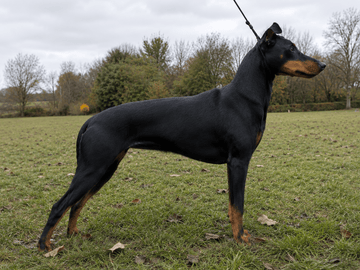
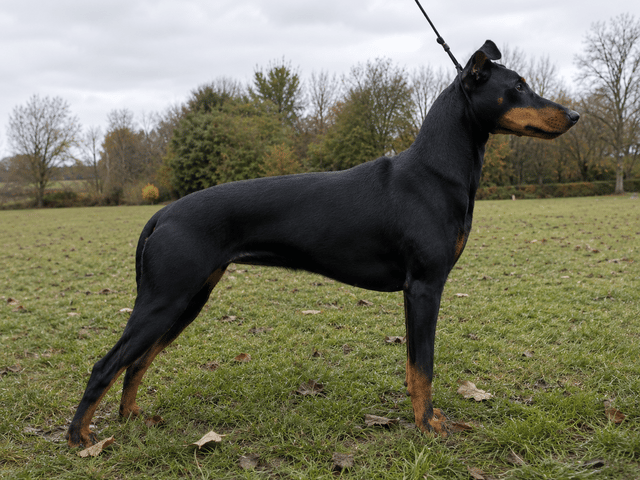
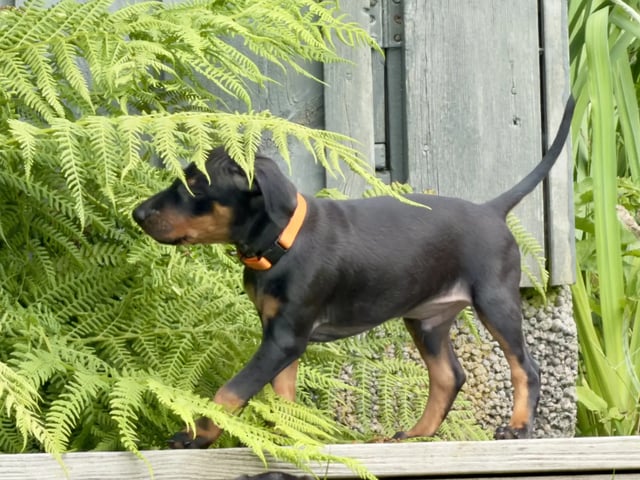
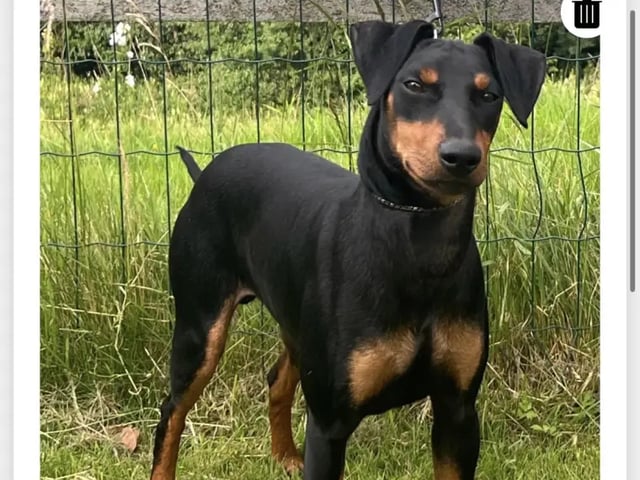
The Manchester Terrier is a small to medium sized, elegant terrier, built for speed and agility rather than bulk. Adults usually stand around 38 to 41 cm at the shoulder, with a weight that reflects a lean, athletic build rather than heaviness. When you look at one side on, you see a streamlined outline with a slightly arched neck, deep chest and a tucked up waist that hints at its rat-catching heritage.
The head is long and narrow with a flat skull and a keen, alert expression. Dark, almond shaped eyes give the dog an intelligent, slightly mischievous look. Ears can be naturally folded or, depending on country and local regulations, sometimes cropped in historical lines, but in modern European contexts you will mostly see small, V-shaped ears carried close to the head. The overall impression is of a refined dog that still looks capable of hard work.
The coat is one of the Manchester Terrier’s most distinctive features. It is:
- Short, close lying and very smooth to the touch
- Glossy when in good condition
- Always black and tan, with clear, sharply defined markings
The tan markings appear above the eyes, on the muzzle and cheeks, on the chest, lower legs and under the tail. Good markings are a point of pride for many breeders. There should be no sooty blending or large patches of white beyond a very small spot on the chest, if any.
Coat care is straightforward. A quick brush once or twice a week with a soft rubber grooming mitt is usually enough to remove loose hairs and keep the coat shining. The breed sheds, but many owners find the shedding quite manageable compared with heavier coated breeds. Because the coat is so short, the skin can be sensitive, so avoid harsh shampoos and do not overbathe. A gentle bath every couple of months, or when truly dirty, is usually sufficient.
Cold and wet weather can be uncomfortable for such a sleek, lightly coated dog. Many Manchester Terriers appreciate a well fitted coat or jumper during winter walks, especially in windy or rainy climates. Regular nail trimming, ear checks and dental care complete the grooming routine and help keep this elegant terrier looking and feeling its best.

¶Temperament & Personality
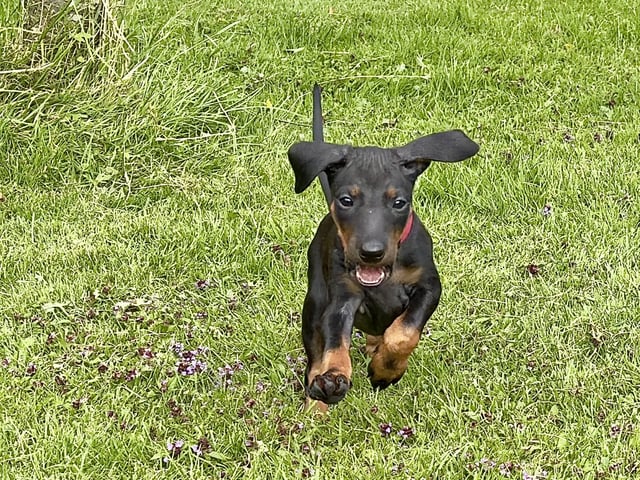
The Manchester Terrier is often described as a “big dog in a small body,” and that phrase fits well. This is a bright, confident and spirited companion that bonds closely with its family. Around their people, many Manchesters are affectionate, playful and sometimes quite clownish, happy to burrow under blankets or follow you from room to room.
With strangers, they can be reserved or aloof. They are not usually aggressive without reason, but they take their watchdog role seriously and will often alert bark when someone approaches the home. Early socialisation is important to prevent unnecessary suspicion or nervousness. When raised with positive experiences, most Manchesters learn to tolerate visitors calmly, although they may never be as socially enthusiastic as some other breeds.
With children, a well bred and well socialised Manchester Terrier can be a devoted companion, especially for slightly older, respectful kids. They are usually too delicate and quick moving to be an ideal match for very rough play. Families should teach children how to handle a small but fast, excitable dog, and always supervise interactions, especially in the early months.
Around other dogs, temperament varies. Many Manchester Terriers enjoy the company of dogs they know, particularly if they have grown up together. Some can be selective or assertive with unfamiliar dogs, especially of the same sex. Careful introductions, neutral meeting places and calm guidance from the owner help a lot. Obedience training and reliable recall are essential if your dog is off leash in areas where other dogs are present.
The greatest challenge for many owners is the Manchester’s strong prey drive. This breed was developed to chase and kill rats and other small vermin, and those instincts remain very strong today. Fast, darting movements from cats, rabbits or wildlife can trigger chasing, so early training and management are vital. Many individuals can live harmoniously with a resident cat if introduced carefully from puppyhood, but small pets like rodents are usually best kept completely separate.
At home, the breed tends to be relatively calm if their exercise and mental needs are met. Without enough stimulation, boredom can lead to problem behaviours such as excessive barking, digging or destructive chewing. This is a dog that likes to be involved, to think, and to move, and owners who enjoy an interactive relationship will find the Manchester Terrier a rewarding partner.

¶Training & Exercise
Manchester Terriers are highly trainable, but they bring a terrier attitude to the table. They are clever, quick to learn and often quite food or toy motivated, yet they are also independent thinkers with a strong sense of what they want. Training works best when it is structured, fair and consistently rewarding.
Positive reinforcement methods suit this breed very well. Short, focused sessions using treats, toys, or access to favourite activities help keep their interest. Long, repetitive drills tend to bore them, and a bored Manchester may start inventing its own games. Clear rules, combined with plenty of praise for correct choices, give the dog confidence and deepen the bond between you.
Many owners find success by:
- Starting early with puppy classes and socialisation
- Prioritising a solid recall and good leash manners
- Teaching impulse control through exercises like “wait,” “leave it” and calm greetings
- Introducing fun activities such as scent games, tricks or basic agility
In terms of exercise, the breed is active and athletic, but not uncontrollable. A healthy adult generally needs:
- At least one good walk of 45 to 60 minutes per day, or two shorter walks
- Several short play or training sessions spread across the day
- Regular opportunities to run freely in a safe, enclosed area
Some Manchesters can adapt to a slightly lower level of activity if they receive a lot of mental stimulation through training and puzzle games, but they are not suited to a very sedentary lifestyle. They particularly enjoy fast running, chasing toys, and problem solving tasks that use their nose and quick reflexes.
Dog sports can be an excellent outlet. Many Manchester Terriers thrive in:
- Agility
- Rally obedience
- Flyball
- Nose work or scent detection games
These activities channel their natural energy and hunting drive into structured work. They also build confidence and provide social exposure in a controlled environment.
Consistency is important. Without clear boundaries, a Manchester Terrier can become pushy or noisy. They are quick to discover what works to get attention, including barking or pestering. If you are patient, firm in a kind way, and ready to laugh at their antics while guiding them, training becomes a very enjoyable shared project.

¶Health
The Manchester Terrier is generally a robust and long lived breed. Many individuals reach 13 to 15 years of age when well cared for, and some live even longer. As with all purebred dogs, there are certain health issues that breeders and owners pay particular attention to.
Conditions reported in the breed include:
- Patellar luxation, where the kneecap can slip out of place and cause lameness
- Hip issues in some lines, although the breed is not among the worst affected
- Eye problems such as cataracts and, in some populations, inherited lens luxation
- Von Willebrand disease and other clotting disorders in certain bloodlines
- Allergies and skin sensitivities, especially related to diet, parasites or environmental triggers
Responsible breeders use health testing to reduce the risk of inherited problems. Depending on the country and breeding club recommendations, this may include:
- Eye examinations by a veterinary ophthalmologist
- Patella checks
- Hip evaluation
- Genetic tests for specific conditions if present in the line
If you are buying a puppy, do not hesitate to ask which tests the parents have undergone, and request to see copies of the results. A reputable breeder will be proud to discuss this.
Routine care is just as important as genetics. Keeping your Manchester at a healthy weight protects the joints and reduces the risk of many diseases. The breed’s slim frame makes even a small amount of extra weight quite visible, so it is helpful to learn how to check body condition by hand.
Regular dental care is essential as smaller breeds can be prone to tartar and gum disease. Daily tooth brushing, combined with appropriate chew items, can make a remarkable difference to long term oral health.
Vaccinations, parasite prevention, and annual veterinary check ups allow early detection of problems. Many health issues, from heart murmurs to dental disease, are easier and cheaper to manage when spotted early.

¶History & Origins
The Manchester Terrier has deep roots in the working class streets and countryside of Britain. Its direct ancestors were small black and tan terriers that were common in the 18th and 19th centuries, valued for their fierce determination in hunting rats and other vermin. These agile dogs worked in stables, warehouses and farms, protecting food stores and livestock from disease carrying rodents.
During the 1800s, when rat baiting and other blood sports were unfortunately popular, these terriers became famous for their speed and efficiency in rat pits. At the same time, there was interest in creating a sleeker, more refined dog that could also accompany gentlemen on walks or rides. Selective breeding between the old black and tan terriers and Whippet type dogs produced a more elegant, streamlined dog that retained the terrier drive.
The city of Manchester in England became a strong centre for this breeding, and the name Manchester Terrier eventually stuck. Over time, the breed moved away from its sporting origins and became more of a companion and show dog, although the instinct to chase and hunt remained firmly in place.
Throughout the 20th century, the Manchester Terrier struggled at times with low numbers, especially during and after the World Wars when keeping dogs was difficult. Dedicated breeders worked hard to preserve the breed’s unique look and character. In some countries, the toy and standard sizes have been treated as closely related but distinct varieties, while in others they are considered parts of the same breed concept.
Today, the Manchester Terrier is still relatively rare in many parts of the world compared to more mainstream companion breeds. Enthusiasts appreciate it as a link to traditional British terrier history, combined with a modern, manageable size and a low maintenance coat. The breed is now primarily a family companion and an active partner in dog sports, though the old rat hunting instinct is very much alive in their enjoyment of chasing toys, scent games and fast paced activities.

¶Living with the Breed
Sharing your life with a Manchester Terrier is both rewarding and demanding. This is not a dog that is content to be a decorative accessory. They want involvement, interaction and a fair amount of structure. For active individuals or families who enjoy training and outdoor time, they can be a near perfect match.
In terms of living space, the Manchester adapts well to apartments and city life, provided exercise needs are met. Their compact size and low shedding coat make them easy to manage indoors. However, thin walls and close neighbours can turn barking into a real issue if not addressed through training and sufficient mental stimulation. A house with a securely fenced garden gives more freedom, but does not replace walks and proper outings.
Daily life usually includes:
- Morning and evening walks
- Short training or trick sessions
- Interactive play with toys or scent games at home
- Time simply spent together, often with the dog curled up close by
They are often quite attached to their people and may not enjoy being left alone for long hours on a regular basis. Gradual training to be comfortable alone, combined with puzzle toys and a predictable routine, can help prevent separation related problems.
Financially, owning a Manchester Terrier means budgeting for quality food, routine veterinary care, vaccines and parasite treatments, grooming basics, insurance and equipment. While they do not eat as much as large breeds and do not need expensive professional grooming, long term costs can still be significant over a 13 to 15 year lifespan. Many owners choose dedicated pet insurance to manage unexpected veterinary bills.
Useful equipment for living with a Manchester Terrier typically includes:
- A well fitted harness and lightweight leash
- Weather appropriate coats for cold or wet climates
- A variety of toys, including chew toys and puzzle feeders
- A comfortable bed, often with blankets, as many like to burrow
- Secure fencing or safe long lines for controlled off leash exploration
If you have other pets, particularly small animals, you will need to think carefully about management. The hunting instinct is real, and even a dog that seems calm indoors may be triggered by fast movement. Early, careful introductions and clear rules are crucial if you plan to mix species.
For first time dog owners, the Manchester Terrier can be a good choice if you are ready to invest time in training and learning. Their intelligence and sensitivity mean that your own habits, consistency and mood will shape their behaviour strongly.
¶Egenskaber
| Egenskab | Værdi |
|---|---|
| Racetype | Racekat/Hund |
| Aggressivitet | 1/5 |
| Børnevenlig | 4/5 |
| Energiveau | 3/5 |
| Pelsfældning | 3/5 |
| Sundhed | 3/5 |
| Intelligens | 3/5 |
| Pelsplejebehov | 3/5 |
| Læreevne | 3/5 |
| Højde | 37 – 41 cm |
| Vægt | 5 – 10 kg |
| Forventet levetid | 12 – 14 år |
¶Ofte stillede spørgsmål
¶Sammenligninger med andre racer
Sammenlign Manchester Terrier med andre racer, og se forskelle i temperament, aktivitetsniveau og pleje, så du kan træffe et trygt valg. Vis alle sammenligninger