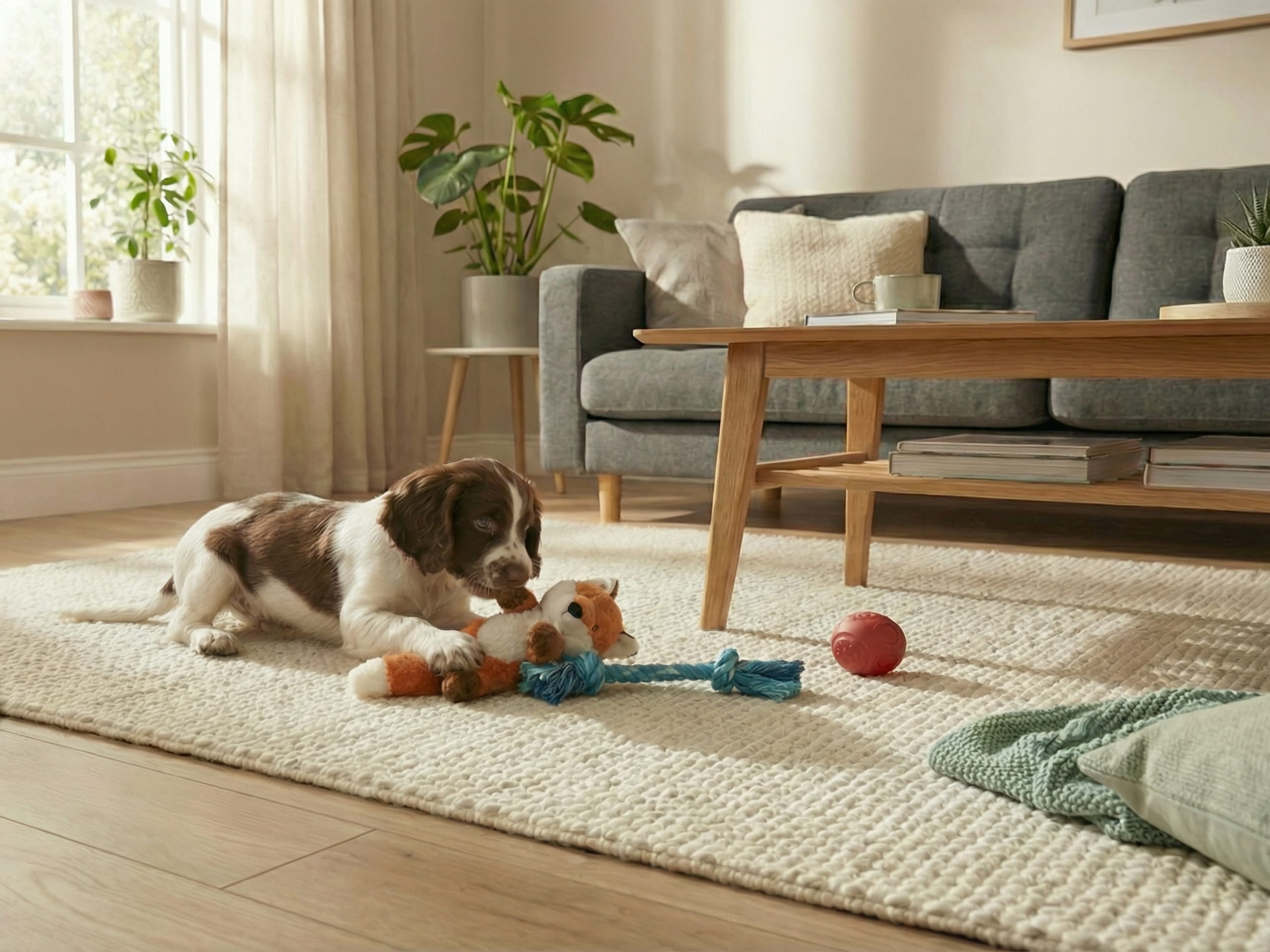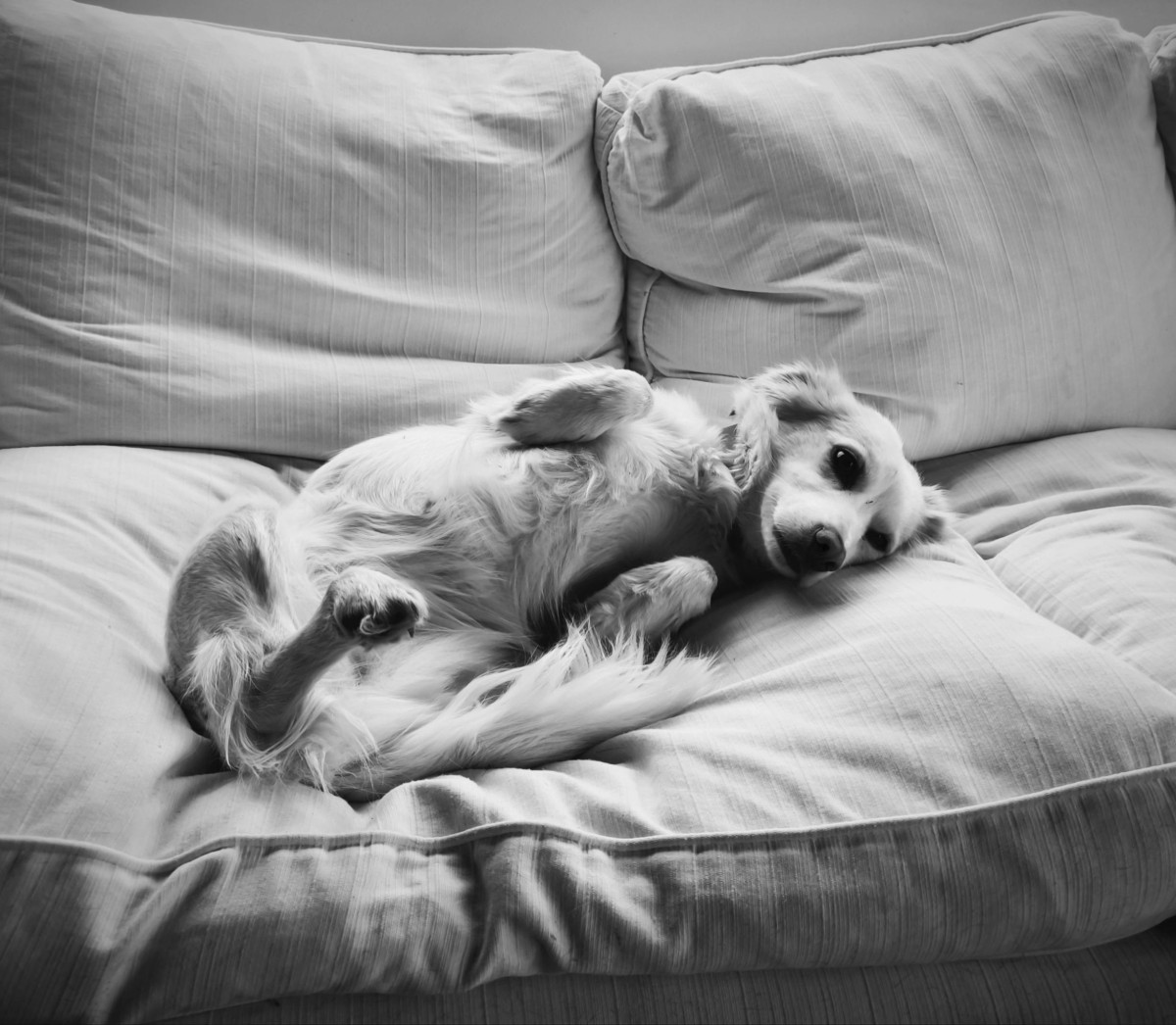

Rooms and other spaces for dogs must be adapted to the number of dogs kept there. All dogs must have access to a clean, dry and soft resting place where they can lie in a natural position. Keep in mind that dogs like to “make a nest”, so give them the opportunity to do that. Bitches with puppies must have a calm, quiet area for themselves and their puppies.
The indoor environment for dogs must have a temperature and humidity level that is suitable for them. There must be access to daylight and lighting that does not irritate the dogs.
¶Exercise yards
Dogs kept in exercise yards, on residential plots or in other outdoor enclosures must have areas that provide both sun and shade, as well as shelter from rain and wind.
There must be a doghouse or some other indoor space. In addition, there must be a raised resting place off the ground. It is important that the environment is stimulating for dogs kept in an exercise yard.
¶Space for single dogs and for pair or group housing
There are minimum size requirements, measured in square metres, for how small an exercise yard or outdoor enclosure may be for a single dog and for pair or group housing (two or more dogs). These are described in tables provided by the Swedish Board of Agriculture (Jordbruksverket). The space may be larger, but not smaller than the measurements in the table.
¶How to calculate how large an exercise yard must be
Below is an example of how to calculate the size of an exercise yard. Say you want to build an exercise yard for three dogs. Their shoulder heights are 30, 40 and 50 centimetres respectively.
You start by checking how many square metres you must have as a minimum for the largest dog according to Jordbruksverket’s table for pair or group housing of large dogs, which is 16.
Then you add the required area for the two smaller dogs according to Jordbruksverket’s tables for those dogs – that is, 6 + 8.
The total minimum area you must have for your three dogs in the exercise yard is therefore 16 + 6 + 8 = 30 square metres.
¶Pens
A pen is always an indoor space. The pen or room must have an appropriate ceiling height so the space and the dogs can be properly managed and ventilated.
In a kennel building, the partitions between pens must be fitted with visual barriers. Visual barriers give the dogs an opportunity for privacy.
As with exercise yards, there are rules for the minimum size of a pen or room, measured in square metres, for a single dog. The space may be larger, but not smaller. The length of the pen must be the dog’s body length from tip of nose to base of tail multiplied by 1.1. The width of the pen must be the dog’s shoulder height multiplied by 1.1, and the height must be the dog’s shoulder height multiplied by 1.2.
A doghouse must be insulated and well ventilated. It must provide protection from wind, direct sunlight, rain, snow, cold and damp. Where needed, there must be a draught lobby or windbreak inside or outside the doghouse so that wind cannot blow straight into it.
¶Temporary housing in smaller spaces
If there are veterinary medical reasons, you may, in consultation with a veterinarian, house your dog in a way that differs from the normal rules. There are also other occasions when you may temporarily keep your dog in smaller spaces.
Below are examples of situations where you may keep your dog in smaller spaces than the standard rules allow:
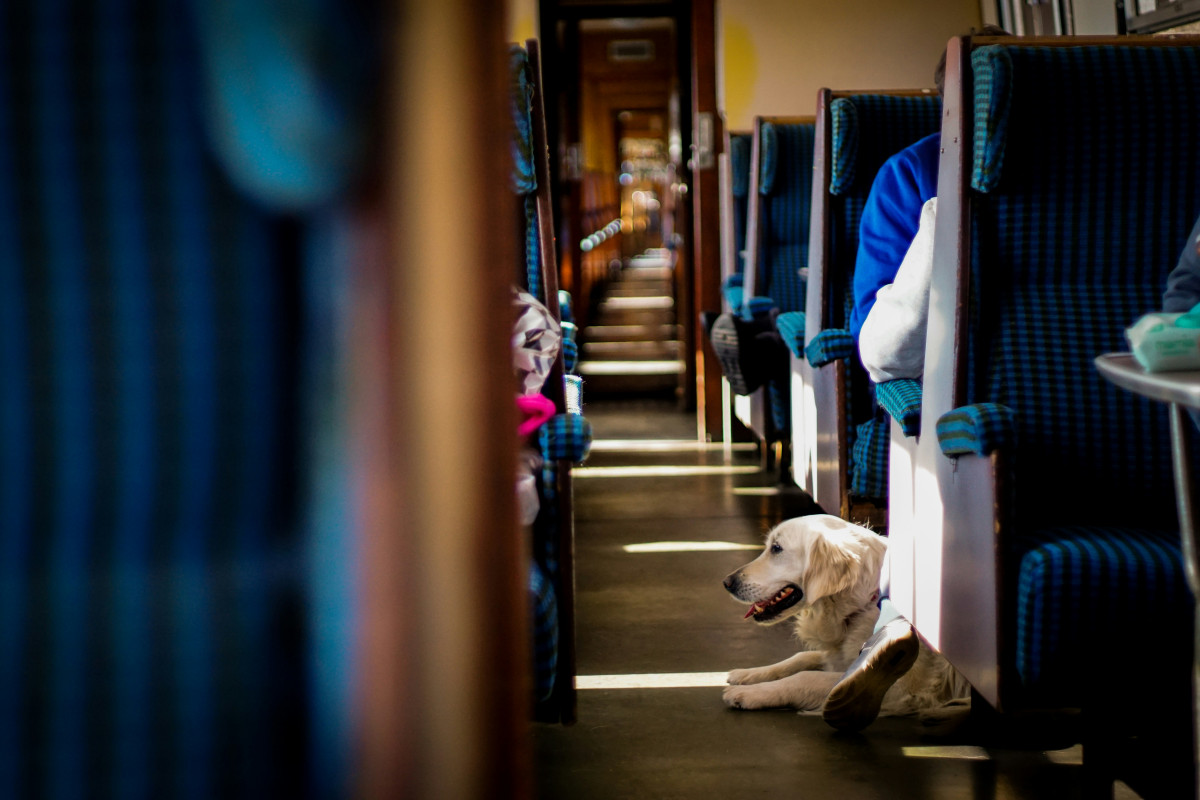
- short journeys in connection with holidays
- staying in areas where dogs are not allowed, for example if you need to go into a shop to buy something
- journeys to and from shows and while staying at shows
- temporary events such as adoption days, competitions, trials or training sessions before competitions
- hunting and training with dogs, including the time during which these activities are in progress
- house-training a puppy in a small pen.
¶Temporary tethering
You may temporarily tether your dog
- for short toileting breaks
- in connection with competitions, hunting or other dog-related activities such as training and other forms of education of the dog
- for rest or overnight stays during multi-day trips in nature
- when staying in areas where dogs are not allowed, for example if you need to go into a shop to buy something.
¶Restricting the dog’s movement while you care for it
If necessary, you may temporarily tether a dog – or restrain it in some other way – while you are taking care of it. This may involve grooming, clipping claws, caring for its mouth and teeth or bathing the dog. It also applies during the time needed to clean the dog’s housing area. However, it is important that the way the dog is tethered or restrained is appropriate from an animal welfare perspective.
Among other things, this means that businesses providing dog care services no longer need to apply to Jordbruksverket for an exemption in order to tether dogs temporarily while working with them, for example during bathing, grooming or claw clipping.
¶Electric fencing
Invisible electric fences that give the dog a shock when it crosses the boundary are not allowed. Visible electric fences that give the dog a shock when it touches them may only be used if the outdoor space enclosed by the fence is at least 20 times the minimum dimensions for outdoor space for dogs. The dog must be able to reach the live part of the fence while standing on the ground, and there must be no risk of the dog becoming caught in it.